Choosing a gas mig welder for global sourcing requires more than comparing prices online. Buyers must connect welding performance, operating conditions, supplier reliability, and long-term service support. A machine that performs well in a workshop may fail when voltage fluctuates at a remote production site.
A practical evaluation begins with the intended materials, wire sizes, shielding gas, duty cycle, and available power supply. For example, a factory welding 6-millimeter steel frames may need stronger output and cooling than a repair shop handling thin sheet metal. Check input voltage carefully. Regional electrical systems can differ, and an incorrect configuration may create costly delays. Ask suppliers for test videos, production records, inspection reports, and clear warranty terms. Independent certification also deserves attention, but certificates should match the exact model being purchased.
My sourcing experience suggests that communication quality often predicts after-sales performance. Reliable manufacturers explain limitations instead of promising unlimited capability. They can provide spare-part lists, troubleshooting guidance, and packaging details for long-distance transport. Still, no checklist is flawless. I have seen buyers focus on the welder price and overlook cable length, torch quality, or replacement-gas compatibility. That mistake can reduce productivity after delivery. A careful buyer should request a sample test, confirm technical documents, and review the supplier’s response time before placing a large order. The right gas mig welder is not simply the cheapest unit; it is the one that remains safe, serviceable, and productive in its actual working environment.
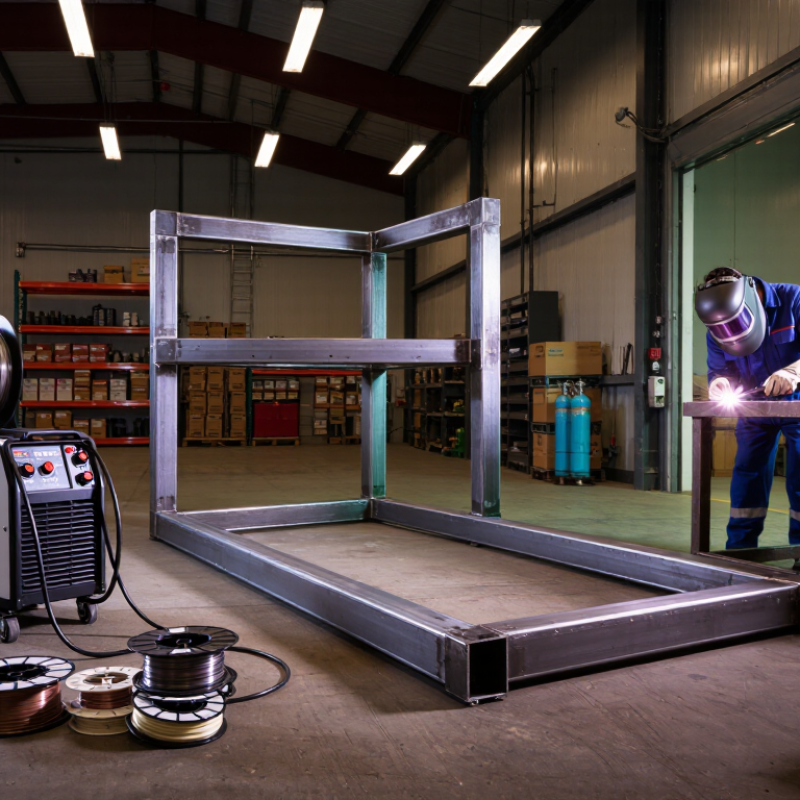
How to Choose a Gas MIG Welder for Global Sourcing?
Gas MIG welders are not one uniform category. A conventional transformer model suits stable factory work, while an inverter model reduces weight and usually improves electrical efficiency. Synergic machines adjust voltage and wire speed together. Pulse MIG adds controlled current peaks, helping reduce spatter on aluminum and thin sections. Gas matters too. MIG normally uses inert gas, while MAG uses active gas for carbon steel. ISO 4063 identifies these processes as 131 and 135.
Core specifications deserve closer attention than attractive photos. Check input voltage, output range, duty cycle, wire diameter, and rated welding current. A 60% duty cycle at 250 amperes means six minutes of welding within ten minutes. That detail changes production planning. Also verify gas-flow control, torch compatibility, cooling method, and electrical protection. IEC 60974-1 is a useful reference for arc-welding power-source performance. Local certification still requires separate checking.
Market data supports careful sourcing. Grand View Research valued the global welding equipment market at about USD 16.3 billion in 2023, with continued growth expected through 2030. Fortune Business Insights also reports rising demand for automated and energy-efficient welding systems. These figures show opportunity, not guaranteed quality. I once focused too heavily on peak amperage. The machine looked powerful, but its low-voltage stability was disappointing. Ask for test welds, duty-cycle records, spare-part availability, and performance at your actual input voltage. Small omissions become expensive later.
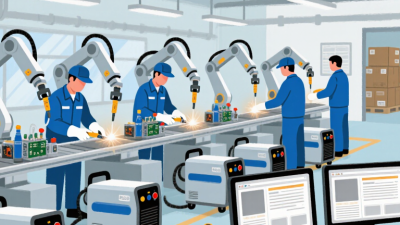
Choosing a gas MIG welder starts with the metal, not the catalog photograph.
For thin steel panels, 130–180 amps and .023–.030 inch wire often provide controllable heat. For 1/4-inch structural steel, look closer to 200–300 amps, adequate duty cycle, and .035–.045 inch wire.
A machine that reaches high peak amperage may still struggle during long welds. Duty cycle matters more than impressive numbers.
Aluminum changes the decision.
It needs stable wire feeding, a suitable liner, and shielding gas matched to the alloy.
Short-circuit transfer can suit thin sheet, while spray transfer demands more power and careful voltage control.
For field repairs, portability and generator compatibility may outweigh maximum output.
For production frames, thermal protection, repeatable settings, and reliable cooling deserve greater attention.
These details affect shipping, installation, and operator training across countries.
When comparing suppliers, I request test welds on the actual material thickness.
Photos are useful, but bead penetration reveals far more. I also check input voltage options, plug configuration, spare-part access, and clear operating manuals.
One uncomfortable lesson is that a cheaper welder can become expensive after unsuitable accessories arrive. I have also seen buyers oversize machines and pay for unused capacity.
That mistake is easy to make. A practical specification should leave some headroom without ignoring the real job.
Choosing a gas MIG welder starts with the workpiece, not the catalog. A 230-volt circuit at 20 amps provides roughly 4.6 kVA before efficiency losses. That may suit light fabrication, but thick steel can demand higher output and steadier arc control. The American Welding Society’s Welding Handbook links current selection to material thickness, wire diameter, and joint design. I always check the site’s voltage stability. A perfect specification means little beside a long extension cable.
Gas systems deserve equal attention. ISO 14175 classifies shielding gases by composition and application, helping buyers compare cylinder contents across suppliers. For common steel work, practical flow often sits near 12–20 liters per minute, depending on nozzle size, wind, and torch angle. Too little gas creates porosity. Too much gas can produce turbulence. Gas is not decoration. A regulator, flowmeter, solenoid, hose, and connector should be assessed as one system, especially when sourcing internationally. Local cylinder valves may differ, so compatibility must be verified before shipment.
Duty cycle is frequently misunderstood. IEC 60974-1 rates welding equipment over a ten-minute period, commonly at a 40°C ambient temperature. A 60% rating means six minutes welding and four minutes cooling at the stated current. In a workshop, repeated starts, dust, and warm enclosures reduce that margin. I prefer at least 20% spare capacity for production work. This is conservative, perhaps overly so. Yet field experience shows that buying only for the average load can punish the machine during peak batches. Record actual amperage, wire speed, and pause time before comparing quotations.
| Evaluation Dimension | Compact Workshop Unit | General Fabrication Unit | Heavy-Duty Production Unit | Three-Phase Industrial Unit |
|---|---|---|---|---|
| Typical output range | 30–180 A | 40–250 A | 50–350 A | 60–500 A |
| Recommended input supply | Single-phase, 120 or 230 V AC | Single-phase, 230 V AC | Single-phase 230 V or three-phase 400 V AC | Three-phase, typically 380–415 V AC |
| Input frequency compatibility | 50/60 Hz preferred for global sourcing | 50/60 Hz preferred | 50/60 Hz; confirm fixed or automatic selection | 50/60 Hz; verify local grid compatibility |
| Approximate maximum input current | 15–25 A at 230 V | 20–32 A at 230 V | 25–45 A at 230 V, or lower per phase at 400 V | 20–40 A per phase at 400 V |
| Power requirement planning | Dedicated 16–25 A circuit; avoid long, undersized extension cords | Dedicated 25–32 A circuit with appropriate overcurrent protection | Industrial circuit; confirm breaker, cable size, grounding, and phase balance | Three-phase distribution, protective earth, and qualified installation required |
| Rated duty cycle at 40 °C | 20–35% at maximum output | 35–60% at maximum output | 60% at maximum output; 100% at a reduced current | 60–100% at production operating currents |
| Meaning of the duty-cycle rating | May weld for 2–3.5 minutes in a 10-minute period at rated output | May weld for approximately 3.5–6 minutes in a 10-minute period | Suitable for repeated fabrication cycles with cooling intervals | Better suited to long, continuous production runs |
| Suitable material thickness | Approximately 1–6 mm steel with suitable wire and joint preparation | Approximately 2–10 mm steel | Approximately 3–16 mm steel, depending on joint design and passes | Approximately 5 mm and above; multi-pass welding may be required |
| Common solid wire diameters | 0.6, 0.8, and 0.9 mm | 0.8, 0.9, and 1.0 mm | 0.9, 1.0, and 1.2 mm | 1.0, 1.2, and 1.6 mm |
| Typical wire-feed speed | 1.5–12 m/min | 1.5–18 m/min | 1.5–20 m/min | 1.5–25 m/min, depending on feeder design |
| Gas system | External cylinder, regulator, hose, and solenoid valve | External cylinder with replaceable regulator and flowmeter | Industrial cylinder or manifold connection; robust gas fittings recommended | Central gas pipeline or high-capacity cylinder manifold |
| Typical shielding-gas flow | 10–15 L/min | 12–18 L/min | 15–22 L/min | 18–25 L/min, adjusted for torch size and workplace conditions |
| Common shielding gases | CO₂ or argon/CO₂ mix for mild steel | Argon/CO₂ mix for lower spatter and smoother transfer; CO₂ where cost is prioritized | Argon/CO₂ mixes selected according to material, transfer mode, and weld profile | Plant-approved gas mixtures with controlled supply pressure and purity |
| Gas pressure and connection checks | Confirm regulator inlet rating, outlet range, hose diameter, and local cylinder thread | Confirm flowmeter scale, connector type, leak test procedure, and cylinder compatibility | Confirm inlet pressure range, gas-heating or anti-freeze needs for high CO₂ use, and manifold fittings | Confirm pipeline pressure, filtration, isolation valves, flashback protection where applicable, and site standards |
| Torch and cable package | 3 m air-cooled torch; compact earth lead | 3–4 m air-cooled torch; replaceable liner and contact tips | 3–4 m heavy-duty air-cooled torch; water cooling may be preferred above roughly 300 A | Heavy-duty torch, feeder cable, and optional water-cooling system |
| Recommended cooling approach | Fan-cooled power source; observe thermal protection indicators | Fan-cooled with clear ventilation around the enclosure | High-capacity fan and thermal protection; water-cooled torch for long high-current welds | Industrial fan cooling and water-cooled torch where required by the duty cycle |
| Useful control functions | Voltage, wire-feed speed, inductance, and 2T/4T selection | Voltage, wire-feed speed, inductance, burn-back, soft start, and polarity selection | Digital parameter display, synergic programs, crater fill, burn-back, and remote control options | Programmable welding procedures, remote feeder control, job storage, and process monitoring |
| Global sourcing checkpoints | Plug type, input voltage, local gas-cylinder thread, spare tips, and translated manual | Electrical certification, replacement feeder parts, regulator standard, and carton protection | Duty-cycle test data, thermal protection test, EMC documentation, spare-part availability, and service training | Three-phase conformity, installation requirements, field-service capability, network compatibility, and long-term parts support |
| Best fit | Maintenance, light fabrication, repair work, and low-volume workshops | General metal fabrication, gates, frames, brackets, and small production batches | Structural components, machinery parts, medium-volume production, and thicker steel | Continuous industrial fabrication, heavy structures, pressure-related work, and automated production cells |
| Selection rule: Choose a welder whose rated duty cycle is comfortably above the planned production load, not merely equal to the maximum amperage. For international orders, verify the destination voltage, frequency, plug, protective-earth arrangement, gas-cylinder connection, applicable electrical and EMC requirements, and the supplier’s duty-cycle test conditions before purchase. | ||||
How to Choose a Gas MIG Welder for Global Sourcing?
Checking Safety Standards, Certifications, and Supplier Reliability
A gas MIG welder should meet the safety rules of its target market. Requirements may cover electrical protection, grounding, electromagnetic compatibility, and thermal control. Ask for certificates, test reports, and the exact model numbers they cover. A certificate without matching serial details deserves caution. Check whether the documents remain valid. Standards can change.
Inspect the machine beyond paperwork. Look for protected cable connections, clear warning labels, secure gas fittings, and stable ventilation openings. Request factory test records for insulation, leakage, overload protection, and duty-cycle performance. Ask how operators should check hoses and regulators before use. Small faults can become expensive delays. Safety comes first.
Supplier reliability needs evidence over promises. Request a production sample, a quality-control checklist, spare-parts records, and batch traceability. A remote video audit can reveal storage conditions and assembly practices, but it cannot replace an independent inspection. That limitation matters. Confirm response times for technical support and warranty claims. Review packaging tests for long-distance shipping, especially around the wire feeder and gas inlet. I would also compare the supplier’s corrective-action records. A clean file may indicate quality, or simply weak reporting. Leave room for doubt, and verify critical claims through an accredited testing body.
How to Choose a Gas MIG Welder for Global Sourcing?
Choosing a gas MIG welder requires more than comparing quotation prices. Start with the complete landed cost. Include the welder, torch, regulator, wire feeder, packaging, freight, port charges, duties, and inland delivery. A compact machine may reduce shipping costs, while a heavier model may offer better durability. Request duty-cycle test records at your required voltage and amperage. Also check three-year costs for consumables, maintenance, and electricity. In practice, buyers sometimes underestimate replacement torches and circuit boards.
Tips: Ask for an itemized quotation and clear delivery terms. Compare sea and air freight using the same product configuration. Confirm pallet dimensions before booking transport. Request spare-part prices, production lead times, and packaging photos. Small omissions become expensive.
After-sales support can decide whether production continues or stops. Check warranty coverage, exclusions, troubleshooting procedures, and response times. A reliable supplier should provide manuals, wiring diagrams, repair videos, and technician training. Local service partners can reduce downtime, but verify their actual skills. Response time alone proves little. Ask for recent support examples, not promises. Keep serial numbers, inspection records, and agreed replacement procedures in writing. I would also test one unit before placing a large order, although this adds time and freight. That inconvenience may reveal unstable feeding, poor cooling, or confusing controls before the shipment becomes difficult to return.


For those larger-sized parts, or smaller quantity runs, we have 2 independent powder coat booths and ovens. The quality, durability and affordability of today’s powder coating finishes make this the process of choice for world-class companies.
Powder coating advantages over other forms of coating are many. Materials used in the Powder coating process can be metals and non-metals that come in a multitude of thicknesses, textures, colors, etc. Another of Powder coating’s biggest advantages over conventional coatings is its ability to create finishes in many different textures. Powder Coating Booths allow us the ability to apply these advantages to large products.
Tri-State Fabricators runs a full-service conveyor line for painting. Wet painting can provide protection or decoration to many different part styles. From start to finish, every project is easier to undergo random and point-based inspection by our skilled painting team.
Advantages to our Wet Paint Line are these lines start with product prep and ends with a thorough inspection of a high quality finished product. Our ability to complete large and small projects with a superior finish and doing so in a timely and economical fashion. This passes along the savings in production to our customers. When powder coating ins not an option, our Wet Paint Line gets the job done right the first time.
When the parts get big and heavy we roll-out our custom paint racks and oversize booth. By utilizing our partnerships with all the major paint brands, we can match virtually any color with wet paint.
The advantages of having access to a Wet Paint Booth are many. Large projects of many different shapes can be loaded into the booth. The Wet Paint Booth offers an environment that is much more controlled than a typical parts painting operation.
Not only are they used because of their controlled environment, but they’re are also advantageous when it comes to applying paint to parts that are needed in industries that require specialty coatings such as medical, aerospace, etc.
Our military forces have some very high standards when it comes to the finish of their vehicles and equipment. From the first pre-treatment step to final coat, it takes a great deal of knowledge and experience to protect the men and women of our armed forces. They deserve only the best, and Tri-State Fabricators provides it.
All of our processes are closely monitored by our staff and management teams. Both of which are highly trained in the processes of metal fabrication and finishing. Tri-State Fabricators’ goal is to always fully satisfy each and every customer, including the military. We will always put a 110% into what we do.
Abrasive media blasting is an excellent way to remove old paint, rust, and increase the paint/powder adhesion. Glass beads produce a much smoother and brighter finish than angular abrasives; leaving the part clean yet without any dimensional change. Chemically inert and environmentally friendly, we can recycle our beads approximately 30 times; making them a more preferred method of metal cleaning or surface finishing.
Advantages to Glass Bead Blasting are many. Glass bead blast media is used when a project is needing rough surfaces need to become smooth for applications of coatings such as paint. It is typically used to clean paint and rust from a product surface without deforming the surface it is being used on. Overall, compared to many other blasting media, Glass Bead Blasting is a very economical choice and those savings are always passed on to our customers.
Tri-State Fabricators utilize a zinc phosphate wash to clean and etch the material to ensure the best paint adhesion possible. The unique design of our 3-stage wash system does the work like a 5-stage. From Cleaning and rinsing to conversion coating and post-treatment, Our Part Washing process is a complete service and works throughout the fabrication service and the finishing service.
Along with the previously mentioned benefits, Curing is a vital chemical reaction that leaves the product finish hard and relatively safe from mild abrasion and aggressive corrosion. This process can be done in more than one way; ambient air-dry or in curing ovens at temps that exceed 240°.
From fixing paint mistakes (someone else’s of course) to simply cleaning our paint line hooks, our burn-off oven is put to good use. After a quick burn-off, a little clean up, and a fresh coat of paint, your parts will look better than new.
Why does our Burn-Off Oven work so well? Because super heating the air around parts turns the materials into ashes. From paint and powder coatings to rubber and machining oils, high temps do the job without degrading the integrity of the part.
Masking is a vital part of producing high quality products. We have die-cut masking patterns to protect machined surfaces as well as a wide range of plugs and caps to protect threaded holes and bolts. We provide permanent and temporary masking.
Masking allows the selected sections of a product to be protected from a fabrication or finishing service. This can be with both chemicals when etching and tapes, paints when only finishing just a section of the product. Masking is great in aiding the customization process of a project.
Screen printing is a photographic process that transfers artwork onto a porous nylon screen which allows colored ink to flow through the screen and be deposited on an aluminum or plastic component. We can generally have just about any design created onto a screen for your parts.
Some of the advantages of Screen Printing are, brand recognition for your business displaying on your products, assembly instructions, product warnings/hazards, etc. Tri-State Fabricators produces Screen Printing of the highest quality so you know it’s durable.
Metal Finishing is the art of treating the exterior portion of product, often metal but can also be made of other materials, so that the surface is clean and free of any debris. Then the process of applying coats or either paint of powder coat takes place. This coating process improves the quality of the product in both appearance and resistance to wear and corrosion.
Tri-State Fabricators, Inc., understands that a project typically isn’t complete until a high-quality finish has been added to your product. This is why our painting and powder coating teams continuously inspect the products throughout the Metal Finishing process.