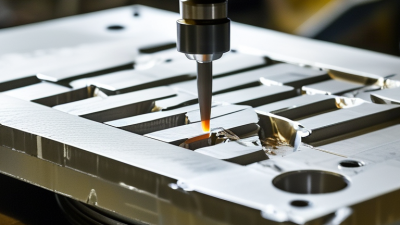
CNC machine parts range from compact brackets to precision shafts, and each type serves a different purpose. Some are milled from solid stock, while others are turned, drilled, or cut from sheet material. The process leaves clues. A flat aluminum plate may have clean pockets and sharp edges; a steel shaft may show stepped diameters and carefully finished bearing seats. These details affect fit, strength, cost, and assembly.
This guide explores common types of cnc machine parts, including milled components, turned parts, housings, brackets, and custom fixtures. It also explains how geometry, material, tolerance, and production volume influence manufacturing choices. A tight tolerance can be essential where two parts must align, but it may add time and expense where a loose fit is acceptable. There is no single best type or process. The categories can overlap, and real designs are often less tidy than a chart suggests. That deserves a second look. By understanding what each part does and how it is made, buyers and designers can ask clearer questions, review drawings more carefully, and choose components suited to the job—not just the machine.
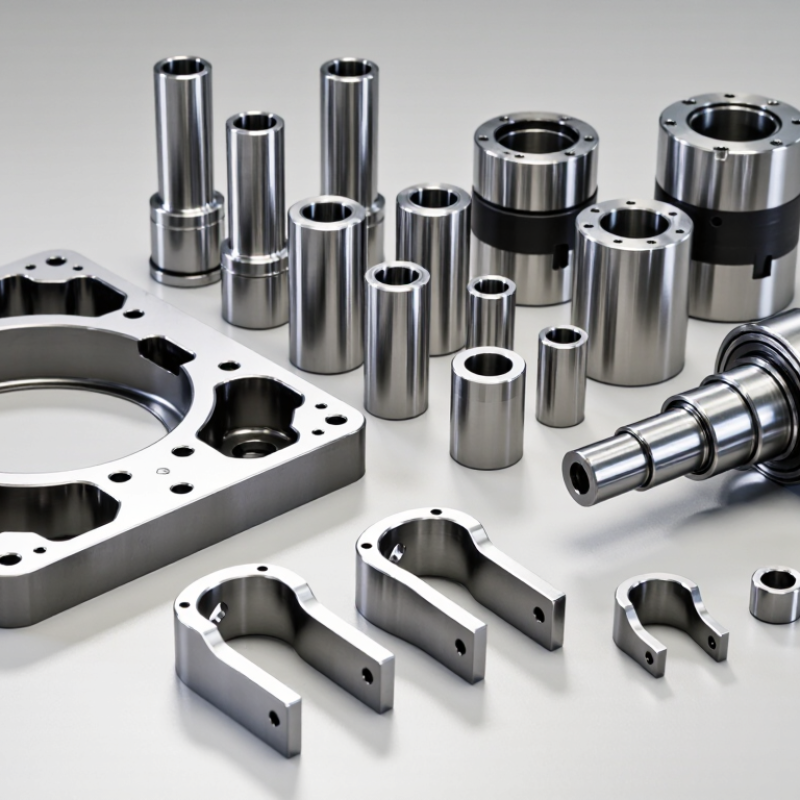
A CNC machine’s structure supports every cutting movement. The base or bed carries the machine’s weight and helps resist vibration. On a machining center, the column rises from the bed and supports the spindle assembly. A gantry design uses two side supports and a crossbeam instead. These layouts suit different work envelopes and loads.
Guideways define the paths along which the table, saddle, or spindle moves. Their alignment affects positioning accuracy, so builders machine and assemble these surfaces with care. Ball screws or other drive systems move the axes, while the frame keeps those movements controlled. A small misalignment can show up as uneven cuts or changing dimensions. It is not always obvious at first.
The spindle head holds and rotates the cutting tool. Its housing must remain stable under cutting forces, yet allow heat to dissipate. Covers, brackets, and enclosures also protect moving parts and help contain chips and coolant. They matter. Still, a heavier frame is not automatically better; layout, material, joint design, and operating conditions all influence rigidity. Inspection should include guideway condition, fastener tightness, and signs of vibration or wear. A machine’s structure can look solid and still need attention.
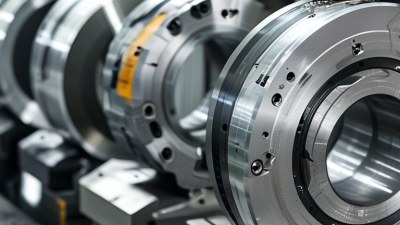
CNC machine motion depends on several parts working together: axes, linear guides, and ball screws. Each axis positions the cutting tool or workpiece along a controlled path. Guides support that movement and help resist side loads, while a ball screw converts motor rotation into precise linear travel. The parts are connected, but they do not perform the same job.
On a typical machine, guide rails keep a carriage moving steadily across the bed. A ball screw runs nearby, with recirculating balls reducing friction between the screw and its nut. Small details matter. Incorrect alignment can create uneven wear, added heat, or a faint vibration that appears only at certain speeds. Lubrication, clean covers, and periodic checks of backlash help preserve repeatable positioning. Measurements should follow the machine maker’s service procedure, since designs and tolerances vary.
Axis performance is not determined by the screw alone. Motor response, bearing support, guide stiffness, and machine load all affect movement. If a machined edge looks wavy, the cause may be looseness, contamination, or a setting issue—not necessarily a damaged screw. Diagnosis takes patience. A practical inspection checks for unusual noise, rough travel, loose fasteners, and visible lubricant problems before parts are replaced. Even well-maintained systems can drift over time, so recording position checks can reveal gradual changes.
Typical component counts in a representative three-axis CNC machine layout.
A common layout uses one ball screw and a pair of linear guide rails for each linear axis. Actual machine designs vary.
Among CNC machine parts, spindle and tooling components have a direct effect on cutting accuracy, surface finish, and machine reliability. The spindle holds and rotates the cutting tool, often at thousands of revolutions per minute. Its bearings, taper, and lubrication system must work together smoothly. Even slight runout can leave visible marks on a finished surface. That matters.
Tool holders connect the spindle to the cutter. Common options include collet, end-mill, and shrink-fit holders, each suited to different tools and cutting conditions. A holder should match the spindle interface and keep the tool firmly seated. For example, a loose collet may cause chatter when milling a narrow slot in aluminum. Chatter can damage the finish and shorten tool life. Small details matter.
Cutting tools are another essential part of the setup. End mills, drills, and face mills remove material in different ways, so geometry and coating should fit the workpiece and operation. I have seen setups where a sharp tool still produced poor results because the holder was dirty. Cleaning the taper and checking for wear are simple habits, but they are easy to skip. They do not solve every problem; feeds, speeds, and workholding matter too. A careful setup starts with clean contact surfaces and a tool that runs true.
What Are the Top Types of CNC Machine Parts?
Workholding and Automatic Tool-Changing Systems
Workholding parts secure the workpiece during cutting. Common examples include vises, chucks, fixture plates, and pallet systems. Their job sounds simple. It is not. A small clamping error can shift a part, distort thin walls, or ruin repeatability. Choose the setup around the part’s shape, material, and machining forces. For example, a thin aluminum plate may need distributed support, while a round bar may sit more securely in a chuck. A fixture that works beautifully for one job can complicate the next.
Automatic tool-changing systems include the tool magazine, changer arm, spindle interface, and control software. They reduce manual tool swaps and help machines run unattended, but only when tools are stored correctly and tool data stays accurate. Deloitte and MAPI’s 2024 Smart Manufacturing Survey reported expected improvements of 10–20% in production output among surveyed manufacturers. That figure covers smart manufacturing initiatives broadly; it is not a guaranteed gain from an automatic tool changer. Still, reliable tool changes and consistent workholding can support smoother production. A missed tool offset can undo that advantage.
Tips: Check clamping clearance before the first cut. Keep tool pockets organized, and verify offsets after tool changes. Small checks matter. Record setup changes; memory is unreliable.
| System | Part or Type | Primary Function | Common Applications | Key Selection Considerations |
|---|---|---|---|---|
| Workholding | Machine vise | Clamps a workpiece securely during milling, drilling, and other machining operations. | Prismatic parts, blocks, plates, and small production batches. | Jaw opening, clamping force, workpiece shape, accessibility, and required positioning accuracy. |
| Workholding | Three-jaw chuck | Centers and grips round or hexagonal workpieces, typically on a CNC lathe. | Turning bars and cylindrical components that can be gripped concentrically. | Chuck diameter, gripping range, workpiece material, spindle speed, and required concentricity. |
| Workholding | Four-jaw chuck | Holds round, square, or irregular workpieces; independently adjustable jaws allow off-center setups. | Non-round parts, eccentric turning, and workpieces requiring individual jaw adjustment. | Setup time, jaw travel, workpiece geometry, and the need for precise alignment. |
| Workholding | Collet chuck | Uses a collet to grip bar stock or small cylindrical parts around a broad portion of their circumference. | Small-diameter turning, precision components, and repeat production from bar stock. | Collet size and type, stock diameter, gripping range, and runout requirements. |
| Workholding | Dedicated fixture | Locates and clamps a workpiece in a repeatable position for a specific machining sequence. | Repeat production, complex shapes, and parts with consistent locating features. | Datum location, clamp access, chip clearance, rigidity, and setup repeatability. |
| Workholding | Zero-point pallet system | Allows a pallet or fixture to be removed and reinstalled at a repeatable machine position. | Multi-operation machining, presetting work outside the machine, and frequent job changes. | Interface compatibility, allowable load, repeatability, and access for cleaning and maintenance. |
| Automatic tool changing | Tool magazine | Stores cutting tools and presents the selected tool to the tool-change mechanism. | Machining centers that use multiple tools within a program or production cycle. | Tool capacity, tool dimensions and weight, change time, and chip or coolant protection. |
| Automatic tool changing | Tool-change arm or gripper | Transfers a tool between the spindle and the magazine during an automatic tool change. | Machining centers with an arm-style tool-changing mechanism. | Tool-holder compatibility, gripping condition, alignment, and the machine's change sequence. |
| Automatic tool changing | Tool holder | Connects a cutting tool to the spindle and provides the interface used for tool storage and exchange. | Milling, drilling, tapping, and other operations on CNC machining centers. | Spindle interface, tool balance, gauge length, clamping method, and cutting-tool compatibility. |
| Automatic tool changing | Drawbar and retention knob | The drawbar clamps the tool holder in the spindle; the retention knob provides a gripping surface for the drawbar. | Machining centers with a compatible spindle and tool-holder system. | Correct interface and retention hardware, secure clamping, wear condition, and manufacturer specifications. |
A CNC machine depends on three connected systems: control, feedback, and safety. The controller interprets the program and sends commands to drives, which move the spindle and axes. An operator may see only a screen and a cutting tool, but accurate machining also relies on clean signals and well-secured wiring. The International Federation of Robotics reported 4,281,585 industrial robots operating worldwide in 2023, a 10% increase over 2022. This IFR World Robotics 2024 figure reflects broader factory automation, where reliable machine coordination matters.
Feedback components check whether movement matches the command. Rotary encoders track motor position; linear scales measure table travel directly. A probe can locate a workpiece before cutting, reducing setup guesswork. Safety components include guards, interlocks, emergency stops, and safety relays. They help stop hazardous motion when a guard opens or a fault occurs. Still, a sensor reading is only useful if it is calibrated and its cable is protected from coolant and vibration. Specifications alone do not tell the whole story.
Tips: Keep feedback cables away from motor power cables, and test interlocks during scheduled maintenance. Record any recurring position errors; small drift can be easy to dismiss, until dimensions begin to wander.


For those larger-sized parts, or smaller quantity runs, we have 2 independent powder coat booths and ovens. The quality, durability and affordability of today’s powder coating finishes make this the process of choice for world-class companies.
Powder coating advantages over other forms of coating are many. Materials used in the Powder coating process can be metals and non-metals that come in a multitude of thicknesses, textures, colors, etc. Another of Powder coating’s biggest advantages over conventional coatings is its ability to create finishes in many different textures. Powder Coating Booths allow us the ability to apply these advantages to large products.
Tri-State Fabricators runs a full-service conveyor line for painting. Wet painting can provide protection or decoration to many different part styles. From start to finish, every project is easier to undergo random and point-based inspection by our skilled painting team.
Advantages to our Wet Paint Line are these lines start with product prep and ends with a thorough inspection of a high quality finished product. Our ability to complete large and small projects with a superior finish and doing so in a timely and economical fashion. This passes along the savings in production to our customers. When powder coating ins not an option, our Wet Paint Line gets the job done right the first time.
When the parts get big and heavy we roll-out our custom paint racks and oversize booth. By utilizing our partnerships with all the major paint brands, we can match virtually any color with wet paint.
The advantages of having access to a Wet Paint Booth are many. Large projects of many different shapes can be loaded into the booth. The Wet Paint Booth offers an environment that is much more controlled than a typical parts painting operation.
Not only are they used because of their controlled environment, but they’re are also advantageous when it comes to applying paint to parts that are needed in industries that require specialty coatings such as medical, aerospace, etc.
Our military forces have some very high standards when it comes to the finish of their vehicles and equipment. From the first pre-treatment step to final coat, it takes a great deal of knowledge and experience to protect the men and women of our armed forces. They deserve only the best, and Tri-State Fabricators provides it.
All of our processes are closely monitored by our staff and management teams. Both of which are highly trained in the processes of metal fabrication and finishing. Tri-State Fabricators’ goal is to always fully satisfy each and every customer, including the military. We will always put a 110% into what we do.
Abrasive media blasting is an excellent way to remove old paint, rust, and increase the paint/powder adhesion. Glass beads produce a much smoother and brighter finish than angular abrasives; leaving the part clean yet without any dimensional change. Chemically inert and environmentally friendly, we can recycle our beads approximately 30 times; making them a more preferred method of metal cleaning or surface finishing.
Advantages to Glass Bead Blasting are many. Glass bead blast media is used when a project is needing rough surfaces need to become smooth for applications of coatings such as paint. It is typically used to clean paint and rust from a product surface without deforming the surface it is being used on. Overall, compared to many other blasting media, Glass Bead Blasting is a very economical choice and those savings are always passed on to our customers.
Tri-State Fabricators utilize a zinc phosphate wash to clean and etch the material to ensure the best paint adhesion possible. The unique design of our 3-stage wash system does the work like a 5-stage. From Cleaning and rinsing to conversion coating and post-treatment, Our Part Washing process is a complete service and works throughout the fabrication service and the finishing service.
Along with the previously mentioned benefits, Curing is a vital chemical reaction that leaves the product finish hard and relatively safe from mild abrasion and aggressive corrosion. This process can be done in more than one way; ambient air-dry or in curing ovens at temps that exceed 240°.
From fixing paint mistakes (someone else’s of course) to simply cleaning our paint line hooks, our burn-off oven is put to good use. After a quick burn-off, a little clean up, and a fresh coat of paint, your parts will look better than new.
Why does our Burn-Off Oven work so well? Because super heating the air around parts turns the materials into ashes. From paint and powder coatings to rubber and machining oils, high temps do the job without degrading the integrity of the part.
Masking is a vital part of producing high quality products. We have die-cut masking patterns to protect machined surfaces as well as a wide range of plugs and caps to protect threaded holes and bolts. We provide permanent and temporary masking.
Masking allows the selected sections of a product to be protected from a fabrication or finishing service. This can be with both chemicals when etching and tapes, paints when only finishing just a section of the product. Masking is great in aiding the customization process of a project.
Screen printing is a photographic process that transfers artwork onto a porous nylon screen which allows colored ink to flow through the screen and be deposited on an aluminum or plastic component. We can generally have just about any design created onto a screen for your parts.
Some of the advantages of Screen Printing are, brand recognition for your business displaying on your products, assembly instructions, product warnings/hazards, etc. Tri-State Fabricators produces Screen Printing of the highest quality so you know it’s durable.
Metal Finishing is the art of treating the exterior portion of product, often metal but can also be made of other materials, so that the surface is clean and free of any debris. Then the process of applying coats or either paint of powder coat takes place. This coating process improves the quality of the product in both appearance and resistance to wear and corrosion.
Tri-State Fabricators, Inc., understands that a project typically isn’t complete until a high-quality finish has been added to your product. This is why our painting and powder coating teams continuously inspect the products throughout the Metal Finishing process.