What Is Sheet Metal Stamping and How Does It Work?

What is sheet metal stamping, and how does it work? This manufacturing process shapes flat metal sheets into precise parts using a press, die, and controlled force. The method supports automotive brackets, electrical enclosures, appliance panels, and many other products. A metal blank enters the die, while the press applies pressure through forming tools. Depending on the design, the operation may include blanking, bending, punching, drawing, or coining.

The process begins with material selection. Steel, aluminum, brass, and stainless steel each respond differently to pressure, stretching, and springback. Engineers review thickness, grain direction, tolerances, and surface requirements before designing the tooling. Even a small clearance error can create burrs, cracks, or distorted edges. In a working factory, operators also monitor lubrication, press speed, tool wear, and feeding accuracy. Small changes matter.

Good sheet metal stamping depends on more than powerful machinery. It requires practical experience, accurate drawings, suitable materials, and repeatable inspection methods. A finished part may look correct while hiding stress near a bend. That risk deserves attention. This guide explains the equipment, production stages, common applications, and quality controls behind the process. It also considers limitations, because stamping is not ideal for every shape, thickness, or production volume. Real manufacturing is rarely perfect. Careful testing, documented measurements, and qualified technical review help turn a promising design into a reliable component.
What Is Sheet Metal Stamping and How Does It Work?

What Is Sheet Metal Stamping?

What Is Sheet Metal Stamping?

Sheet metal stamping is a manufacturing process that forms flat metal sheets into useful shapes. A press pushes a punch into a shaped die, changing the sheet through controlled force. The operation may cut, bend, draw, or emboss the material. Common parts include brackets, covers, clips, and structural panels.

The process starts with a metal blank, often made from steel, aluminum, or another suitable alloy. A technician positions it between the tooling surfaces. When the press closes, the punch guides the material into the die cavity. Cutting creates the outline. Bending forms angles. Deep drawing creates hollow shapes, such as cups or housings.

Small details matter. Material thickness, hardness, grain direction, and lubrication affect the final result. Operators also check burrs, wrinkles, cracks, and springback after forming. Springback means the metal slightly returns toward its original shape. Tool design must allow for this movement. It is not always predictable.

A clean definition can hide practical problems. Poor alignment may leave uneven edges. Excessive force can damage the sheet or shorten tool life. Experienced teams review trial parts before approving full production. They measure dimensions with gauges or coordinate equipment, then adjust the die when needed. Stamping can be fast and repeatable, but reliable results depend on process control, inspection, and realistic tolerances.

How the Sheet Metal Stamping Process Works

How the Sheet Metal Stamping Process Works

Sheet metal stamping begins with a flat coil or cut blank. The material is usually steel, aluminum, or another workable alloy. An operator checks thickness, grain direction, and surface condition before production starts. Small errors here can affect every later part.

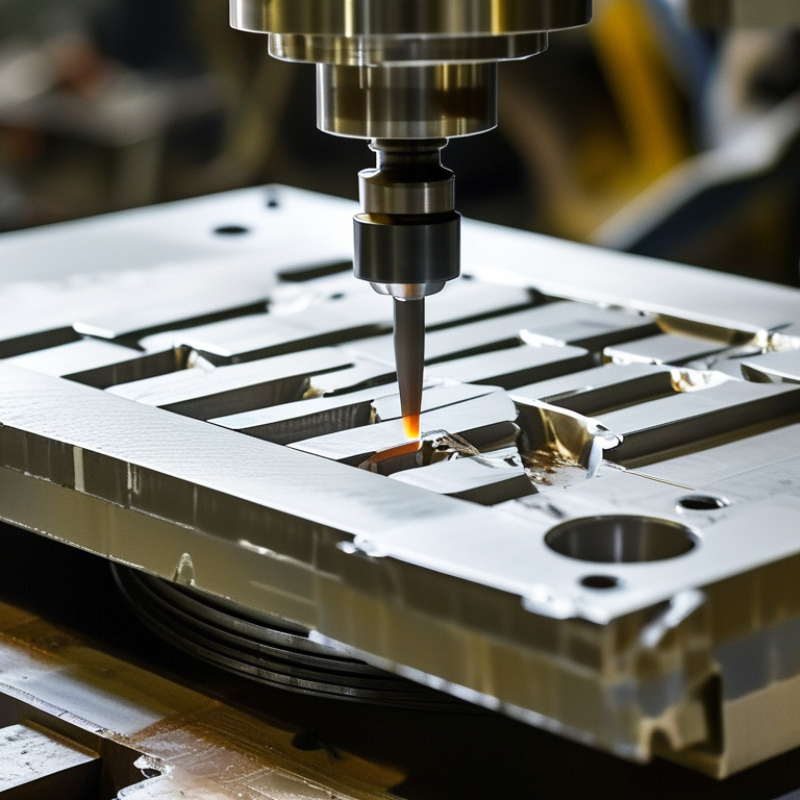
The blank moves into a stamping die mounted inside a mechanical or hydraulic press. The die contains shaped sections that guide the metal during forming. A punch pushes the sheet through, over, or against these sections. Depending on the tool design, one stroke may blank, bend, draw, or pierce the material. The press applies controlled force at a measured speed. Lubrication reduces friction and helps prevent scoring.

The process is fast, but it is not perfectly predictable. Material springback can slightly change the final angle. Excessive force may create cracks, while poor clearance can leave rough edges or large burrs. Technicians inspect sample parts with gauges and measuring tools. They may adjust die alignment, pressure, lubrication, or feed timing. This hands-on correction matters. Digital settings alone cannot reveal every change in the sheet.

After forming, parts may receive trimming, deburring, cleaning, or surface treatment. Quality checks compare dimensions against approved drawings and tolerances. Consistent feeding, sharp tooling, and scheduled maintenance improve repeatability. Even then, each new material batch deserves attention. Small differences in hardness can alter the result.

Key Machines, Tools, and Materials Used

Sheet metal stamping uses a press and a shaped die to transform flat metal into useful parts. The press drives a punch through the sheet, applying controlled force against the die. This process can create holes, bends, cups, brackets, and detailed panels.

The main machine is the stamping press. Mechanical presses suit high-speed production, while hydraulic presses offer slower, adjustable force. A complete setup may include a coil feeder, uncoiler, die set, punch, blank holder, and sensors.

Tool steels are commonly selected for dies because they resist wear. The workpiece may be low-carbon steel, stainless steel, aluminum, copper, or brass. Each material reacts differently to pressure, stretching, and springback. That difference matters.

Tips: Check material thickness before choosing the die clearance. Inspect cutting edges regularly. Poor clearance can cause burrs, cracking, or excessive tool wear. Lubrication also affects surface quality and forming force. Calipers, micrometers, height gauges, and visual inspections help verify dimensions during production. In practical workshops, small alignment errors can become large defects. A perfect setup is rare. Operators should review the first parts carefully and adjust feed length, pressure, or lubrication when results drift. One detail is often overlooked: clean tools improve consistency.

Common Types of Sheet Metal Stamping Operations

Sheet metal stamping turns flat metal sheets into precise components through controlled force, dies, and presses. The process suits materials such as steel, aluminum, copper, and stainless steel. Each operation serves a different purpose, so choosing the wrong method can create cracks, burrs, or distorted edges.

Blanking cuts a complete shape from the sheet, while piercing creates holes or slots. Bending forms angles, channels, or flanges without removing material. Deep drawing pulls a blank into a cup-like shape for housings, covers, and containers. Coining applies intense pressure to sharpen details or improve surface definition. Progressive stamping combines several operations in one die, moving the strip through multiple stations. It can improve output, but setup errors may affect every part.

Tips: Match the material thickness with the die clearance. Check tool wear regularly, especially around piercing edges. Use trial runs to inspect springback and dimensional changes. Keep the sheet clean and properly aligned. Small alignment issues become expensive quickly.

In practice, production teams often adjust press speed, lubrication, and forming pressure after testing. A design may appear correct on a drawing but behave differently in production. This is where experience matters. Not every defect comes from the machine. Sometimes, the part geometry needs another review.

What Is Sheet Metal Stamping and How Does It Work? — Common Types of Sheet Metal Stamping Operations
Operation How It Works Primary Tooling Typical Result Common Materials Key Advantages Important Considerations
1Blanking A punch forces a section of sheet metal through a die, separating the cut-out piece from the surrounding sheet. Blanking punch and die set Flat blanks used as the starting shape for later forming operations. Low-carbon steel, stainless steel, aluminum, copper, brass Produces repeatable flat shapes at high production rates. Die clearance must match the material to control burrs, edge quality, and cutting force.
2Piercing A punch removes a slug from the sheet to create a hole, slot, or other internal opening. Piercing punch, die, and stripper Round holes, slots, mounting openings, and ventilation patterns. Steel, stainless steel, aluminum, copper alloys Efficient for producing consistent openings in large quantities. Small holes may require specialized tooling; excessive clearance can increase burr formation.
3Bending The punch applies force along a bend line while the die supports the sheet, creating an angled or formed section. V-die, U-die, wiping die, or forming die Angles, channels, brackets, flanges, and folded edges. Carbon steel, stainless steel, aluminum, copper alloys Creates precise geometric features without removing material. Springback, bend radius, grain direction, and minimum flange length affect dimensional accuracy.
4Deep Drawing A punch pulls a flat blank into a die cavity, forming a hollow component whose depth is significant relative to its diameter. Drawing punch, die, blank holder, and draw beads when required Cups, cans, housings, reservoirs, and other hollow shapes. Low-carbon steel, stainless steel, aluminum, brass Produces seamless hollow parts with good repeatability. Wrinkling and tearing must be controlled through blank-holder pressure, lubrication, radii, and staged drawing.
5Redrawing A previously drawn part is drawn again through a smaller die to increase depth or reduce its diameter. Successive drawing dies and punches Deeper or narrower cylindrical and irregular hollow parts. Low-carbon steel, stainless steel, aluminum, brass Allows shapes that cannot be formed in one drawing pass. Multiple stages may be necessary, with intermediate annealing for materials that become heavily work-hardened.
6Embossing Matched tooling presses a raised or recessed pattern into the sheet without cutting through it. Male and female embossing dies Ribs, logos or markings, stiffening patterns, channels, and decorative surfaces. Steel, stainless steel, aluminum, copper alloys Improves stiffness and adds surface detail with minimal additional material. Pattern depth, material ductility, and local stretching influence surface quality and flatness.
7Coining High localized pressure compresses the sheet between closely fitting die surfaces, producing a precise impression or bend. Precision coining punch and die Sharp bends, detailed impressions, small ribs, and accurately defined features. Steel, stainless steel, aluminum, copper alloys Reduces springback and improves dimensional definition in selected areas. Requires relatively high forming force and robust tooling because the material is intentionally compressed.
8Flanging A sheet edge is bent or formed to create a projecting rim, lip, or joining surface. Flanging punch and die, or wiping-forming tooling Rims, attachment edges, reinforcement lips, and assembly flanges. Steel, stainless steel, aluminum, copper alloys Improves rigidity and provides surfaces for fastening, welding, or joining. Edge cracking can occur when the flange radius is too small or the material has limited ductility.
9Lancing The sheet is partially cut and displaced in one operation, creating a tab, vent, or opening without producing a fully separated slug. Lancing punch and die Tabs, louvers, ventilation features, and retention clips. Low-carbon steel, stainless steel, aluminum Reduces scrap compared with operations that remove a complete piece of material. Tool geometry must control the cut-and-form sequence to prevent tearing and distortion.
10Trimming Excess material is cut away from a previously formed or drawn part to establish the final perimeter. Trimming punch and die Clean, uniform edges on formed components. Steel, stainless steel, aluminum, brass Improves edge accuracy and prepares parts for assembly or secondary operations. The formed part must be supported properly to prevent distortion during trimming.
11Forming Localized or progressive pressure changes the contour of the sheet without completely separating the material. Forming dies, punches, and guide components Curves, offsets, ribs, beads, and three-dimensional contours. Steel, stainless steel, aluminum, copper alloys Creates complex profiles while maintaining material continuity. Material flow, forming limits, springback, and surface marking must be evaluated during die design.

Applications, Benefits, and Process Limitations

Sheet metal stamping converts flat metal into precise components through controlled force. A press drives a shaped die into sheet stock, causing bending, drawing, punching, or forming. Progressive dies can complete several operations during one coil-fed cycle. Common applications include automotive brackets, appliance panels, electrical enclosures, and construction hardware.

The method suits high-volume production because each stroke can produce consistent geometry. It also supports thin, strong materials with relatively low material waste when nesting is carefully planned. The World Steel Association reported approximately 1.89 billion tonnes of crude steel production in 2023, showing the enormous material base supporting formed-metal industries. For sustainability decisions, however, forming is not automatically efficient. The International Energy Agency estimates that iron and steel production creates about 7% of global energy-system emissions. Scrap recovery, lightweight design, and efficient press settings therefore matter.

Stamping has practical limits. Dies can require substantial engineering and capital, especially for complex parts or short production runs. Tight corners may cause cracking, while elastic springback can shift critical dimensions after forming. Deep-drawn parts may also thin near the wall or tear around the punch radius. These defects often appear only after tooling trials. That is the uncomfortable part. A simulation may predict acceptable forming, yet material variation, lubrication, and coil direction can still change results. Designers should allow realistic radii, inspect first-off parts, and question whether stamping remains economical at the planned volume. Data from the U.S. Department of Energy’s Industrial Decarbonization Roadmap also places iron and steel among the most energy-intensive industrial sectors, reinforcing the need to evaluate tooling, energy, and scrap together.

Sheet Metal Stamping: Typical Production Speed by Process

Sheet metal stamping uses dies and presses to cut, bend, draw, or form flat sheet into precise parts. Production speed depends on part geometry, material, thickness, tooling, and press configuration.

Indicative industrial ranges in strokes per minute (SPM). Progressive and four-slide operations can achieve high output for suitable parts, while deep drawing and fine blanking generally operate more slowly because they require controlled material flow and higher forming accuracy.

Powder Coat Booths

For those larger-sized parts, or smaller quantity runs, we have 2 independent powder coat booths and ovens. The quality, durability and affordability of today’s powder coating finishes make this the process of choice for world-class companies.

Powder coating advantages over other forms of coating are many. Materials used in the Powder coating process can be metals and non-metals that come in a multitude of thicknesses, textures, colors, etc. Another of Powder coating’s biggest advantages over conventional coatings is its ability to create finishes in many different textures. Powder Coating Booths allow us the ability to apply these advantages to large products.

Wet Paint Line

Tri-State Fabricators runs a full-service conveyor line for painting. Wet painting can provide protection or decoration to many different part styles. From start to finish, every project is easier to undergo random and point-based inspection by our skilled painting team.

Advantages to our Wet Paint Line are these lines start with product prep and ends with a thorough inspection of a high quality finished product. Our ability to complete large and small projects with a superior finish and doing so in a timely and economical fashion. This passes along the savings in production to our customers. When powder coating ins not an option, our Wet Paint Line gets the job done right the first time.

Wet Paint Booths

When the parts get big and heavy we roll-out our custom paint racks and oversize booth. By utilizing our partnerships with all the major paint brands, we can match virtually any color with wet paint.

The advantages of having access to a Wet Paint Booth are many. Large projects of many different shapes can be loaded into the booth. The Wet Paint Booth offers an environment that is much more controlled than a typical parts painting operation.

Not only are they used because of their controlled environment, but they’re are also advantageous when it comes to applying paint to parts that are needed in industries that require specialty coatings such as medical, aerospace, etc.

Military CARC

Our military forces have some very high standards when it comes to the finish of their vehicles and equipment. From the first pre-treatment step to final coat, it takes a great deal of knowledge and experience to protect the men and women of our armed forces. They deserve only the best, and Tri-State Fabricators provides it.

All of our processes are closely monitored by our staff and management teams. Both of which are highly trained in the processes of metal fabrication and finishing. Tri-State Fabricators’ goal is to always fully satisfy each and every customer, including the military. We will always put a 110% into what we do.

Glass-Bead Blasting

Abrasive media blasting is an excellent way to remove old paint, rust, and increase the paint/powder adhesion. Glass beads produce a much smoother and brighter finish than angular abrasives; leaving the part clean yet without any dimensional change. Chemically inert and environmentally friendly, we can recycle our beads approximately 30 times; making them a more preferred method of metal cleaning or surface finishing.

Advantages to Glass Bead Blasting are many. Glass bead blast media is used when a project is needing rough surfaces need to become smooth for applications of coatings such as paint. It is typically used to clean paint and rust from a product surface without deforming the surface it is being used on. Overall, compared to many other blasting media, Glass Bead Blasting is a very economical choice and those savings are always passed on to our customers.

Part Washing

Tri-State Fabricators utilize a zinc phosphate wash to clean and etch the material to ensure the best paint adhesion possible. The unique design of our 3-stage wash system does the work like a 5-stage. From Cleaning and rinsing to conversion coating and post-treatment, Our Part Washing process is a complete service and works throughout the fabrication service and the finishing service.

Along with the previously mentioned benefits, Curing is a vital chemical reaction that leaves the product finish hard and relatively safe from mild abrasion and aggressive corrosion. This process can be done in more than one way; ambient air-dry or in curing ovens at temps that exceed 240°.

Burn-Off Oven

From fixing paint mistakes (someone else’s of course) to simply cleaning our paint line hooks, our burn-off oven is put to good use. After a quick burn-off, a little clean up, and a fresh coat of paint, your parts will look better than new.

Why does our Burn-Off Oven work so well? Because super heating the air around parts turns the materials into ashes. From paint and powder coatings to rubber and machining oils, high temps do the job without degrading the integrity of the part.

Masking

Masking is a vital part of producing high quality products. We have die-cut masking patterns to protect machined surfaces as well as a wide range of plugs and caps to protect threaded holes and bolts. We provide permanent and temporary masking.

Masking allows the selected sections of a product to be protected from a fabrication or finishing service. This can be with both chemicals when etching and tapes, paints when only finishing just a section of the product. Masking is great in aiding the customization process of a project.

Screen Printing

Screen printing is a photographic process that transfers artwork onto a porous nylon screen which allows colored ink to flow through the screen and be deposited on an aluminum or plastic component. We can generally have just about any design created onto a screen for your parts.

Some of the advantages of Screen Printing are, brand recognition for your business displaying on your products, assembly instructions, product warnings/hazards, etc. Tri-State Fabricators produces Screen Printing of the highest quality so you know it’s durable.

Metal Finishing

Metal Finishing is the art of treating the exterior portion of product, often metal but can also be made of other materials, so that the surface is clean and free of any debris. Then the process of applying coats or either paint of powder coat takes place. This coating process improves the quality of the product in both appearance and resistance to wear and corrosion.

Tri-State Fabricators, Inc., understands that a project typically isn’t complete until a high-quality finish has been added to your product. This is why our painting and powder coating teams continuously inspect the products throughout the Metal Finishing process.