Choosing the right cnc machine can shape your production costs, quality, and future capacity. It is not simply a choice between three-axis, five-axis, or turning equipment. The decision begins with your actual work.
Consider your materials, part dimensions, tolerances, batch sizes, and expected production hours. A small aluminum bracket may need speed and flexible tooling. A large steel housing may demand rigidity, torque, and a generous work envelope. Measure the parts on your shop floor. Do not rely only on supplier brochures.
Dr. Tony Schmitz, a recognized machining researcher, offers a useful reminder: “The machine tool is the heart of manufacturing.” His point remains practical. A powerful spindle cannot fix poor fixturing, weak programming, or inadequate operator training. The complete process matters.
Review spindle speed, horsepower, axis travel, positioning accuracy, control software, tool capacity, and coolant management. Check service response times, spare-parts availability, and training support. A cheaper cnc machine may become expensive when downtime interrupts delivery schedules. That lesson is easy to overlook.
Your workforce also deserves attention. An advanced machine may produce excellent results, yet remain underused without skilled programmers and operators. Consider a machine that your team can confidently maintain and improve. Growth plans matter, but unrealistic forecasts can waste capital.
No checklist is perfect. I have seen buyers focus heavily on purchase price, then regret ignoring installation space and electrical requirements. Compare real quotations, request sample cuts, and inspect similar machines in active workshops. The right choice should fit today’s work while leaving room for tomorrow’s demands.
Choosing a CNC machine should begin with your actual production plan, not a machine’s impressive specifications. Define the parts you will make, their dimensions, monthly quantity, and required tolerance. A prototype shop may need flexibility, while a production line may value repeatability and cycle time.
Material choice changes the decision. Aluminum usually requires different cutting speeds and chip control than stainless steel. Plastics may need sharp tooling, low heat, and careful clamping. Hard materials demand greater machine rigidity, spindle torque, and reliable coolant management. Record your largest workpiece and its heaviest fixture. A small error here can make an expensive machine impractical.
Tips: Create a simple part list. Include size, material, quantity, and tolerance. Ask for a test cut using your hardest material. Check the finished surface, dimensional accuracy, chip removal, and setup time. Also calculate tooling, workholding, maintenance, training, and electrical costs. The purchase price is only one part of ownership.
Do not trust averages alone. A machine that handles most jobs may struggle with your most demanding part. In real workshops, that one difficult component can control scheduling and profit. I have seen teams select high speed, then discover they lacked enough torque for deeper cuts. Leave room for future materials and larger fixtures, but avoid paying for capacity you cannot support. Your production goals should guide every technical requirement.
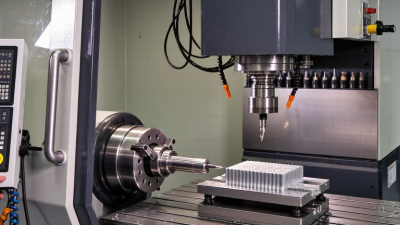
How to Choose the Right CNC Machine for Your Business?
Match the machine to the process, not the other way around. A three-axis mill suits plates, brackets, and simple pockets. It may struggle with deep cavities or angled surfaces. A four- or five-axis machine reduces repositioning and improves access to complex parts. However, added flexibility also brings higher programming and inspection demands.
Turning work usually requires a CNC lathe with suitable tooling and reliable workholding. Choose live tooling when one setup must include drilling, milling, and turning. For flat panels, signs, or sheet materials, a CNC router may offer faster cutting and a larger working area. Confirm the spindle speed, torque, travel limits, and material compatibility before comparing prices. Small details matter.
Think about your real production pattern. A prototype shop may value quick setup and flexible fixturing. Repetitive production may justify automatic tool changes, probing, and chip management. Measure your largest workpiece, tightest tolerance, and expected monthly volume. Then discuss cycle times with an experienced machinist or process engineer. Their practical feedback can reveal hidden costs, such as custom fixtures, coolant handling, training, and inspection equipment. I would also test a sample part before purchasing. A demonstration can look impressive while masking awkward loading or difficult access. My own preference would be to leave capacity unused rather than run every machine at its limit. That choice costs more initially. It can reduce errors and rushed maintenance later.
Matching common CNC machine types to intended manufacturing processes
The chart uses a practical 1–5 suitability rating, where 5 indicates that a machine type is commonly well suited to the process and 1 indicates limited suitability. CNC mills are typically selected for prismatic parts, CNC lathes for cylindrical components, CNC routers for large flat materials, and EDM machines for intricate features in electrically conductive hard materials.
Choosing the right CNC machine begins with your actual production needs, not a catalog headline. Measure your largest workpiece, including clamps, fixtures, and tool clearance. A machine rated for a 500 mm part may feel cramped after setup equipment is installed. Leave working space.
Cutting capacity also depends on material and operation. Aluminum milling requires different spindle power from hardened steel turning. Review spindle speed, torque, motor power, axis travel, and table load together.
I once underestimated fixture weight, which reduced usable capacity and slowed production. That mistake was expensive.
Accuracy requires careful reading. Check positioning accuracy, repeatability, thermal stability, and measured test conditions. A tight specification may apply only to a short cycle in a controlled room. Request inspection records and run a sample part using your tools, material, and tolerances. Measure holes, flatness, and surface finish after the machine reaches operating temperature. Numbers can mislead.
Automation should solve a clear labor or consistency problem. Tool changers, probing systems, bar feeders, pallet systems, and chip management can reduce interruptions. However, complex automation may create new maintenance demands. For short runs, reliable manual loading may be more practical. For continuous production, automatic part handling can protect cycle times. Check software compatibility, operator training, service response, and spare-part access before purchase. A perfect choice is rare. Revisit your assumptions after a real production trial.
Choosing the right CNC machine starts with the total cost, not the purchase price. A low-cost unit may require expensive tooling, software, installation, and operator training. Add electricity, coolant, maintenance, and waste disposal to your worksheet. These expenses often become visible after production begins. That is uncomfortable, but realistic. Ask suppliers for service intervals and replacement-part estimates. Then compare those figures with your expected monthly workload.
Measure the workspace before reviewing machine specifications. Record door widths, ceiling height, floor strength, and access for material handling. Leave room for loading stock and opening electrical panels. A machine that fits tightly may still disrupt daily work. Chips can spread several meters, especially during aggressive cutting. Plan space for extraction, storage, inspection, and safe movement. Measure twice.
Operating demands deserve equal attention. Consider material hardness, part size, tolerances, batch frequency, and required spindle hours. A compact machine may suit prototypes but struggle with continuous production. A larger model can waste floor space and energy when used occasionally. Ask operators to test controls and loading steps, not only cutting performance. Their feedback may reveal awkward doors, poor visibility, or slow setup. My own estimates have been wrong when I ignored cleaning time. Build a small pilot schedule, record actual cycle times, and revise the budget before committing.
A CNC machine is only as reliable as the support behind it. Ask who answers technical calls, how quickly they respond, and whether help is available in your time zone. Request written service terms, spare-parts lead times, and escalation procedures. A polished demonstration can still hide weak after-sales support. Ask for a live troubleshooting session before purchasing.
Training deserves equal attention. Operators should practice setup, tool offsets, probing, alarms, and safe recovery on the actual machine. The World Economic Forum’s Future of Jobs Report 2023 estimates that 44% of workers’ skills may be disrupted within five years. Therefore, include refresher training, not only installation lessons. Short videos help, but hands-on practice is better. Mistakes will happen.
Maintenance planning should include lubrication schedules, inspection points, remote diagnostics, and realistic downtime estimates. The U.S. Department of Energy reports that predictive maintenance can reduce maintenance costs by 25–30% and downtime by 35–45%, although results vary by application. Verify whether sensors and software support those capabilities. Finally, test future scalability. Can the control system accept additional axes, automation, quality monitoring, or connected production data? Deloitte’s 2024 smart manufacturing survey found that 86% of manufacturers expect smart manufacturing to become a major competitiveness driver within five years. Choose an upgrade path, not just a machine. A spreadsheet may show capacity, but it cannot reveal every training gap or service delay.
| CNC Machine Type | Best-Fit Applications | Typical Materials | Typical Working Envelope | Typical Axis Configuration | Typical Spindle Range | Expected Accuracy Level | Support and Training Requirements | Maintenance Profile | Scalability Potential | Business Fit |
|---|---|---|---|---|---|---|---|---|---|---|
| 3-Axis Vertical Machining Center | General-purpose prismatic parts, fixtures, prototypes, and small-to-medium production runs | Aluminum, steel, stainless steel, brass, engineering plastics | Approximately 500–1,000 mm X-axis travel; varies significantly by model | 3 linear axes; optional rotary table may add a fourth axis | Approximately 6,000–15,000 rpm | High Often suitable for tight-tolerance production when properly installed and maintained |
Operator training, CAM training, workholding guidance, and application support are strongly recommended | Daily cleaning and inspection; lubrication, coolant management, spindle checks, and periodic geometric verification | High Can add probing, automation, rotary axes, and higher-capacity tooling |
Strong first CNC investment for diversified job shops and manufacturers |
| 4-Axis Machining Center | Parts requiring machining around multiple sides without repeated manual repositioning | Aluminum, steel, stainless steel, brass, plastics, and selected difficult alloys | Approximately 500–1,000 mm X-axis travel, plus rotary workholding capacity | 3 linear axes plus one rotary axis | Approximately 6,000–15,000 rpm | High Improves positional consistency and reduces setup-related variation |
Requires advanced setup, rotary-axis programming, post-processor validation, and operator training | Standard machine care plus rotary-axis lubrication, backlash checks, and additional alignment verification | High Can support more complex parts and reduce labor per component |
Suitable for growing businesses with recurring multi-sided components |
| 5-Axis Machining Center | Complex aerospace, medical, energy, mold, impeller, and contoured components | Aluminum, titanium, stainless steel, tool steel, nickel alloys, composites | Commonly 300–800 mm linear travel with a rotary/tilting table or swivel head | Three linear axes plus two simultaneous rotary axes | Approximately 8,000–24,000 rpm | Very High Requires controlled conditions, qualified processes, and reliable calibration |
Highest training requirement; needs advanced CAM, post-processing, collision avoidance, and process verification | More frequent calibration, rotary-axis inspection, thermal management, and preventive maintenance | Very High Expands part capability and can reduce fixtures and setups |
Best for high-value complex work where capability offsets higher investment and training costs |
| CNC Turning Center | Shafts, bushings, threaded parts, flanges, hydraulic components, and rotational components | Steel, stainless steel, aluminum, brass, titanium, plastics | Typical turning diameter of 200–500 mm; bar capacity depends on configuration | 2-axis turning; live tooling and a Y-axis may be added | Approximately 3,000–6,000 rpm for many general-purpose models | High Well suited to repeatable diameter, thread, and face machining |
Training should cover tool offsets, chucking, threading, bar feeding, and workholding safety | Chip removal, chuck and collet care, lubrication, coolant control, turret checks, and spindle inspection | High Can add live tooling, Y-axis capability, bar feeders, and automatic part handling |
Efficient choice when most revenue comes from rotational parts |
| CNC Router | Large-format cutting, signage, woodworking, plastic fabrication, and non-ferrous sheet work | Wood, MDF, acrylic, plastics, aluminum sheet, foam, and composite panels | Often 1,200–3,000 mm or more in X-axis travel | 3 axes; optional rotary or tangential cutting configurations | Approximately 12,000–24,000 rpm | Medium to High Depends on frame rigidity, tooling, material, and table design |
Training should include dust extraction, tool selection, nesting software, workholding, and material handling | Dust removal, guide and rack cleaning, lubrication, spindle checks, vacuum-table inspection, and alignment checks | High Can expand through larger tables, automatic tool changing, vacuum systems, and nesting automation |
Good fit for large panels, short cycles, and non-metal production environments |
| CNC Fiber Laser Cutter | Rapid profiling of sheet metal, brackets, panels, enclosures, and flat components | Mild steel, stainless steel, aluminum, brass, and selected reflective metals | Common bed sizes include approximately 1,500 × 3,000 mm and larger | 2-axis motion with controlled laser height and optional rotary or tube-cutting attachments | Laser power is commonly specified from approximately 1–12 kW for industrial sheet cutting | High Edge quality depends on material, thickness, gas, optics, and process settings |
Requires laser safety training, nesting software skills, assist-gas knowledge, and process parameter development | Optics and nozzle inspection, lens cleaning, chiller checks, filtration, gas-system checks, and enclosure safety testing | Very High Can add automation, loading systems, tube cutting, and production monitoring |
Strong option for sheet-metal businesses prioritizing throughput and reduced setup time |
| CNC EDM Wire-Cut Machine | Precision dies, punches, intricate profiles, hardened materials, and narrow slots | Tool steel, hardened steel, carbide, copper alloys, and conductive materials | Typical workpiece capacity is approximately 300–800 mm; varies by model | Usually 4-axis wire control for tapered and contoured cuts | Cutting performance is specified by cutting speed rather than spindle rpm | Very High Suitable for intricate profiles and hardened materials when properly calibrated |
Requires specialized programming, threading, dielectric management, and precision inspection training | Deionized-water quality control, filtration, wire-system inspection, guides, conductivity, and periodic calibration | Medium to High Expands precision capability but usually serves a specialized process family |
Appropriate when hardened materials and complex 2D or tapered profiles justify specialized equipment |


For those larger-sized parts, or smaller quantity runs, we have 2 independent powder coat booths and ovens. The quality, durability and affordability of today’s powder coating finishes make this the process of choice for world-class companies.
Powder coating advantages over other forms of coating are many. Materials used in the Powder coating process can be metals and non-metals that come in a multitude of thicknesses, textures, colors, etc. Another of Powder coating’s biggest advantages over conventional coatings is its ability to create finishes in many different textures. Powder Coating Booths allow us the ability to apply these advantages to large products.
Tri-State Fabricators runs a full-service conveyor line for painting. Wet painting can provide protection or decoration to many different part styles. From start to finish, every project is easier to undergo random and point-based inspection by our skilled painting team.
Advantages to our Wet Paint Line are these lines start with product prep and ends with a thorough inspection of a high quality finished product. Our ability to complete large and small projects with a superior finish and doing so in a timely and economical fashion. This passes along the savings in production to our customers. When powder coating ins not an option, our Wet Paint Line gets the job done right the first time.
When the parts get big and heavy we roll-out our custom paint racks and oversize booth. By utilizing our partnerships with all the major paint brands, we can match virtually any color with wet paint.
The advantages of having access to a Wet Paint Booth are many. Large projects of many different shapes can be loaded into the booth. The Wet Paint Booth offers an environment that is much more controlled than a typical parts painting operation.
Not only are they used because of their controlled environment, but they’re are also advantageous when it comes to applying paint to parts that are needed in industries that require specialty coatings such as medical, aerospace, etc.
Our military forces have some very high standards when it comes to the finish of their vehicles and equipment. From the first pre-treatment step to final coat, it takes a great deal of knowledge and experience to protect the men and women of our armed forces. They deserve only the best, and Tri-State Fabricators provides it.
All of our processes are closely monitored by our staff and management teams. Both of which are highly trained in the processes of metal fabrication and finishing. Tri-State Fabricators’ goal is to always fully satisfy each and every customer, including the military. We will always put a 110% into what we do.
Abrasive media blasting is an excellent way to remove old paint, rust, and increase the paint/powder adhesion. Glass beads produce a much smoother and brighter finish than angular abrasives; leaving the part clean yet without any dimensional change. Chemically inert and environmentally friendly, we can recycle our beads approximately 30 times; making them a more preferred method of metal cleaning or surface finishing.
Advantages to Glass Bead Blasting are many. Glass bead blast media is used when a project is needing rough surfaces need to become smooth for applications of coatings such as paint. It is typically used to clean paint and rust from a product surface without deforming the surface it is being used on. Overall, compared to many other blasting media, Glass Bead Blasting is a very economical choice and those savings are always passed on to our customers.
Tri-State Fabricators utilize a zinc phosphate wash to clean and etch the material to ensure the best paint adhesion possible. The unique design of our 3-stage wash system does the work like a 5-stage. From Cleaning and rinsing to conversion coating and post-treatment, Our Part Washing process is a complete service and works throughout the fabrication service and the finishing service.
Along with the previously mentioned benefits, Curing is a vital chemical reaction that leaves the product finish hard and relatively safe from mild abrasion and aggressive corrosion. This process can be done in more than one way; ambient air-dry or in curing ovens at temps that exceed 240°.
From fixing paint mistakes (someone else’s of course) to simply cleaning our paint line hooks, our burn-off oven is put to good use. After a quick burn-off, a little clean up, and a fresh coat of paint, your parts will look better than new.
Why does our Burn-Off Oven work so well? Because super heating the air around parts turns the materials into ashes. From paint and powder coatings to rubber and machining oils, high temps do the job without degrading the integrity of the part.
Masking is a vital part of producing high quality products. We have die-cut masking patterns to protect machined surfaces as well as a wide range of plugs and caps to protect threaded holes and bolts. We provide permanent and temporary masking.
Masking allows the selected sections of a product to be protected from a fabrication or finishing service. This can be with both chemicals when etching and tapes, paints when only finishing just a section of the product. Masking is great in aiding the customization process of a project.
Screen printing is a photographic process that transfers artwork onto a porous nylon screen which allows colored ink to flow through the screen and be deposited on an aluminum or plastic component. We can generally have just about any design created onto a screen for your parts.
Some of the advantages of Screen Printing are, brand recognition for your business displaying on your products, assembly instructions, product warnings/hazards, etc. Tri-State Fabricators produces Screen Printing of the highest quality so you know it’s durable.
Metal Finishing is the art of treating the exterior portion of product, often metal but can also be made of other materials, so that the surface is clean and free of any debris. Then the process of applying coats or either paint of powder coat takes place. This coating process improves the quality of the product in both appearance and resistance to wear and corrosion.
Tri-State Fabricators, Inc., understands that a project typically isn’t complete until a high-quality finish has been added to your product. This is why our painting and powder coating teams continuously inspect the products throughout the Metal Finishing process.