What is Y-Waveguide Modulator and How Does it Work?
The Y-Waveguide Modulator is a crucial component in optical communication systems. Its unique design significantly improves modulation efficiency. Reports from industry experts suggest that the global optical modulator market is projected to reach USD 1.5 billion by 2026, reflecting its growing importance in telecommunications.
Y-Waveguide Modulators utilize innovative waveguide structures to enhance performance. These devices allow for precise control over light signals. A recent study indicated that they deliver modulation speeds exceeding 40 Gbps. This capability is essential for next-generation data centers and high-speed internet applications.
Despite advances, challenges remain. The complexity of integration and manufacturing can hinder widespread adoption. Additionally, optimizing performance while reducing costs is a key concern. Continued research into these areas will be vital for the future of Y-Waveguide Modulators. Their role in enabling faster and more reliable communication is clear, but industry stakeholders must address these lingering issues.
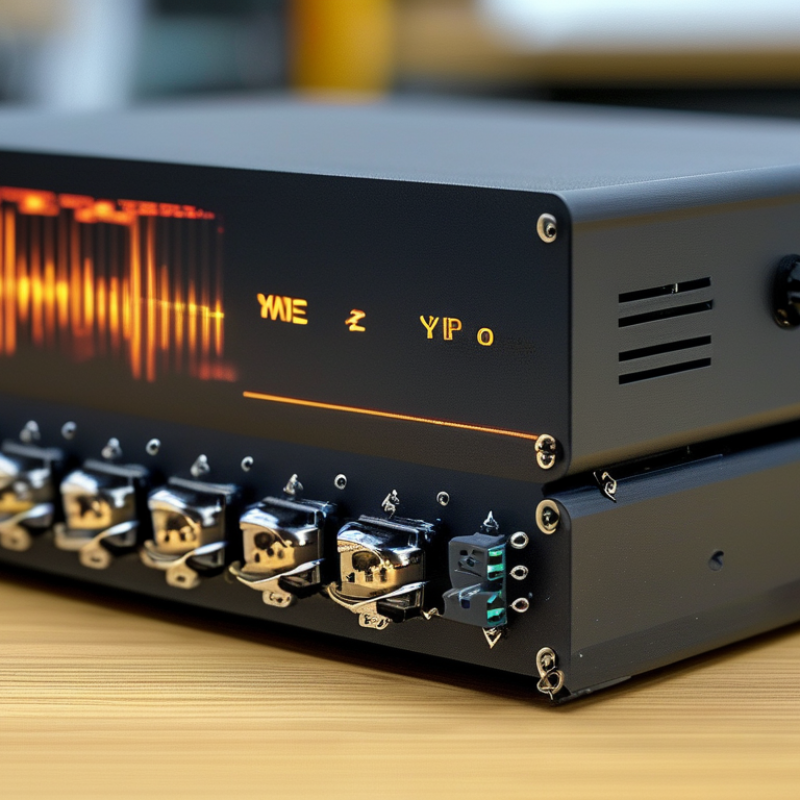
Y-Waveguide Modulator: An Overview of Its Functionality
The Y-waveguide modulator is a crucial component in modern photonics technology. It routes light through a waveguide and alters its properties based on electrical signals. This ability enables fast modulation of light, which is essential for applications in telecommunications and optical data processing.
In functionality, the Y-waveguide modulator operates by guiding light through Y-shaped structures. This design allows for effective manipulation of the electromagnetic field. When an electrical signal is applied, the waveguide's refractive index changes. As a result, light is modulated precisely in amplitude and phase. The material choice impacts performance, emphasizing the need for reliable materials.
However, challenges in manufacturing and material properties can lead to inconsistencies. Every fabricating process may not yield the same results. Therefore, it's crucial to continually test and refine production techniques. Understanding these imperfections is key to enhancing the performance and reliability of Y-waveguide modulators.
Principle of Operation of Y-Waveguide Modulators
Y-Waveguide modulators are critical devices in the field of optical communication. They manipulate light to encode data, enabling high-speed transmission. The principle of operation involves several steps, primarily focusing on the interaction of light with electric fields within the waveguide.
In a Y-Waveguide modulator, light enters a structure where it encounters a varying electric field. This electric field influences the refractive index of the medium. As a result, the phase of light changes, allowing for data modulation. The Y-structure efficiently splits and combines light, supporting advanced modulation formats. This configuration enhances performance, showing potential for high bandwidth and low loss.
**Tip:** Always ensure proper alignment of the light source and modulator. Misalignment can lead to significant losses in signal quality.
Another crucial aspect is the material choice for waveguide fabrication. Common materials include lithium niobate or silicon, each with distinct properties. The choice impacts efficiency, bandwidth, and overall performance. Understanding these materials is essential for optimal designs.
**Tip:** Experimentation can lead to new insights. Testing different configurations helps refine designs and improve functionality.
This technology is evolving rapidly. Innovations result in better integration with existing systems. Staying informed about advancements is key for professionals in the field. Embracing these changes fosters growth and improved solutions in optical communication.
Key Components of a Y-Waveguide Modulator
A Y-waveguide modulator is a vital device in photonics, enabling precise control of light signals. At its core, a Y-waveguide modulator relies on specific components to function effectively. These components work together to modulate light passing through the waveguide.
One key component is the Y-junction. It splits the incoming optical signal into two paths, allowing for individual modulation. This design enhances the flexibility and efficiency of the modulation process. Another essential element is the electro-optic material, which converts electrical signals into optical changes. This material must exhibit high responsiveness and low distortion to maintain signal integrity.
Finally, the electrodes play a crucial role by applying the electric field necessary for modulation. Their design must ensure uniform distribution of the field across the waveguide. However, achieving perfect alignment is challenging and may lead to inconsistencies in performance. Continuous refinement of these components is necessary for improving the effectiveness of Y-waveguide modulators. The intricacies involved make this a fascinating area of research in optical technology.
Applications of Y-Waveguide Modulators in Communication Systems
Y-Waveguide modulators play a crucial role in modern communication systems. These devices convert electrical signals into light for high-speed data transmission. With the growing demand for bandwidth, Y-waveguide modulators have become essential in fiber-optic communications. According to a report by MarketsandMarkets, the optical modulator market is expected to reach $3 billion by 2024, driven by advancements in communication technologies.
The applications of Y-waveguide modulators span various sectors. They are widely used in telecommunications, data centers, and even medical systems. High-speed internet relies heavily on these devices for efficient data routing. A report from Grand View Research predicts that the fiber-optic communication market will expand at a CAGR of 10% from 2021 to 2028. This growth highlights the increasing reliance on Y-waveguide modulators for effective data transmission.
Yet, challenges persist. The fabrication of these modulators often involves complex processes. Ensuring consistency in performance can be difficult. Issues such as thermal management and alignment during assembly have been noted. This underscores the need for ongoing research and development in the field. The quest for reliability in performance remains an area worth exploring.
Advantages and Challenges of Using Y-Waveguide Modulators
Y-waveguide modulators serve a crucial role in photonic integrated circuits. These devices leverage the unique properties of waveguides to manipulate light for applications in telecommunication and data transfer. One of the key advantages of Y-waveguide modulators is their efficiency. According to a recent report from the International Telecommunication Union, optimized modulators can achieve modulation speeds of up to 40 Gbps. This capability supports rising bandwidth demands.
However, employing Y-waveguide modulators isn't without challenges. Their fabrication can be complex and costly. The precision required often leads to longer production times, which may deter some manufacturers. Additionally, thermal stability remains a concern. Fluctuations in temperature can impact modulation performance, affecting data integrity. The research published in the Journal of Optical Communications illustrates a significant reduction in performance at elevated temperatures.
Despite these drawbacks, the potential of Y-waveguide modulators is significant. They enable high-density integration of optical components, offering much-needed solutions for modern telecommunication infrastructures. Industry experts argue that as technology advances, overcoming these challenges will be pivotal in shaping the future of optical communication. Balancing efficiency, cost, and stability will define the next generation of Y-waveguide modulators.
What is Y-Waveguide Modulator and How Does it Work? - Advantages and Challenges of Using Y-Waveguide Modulators
| Feature | Description | Advantages | Challenges |
| Operating Principle | Y-waveguide modulators utilize Y-shaped waveguides to manipulate light for signal modulation. | High efficiency, compact size, and integration capability with photonic circuits. | Fabrication complexity and sensitivity to environmental variations. |
| Applications | Used in communication systems, signal processing, and optical networks. | Suitable for high-speed data transmission and broadband communication. | Requires advanced technology for implementation and optimization. |
| Modulation Speed | Can achieve high modulation speeds necessary for modern applications. | Enables greater bandwidth efficiency and faster data rates. | May face limitations due to thermal effects and saturation. |
| Integration | Designed for seamless integration with other photonic devices. | Reduces overall system size and improves performance. | Challenges in interfacing with electronic components. |





