


What Is a WPC Decking Panel and Is It Worth It?

A WPC Decking Panel combines wood fibers, recycled or new plastic, and stabilizing additives. It is pressed into boards that resemble natural timber, but it behaves differently under sunlight, rain, and daily foot traffic. Many homeowners choose it for patios, balconies, pool surrounds, and garden walkways. The appeal is clear: fewer splinters, consistent color, and less routine painting than traditional wood.

Still, appearance does not tell the whole story. A quality panel should have a stable core, accurate dimensions, and a surface designed to resist moisture and staining. Capped products usually offer stronger protection than uncapped boards. However, they may cost more. During installation, small expansion gaps matter because composite materials can move with temperature changes. Dark boards can also become uncomfortably hot in direct summer sunlight. That detail is easy to overlook.

Is it worth the investment? The answer depends on climate, budget, expected lifespan, and installation quality. A cheaper board may look attractive at first, then fade or warp sooner. Poor joist spacing can create movement underfoot, even when the panel itself is well made. It is not a miracle material. Regular sweeping, prompt stain removal, and proper drainage still matter. Buyers should compare test data, warranty terms, slip resistance, and independent installer advice. Manufacturer claims deserve careful checking. In the following discussion, we will examine how WPC decking panels are made, where they perform well, and where their limitations become visible. The honest answer may be less exciting, but it is more useful.
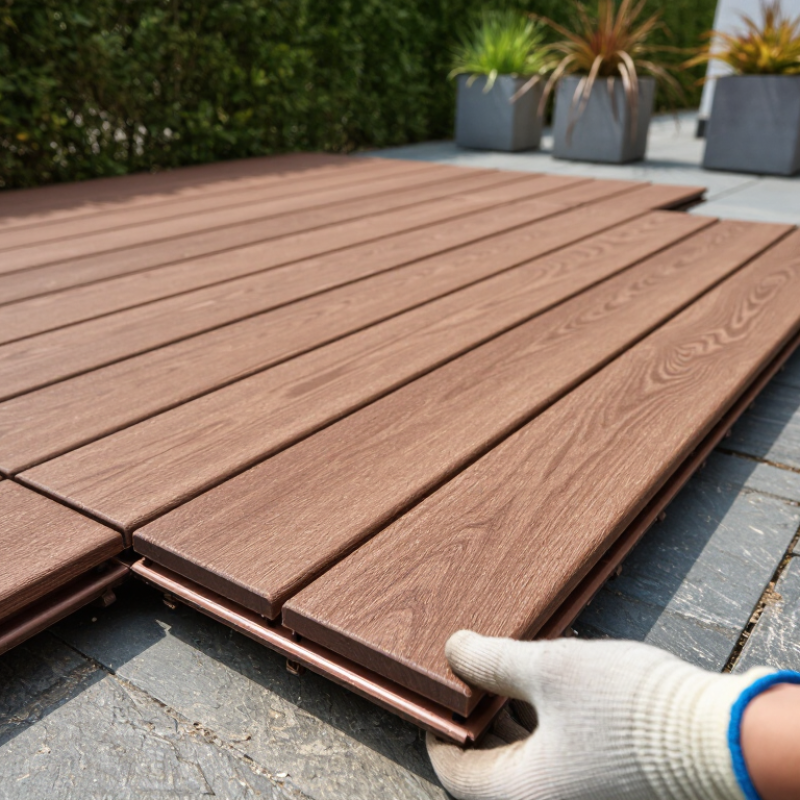
What Is a WPC Decking Panel and Is It Worth It?

What Is a WPC Decking Panel?

A WPC decking panel is a board made from wood fibers and thermoplastic polymers. Manufacturers also add pigments, stabilizers, and bonding agents. The result looks similar to timber but behaves differently outdoors.

WPC panels are available in solid or hollow profiles. Solid boards feel heavier and often resist impact better. Hollow boards reduce weight but need careful support beneath the surface.

During installation, joist spacing, drainage, and expansion gaps matter. Panels can expand in hot weather, especially when exposed to direct sunlight. Ignoring this detail may cause raised edges or uneven joints. That is not a small problem.

From practical installation experience, WPC usually needs less routine care than natural wood. It does not require regular staining, and it resists rot, insects, and moisture better than untreated timber. However, it is not maintenance-free. Dust, grease, and standing water can still create slippery or stained areas. Dark colors may also become uncomfortable under strong summer sun.

A reliable assessment should include the panel’s slip rating, fire classification, surface warranty, and tested load capacity. Check the substructure too. A high-quality board can perform poorly on weak or poorly aligned joists. I once underestimated heat movement on a sunny terrace, and the tight joints later needed correction. WPC can be worth considering for patios, balconies, and garden paths, but climate, drainage, foot traffic, and installation quality should guide the decision.


How Are WPC Decking Panels Made?

A WPC decking panel combines wood fibers with thermoplastic polymers and performance additives. Manufacturers usually dry the wood first, because excess moisture can create bubbles and weak spots. The fibers are then ground into a consistent size. This step matters more than many buyers expect.

The prepared fibers, polymer, pigments, and stabilizers enter a heated extruder. Inside, rotating screws blend and soften the materials under controlled heat. The mixture passes through a shaped die, forming a continuous decking profile.

Rollers cool the profile and help maintain its dimensions. Surface embossing can add a wood-like grain and improve underfoot texture. Some panels receive a protective outer layer, while others rely on the blended core.

Quality checks may include moisture testing, bending tests, color inspection, and repeated water exposure. Results can vary, especially when recycled materials change between production batches. That deserves honest attention.

Tips:

Ask about the fiber source, polymer type, and moisture resistance. Request test data for slip resistance, fading, and load performance. Inspect a full-size sample outdoors, not only a small showroom piece. A slightly uneven texture is not always a defect, but severe warping suggests poor manufacturing control. Proper spacing during installation also matters, because panels expand and contract with temperature. Even a well-made WPC panel can fail when drainage is blocked or the supporting frame is weak.

What Are the Main Features of WPC Decking Panels?

WPC decking panels combine wood fibers with recycled plastic and performance additives. They are shaped under heat and pressure for consistent size and texture. This composition helps resist moisture, insects, cracking, and surface splinters. Unlike untreated timber, WPC usually needs no staining or sealing. It still expands and contracts with temperature changes. Dark panels can become hot under strong sunlight. Their surface may also fade slightly during the first season. These details are easy to overlook.

Tips: Check joist spacing before installation. Leave the specified expansion gaps. Keep the drainage path clear. Use corrosion-resistant fixings. Do not improvise. A small spacing mistake can create movement, noise, or uneven joints. Cleaning with mild soap and water usually removes dust, leaves, and light stains. Avoid aggressive pressure washing, which may roughen the surface.

In practical outdoor projects, WPC offers a useful balance between timber’s appearance and lower routine maintenance. Many panels provide a textured surface for better underfoot grip, especially when the deck is damp. However, “low maintenance” does not mean maintenance-free. Food oil, standing water, and trapped dirt can still mark the boards. Good ventilation beneath the deck remains essential. I have found that installation quality often matters more than the panel’s appearance in a sample. A well-finished deck feels stable and quiet; a poorly supported one may disappoint, even with a high-quality material.

How Do WPC Decking Panels Compare with Other Decking Materials?

WPC decking panels combine wood fibers with recycled or virgin plastic and binding additives. In practical deck assessments, their main advantage is predictable maintenance. They resist rot, insects, and surface cracking better than untreated timber. A broom, mild cleaner, and occasional inspection are usually enough. However, WPC is not maintenance-free. Dark boards can become hot under strong sunlight, and poor-quality products may fade or swell at the edges.

Compared with natural wood, WPC offers more consistent color and fewer splinters. Wood feels warmer and often looks more authentic, but it needs sealing, staining, and careful moisture control. Hardwood can last for years, although its price and responsible sourcing require attention. Pressure-treated softwood is cheaper, yet it may twist, split, or develop rough patches as it ages.

PVC decking generally handles moisture well and weighs less than WPC. Still, it can look more artificial and may expand noticeably with temperature changes. Aluminum decking provides excellent durability and fire resistance, but it can feel cold, sound hollow in rain, and cost more. WPC sits between these choices: less upkeep than wood, more natural texture than PVC, and lower cost than many metal systems.

Installation details matter. Leave the manufacturer’s expansion gaps, use proper joist spacing, and prevent standing water. I would not choose WPC solely from a color sample. Check heat exposure, drainage, local climate, and warranty terms first. Even then, performance can vary between batches. That deserves honest consideration.

Is a WPC Decking Panel Worth the Investment?

Is a WPC decking panel worth the investment? Often, yes, but the answer depends on climate, usage, and installation quality. WPC combines wood fiber with polymer, creating a surface that handles routine moisture better than untreated timber. Grand View Research valued the global wood-plastic-composites market at approximately $7.06 billion in 2023. Its analysis projects nearly 7% annual growth from 2024 to 2030. This figure covers multiple applications, not decking alone. Still, it shows growing market confidence in the material.

The financial advantage becomes clearer when time matters. WPC panels usually need washing, inspection, and occasional fastening checks. They normally do not require annual staining. Timber decking may need repeated sealing, sanding, and board replacement. The 2024 Houzz & Home Study also identifies outdoor improvements as an active renovation category among homeowners. However, project budgets vary sharply by region and deck size. Do not trust a simple price-per-panel comparison.

Installation details can decide the outcome. ASTM D7032-21 sets performance requirements for composite and plastic lumber used in deck boards. Buyers should also check joist spacing, drainage, slip resistance, and verified load information. Dark panels can become uncomfortable under direct summer sun. Scratches may also remain visible. A low-quality frame can undermine an expensive surface. WPC is not maintenance-free. That phrase deserves skepticism. For a busy household, the investment may be worthwhile, but the substructure and installation deserve equal attention.

What Is a WPC Decking Panel and Is It Worth It?

A comparison of typical service life and annual maintenance requirements for common decking materials.

WPC decking generally offers a longer service life than pressure-treated wood while requiring less frequent maintenance. The figures use midpoint estimates from commonly reported industry ranges: approximately 25 years for WPC, 12.5 years for pressure-treated wood, and 30 years for PVC decking. Maintenance events refer to typical cleaning, sealing, or surface-treatment requirements per year.

Powder Coat Booths

For those larger-sized parts, or smaller quantity runs, we have 2 independent powder coat booths and ovens. The quality, durability and affordability of today’s powder coating finishes make this the process of choice for world-class companies.

Powder coating advantages over other forms of coating are many. Materials used in the Powder coating process can be metals and non-metals that come in a multitude of thicknesses, textures, colors, etc. Another of Powder coating’s biggest advantages over conventional coatings is its ability to create finishes in many different textures. Powder Coating Booths allow us the ability to apply these advantages to large products.

Wet Paint Line

Tri-State Fabricators runs a full-service conveyor line for painting. Wet painting can provide protection or decoration to many different part styles. From start to finish, every project is easier to undergo random and point-based inspection by our skilled painting team.

Advantages to our Wet Paint Line are these lines start with product prep and ends with a thorough inspection of a high quality finished product. Our ability to complete large and small projects with a superior finish and doing so in a timely and economical fashion. This passes along the savings in production to our customers. When powder coating ins not an option, our Wet Paint Line gets the job done right the first time.

Wet Paint Booths

When the parts get big and heavy we roll-out our custom paint racks and oversize booth. By utilizing our partnerships with all the major paint brands, we can match virtually any color with wet paint.

The advantages of having access to a Wet Paint Booth are many. Large projects of many different shapes can be loaded into the booth. The Wet Paint Booth offers an environment that is much more controlled than a typical parts painting operation.

Not only are they used because of their controlled environment, but they’re are also advantageous when it comes to applying paint to parts that are needed in industries that require specialty coatings such as medical, aerospace, etc.

Military CARC

Our military forces have some very high standards when it comes to the finish of their vehicles and equipment. From the first pre-treatment step to final coat, it takes a great deal of knowledge and experience to protect the men and women of our armed forces. They deserve only the best, and Tri-State Fabricators provides it.

All of our processes are closely monitored by our staff and management teams. Both of which are highly trained in the processes of metal fabrication and finishing. Tri-State Fabricators’ goal is to always fully satisfy each and every customer, including the military. We will always put a 110% into what we do.

Glass-Bead Blasting

Abrasive media blasting is an excellent way to remove old paint, rust, and increase the paint/powder adhesion. Glass beads produce a much smoother and brighter finish than angular abrasives; leaving the part clean yet without any dimensional change. Chemically inert and environmentally friendly, we can recycle our beads approximately 30 times; making them a more preferred method of metal cleaning or surface finishing.

Advantages to Glass Bead Blasting are many. Glass bead blast media is used when a project is needing rough surfaces need to become smooth for applications of coatings such as paint. It is typically used to clean paint and rust from a product surface without deforming the surface it is being used on. Overall, compared to many other blasting media, Glass Bead Blasting is a very economical choice and those savings are always passed on to our customers.

Part Washing

Tri-State Fabricators utilize a zinc phosphate wash to clean and etch the material to ensure the best paint adhesion possible. The unique design of our 3-stage wash system does the work like a 5-stage. From Cleaning and rinsing to conversion coating and post-treatment, Our Part Washing process is a complete service and works throughout the fabrication service and the finishing service.

Along with the previously mentioned benefits, Curing is a vital chemical reaction that leaves the product finish hard and relatively safe from mild abrasion and aggressive corrosion. This process can be done in more than one way; ambient air-dry or in curing ovens at temps that exceed 240°.

Burn-Off Oven

From fixing paint mistakes (someone else’s of course) to simply cleaning our paint line hooks, our burn-off oven is put to good use. After a quick burn-off, a little clean up, and a fresh coat of paint, your parts will look better than new.

Why does our Burn-Off Oven work so well? Because super heating the air around parts turns the materials into ashes. From paint and powder coatings to rubber and machining oils, high temps do the job without degrading the integrity of the part.

Masking

Masking is a vital part of producing high quality products. We have die-cut masking patterns to protect machined surfaces as well as a wide range of plugs and caps to protect threaded holes and bolts. We provide permanent and temporary masking.

Masking allows the selected sections of a product to be protected from a fabrication or finishing service. This can be with both chemicals when etching and tapes, paints when only finishing just a section of the product. Masking is great in aiding the customization process of a project.

Screen Printing

Screen printing is a photographic process that transfers artwork onto a porous nylon screen which allows colored ink to flow through the screen and be deposited on an aluminum or plastic component. We can generally have just about any design created onto a screen for your parts.

Some of the advantages of Screen Printing are, brand recognition for your business displaying on your products, assembly instructions, product warnings/hazards, etc. Tri-State Fabricators produces Screen Printing of the highest quality so you know it’s durable.

Metal Finishing

Metal Finishing is the art of treating the exterior portion of product, often metal but can also be made of other materials, so that the surface is clean and free of any debris. Then the process of applying coats or either paint of powder coat takes place. This coating process improves the quality of the product in both appearance and resistance to wear and corrosion.

Tri-State Fabricators, Inc., understands that a project typically isn’t complete until a high-quality finish has been added to your product. This is why our painting and powder coating teams continuously inspect the products throughout the Metal Finishing process.
