


An Amorphous Transformer Body Assembly Worktable gives technicians a stable, organized place to position and assemble transformer components. During this stage, careful handling matters. Parts must remain accessible while workers check their fit, alignment, and fastening points. A suitable worktable can help reduce unnecessary lifting and repeated repositioning. It can also keep tools and small components within reach. Small details count.
The right setup depends on the transformer design, component dimensions, lifting methods, and assembly sequence. A table should provide adequate load capacity and a surface suited to the work, but those features need verification against actual production requirements. Adjustable supports or accessible clamping points may help with different body configurations. Still, a worktable alone cannot guarantee accurate assembly. That distinction matters. Technicians need clear procedures, appropriate inspection tools, and training alongside suitable equipment.
There is no single layout that fits every workshop. A table that works well for one production line may feel awkward in another, especially when access or material flow is limited. That deserves a closer look. Before choosing an Amorphous Transformer Body Assembly Worktable, manufacturers can review common assembly tasks, worker reach, and handling needs. Practical feedback from operators is valuable, though it may reveal compromises rather than a perfect solution. A thoughtful selection can support steadier work, safer handling, and more consistent checks without promising results that equipment alone cannot deliver.
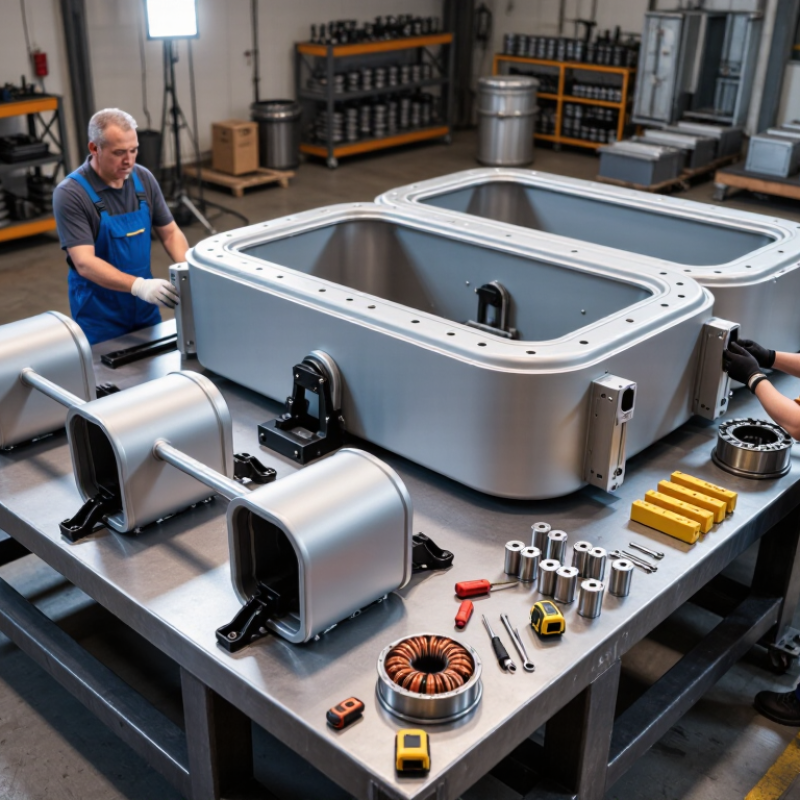
An amorphous transformer body assembly worktable is a purpose-built fixture for positioning and supporting a transformer’s active body during assembly. It is more than a flat bench. A stable frame, adjustable supports, clamping points, and clear access around the workpiece can help crews align components and reach connection areas. Depending on the process, the table may also allow controlled rotation or height adjustment. Small details matter: a slipping support or awkward cable route can slow careful work. Not a magic fix.
The U.S. Department of Energy’s distribution-transformer standards technical support analysis reports that amorphous-core designs can reduce no-load losses by roughly 60–70% versus conventional silicon-steel designs. That figure describes transformer performance, not a worktable’s benefit. The table’s role is practical: support repeatable assembly without damaging delicate core material. IEA’s 2023 Electricity Grids and Secure Energy Transitions report says annual grid investment needs to rise from about $300 billion to more than $600 billion by 2030. Reliable production matters in that context. In practice, each line needs a fixture matched to its body dimensions and handling steps. A table that fits one setup may frustrate another; this is easy to overlook during planning.

An amorphous transformer body assembly worktable should support the core and coil assembly without putting unnecessary pressure on delicate core sections. A rigid frame helps limit movement during fitting, while adjustable supports accommodate different body sizes. Keep contact surfaces smooth and clean. Small details matter.
Useful components include locating stops, padded clamps, tool holders, and accessible lifting points. Stops help maintain alignment as workers position the assembly. Clamps should hold parts securely without crushing insulation or shifting core laminations. Add clear space around the work area for measuring tools and safe hand access. Not everything fits.
Worktable design depends on the assembly sequence, not just the final dimensions. A height suited to the main tasks can reduce awkward reaching, while removable fixtures make cleaning and changeovers easier. Rounded edges and a stable base also help during handling. In practice, the first layout may feel awkward once real components are on it. A trial assembly can reveal blocked access, poor sightlines, or supports that need adjustment. Document those findings and revise the fixture before routine use.
An amorphous transformer body assembly worktable provides a stable, level base for positioning the core and body components. Broad support points help prevent rocking while workers align frames, clamps, and winding assemblies. Adjustable stops and clear reference marks make repeatable positioning easier. Small errors matter. Amorphous alloy cores use thin ribbon, so careful handling and even support can help reduce unnecessary movement during assembly.
A practical worktable also improves access. Workers can bring tools and fasteners within reach, secure components before tightening, and adjust the working height to reduce awkward bending. Lockable wheels may help move a fixture between stations, while leveling feet keep it steady during assembly. The International Energy Agency’s 2023 report, Electricity Grids and Secure Energy Transitions, says annual grid investment needs to exceed USD 600 billion by 2030. That growth makes consistent, efficient transformer production increasingly important, though a worktable alone cannot deliver it.
The details should match the body design and the actual workflow. Check load capacity, clamping positions, surface protection, and clearance for lifting equipment before specifying a table. A very rigid fixture can be limiting when body sizes vary. It may also slow changeovers if adjustments require special tools. A short trial with real components can reveal those issues before the table enters regular production.
An amorphous transformer body assembly worktable can make a crowded build area easier to control. A broad, level surface gives the frame, core parts, and fastening tools defined places during assembly. That matters when technicians move between positioning, tightening, and checking clearances. Keep frequently used tools within reach, and mark bins for fasteners or insulating parts. Small changes help. They reduce repeated searching and unnecessary reaching, while keeping the work sequence visible to the team. A clear staging zone also helps separate parts awaiting inspection from those ready for the next step.
Safety depends on the table’s fit as much as its layout. A stable, load-rated structure, rounded accessible edges, and enough knee and foot clearance can support safer handling. If heavy assemblies need lifting, pair the table with suitable lifting aids rather than asking workers to compensate. This is not automatic. Operators should still follow site-specific handling procedures and keep walkways free of cables and packaging. For production quality, fixtures or locating guides can help hold components consistently while joints are secured. A clean, well-lit surface makes loose hardware, debris, and visible misalignment easier to notice. Still, a neat bench cannot replace measurement or inspection; that limitation is easy to overlook. Adjusting height and tool placement after observing real work may reveal awkward steps a drawing missed.
Why Use an Amorphous Transformer Body Assembly Worktable?
Factors to Consider When Selecting and Using a Worktable
Choose a worktable around the assembly, not a catalogue photograph. Amorphous metal cores are thin and delicate, so the surface should support the body evenly without sharp edges or raised fasteners. Check the table’s rated load against the heaviest core, fixtures, and tools used together. Leave room for lifting aids and safe hand access. A crowded bench invites awkward handling.
Height and layout matter, too. Set the working area near elbow height for frequent tasks, then verify the position with operators and the actual assembly. Add locating stops or adjustable supports when they prevent shifting without pressing on fragile core edges. The U.S. Bureau of Labor Statistics reported 2.6 million nonfatal injury and illness cases in private industry in 2023. That broad figure is not specific to transformer assembly, but it reinforces the value of reducing avoidable handling strain. Small details matter.
Consider cleanability, vibration, and access for inspection. A stable, smooth surface helps prevent debris from marking insulation or entering the assembly. Include space for measuring tools and clear sightlines to check alignment. DOE’s 2016 transformer-efficiency analysis projected about 3.6 quadrillion Btu in energy savings over 30 years from its distribution-transformer standards. Efficient designs demand consistent production, but a worktable alone cannot guarantee quality. Test it loaded. Observe a real build, then revise the layout; the first arrangement may look sensible and still slow the work.


For those larger-sized parts, or smaller quantity runs, we have 2 independent powder coat booths and ovens. The quality, durability and affordability of today’s powder coating finishes make this the process of choice for world-class companies.
Powder coating advantages over other forms of coating are many. Materials used in the Powder coating process can be metals and non-metals that come in a multitude of thicknesses, textures, colors, etc. Another of Powder coating’s biggest advantages over conventional coatings is its ability to create finishes in many different textures. Powder Coating Booths allow us the ability to apply these advantages to large products.
Tri-State Fabricators runs a full-service conveyor line for painting. Wet painting can provide protection or decoration to many different part styles. From start to finish, every project is easier to undergo random and point-based inspection by our skilled painting team.
Advantages to our Wet Paint Line are these lines start with product prep and ends with a thorough inspection of a high quality finished product. Our ability to complete large and small projects with a superior finish and doing so in a timely and economical fashion. This passes along the savings in production to our customers. When powder coating ins not an option, our Wet Paint Line gets the job done right the first time.
When the parts get big and heavy we roll-out our custom paint racks and oversize booth. By utilizing our partnerships with all the major paint brands, we can match virtually any color with wet paint.
The advantages of having access to a Wet Paint Booth are many. Large projects of many different shapes can be loaded into the booth. The Wet Paint Booth offers an environment that is much more controlled than a typical parts painting operation.
Not only are they used because of their controlled environment, but they’re are also advantageous when it comes to applying paint to parts that are needed in industries that require specialty coatings such as medical, aerospace, etc.
Our military forces have some very high standards when it comes to the finish of their vehicles and equipment. From the first pre-treatment step to final coat, it takes a great deal of knowledge and experience to protect the men and women of our armed forces. They deserve only the best, and Tri-State Fabricators provides it.
All of our processes are closely monitored by our staff and management teams. Both of which are highly trained in the processes of metal fabrication and finishing. Tri-State Fabricators’ goal is to always fully satisfy each and every customer, including the military. We will always put a 110% into what we do.
Abrasive media blasting is an excellent way to remove old paint, rust, and increase the paint/powder adhesion. Glass beads produce a much smoother and brighter finish than angular abrasives; leaving the part clean yet without any dimensional change. Chemically inert and environmentally friendly, we can recycle our beads approximately 30 times; making them a more preferred method of metal cleaning or surface finishing.
Advantages to Glass Bead Blasting are many. Glass bead blast media is used when a project is needing rough surfaces need to become smooth for applications of coatings such as paint. It is typically used to clean paint and rust from a product surface without deforming the surface it is being used on. Overall, compared to many other blasting media, Glass Bead Blasting is a very economical choice and those savings are always passed on to our customers.
Tri-State Fabricators utilize a zinc phosphate wash to clean and etch the material to ensure the best paint adhesion possible. The unique design of our 3-stage wash system does the work like a 5-stage. From Cleaning and rinsing to conversion coating and post-treatment, Our Part Washing process is a complete service and works throughout the fabrication service and the finishing service.
Along with the previously mentioned benefits, Curing is a vital chemical reaction that leaves the product finish hard and relatively safe from mild abrasion and aggressive corrosion. This process can be done in more than one way; ambient air-dry or in curing ovens at temps that exceed 240°.
From fixing paint mistakes (someone else’s of course) to simply cleaning our paint line hooks, our burn-off oven is put to good use. After a quick burn-off, a little clean up, and a fresh coat of paint, your parts will look better than new.
Why does our Burn-Off Oven work so well? Because super heating the air around parts turns the materials into ashes. From paint and powder coatings to rubber and machining oils, high temps do the job without degrading the integrity of the part.
Masking is a vital part of producing high quality products. We have die-cut masking patterns to protect machined surfaces as well as a wide range of plugs and caps to protect threaded holes and bolts. We provide permanent and temporary masking.
Masking allows the selected sections of a product to be protected from a fabrication or finishing service. This can be with both chemicals when etching and tapes, paints when only finishing just a section of the product. Masking is great in aiding the customization process of a project.
Screen printing is a photographic process that transfers artwork onto a porous nylon screen which allows colored ink to flow through the screen and be deposited on an aluminum or plastic component. We can generally have just about any design created onto a screen for your parts.
Some of the advantages of Screen Printing are, brand recognition for your business displaying on your products, assembly instructions, product warnings/hazards, etc. Tri-State Fabricators produces Screen Printing of the highest quality so you know it’s durable.
Metal Finishing is the art of treating the exterior portion of product, often metal but can also be made of other materials, so that the surface is clean and free of any debris. Then the process of applying coats or either paint of powder coat takes place. This coating process improves the quality of the product in both appearance and resistance to wear and corrosion.
Tri-State Fabricators, Inc., understands that a project typically isn’t complete until a high-quality finish has been added to your product. This is why our painting and powder coating teams continuously inspect the products throughout the Metal Finishing process.

