Why Use a Distribution Circuit Breaker?
A Distribution Circuit Breaker protects electrical circuits from excessive current, short circuits, and dangerous fault conditions. It disconnects power when current rises beyond a safe level. This response helps protect cables, control panels, connected equipment, and nearby personnel. In a commercial building, for example, a breaker may isolate a lighting circuit before overheated wiring damages insulation. The result is practical and immediate.
Choosing the right breaker requires more than checking its current rating. Engineers should examine voltage, interrupting capacity, load type, ambient temperature, installation method, and coordination with upstream devices. A motor circuit may produce a temporary starting surge. A sensitive control system may need faster fault protection. Standards such as IEC or UL can provide useful guidance, but the installation still requires professional judgment and verification. Labels should remain visible. Terminals must be tightened to the manufacturer’s specifications. Testing should follow the equipment instructions and local requirements.
No breaker lasts forever. Dust, heat, vibration, and repeated faults can affect performance. That point is sometimes overlooked. A properly selected Distribution Circuit Breaker is not a substitute for maintenance or sound system design. It is one part of a wider protection strategy. Reviewing trip settings, inspecting connections, and recording test results can reveal weaknesses before an incident occurs. Real-world conditions often differ from design assumptions. That is why experienced electricians and qualified engineers should assess the complete system, not just the breaker on the panel.
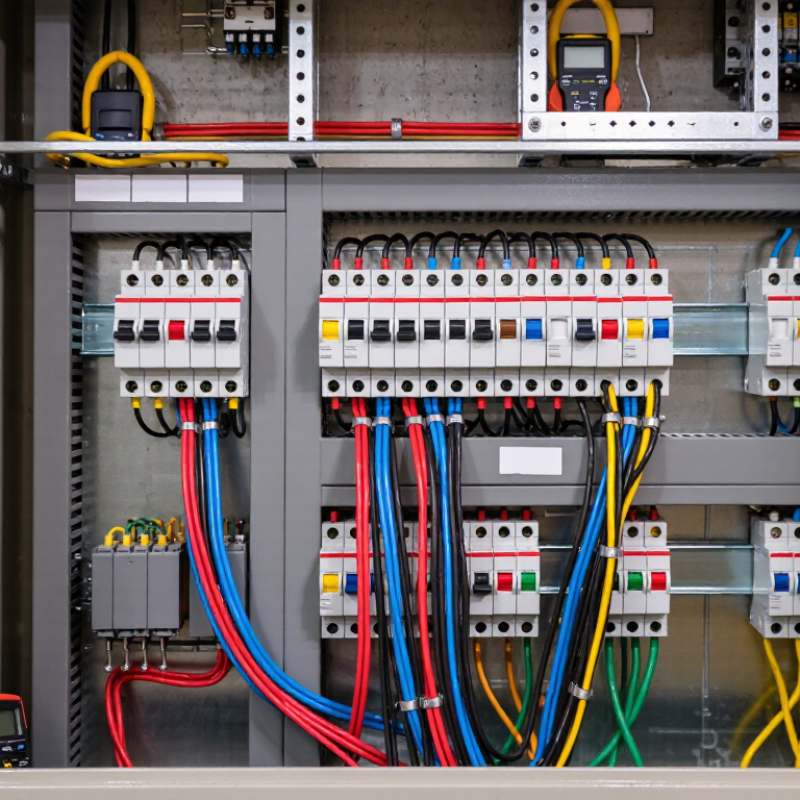
What a Distribution Circuit Breaker Is and Where It Fits
Why Use a Distribution Circuit Breaker?
What a Distribution Circuit Breaker Is and Where It Fits
A distribution circuit breaker sits between the incoming supply and smaller branch circuits. It controls how power moves through a building’s distribution board. When current exceeds safe limits, the breaker trips and opens the circuit. During a short circuit, this response can limit heat, arcing, and damage to connected cables. Small device. Major consequence.
Its location matters. It may protect a feeder, a group of lighting circuits, or individual socket circuits. The breaker must match the cable size, expected load, system voltage, and available fault current. Electricians also consider trip characteristics and coordination with upstream and downstream protection. A breaker that trips too late may leave wiring exposed. A breaker that trips too easily can interrupt normal work.
In practical maintenance, warning signs deserve attention. A warm terminal, repeated tripping, discoloration, or a burning smell should not be ignored. These details may point to loose connections, overloads, or aging equipment. Yet a breaker is not a complete safety plan. It cannot repair poor wiring or replace correct installation practices. Real installations are imperfect. Dust, heat, rushed alterations, and changing loads can affect performance. Qualified inspection and testing should follow applicable electrical codes and the equipment manufacturer’s technical requirements.
How Distribution Circuit Breakers Detect and Interrupt Faults
A distribution circuit breaker protects feeders, transformers, and people when current moves beyond safe limits. The danger may begin with a damaged cable, a loose connection, or a short circuit behind a metal panel. The U.S. Energy Information Administration reported that American customers experienced several hours of power interruptions per year in recent reliability data. Fast fault interruption helps prevent a local failure from becoming a wider outage.
Detection starts with measurement. Thermal elements respond to sustained overloads, while magnetic elements react to sharp short-circuit currents. Modern electronic trip units sample current through sensors and compare it with programmed thresholds. A fault may be detected within milliseconds. The mechanism then releases the contacts, which separate under load. An arc forms between them. Arc chutes divide, cool, and extinguish it before the circuit becomes dangerous. The breaker’s interrupting rating must exceed the available fault current. That detail is often missed during rushed installations.
Coordination matters too. IEEE 1366 defines reliability measures such as SAIDI and SAIFI, helping engineers judge outage duration and frequency. Selective coordination allows the nearest protective device to trip first, keeping more equipment energized. Yet settings are not permanent truths. Load growth, motor starting, and altered transformer impedance can change fault behavior. Field testing and maintenance remain necessary. NFPA 70B emphasizes documented electrical maintenance practices, although real sites sometimes treat testing as an afterthought. That is a costly weakness.
Key Protective Functions in Electrical Distribution Systems
Why Use a Distribution Circuit Breaker?
A distribution circuit breaker protects electrical systems from dangerous overcurrent. It interrupts power when a fault, overload, or short circuit appears. This action limits heat in conductors and reduces damage to connected equipment. In field inspections, a tripped breaker often reveals a loose connection, aging insulation, or excessive demand. It should not be reset repeatedly without investigation.
The device also supports safer maintenance. When opened, it separates a circuit from its supply and provides a clear isolation point. Some breakers offer adjustable trip settings, helping engineers coordinate protection across feeders and branch circuits. Correct coordination allows the nearest protective device to operate first. However, calculations can be imperfect when loads change or records are outdated. Regular testing, accurate labeling, and thermal inspections remain essential.
Tips: Choose ratings that match the conductor and expected load. Check tightening torque during installation. Test protective functions according to applicable standards. Keep circuit directories current. Never treat a breaker as a substitute for proper grounding or safe work procedures. Small details matter. A visibly quiet panel may still hide a developing fault.
Installation, Testing, and Maintenance Requirements
Why Use a Distribution Circuit Breaker?
A distribution circuit breaker protects branch circuits from overloads and short circuits. It also supports safer fault isolation during repairs. During installation, the breaker must match the circuit’s voltage, current rating, and conductor size. The enclosure should remain dry, accessible, and firmly mounted. Connections require correct torque, not just a quick tightening. Small errors matter.
Installation should follow local electrical codes and the equipment manufacturer’s instructions. A qualified electrician should isolate the supply and verify that no voltage remains. Testing usually includes visual inspection, mechanical operation, insulation checks, and trip-function verification. Test instruments must be suitable and properly calibrated. Record the measured values, test date, and circuit identification. Do not trust appearance alone. A loose terminal may look normal but heat under load.
Maintenance should include cleaning, torque checks, and inspection for discoloration, odor, cracks, or moisture. Thermal scanning can reveal abnormal heating before failure occurs. Exercise and trip testing should follow approved procedures, because unnecessary operation can create risk. Maintenance intervals depend on load, environment, and duty cycle. One weakness remains: schedules are often copied without reviewing actual conditions. A dusty workshop needs closer attention than a clean office panel. If nuisance tripping occurs, investigate the circuit instead of repeatedly resetting the breaker. Damaged or unreliable devices should be replaced by qualified personnel.





