


Why Are Fixtures Jigs Essential for Global Buyers?

Global buyers often ask why Fixtures Jigs deserve attention before production begins. The answer is practical. These tools hold parts in consistent positions during machining, welding, drilling, or assembly. A well-designed fixture can reduce movement, improve repeatability, and protect dimensional accuracy. It also helps operators follow the same process across different shifts and factories.

For an overseas buyer, this consistency has commercial value. A jig with hardened locating pins, replaceable bushings, and clear reference points can reduce rework. It may also simplify inspection when suppliers use coordinate measuring machines or calibrated gauges. During supplier evaluations, buyers should request drawings, material specifications, tolerance data, and maintenance instructions. Photos are useful, but measured samples tell more. Ask for evidence.

Fixtures Jigs also support safer and more predictable production planning. A reliable design can shorten setup time and make training easier for new operators. However, no fixture is universally perfect. A tool built for one alloy, part variation, or production volume may fail elsewhere. That limitation is easy to overlook. Buyers should review clamping pressure, access for tools, corrosion resistance, and expected service life. They should also confirm how replacement components will be supplied internationally. Small details matter, especially when a damaged locating pin can stop an entire production line. Good sourcing depends on technical dialogue, documented testing, and honest discussion of weaknesses. Claims without inspection evidence should be treated carefully.
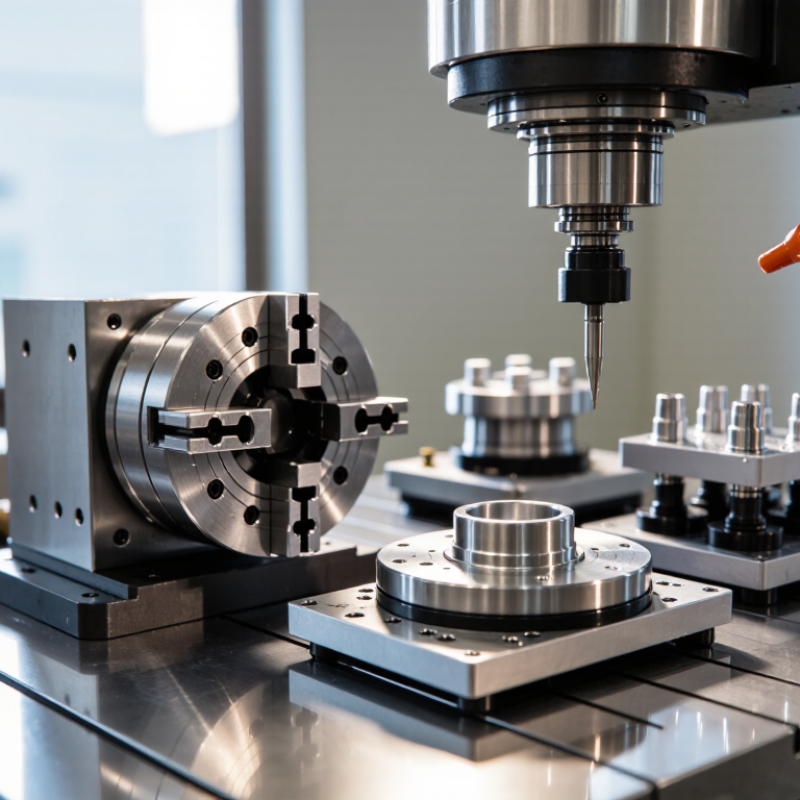
Why Are Fixtures Jigs Essential for Global Buyers?

What Are Fixtures and Jigs?

Fixtures and jigs are production tools that improve accuracy, repeatability, and workplace efficiency. A fixture holds a workpiece firmly during cutting, drilling, welding, or assembly. It does not usually guide the tool. A jig performs that extra task by directing the tool to a precise location. Think of a metal plate with locating pins, clamps, and a drill guide. Small details matter.

In practical production, these tools reduce movement and help operators achieve consistent results. They also shorten setup time between batches. However, a poorly designed jig can cause scratches, alignment errors, or difficult loading. It may look efficient on paper but fail beside a busy machine. That gap deserves honest checking.

Tips: Confirm the part’s dimensions, material, tolerance, and production volume before ordering. Ask for a clear drawing and trial feedback. Check clamping force, access for tools, wear points, and replacement components. For global buyers, review packaging, inspection records, surface protection, and communication methods. A simple fixture may be better than a complex one when operators need speed and easy maintenance. Include sample parts during testing, because theoretical accuracy can change in real production.


How Do Fixtures and Jigs Support Manufacturing?

Fixtures and jigs support manufacturing by controlling position, movement, and repeatability during production. A fixture holds the workpiece securely. A jig also guides the cutting, drilling, or assembly tool. This simple distinction matters when global buyers compare suppliers, tolerances, and production risks.

A 2024 smart-manufacturing survey of 600 industry leaders reported that 92% viewed smart manufacturing as important to future competitiveness. Fixtures and jigs make that ambition practical. They create stable reference points for sensors, automated tools, and inspection equipment. Operators can load parts faster, while machines receive more consistent coordinates. The World Economic Forum’s 2023 Global Lighthouse Network report recorded productivity gains of about 30% in advanced factories. Repeatable workholding contributed to this type of improvement, although it was never the only factor.

On a real line, a fixture may use hardened locating pins, clamps, and a quick-release base. A jig may guide a drill through a precise bushing. Small details matter. Misalignment creates scrap, rework, and delayed shipments. Poor access creates awkward handling. A poorly designed fixture can lock in errors. That risk deserves more attention.

For global buyers, modular designs support product changes across different factories. Standard interfaces also simplify maintenance and replacement. However, “universal” fixtures are often compromises. They may reduce setup time but weaken accuracy. Suppliers should validate clamping force, tolerance stability, operator safety, and inspection records before mass production. Data should support the claim, not replace hands-on trials.

Why Are They Essential for Global Buyers?

Fixtures and jigs are essential because global buyers purchase repeatability before they purchase metal. A jig guides the tool, while a fixture holds the workpiece in a defined position. Together, they control hole location, clamping pressure, and assembly alignment. Small details matter.

Deloitte’s 2024 Smart Manufacturing and Operations Survey found that 92% of manufacturers view smart manufacturing as important to future competitiveness. Fixtures provide a practical foundation for that ambition. They help operators reproduce the same setup across shifts, factories, and countries. For global buyers, this means clearer inspection results, fewer rejected samples, and more predictable production schedules. A documented fixture design also gives suppliers a common technical language when drawings alone feel incomplete.

Quality credibility matters too. The ISO Survey 2022 recorded 1,265,216 ISO 9001 certificates worldwide, showing how widely structured quality systems are used. However, certification cannot replace physical control at the workstation. A weak fixture may pass paperwork while allowing vibration, uneven clamping, or gradual tool wear. The uncomfortable truth is that fixtures are not automatically efficient. They can become expensive obstacles when products change frequently. Buyers should request material details, tolerance checks, maintenance records, and trial-run evidence. A fixture should support production, not merely look professional in a quotation.

Why Are Fixtures Jigs Essential for Global Buyers? - Why Are They Essential for Global Buyers?

Practical performance and purchasing considerations for industrial fixtures and jigs used in repeatable manufacturing.

Buyer Dimension How Fixtures and Jigs Help Typical Operational Range Global Purchasing Relevance
Part positioning repeatability Locates the workpiece in a defined position for machining, welding, drilling, inspection, or assembly. Approximately ±0.02–±0.10 mm for precision applications Supports consistent output when production is distributed across plants, shifts, or contract manufacturers.
Setup time Uses predefined locating and clamping points instead of repeated manual alignment. Commonly reduced from 15–30 minutes to 2–10 minutes Shorter changeovers improve capacity utilization and help buyers manage variable order volumes.
First-pass yield Controls part orientation and reduces errors caused by incorrect placement or inconsistent clamping. Potential improvement of 5–20 percentage points, depending on the starting process Lower scrap and rework reduce landed cost, inspection workload, and delivery risk.
Labor requirements Makes the correct loading sequence clear and reduces dependence on highly experienced operators. Training time often reduced by 20–50% Standardized work instructions are easier to transfer between countries and production partners.
Quality inspection Provides stable reference points for gauges, dimensional checks, and visual inspection. Inspection variation commonly reduced by 10–30% Improves measurement consistency for incoming, in-process, and final quality control.
Production scalability Allows the same process logic to be replicated across multiple workstations or production sites. Suitable for low-volume prototypes through high-volume repeat production A documented fixture design simplifies supplier qualification and capacity expansion.
Product protection Uses controlled contact surfaces, soft pads, and defined clamping force to prevent deformation or scratches. Best suited to documented contact-force and surface-finish requirements Helps maintain appearance and functional tolerances during international production and handling.
Maintenance and serviceability Replaceable locators, bushings, pins, and wear plates extend service life and simplify repairs. Typical wear components can be replaced without rebuilding the full tool Modular maintenance lowers downtime and reduces dependence on urgent cross-border shipments.
Total cost of ownership The initial tooling cost is balanced by lower labor, scrap, rework, setup, and inspection costs. Payback may occur within months in repetitive production Enables purchasing teams to compare tooling by lifecycle value rather than purchase price alone.
Documentation and transfer Defined drawings, datum references, bill of materials, and operating instructions preserve process knowledge. Recommended documents: 2D drawing, 3D model, inspection plan, and maintenance guide Clear technical records reduce ambiguity across languages, time zones, and supplier handovers.

Note: Operational ranges are indicative manufacturing benchmarks. Actual performance depends on part geometry, material, tolerance requirements, process capability, fixture design, maintenance, and operator training.

How Should Buyers Evaluate Fixtures and Jigs?

Global buyers should evaluate fixtures and jigs as production assets, not simple tooling purchases. Their value depends on repeatability, changeover speed, safety, and verified compatibility with the target machine. The International Federation of Robotics reported 541,302 industrial robot installations worldwide in 2023. That scale increases the need for accurate locating, stable clamping, and reliable robot access.

Start with the part and process. Check datum design, tolerance capability, clamping force, material wear, and operator access. Ask for repeatability data, inspection records, and a documented testing method. A fixture that holds a part within ±0.05 mm may still fail if loading varies between shifts. Ask uncomfortable questions. Can replacement components be sourced locally? Does the supplier provide drawings, maintenance instructions, and spare wear plates? ISO 9001-based quality systems help, but certification alone does not prove tooling performance.

Total cost needs closer attention. Compare purchase price, setup labor, calibration, repair time, and expected service life. A lightweight jig may reduce shipping costs, yet deform under continuous clamping. A complex fixture may improve precision but slow product changeovers. The U.S. National Institute of Standards and Technology emphasizes measurement traceability and uncertainty control in manufacturing environments. Buyers should therefore request gauge calibration evidence and test results linked to recognized standards. Samples matter. Video demonstrations are useful, but they cannot replace a production trial using real materials, real cycle times, and actual operators. That is where attractive specifications sometimes become disappointing.

What Factors Affect Their Cost and Performance?

Why Are Fixtures Jigs Essential for Global Buyers?

What Factors Affect Their Cost and Performance?

Fixture and jig prices rarely depend on metal alone. Material, geometry, tolerance, batch size, and machining time matter more. Hardened steel costs more than aluminum, but it may survive thousands of clamping cycles. A simple plate with manual clamps can suit low-volume production. Complex parts need locating pins, interchangeable nests, or pneumatic control. These details increase cost quickly.

Performance depends on repeatability, rigidity, thermal stability, and operator access. A fixture can look precise yet fail under cutting force. Poor clamping may distort a thin housing by fractions of a millimeter. That error can spread across every assembled part. The U.S. National Institute of Standards and Technology highlights measurement uncertainty as a critical manufacturing concern. Buyers should request capability evidence, not attractive drawings. Gauge repeatability and reproducibility studies can expose hidden variation.

Lifecycle economics deserve attention. Deloitte’s 2024 Smart Manufacturing and Operations Survey reported that 86% of manufacturing leaders viewed smart production as important for competitiveness. That supports adding sensors or digital monitoring when production volume justifies it. However, automation is not automatically efficient. A low-volume buyer may overpay for technology that operators rarely use. Maintenance access, spare components, shipping protection, and local technical support also affect ownership cost. One practical lesson remains uncomfortable: the cheapest fixture often becomes expensive after the first redesign.

Why Are Fixtures and Jigs Essential for Global Buyers?

Fixtures and jigs improve positioning repeatability, reduce setup time, support consistent quality across production sites, and lower operator-dependent variation. Their cost and performance are mainly affected by production volume, tolerance requirements, material selection, complexity, and automation level.

The chart uses normalized planning indices: 100 represents the baseline requirement for a standard manual fixture. Higher cost index indicates greater investment, while higher performance index indicates better repeatability, cycle-time reduction, and process consistency. Actual results vary by part geometry, tolerances, materials, and production conditions.

Powder Coat Booths

For those larger-sized parts, or smaller quantity runs, we have 2 independent powder coat booths and ovens. The quality, durability and affordability of today’s powder coating finishes make this the process of choice for world-class companies.

Powder coating advantages over other forms of coating are many. Materials used in the Powder coating process can be metals and non-metals that come in a multitude of thicknesses, textures, colors, etc. Another of Powder coating’s biggest advantages over conventional coatings is its ability to create finishes in many different textures. Powder Coating Booths allow us the ability to apply these advantages to large products.

Wet Paint Line

Tri-State Fabricators runs a full-service conveyor line for painting. Wet painting can provide protection or decoration to many different part styles. From start to finish, every project is easier to undergo random and point-based inspection by our skilled painting team.

Advantages to our Wet Paint Line are these lines start with product prep and ends with a thorough inspection of a high quality finished product. Our ability to complete large and small projects with a superior finish and doing so in a timely and economical fashion. This passes along the savings in production to our customers. When powder coating ins not an option, our Wet Paint Line gets the job done right the first time.

Wet Paint Booths

When the parts get big and heavy we roll-out our custom paint racks and oversize booth. By utilizing our partnerships with all the major paint brands, we can match virtually any color with wet paint.

The advantages of having access to a Wet Paint Booth are many. Large projects of many different shapes can be loaded into the booth. The Wet Paint Booth offers an environment that is much more controlled than a typical parts painting operation.

Not only are they used because of their controlled environment, but they’re are also advantageous when it comes to applying paint to parts that are needed in industries that require specialty coatings such as medical, aerospace, etc.

Military CARC

Our military forces have some very high standards when it comes to the finish of their vehicles and equipment. From the first pre-treatment step to final coat, it takes a great deal of knowledge and experience to protect the men and women of our armed forces. They deserve only the best, and Tri-State Fabricators provides it.

All of our processes are closely monitored by our staff and management teams. Both of which are highly trained in the processes of metal fabrication and finishing. Tri-State Fabricators’ goal is to always fully satisfy each and every customer, including the military. We will always put a 110% into what we do.

Glass-Bead Blasting

Abrasive media blasting is an excellent way to remove old paint, rust, and increase the paint/powder adhesion. Glass beads produce a much smoother and brighter finish than angular abrasives; leaving the part clean yet without any dimensional change. Chemically inert and environmentally friendly, we can recycle our beads approximately 30 times; making them a more preferred method of metal cleaning or surface finishing.

Advantages to Glass Bead Blasting are many. Glass bead blast media is used when a project is needing rough surfaces need to become smooth for applications of coatings such as paint. It is typically used to clean paint and rust from a product surface without deforming the surface it is being used on. Overall, compared to many other blasting media, Glass Bead Blasting is a very economical choice and those savings are always passed on to our customers.

Part Washing

Tri-State Fabricators utilize a zinc phosphate wash to clean and etch the material to ensure the best paint adhesion possible. The unique design of our 3-stage wash system does the work like a 5-stage. From Cleaning and rinsing to conversion coating and post-treatment, Our Part Washing process is a complete service and works throughout the fabrication service and the finishing service.

Along with the previously mentioned benefits, Curing is a vital chemical reaction that leaves the product finish hard and relatively safe from mild abrasion and aggressive corrosion. This process can be done in more than one way; ambient air-dry or in curing ovens at temps that exceed 240°.

Burn-Off Oven

From fixing paint mistakes (someone else’s of course) to simply cleaning our paint line hooks, our burn-off oven is put to good use. After a quick burn-off, a little clean up, and a fresh coat of paint, your parts will look better than new.

Why does our Burn-Off Oven work so well? Because super heating the air around parts turns the materials into ashes. From paint and powder coatings to rubber and machining oils, high temps do the job without degrading the integrity of the part.

Masking

Masking is a vital part of producing high quality products. We have die-cut masking patterns to protect machined surfaces as well as a wide range of plugs and caps to protect threaded holes and bolts. We provide permanent and temporary masking.

Masking allows the selected sections of a product to be protected from a fabrication or finishing service. This can be with both chemicals when etching and tapes, paints when only finishing just a section of the product. Masking is great in aiding the customization process of a project.

Screen Printing

Screen printing is a photographic process that transfers artwork onto a porous nylon screen which allows colored ink to flow through the screen and be deposited on an aluminum or plastic component. We can generally have just about any design created onto a screen for your parts.

Some of the advantages of Screen Printing are, brand recognition for your business displaying on your products, assembly instructions, product warnings/hazards, etc. Tri-State Fabricators produces Screen Printing of the highest quality so you know it’s durable.

Metal Finishing

Metal Finishing is the art of treating the exterior portion of product, often metal but can also be made of other materials, so that the surface is clean and free of any debris. Then the process of applying coats or either paint of powder coat takes place. This coating process improves the quality of the product in both appearance and resistance to wear and corrosion.

Tri-State Fabricators, Inc., understands that a project typically isn’t complete until a high-quality finish has been added to your product. This is why our painting and powder coating teams continuously inspect the products throughout the Metal Finishing process.
