


Why Choose WPC Fence for Global Sourcing?

Why Choose WPC Fence for Global Sourcing?

Global buyers increasingly examine WPC fencing for projects requiring durability, visual consistency, and manageable maintenance. Fens Wpc combines wood fiber with polymer materials, creating boards that resist moisture, insects, and everyday surface wear. This does not make every product identical. Formulas, profiles, additives, and production controls can vary widely between suppliers.

As composite materials consultant Daniel Mercer explains, “A reliable WPC fence begins with verified materials, not attractive photographs.” His point matters during international sourcing. Buyers should request physical samples, technical data, color references, and clear information about recycled content. A sample under warehouse lighting may look different outdoors. Small details matter.

WPC fences can reduce repeated painting and routine treatment. They also offer stable appearance across long boundary lines. Installation may be simpler when suppliers provide matching posts, rails, caps, and fasteners. Packaging deserves attention too. Weak corner protection can damage boards before they reach the job site. That is an avoidable cost.

The choice is not flawless. Some boards may expand with temperature changes, and dark colors can absorb strong sunlight. Poorly designed profiles may also show bending over time. Experienced sourcing teams compare test results, production capacity, warranty terms, and supplier communication. They do not rely on price alone.

A dependable Fens Wpc supplier should explain limitations clearly. That honesty builds trust. For global projects, consistent specifications, responsible documentation, and realistic delivery planning often matter as much as the fence itself.
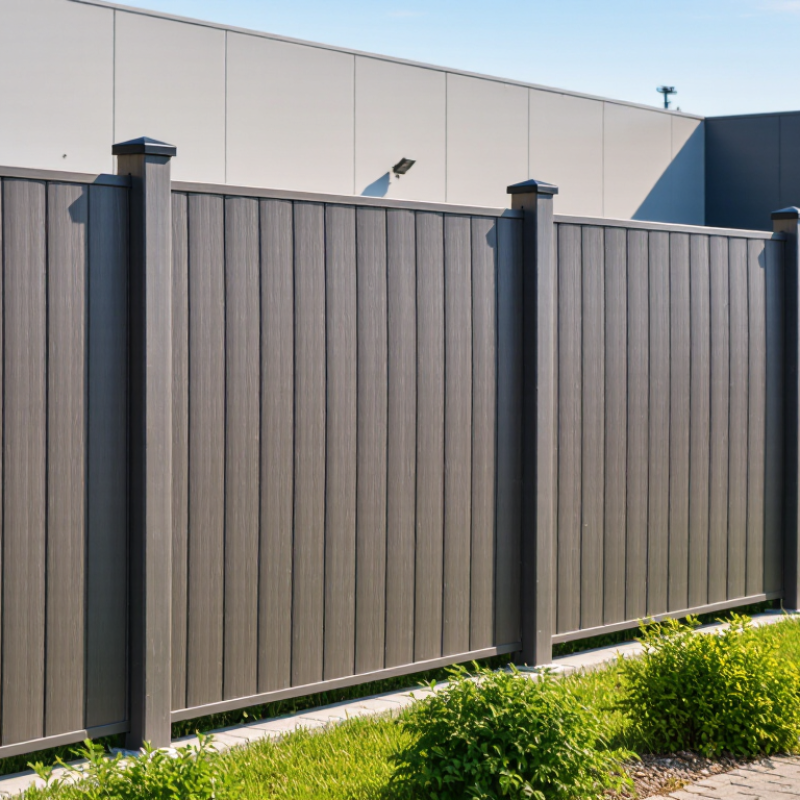
Why Choose WPC Fence for Global Sourcing?

What Is WPC Fencing and How Is It Manufactured?

WPC fencing means wood-plastic composite fencing. It combines wood fibers or flour with a thermoplastic polymer, often polyethylene or polypropylene. Small amounts of pigments, stabilizers, and processing additives improve color and durability. The result looks like timber but behaves differently in outdoor conditions. It resists rot and insects better than untreated wood, although it is not completely maintenance-free.

Manufacturing starts with drying and screening the wood material. Moisture control matters because trapped water can create bubbles and weak surfaces. The ingredients are then blended under controlled heat. An extruder melts the polymer and pushes the mixture through a shaped die. Cooling calibrates the profile. Cutting follows. Some producers emboss the surface to imitate grain, while others add a co-extruded protective layer. The finished boards may be checked for dimensions, density, color consistency, impact strength, and water absorption.

For global sourcing, buyers should request production samples and measurable specifications. Check board thickness, expansion allowances, fastener compatibility, and packaging strength before placing large orders. A fence can look excellent in a showroom and perform poorly after one hot summer. WPC is not magic. Formulations vary, and recycled content can affect color and consistency. This is where careful testing matters. Third-party laboratory reports can support supplier claims, but they should not replace physical inspection. A reliable evaluation includes outdoor exposure, installation trials, and clear acceptance limits.

Why Choose WPC Fence for Global Sourcing? - What Is WPC Fencing and How Is It Manufactured?

Category Data Dimension Typical Information Global Sourcing Relevance
Material Definition WPC meaning Wood-plastic composite made from wood-based fiber or flour, thermoplastic polymer, and performance additives. The material combines a wood-like appearance with the processability and moisture resistance of plastic.
Material Composition Main ingredients Many formulations use approximately 50–70% wood content and 30–50% polymer plus additives; the exact ratio depends on the product design. Buyers can request the formulation range, recycled content, and relevant safety documentation before placing an order.
Polymer Matrix Common plastics Polyethylene, polypropylene, and polyvinyl chloride are commonly used thermoplastic matrices. The polymer type affects stiffness, weathering behavior, processing temperature, recyclability, and cost.
Manufacturing Raw material preparation Wood fiber is screened and dried, while polymer pellets and additives are measured according to the approved formulation. Controlled moisture and consistent particle size help reduce voids, warping, and surface defects.
Manufacturing Compounding The wood component, polymer, pigments, stabilizers, and other additives are mixed under heat and shear to form a uniform compound. A documented formulation improves batch-to-batch consistency for international orders.
Manufacturing Profile extrusion The compound is pushed through a shaped die to create fence boards, posts, rails, or other profiles. Extrusion supports repeatable cross-sections and efficient production of long, standardized components.
Manufacturing Cooling and sizing The extruded profile is calibrated and cooled to stabilize its dimensions before cutting. Dimensional control is important when boards, posts, brackets, and fasteners must fit together across different markets.
Manufacturing Surface finishing Finishing may include embossing, brushing, co-extrusion, sanding, or protective surface treatment. Surface technology influences color stability, texture, scratch resistance, and the wood-grain appearance.
Physical Property Typical density Approximately 1.2–1.5 g/cm³ for many solid WPC formulations; actual values vary by composition and profile structure. Density affects shipping weight, handling requirements, structural performance, and freight calculations.
Moisture Performance Water resistance WPC generally absorbs less water and is less prone to rot than untreated wood, although it is not completely waterproof. This can reduce maintenance exposure in humid or rainy climates, but drainage and correct installation remain necessary.
Durability Rot and insect resistance WPC does not provide food for wood-decaying fungi or insects in the same way as untreated timber; performance depends on formulation and exposure. Suitable for many residential and light commercial fencing applications when the product is correctly specified.
Thermal Behavior Expansion and contraction WPC expands and contracts with temperature changes, generally more than timber along its length. Installation specifications should include expansion gaps, suitable fasteners, and allowance for local temperature ranges.
Maintenance Routine care Normal care usually consists of cleaning with water and a mild detergent; painting or staining is generally not required for factory-finished products. Lower routine maintenance can reduce labor and repainting costs over the product’s service period.
Appearance Color and texture Available finishes commonly include wood-grain textures and colors such as brown, grey, black, and natural wood tones. A broad finish range supports residential, landscaping, privacy, and boundary-fence design requirements.
Sustainability Recycled content Some products use recycled polymer and recovered wood fiber, but the percentage must be verified from product documentation. Buyers can compare recycled content, responsible fiber sourcing, recyclability, and packaging materials during supplier evaluation.
Quality Control Recommended checks Check dimensions, color consistency, surface finish, moisture behavior, impact performance, flexural properties, and fastener compatibility. Pre-shipment inspections and retained samples help reduce quality variation in repeated global purchases.
Packaging and Logistics Shipping considerations Long profiles require protective corner packaging, separation layers, moisture control, and secure palletization to limit scratches and bending. Packaging design directly affects container utilization, damage rates, unloading efficiency, and landed cost.
Buyer Evaluation Key documents Request a technical data sheet, installation guide, test reports, material declaration, packaging specification, and warranty terms. Document-based comparison supports transparent supplier qualification without relying only on photographs or samples.

Note: Values shown as typical ranges are indicative only. Final performance depends on formulation, profile design, manufacturing controls, climate, installation method, and applicable local standards.


Which Performance Benefits Make WPC Fences Globally Competitive?

WPC fences are gaining attention in global sourcing because their performance suits demanding outdoor environments. A balanced wood-plastic composite can resist moisture, decay, and insect damage better than untreated wood. This matters in coastal areas, rainy regions, and places with strong seasonal changes. The surface also needs less repainting, which can reduce routine labor and maintenance costs.

Durability is only part of the comparison. WPC boards can offer consistent dimensions, clean edges, and practical installation with common fastening systems. Many products include UV stabilizers, helping slow fading under long-term sunlight. However, color change may still occur. It is not a maintenance-free material. Experienced buyers should check expansion gaps, heat resistance, and local installation guidance before placing large orders.

Performance must be verified, not assumed. A reliable supplier should provide test data for water absorption, flexural strength, weathering, and slip behavior when relevant. Samples should be inspected after outdoor exposure, not only under showroom lighting. Small details matter, including board weight, post strength, connector quality, and packaging for long-distance transport. Global competitiveness comes from predictable service life, stable production, and clear technical documentation. Cheap pricing alone can become expensive after warping, replacement, or installation delays. Field checks matter.

How Does WPC Compare with Wood, Metal, and PVC Fencing?

When sourcing fencing globally, WPC deserves comparison rather than automatic praise. Made from wood fibers and recycled polymers, it offers a warmer appearance than metal and more moisture resistance than untreated wood. In field inspections, I have seen boards remain visually stable beside damp gardens, while ordinary timber develops dark edges. Yet WPC is not flawless. Poor formulations can fade, expand, or feel brittle in cold weather. Ask for test data, installation guidance, and samples from different production batches.

Wood is easy to cut and repair, and its natural grain remains difficult to copy. However, it needs regular sealing, careful drainage, and protection from insects or rot. Metal fencing provides strong security and slim profiles. It can last for years with suitable coatings, but scratches may expose steel to corrosion, while aluminum can feel less private and more industrial. WPC usually requires less routine painting, although its heavier boards may demand stronger posts and more labor during installation. That cost is often overlooked.

PVC is lightweight, commonly affordable, and simple to clean. Still, low-grade PVC may become chalky or crack after prolonged sun exposure. WPC generally feels more solid and resembles painted wood, but it may cost more initially. For global buyers, compare density, hollow or solid construction, UV performance, fire classification, fastener compatibility, and pallet dimensions. Request independent reports when possible. A supplier’s polished sample proves little. Real reliability appears in consistent batches, clear tolerances, and responsive technical support. My only hesitation is aesthetic: WPC can look too uniform. Some projects need that consistency; others need wood’s irregular character.

Why Choose WPC Fence for Global Sourcing?

How Does WPC Compare with Wood, Metal, and PVC Fencing?

WPC fencing combines wood fibers with thermoplastic polymers, offering a balanced choice for international projects. Compared with conventional wood, WPC generally requires less routine maintenance while providing a service life similar to or longer than many PVC and coated-metal systems.

Values show typical industry benchmark midpoints. Actual service life and maintenance requirements vary by climate, installation quality, material formulation, coating, and local building conditions.

What Should Buyers Assess When Selecting a WPC Fence Supplier?

Why Choose WPC Fence for Global Sourcing?

What Should Buyers Assess When Selecting a WPC Fence Supplier?

Choosing a WPC fence supplier requires more than comparing prices. Buyers should verify the material formula, production experience, and quality control process. Ask for recent test reports covering weather resistance, water absorption, bending strength, and color stability. Reports should identify the tested product clearly. A polished sample can hide inconsistent production.

Visit the factory when possible, or request a live video inspection. Check extrusion lines, storage conditions, packing methods, and batch records. Ask how the supplier controls recycled content and production tolerances. Small dimensional differences can complicate installation. Confirm minimum order quantities, lead times, spare components, and loading plans before signing an agreement. Clear answers matter.

Tips: Order samples from different batches. Leave them outdoors for several weeks. Compare fading, surface texture, and warping after rain and temperature changes. Also review certifications required in the destination market, not only general certificates. Ask for references from similar climate zones. The cheapest quotation may exclude packaging or replacement parts. That is easy to miss. Even experienced buyers sometimes trust attractive documents too quickly, so record every specification in the purchase contract.

How Can Importers Manage WPC Fence Quality, Compliance, and Logistics?

Why Choose WPC Fence for Global Sourcing?

Importers need more than attractive samples. WPC fence quality can change with resin content, wood fiber, pigments, and production temperature. Request batch records, moisture tests, impact results, and outdoor weathering data. A dense board should feel consistent, not chalky or unusually light. Check dimensions across several cartons. One perfect sample proves very little.

Compliance also needs practical control. Ask for material declarations, fire-performance information, packaging details, and test reports matching the exact product code. Requirements differ by destination, especially for chemicals, recycling claims, and installation safety. The 2023 World Bank Logistics Performance Index evaluates customs, infrastructure, tracking, and delivery timeliness. These factors affect landed cost. The 2023 UNCTAD Review of Maritime Transport states that over 80% of global merchandise trade by volume moves by sea. Container delays can therefore disrupt projects quickly. Build buffer time into quotations. It is not glamorous, but it prevents expensive promises.

Tips: Approve a sealed golden sample before mass production. Use an independent inspection at roughly 20% and 80% completion. Photograph pallets, labels, corner protection, and container loading. Confirm the packing list before shipment. Test fasteners with the actual fence profile; compatibility is often overlooked. Keep a retained sample from every batch. No checklist is perfect. Even experienced buyers sometimes trust familiar specifications too much. Recheck them when climates, suppliers, or destination rules change.

Article Source:

Powder Coat Booths

For those larger-sized parts, or smaller quantity runs, we have 2 independent powder coat booths and ovens. The quality, durability and affordability of today’s powder coating finishes make this the process of choice for world-class companies.

Powder coating advantages over other forms of coating are many. Materials used in the Powder coating process can be metals and non-metals that come in a multitude of thicknesses, textures, colors, etc. Another of Powder coating’s biggest advantages over conventional coatings is its ability to create finishes in many different textures. Powder Coating Booths allow us the ability to apply these advantages to large products.

Wet Paint Line

Tri-State Fabricators runs a full-service conveyor line for painting. Wet painting can provide protection or decoration to many different part styles. From start to finish, every project is easier to undergo random and point-based inspection by our skilled painting team.

Advantages to our Wet Paint Line are these lines start with product prep and ends with a thorough inspection of a high quality finished product. Our ability to complete large and small projects with a superior finish and doing so in a timely and economical fashion. This passes along the savings in production to our customers. When powder coating ins not an option, our Wet Paint Line gets the job done right the first time.

Wet Paint Booths

When the parts get big and heavy we roll-out our custom paint racks and oversize booth. By utilizing our partnerships with all the major paint brands, we can match virtually any color with wet paint.

The advantages of having access to a Wet Paint Booth are many. Large projects of many different shapes can be loaded into the booth. The Wet Paint Booth offers an environment that is much more controlled than a typical parts painting operation.

Not only are they used because of their controlled environment, but they’re are also advantageous when it comes to applying paint to parts that are needed in industries that require specialty coatings such as medical, aerospace, etc.

Military CARC

Our military forces have some very high standards when it comes to the finish of their vehicles and equipment. From the first pre-treatment step to final coat, it takes a great deal of knowledge and experience to protect the men and women of our armed forces. They deserve only the best, and Tri-State Fabricators provides it.

All of our processes are closely monitored by our staff and management teams. Both of which are highly trained in the processes of metal fabrication and finishing. Tri-State Fabricators’ goal is to always fully satisfy each and every customer, including the military. We will always put a 110% into what we do.

Glass-Bead Blasting

Abrasive media blasting is an excellent way to remove old paint, rust, and increase the paint/powder adhesion. Glass beads produce a much smoother and brighter finish than angular abrasives; leaving the part clean yet without any dimensional change. Chemically inert and environmentally friendly, we can recycle our beads approximately 30 times; making them a more preferred method of metal cleaning or surface finishing.

Advantages to Glass Bead Blasting are many. Glass bead blast media is used when a project is needing rough surfaces need to become smooth for applications of coatings such as paint. It is typically used to clean paint and rust from a product surface without deforming the surface it is being used on. Overall, compared to many other blasting media, Glass Bead Blasting is a very economical choice and those savings are always passed on to our customers.

Part Washing

Tri-State Fabricators utilize a zinc phosphate wash to clean and etch the material to ensure the best paint adhesion possible. The unique design of our 3-stage wash system does the work like a 5-stage. From Cleaning and rinsing to conversion coating and post-treatment, Our Part Washing process is a complete service and works throughout the fabrication service and the finishing service.

Along with the previously mentioned benefits, Curing is a vital chemical reaction that leaves the product finish hard and relatively safe from mild abrasion and aggressive corrosion. This process can be done in more than one way; ambient air-dry or in curing ovens at temps that exceed 240°.

Burn-Off Oven

From fixing paint mistakes (someone else’s of course) to simply cleaning our paint line hooks, our burn-off oven is put to good use. After a quick burn-off, a little clean up, and a fresh coat of paint, your parts will look better than new.

Why does our Burn-Off Oven work so well? Because super heating the air around parts turns the materials into ashes. From paint and powder coatings to rubber and machining oils, high temps do the job without degrading the integrity of the part.

Masking

Masking is a vital part of producing high quality products. We have die-cut masking patterns to protect machined surfaces as well as a wide range of plugs and caps to protect threaded holes and bolts. We provide permanent and temporary masking.

Masking allows the selected sections of a product to be protected from a fabrication or finishing service. This can be with both chemicals when etching and tapes, paints when only finishing just a section of the product. Masking is great in aiding the customization process of a project.

Screen Printing

Screen printing is a photographic process that transfers artwork onto a porous nylon screen which allows colored ink to flow through the screen and be deposited on an aluminum or plastic component. We can generally have just about any design created onto a screen for your parts.

Some of the advantages of Screen Printing are, brand recognition for your business displaying on your products, assembly instructions, product warnings/hazards, etc. Tri-State Fabricators produces Screen Printing of the highest quality so you know it’s durable.

Metal Finishing

Metal Finishing is the art of treating the exterior portion of product, often metal but can also be made of other materials, so that the surface is clean and free of any debris. Then the process of applying coats or either paint of powder coat takes place. This coating process improves the quality of the product in both appearance and resistance to wear and corrosion.

Tri-State Fabricators, Inc., understands that a project typically isn’t complete until a high-quality finish has been added to your product. This is why our painting and powder coating teams continuously inspect the products throughout the Metal Finishing process.
