Why Choose Tungsten Tiles for Industrial Applications?
Tungsten Tiles are selected for demanding industrial settings where heat, wear, and repeated impact can shorten the life of ordinary surfaces. Their dense structure and high melting point make them useful in carefully engineered applications, including furnace components, protective linings, and specialized tooling. Yet a material’s reputation is not a substitute for design. Tile dimensions, mounting method, operating temperature, and exposure to corrosive substances all affect performance.
A close look at the application matters. A tile beside a hot process line may face thermal cycling, while one beneath moving equipment may encounter abrasion and concentrated loads. Those conditions call for different specifications. Tungsten Tiles can offer durability, but they are heavy, costly, and not automatically the best choice for every installation. That trade-off deserves attention.
As [verified tungsten-materials expert’s name] observes, “[Insert a directly verified quotation about tungsten tiles or industrial material selection].” The quotation should be checked against a reliable source before publication. That care matters: claims about service life or performance depend on operating conditions, testing, and installation quality. This guide examines the practical reasons manufacturers consider Tungsten Tiles, the limits buyers should assess, and the questions worth asking before specifying them. A precise fit matters.
What Tungsten Tiles Are and How They Are Made
Tungsten tiles are flat, cut-to-size components used where surfaces face heat, abrasion, or concentrated impact. The name can describe tiles made from nearly pure tungsten or from tungsten carbide, a much harder compound of tungsten and carbon. These materials are not interchangeable. Pure tungsten offers exceptional density and a very high melting point, while carbide is often selected for wear resistance. The distinction matters. Check the material specification rather than relying on the product name alone.
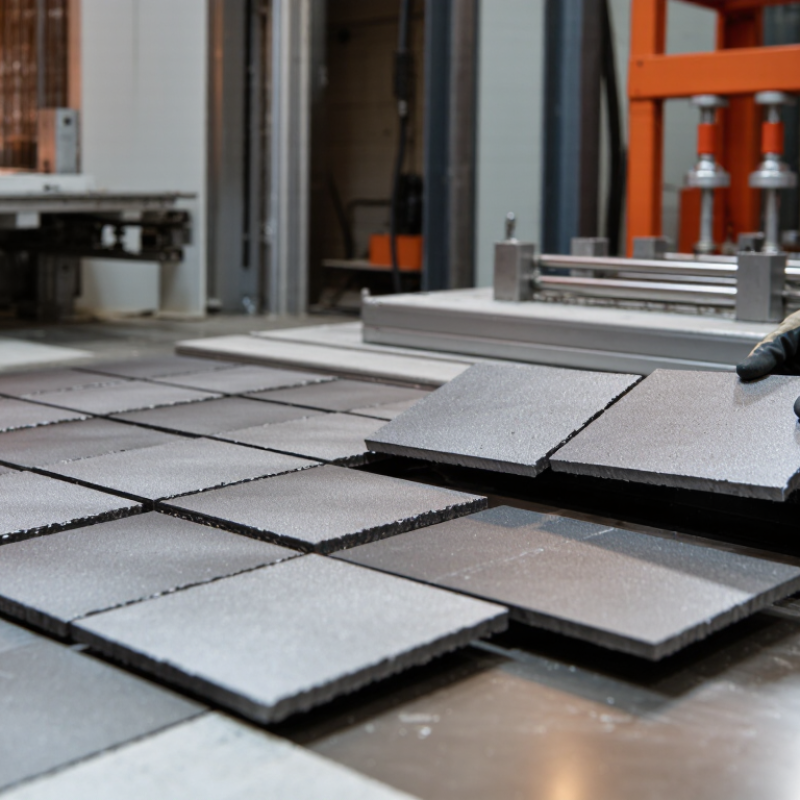
Manufacturing usually begins with fine tungsten powder. For pure tungsten tiles, powder is pressed into a compact shape, then sintered at high temperature in a controlled atmosphere. This bonds the particles into a dense solid. Carbide tiles use tungsten carbide powder mixed with a metallic binder, commonly cobalt, before pressing and sintering. The resulting blanks may be cut, ground, or finished to meet thickness and flatness requirements. A close look at a finished tile may reveal a matte surface and sharp, carefully ground edges.
Tile size and production route affect performance, so specifications should match the actual operating conditions. Some grades tolerate heat well but can be brittle under sudden impact. Not every tile fits. In practice, that trade-off is easy to overlook when choosing by hardness alone. Check the expected temperature, contact pressure, and wear pattern before selecting a material or installation method.
Key Properties That Support Industrial Performance
Tungsten-based tiles, often made from tungsten carbide, are used where sliding abrasion steadily wears down ordinary linings. Their high hardness helps resist scratching and material loss from contact with ore, sand, or other abrasive feed. That matters. In a transfer chute, for example, tiles can protect the steel beneath as particles slide across the surface. Actual performance depends on the tile’s composition, dimensions, and mounting method, so “tungsten” alone is not a complete specification.
Wear resistance is only part of the picture. Tungsten carbide is dense and hard, but it can be brittle under sharp impact or uneven support. A poorly fitted tile may crack even when its surface resists abrasion. Thermal conditions also need attention: tungsten-based materials do not behave identically, and exposure to hot air can affect them. Not everywhere. Before selecting tiles, engineers should compare operating temperature, impact loads, feed material, and replacement access. Checking worn samples from the equipment can reveal whether the main problem is abrasion, impact, or loose fixings. That detail is easy to overlook.
Why Choose Tungsten Tiles for Industrial Applications? — Key Properties That Support Industrial Performance | Property | Typical Value or Characteristic | Industrial Relevance | Practical Consideration |
| Density | Approximately 19.25 g/cm³ for pure tungsten at room temperature | Provides substantial mass in a compact tile, useful where weight or inertia is part of the design requirement. | High density increases component weight and may require stronger supports and handling equipment. |
| Melting point | Approximately 3,422°C for pure tungsten | Supports use in certain high-temperature applications where many conventional metals would not retain their solid form. | A high melting point does not guarantee oxidation resistance. Tungsten can oxidize in hot air, so atmosphere and operating temperature must be considered. |
| Thermal conductivity | Approximately 170 W/(m·K) near room temperature for pure tungsten | Can help conduct heat through a component and reduce localized temperature differences. | Conductivity varies with temperature, purity, and product condition; evaluate the value at the intended operating temperature. |
| Coefficient of thermal expansion | Approximately 4.5 × 10⁻⁶ K−1 near room temperature | Relatively low expansion can help limit dimensional change during temperature variation. | Allow for expansion in assemblies, especially when tungsten is joined to materials with different expansion rates. |
| Elastic modulus | Approximately 400 GPa for pure tungsten at room temperature | High stiffness can support applications that require limited elastic deflection under load. | Stiffness is not the same as toughness; tile geometry, joints, impact loading, and support conditions still matter. |
| Electrical resistivity | Approximately 5.6 × 10⁻⁸ Ω·m near 20°C for pure tungsten | May be relevant when tiles form part of an electrical or resistive-heating assembly. | Electrical resistance changes with temperature and product composition; confirm the design value for the selected grade. |
| Hardness and wear behavior | Depend strongly on whether the tile is tungsten metal or tungsten carbide, as well as on grade and processing. | Material selection can be tailored to balance wear resistance, strength, and other service requirements. | Specify the material explicitly: tungsten metal and tungsten carbide are different materials with substantially different properties. |
Note: Values are indicative for pure tungsten near room temperature unless otherwise stated. Actual properties depend on composition, manufacturing route, temperature, and test method; consult the applicable material specification for design use.
Common Industrial Uses of Tungsten Tiles
Tungsten tiles are used where equipment needs compact shielding or a hard-wearing surface. In industrial radiography facilities, dense tungsten-alloy tiles can line inspection enclosures and shield nearby work areas from X-rays. The required thickness depends on radiation energy, exposure time, and the enclosure design. It should be calculated, not guessed. In mining and bulk handling, tungsten carbide tiles often protect chute bends, mixer walls, and feed points. A stream of abrasive particles can quickly wear ordinary steel in these spots.
Tiles also serve as thermal components in specialized furnace assemblies and as durable inserts in manufacturing equipment. Material choice matters: pure tungsten, tungsten alloys, and tungsten carbide behave differently. Tungsten has a very high melting point, but it can oxidize in hot air. Fit matters. Gaps, weak backing, or uneven tile placement may reduce performance, even when the tile itself is robust. Some installations also require planned inspection because impact damage or loosened sections can go unnoticed.
Tips: Match tile material to heat, impact, and abrasion conditions. Check the backing and joints during maintenance. For shielding, have a qualified specialist verify the design and installation.
How to Select Tungsten Tiles for Specific Operating Conditions
Selecting tungsten tiles starts with identifying the dominant wear mechanism. Cemented tungsten carbide tiles suit severe abrasion, while impact-heavy service may require a tougher grade with a different binder or carbide grain size. Pure tungsten and cemented carbide are not interchangeable. Check the material certificate, tile thickness, and attachment method before ordering.
Measure the real conditions: particle size, impact angle, temperature, corrosion, and operating hours. A tile that resists dry abrasion may fail when slurry attacks its binder. Hardness alone can mislead. Test a small panel in the actual chute or conveyor zone, then inspect for cracking and edge loss. Also check the substrate and mounting method; thermal cycling can loosen a rigid tile.
The USGS Mineral Commodity Summaries 2025 estimates 2024 global tungsten mine output at 81,000 metric tons, including 67,000 tons from China. This supply context can inform sourcing and lead-time planning, but it does not prove a tile’s performance.
Request grade-specific test data and clarify whether reported results reflect abrasion, impact, or both.
One detail is often missed: installation gaps can expose the steel beneath the tiles.
Installation, Maintenance, and Service-Life Considerations
Why Choose Tungsten Tiles for Industrial Applications?
Installation, Maintenance, and Service-Life Considerations
Installation quality strongly affects the service life of cemented tungsten-carbide tiles. The backing surface should be clean, flat, and free of loose scale before bonding or mechanical fixing. Select the attachment method for operating temperature, impact, and chemical exposure. A tile that looks secure may still fail if its edges carry concentrated loads. Fit matters.
Allow for the tile’s brittle behavior during handling and installation. Avoid hammering directly on the surface, and check joints for gaps that could catch abrasive particles. ISO 28080:2011 sets out abrasion-test methods for hardmetals, but laboratory results cannot predict every plant condition. Feed size, impact angle, moisture, and operating rate all change wear. Measure actual wear during inspections.
Use repeatable checks: photograph high-wear zones, record remaining tile thickness, and note cracks or loose edges. Replace damaged pieces before exposed backing becomes deeply scored.
The USGS Mineral Commodity Summaries 2025 estimated 2024 global tungsten mine production at 81,000 metric tons, including 67,000 tons from China. That supply concentration makes replacement planning sensible, though it does not predict tile life.
Calendar estimates alone are weak. Plant records are better, but imperfect; inspection intervals may need adjustment after the first operating season.





