


Titanium Parts have become a practical choice for manufacturers serving demanding global markets. Their strength-to-weight ratio supports lighter assemblies without sacrificing structural performance. In aerospace, medical, marine, and chemical equipment, this balance can reduce maintenance pressure and improve product life. A machined titanium bracket, for example, may withstand vibration while weighing less than a comparable steel component. That difference matters during transport, installation, and repeated use.
Material selection still requires discipline. Titanium resists corrosion, tolerates high temperatures, and performs well in many harsh environments. However, it is not automatically the best solution for every product. Machining can generate heat, increase tool wear, and require carefully controlled cutting conditions. Experienced suppliers monitor spindle speed, coolant flow, tolerances, and surface finish throughout production. They also verify alloy grades, inspection records, and traceability before shipment. Small details matter.
Global manufacturing adds another layer of responsibility. Reliable partners should communicate clearly across time zones and provide consistent documentation for quality reviews. They should understand international supply expectations without making unsupported claims. Prototype results, inspection data, and real production experience offer stronger evidence than marketing language alone. Titanium Parts can deliver long-term value, but only when design, manufacturing, and verification work together. The material is impressive. The process is not effortless. Careful engineering remains the difference between a durable component and an expensive mistake.
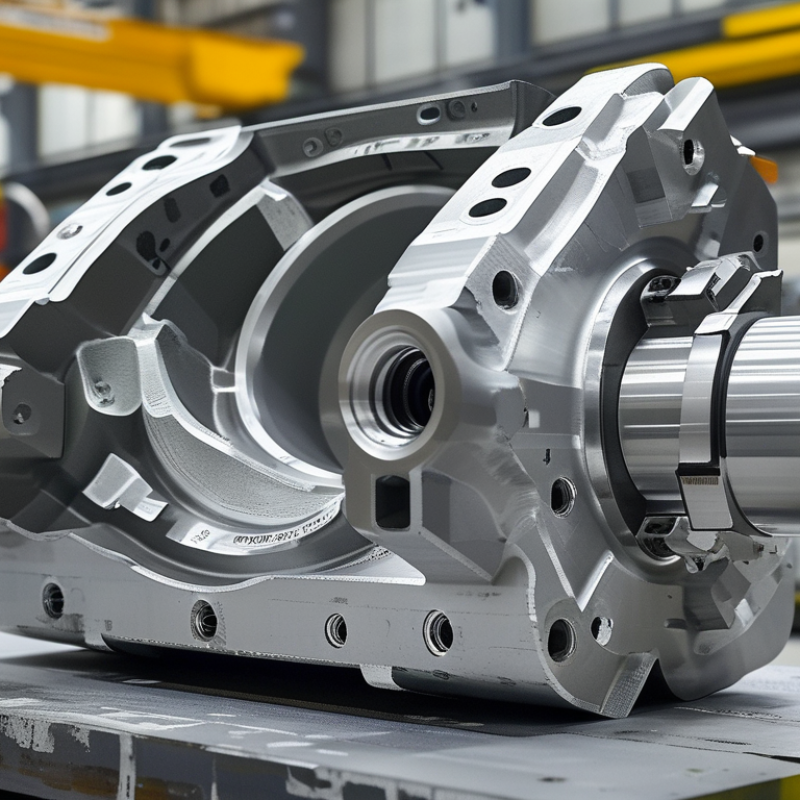
Titanium parts are machined or formed components made from titanium alloys. They appear as housings, fasteners, brackets, shafts, and medical-grade components. Their value comes from a useful balance: low density, high strength, and strong corrosion resistance. They can remain dependable near seawater, chemicals, and changing temperatures. Not everywhere. Surface condition, alloy selection, and finishing still matter.
For global manufacturing, this combination can simplify product design and supply planning. A lighter bracket may reduce shipping weight and installation effort. A corrosion-resistant shaft may need fewer replacements in humid facilities. Standardized titanium parts can also move between qualified suppliers with fewer design changes. That depends on accurate drawings, controlled tolerances, material certificates, and repeatable inspection. CNC machining titanium requires sharp tools, stable fixturing, controlled heat, and careful cutting parameters. Without these controls, heat buildup can damage surfaces and shorten tool life.
The material is not a magic solution. Titanium often costs more than steel and demands careful machining. A design team should compare lifecycle value, not purchase price alone. For example, a part lasting twice as long may justify higher production cost. Still, that assumption needs testing. Load data, cleaning conditions, repair access, and regional standards should guide the decision. When these details are documented, titanium parts support more consistent manufacturing across borders. Their success comes from disciplined engineering, not material choice alone.

Titanium parts earn attention through a rare balance of low density and high strength. Commercially pure titanium has a density near 4.51 g/cm³, while Ti-6Al-4V is about 4.43 g/cm³. These figures appear in ASM Handbook materials data. Steel is usually much heavier.
Strength matters in global manufacturing. Typical Ti-6Al-4V tensile strength approaches 900 MPa after suitable processing. Its strength-to-weight ratio supports lighter brackets, housings, shafts, and aircraft structures. The material also retains useful performance near 400°C. However, titanium is not a universal solution. Its elastic modulus is only about 114 GPa, roughly half that of steel. Designers must check stiffness, vibration, and deflection.
Corrosion resistance is another practical advantage. A stable oxide film protects titanium in seawater, chlorides, and many chemical environments. NACE technical guidance recognizes titanium alloys for demanding corrosion-service applications. The USGS Mineral Commodity Summaries 2025 reports approximately 9.5 million metric tons of global ilmenite production in 2024, showing the scale of the upstream supply chain. Yet supply does not guarantee easy sourcing.
Machining titanium requires discipline. Cutting heat stays near the tool, and poor parameters can cause galling or premature wear. Keep speeds controlled. Use sharp tooling and steady coolant flow. I have seen lightweight designs fail because engineers optimized mass before checking joint stiffness. That lesson is uncomfortable. Titanium rewards careful engineering, not automatic material substitution.
| Material Property | Typical Titanium Value | Common Reference Grade or Condition | Manufacturing Significance |
|---|---|---|---|
| Density | Approximately 4.51 g/cm³ | Commercially pure titanium and titanium alloys | About 40% lighter than steel, helping reduce component weight while maintaining high structural performance. |
| Tensile Strength | 240–345 MPa for commercially pure grades Up to approximately 900–1,100 MPa for Grade 5 alloy | Commercially pure titanium; Ti-6Al-4V | Supports load-bearing parts, especially when strength-to-weight ratio is a primary design requirement. |
| Yield Strength | 170–275 MPa for commercially pure grades Approximately 830–950 MPa for Grade 5 alloy | Typical annealed material conditions | Indicates the stress level at which permanent deformation begins; actual values depend on grade, heat treatment, and product form. |
| Elastic Modulus | Approximately 105–120 GPa | Most titanium grades at room temperature | Lower than steel, allowing useful flexibility but requiring careful consideration of part stiffness and deflection. |
| Specific Strength | High strength-to-weight ratio | Particularly notable for Ti-6Al-4V and other alpha-beta alloys | Enables lightweight designs for aerospace, medical, chemical-processing, and high-performance industrial components. |
| Melting Range | Approximately 1,660–1,670°C for commercially pure titanium Approximately 1,600–1,660°C for common alloys | Grade and alloy dependent | Provides excellent high-temperature capability, although allowable service temperature also depends on environment and exposure time. |
| Thermal Conductivity | Approximately 6–22 W/m·K | Lower than aluminum and most steels; varies by grade | Low thermal conductivity can increase heat concentration during machining and requires appropriate cutting parameters and cooling practices. |
| Coefficient of Thermal Expansion | Approximately 8.5–9.5 × 10⁻⁶/K | Typical room-temperature range | Lower thermal expansion helps dimensional stability across temperature changes compared with many aluminum alloys. |
| Corrosion Resistance | Excellent in seawater, chlorides, and many oxidizing environments | Protective, self-healing titanium oxide film | Reduces the need for protective coatings and supports long service life in marine, chemical, and medical applications. |
| Biocompatibility | Generally high for suitable implant-grade titanium | Commercially pure titanium and Ti-6Al-4V ELI, when processed to applicable standards | Makes titanium suitable for many orthopedic, dental, and surgical components; final suitability depends on standards, surface condition, and application. |
| Magnetic Behavior | Essentially non-ferromagnetic | Commercially pure titanium and common titanium alloys | Useful for applications requiring low magnetic interference, subject to the complete assembly and surrounding materials. |
| Fatigue Performance | Strong fatigue capability when properly designed and finished | Influenced by alloy, surface finish, stress concentration, and environment | Supports cyclic-load applications, but machining marks, sharp transitions, and surface defects should be controlled. |
| Machinability | More difficult than aluminum and mild steel | All titanium grades; Grade 5 requires particular process control | Low thermal conductivity and chemical reactivity can cause heat buildup, tool wear, and work hardening; rigid setups and suitable tooling are important. |
| Recyclability | Recyclable through controlled scrap collection and remelting | Commercially pure titanium and titanium alloys | Separating alloys and avoiding contamination improves recovery quality and supports more sustainable manufacturing programs. |
Titanium parts offer a strong advantage in international production: high strength with relatively low weight. This balance helps reduce assembly weight without weakening structural performance.
Titanium also resists corrosion in humid, salty, and chemically demanding environments. That matters when components travel across climates or operate outdoors. Its stable performance can support longer service intervals and fewer replacement shipments.
Titanium remains reliable at elevated temperatures, although its machining behavior demands experienced process control. Cutting generates heat quickly. Tool wear can be significant.
In global manufacturing, consistency is just as important as material strength. Clear drawings, controlled tolerances, and documented inspection methods help different facilities produce matching parts.
Traceability records also make quality reviews easier across borders. From practical production experience, surface finish and thread accuracy often need extra attention.
A part may meet the drawing but still cause assembly friction. That is an uncomfortable detail worth checking early.
Titanium is not always the cheapest choice, either. Its value depends on service life, weight reduction, and maintenance demands, not purchase price alone.
Tips:
Confirm the alloy, tolerance, finish, and inspection method before production. Request sample parts and review machining marks closely. Keep specifications simple where possible. Less ambiguity helps international teams work better.
Why Choose Titanium Parts for Global Manufacturing?
Common manufacturing methods determine titanium’s cost, strength, and delivery reliability. CNC machining suits tight tolerances and small production runs. It can produce clean threads, thin walls, and complex medical or aerospace parts. However, titanium removes heat poorly. Sharp tools, steady coolant, and slower cutting speeds are essential.
Forging aligns the metal’s grain structure and improves fatigue performance. It fits shafts, brackets, and load-bearing components. Casting supports complex shapes with fewer machining steps, but surface defects require strict inspection. Additive manufacturing reduces material waste and creates internal channels that conventional tools cannot reach. The process still needs careful powder control, heat treatment, and post-machining. The USGS Mineral Commodity Summaries 2024 estimated global titanium sponge production at approximately 280,000 metric tons in 2023, showing a substantial but specialized supply base.
Tips: Match the method to the part’s stress, volume, and tolerance. Request material certificates, heat-treatment records, and dimensional reports. ISO 9001 systems help, but paperwork alone cannot reveal every defect. CT scanning or ultrasonic testing may be worthwhile for critical parts. Powder-bed printing is impressive, though not automatically the best choice. A simpler forged design may perform better and cost less. Specifications sometimes overreach. Review them with a manufacturing engineer before production.
Why Choose Titanium Parts for Global Manufacturing?
Titanium parts are chosen when low weight, strength, and corrosion resistance matter together. In aerospace structures, they reduce mass while supporting demanding loads and temperature changes. Marine pumps and offshore equipment benefit from titanium’s resistance to seawater. Medical instruments may require titanium for its biocompatibility and clean surface performance. Chemical processing systems also use it near aggressive fluids. The application decides the value.
Yet, titanium is not automatically the best material. The correct grade must match strength, temperature, corrosion exposure, and forming requirements. Design teams should compare fatigue data, tolerances, and expected service life. For medical components, traceability and documented material certification are essential. For outdoor or marine use, joint design deserves careful attention. Galvanic corrosion can appear when titanium contacts dissimilar metals. Surface finish can also affect cleaning and wear.
Manufacturing route matters. Machining titanium demands sharp tools, controlled cutting speeds, and effective heat management. Poor tool control can damage the part. I have seen small design assumptions create expensive rework. Global sourcing adds another layer of risk. Ask suppliers about inspection methods, dimensional reports, material certificates, and packaging protection. Do not accept vague quality claims. A lightweight part is not truly efficient if production waste, repairs, or transport damage offset its benefits. Engineers should review the full lifecycle, not only the purchase price. Titanium selection still requires judgment.
Industry Applications and Selection Considerations for Titanium Parts


For those larger-sized parts, or smaller quantity runs, we have 2 independent powder coat booths and ovens. The quality, durability and affordability of today’s powder coating finishes make this the process of choice for world-class companies.
Powder coating advantages over other forms of coating are many. Materials used in the Powder coating process can be metals and non-metals that come in a multitude of thicknesses, textures, colors, etc. Another of Powder coating’s biggest advantages over conventional coatings is its ability to create finishes in many different textures. Powder Coating Booths allow us the ability to apply these advantages to large products.
Tri-State Fabricators runs a full-service conveyor line for painting. Wet painting can provide protection or decoration to many different part styles. From start to finish, every project is easier to undergo random and point-based inspection by our skilled painting team.
Advantages to our Wet Paint Line are these lines start with product prep and ends with a thorough inspection of a high quality finished product. Our ability to complete large and small projects with a superior finish and doing so in a timely and economical fashion. This passes along the savings in production to our customers. When powder coating ins not an option, our Wet Paint Line gets the job done right the first time.
When the parts get big and heavy we roll-out our custom paint racks and oversize booth. By utilizing our partnerships with all the major paint brands, we can match virtually any color with wet paint.
The advantages of having access to a Wet Paint Booth are many. Large projects of many different shapes can be loaded into the booth. The Wet Paint Booth offers an environment that is much more controlled than a typical parts painting operation.
Not only are they used because of their controlled environment, but they’re are also advantageous when it comes to applying paint to parts that are needed in industries that require specialty coatings such as medical, aerospace, etc.
Our military forces have some very high standards when it comes to the finish of their vehicles and equipment. From the first pre-treatment step to final coat, it takes a great deal of knowledge and experience to protect the men and women of our armed forces. They deserve only the best, and Tri-State Fabricators provides it.
All of our processes are closely monitored by our staff and management teams. Both of which are highly trained in the processes of metal fabrication and finishing. Tri-State Fabricators’ goal is to always fully satisfy each and every customer, including the military. We will always put a 110% into what we do.
Abrasive media blasting is an excellent way to remove old paint, rust, and increase the paint/powder adhesion. Glass beads produce a much smoother and brighter finish than angular abrasives; leaving the part clean yet without any dimensional change. Chemically inert and environmentally friendly, we can recycle our beads approximately 30 times; making them a more preferred method of metal cleaning or surface finishing.
Advantages to Glass Bead Blasting are many. Glass bead blast media is used when a project is needing rough surfaces need to become smooth for applications of coatings such as paint. It is typically used to clean paint and rust from a product surface without deforming the surface it is being used on. Overall, compared to many other blasting media, Glass Bead Blasting is a very economical choice and those savings are always passed on to our customers.
Tri-State Fabricators utilize a zinc phosphate wash to clean and etch the material to ensure the best paint adhesion possible. The unique design of our 3-stage wash system does the work like a 5-stage. From Cleaning and rinsing to conversion coating and post-treatment, Our Part Washing process is a complete service and works throughout the fabrication service and the finishing service.
Along with the previously mentioned benefits, Curing is a vital chemical reaction that leaves the product finish hard and relatively safe from mild abrasion and aggressive corrosion. This process can be done in more than one way; ambient air-dry or in curing ovens at temps that exceed 240°.
From fixing paint mistakes (someone else’s of course) to simply cleaning our paint line hooks, our burn-off oven is put to good use. After a quick burn-off, a little clean up, and a fresh coat of paint, your parts will look better than new.
Why does our Burn-Off Oven work so well? Because super heating the air around parts turns the materials into ashes. From paint and powder coatings to rubber and machining oils, high temps do the job without degrading the integrity of the part.
Masking is a vital part of producing high quality products. We have die-cut masking patterns to protect machined surfaces as well as a wide range of plugs and caps to protect threaded holes and bolts. We provide permanent and temporary masking.
Masking allows the selected sections of a product to be protected from a fabrication or finishing service. This can be with both chemicals when etching and tapes, paints when only finishing just a section of the product. Masking is great in aiding the customization process of a project.
Screen printing is a photographic process that transfers artwork onto a porous nylon screen which allows colored ink to flow through the screen and be deposited on an aluminum or plastic component. We can generally have just about any design created onto a screen for your parts.
Some of the advantages of Screen Printing are, brand recognition for your business displaying on your products, assembly instructions, product warnings/hazards, etc. Tri-State Fabricators produces Screen Printing of the highest quality so you know it’s durable.
Metal Finishing is the art of treating the exterior portion of product, often metal but can also be made of other materials, so that the surface is clean and free of any debris. Then the process of applying coats or either paint of powder coat takes place. This coating process improves the quality of the product in both appearance and resistance to wear and corrosion.
Tri-State Fabricators, Inc., understands that a project typically isn’t complete until a high-quality finish has been added to your product. This is why our painting and powder coating teams continuously inspect the products throughout the Metal Finishing process.

