


Why Choose Thermal Bond Non Woven Fabric?

thermal bond non woven fabric is produced by heating thermoplastic fibers until they bond at selected points. This process can create a clean, stable sheet without traditional liquid adhesives. In practical production, the fabric may feel soft, firm, airy, or slightly textured, depending on fiber type and bonding temperature. That range makes it useful for hygiene products, filtration layers, packaging, furniture padding, and automotive interiors.

Performance depends on more than appearance. Engineers usually assess basis weight, tensile strength, elongation, air permeability, thickness, and thermal resistance. A lightweight sheet may improve breathability, while a denser structure can provide stronger support. Experienced manufacturers also monitor web uniformity and bonding consistency across the roll. Small temperature changes can affect softness and strength.

The advantages are clear.

Thermal bonding can support efficient, solvent-free manufacturing and consistent material design. It may also allow recycled or blended fibers, when their compatibility and performance are properly verified. However, no fabric is ideal for every use. Excessive heat can reduce flexibility, while weak bonding may cause fiber shedding or poor durability. This is where technical testing matters.

Reliable selection should include supplier documentation, laboratory results, and application-specific trials. Standards such as ISO or ASTM methods can help compare results, but test conditions still influence conclusions. A material that performs well in a dry laboratory may behave differently under humidity, pressure, or repeated folding. That point is easy to overlook. Careful evaluation helps buyers choose a Thermal Bond Non Woven fabric that balances strength, comfort, cost, and long-term reliability.
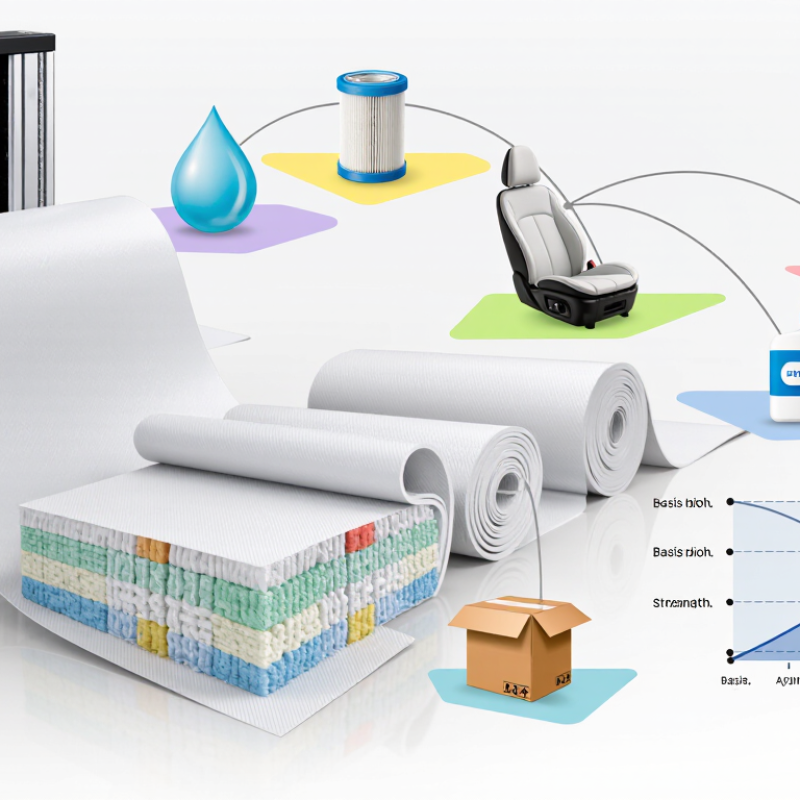
Why Choose Thermal Bond Non Woven Fabric?

What Is Thermal Bond Non Woven Fabric?

Thermal bond non woven fabric is a sheet made from loose fibers bonded by controlled heat. Unlike woven fabric, it has no traditional yarn structure. Heat softens special fibers or bonding components, then pressure joins the layers into a stable web. The result can feel soft, firm, porous, or slightly textured, depending on fiber type, weight, and processing temperature. It is commonly used in hygiene products, filtration layers, packaging, furniture padding, and protective covers.

Its main advantages are efficient production, consistent thickness, and flexible design. Manufacturers can adjust strength, air permeability, softness, and absorbency for different applications. From practical testing, edge stability often matters more than appearance. A sheet may look uniform but tear during cutting. It is not perfect. Excessive heat can flatten the web, reduce softness, or create weak spots. Testing should include stretching, airflow, moisture exposure, and repeated handling.

Tips: Check the fabric weight and bonding method before selection. Ask for technical data, including tensile strength and thickness tolerance. Test a small sample under real working conditions. Storage also matters. Keep rolls dry, clean, and away from direct heat. One overlooked detail is compression during transport. Heavy pressure can change loft permanently. Review the final performance, not only the first impression.


How Is Thermal Bond Non Woven Fabric Manufactured?

Thermal bond non woven fabric begins with carefully selected thermoplastic polymer chips. Operators melt the chips and push the liquid polymer through fine spinneret holes. This creates continuous filaments with controlled thickness. The filaments cool quickly in moving air. Then, a web-forming machine spreads them across a moving belt.

The loose web has little strength at this stage. Heat provides the structure. A heated calender presses the web between patterned rollers, bonding selected points. Some production lines use hot air instead. The method depends on fiber type, thickness, and the required softness. Temperature, pressure, and line speed must stay balanced. Too much heat can flatten the fabric. Too little heat can cause weak bonding.

Quality technicians check weight, thickness, tensile strength, air permeability, and surface appearance. They also inspect edges and bonding patterns under consistent lighting. Small process changes can create noticeable differences. A humid room may affect handling. A slight temperature drift may produce uneven strength. The process is efficient, but it is not flawless. Careful records and repeated testing remain necessary. When properly controlled, thermal bonding produces clean, uniform fabric without chemical binders. Its light structure suits filtration, hygiene products, packaging, insulation, and selected automotive applications. Performance still depends on honest material selection and realistic design requirements.

What Properties Define Thermal Bond Non Woven Fabric?

Why Choose Thermal Bond Non Woven Fabric?

Thermal bond non woven fabric is made by heating thermoplastic fibers until selected points fuse together. This process creates a stable web without liquid adhesives. Its key properties include light weight, clean appearance, and consistent thickness. In practical use, the fabric often feels soft but keeps its shape under moderate pressure.

Air permeability is another important property. A loose fiber structure allows air to pass through, supporting breathable filters, hygiene layers, and protective packaging. Bond density changes this behavior. More bonding can improve strength, but it may reduce softness and airflow. The balance matters. Small changes can affect performance.

Thermal stability and resilience also define the material. Properly bonded fibers can recover after compression and resist fraying during cutting. Some constructions provide useful insulation because trapped air slows heat transfer. However, thermal bond fabric is not automatically heat resistant. Excessive temperature can deform the fibers. Moisture absorption also depends on the fiber type, rather than the bonding method alone.

From production experience, uniform heating is essential. Uneven bonding may create hard spots, weak edges, or inconsistent tensile strength. I would not judge quality by appearance alone. Testing basis weight, thickness, air permeability, and recovery after compression gives a more reliable picture. Even then, one weakness remains: laboratory results may not match performance after repeated washing, folding, or long storage.

Where Is Thermal Bond Non Woven Fabric Used?

Why Choose Thermal Bond Non Woven Fabric?

Where Is Thermal Bond Non Woven Fabric Used?

Thermal bond non woven fabric is used where light weight, structure, and controlled airflow matter. It is formed by heating thermoplastic fibers until selected points bond together. This process can create a clean, stable sheet without traditional liquid adhesives. In practical production, engineers choose the fabric by weight, thickness, fiber type, strength, and heat resistance.

In hygiene products, the material may support topsheets, backsheets, or absorbent core layers. Its soft surface can improve comfort, while its open structure helps liquids move through designed areas. It is also used in filtration media, where fiber spacing affects airflow and particle capture. The fit matters. A fabric that looks uniform may still perform poorly after compression or humidity exposure.

Furniture makers use thermal bond non woven fabric for lining, padding support, and dust barriers beneath upholstery. Automotive interiors may include it behind door panels, seat structures, and trunk coverings. In agriculture, it can serve as a lightweight crop cover or plant protection layer. Construction applications include insulation facings and protective separators. I have seen specifications fail when buyers focus only on price. Testing remains essential. Samples should be checked for tensile strength, thickness recovery, air permeability, and behavior after heat aging. Thermal bonding is useful, but it is not automatically suitable for every environment.

Why Choose Thermal Bond Non Woven Fabric? - Where Is Thermal Bond Non Woven Fabric Used?

Application Area Typical Product Why Thermal Bond Non Woven Fabric Is Chosen Key Performance Requirements Typical Basis Weight Range* Common Fiber Options
Hygiene Products Acquisition layers, topsheets, backsheet components, and elastic support layers Soft hand feel, low lint, good air permeability, and the ability to be produced continuously at high speed Softness, liquid management, breathability, tensile strength, and skin-contact suitability 15–80 g/m² Polypropylene, polyester, polyethylene, and bicomponent fibers
Filtration Air pre-filters, dust filters, liquid filter support layers, and filter covers Uniform fiber distribution, controllable pore structure, low pressure drop, and stable dimensional performance Particle retention, air or liquid permeability, burst strength, and chemical resistance 30–200 g/m² Polyester, polypropylene, nylon, and specialty bicomponent fibers
Automotive Interiors Trunk liners, door-panel substrates, parcel-shelf coverings, and insulation facings Light weight, good formability, abrasion resistance, and compatibility with molding or lamination processes Dimensional stability, acoustic absorption, abrasion resistance, flame performance, and low odor 60–250 g/m² Polyester, polypropylene, recycled polyester, and blended fibers
Furniture and Bedding Mattress liners, quilt backing, cushion wrapping, and upholstery support layers Consistent coverage, resilience, economical production, and suitability for quilting and adhesive bonding Tear strength, elongation, softness, abrasion resistance, and long-term shape retention 40–180 g/m² Polyester, polypropylene, viscose blends, and bicomponent fibers
Construction Roofing membranes, wall insulation facings, house-wrap components, and protective underlays Fast production, low weight, good tear resistance, and the option to combine the fabric with films or coatings Water resistance when laminated, tensile strength, tear resistance, dimensional stability, and weather durability 50–180 g/m² Polyester, polypropylene, polyethylene, and mineral-compatible fiber blends
Medical and Personal Care Gown components, surgical drape layers, packaging covers, and disposable protective items Clean appearance, controlled fluid barrier performance when laminated, and efficient disposable-product manufacturing Barrier protection, breathability, low lint, tensile strength, and sterilization compatibility where required 20–100 g/m² Polypropylene, polyester, polyethylene, and bicomponent fibers
Agriculture and Horticulture Crop covers, root bags, seedling wraps, and plant-protection materials Light weight, air and moisture exchange, easy handling, and the ability to add ultraviolet stabilizers Air permeability, moisture management, tear strength, light transmission, and outdoor durability 17–100 g/m² Polypropylene, polyester, and ultraviolet-stabilized polymer fibers
Packaging Protective wraps, pouch liners, gift packaging inserts, and cushioning layers Soft surface, clean appearance, flexibility, and resistance to tearing during handling Surface uniformity, tensile strength, tear resistance, printability, and foldability 20–120 g/m² Polyester, polypropylene, viscose blends, and recycled polymer fibers
Electrical and Cable Protection Cable wraps, separator layers, insulation supports, and protective sleeves Low weight, consistent thickness, easy slitting, and the ability to meet application-specific electrical requirements Dielectric performance, heat resistance, tensile strength, dimensional stability, and flame performance 30–150 g/m² Polyester, polypropylene, aramid, and other heat-resistant fibers
Geotextiles and Civil Engineering Drainage filters, separation layers, erosion-control fabrics, and soil-stabilization components Good separation and filtration capability, high production efficiency, and adaptability to different site conditions Permeability, puncture resistance, tensile strength, creep resistance, and soil compatibility 100–500 g/m² Polypropylene, polyester, and recycled polyester fibers

*Basis weight ranges are typical industry reference ranges and vary according to fiber type, web structure, bonding temperature, end-use requirements, and any subsequent coating or lamination process.

Why Choose Thermal Bond Non Woven Fabric?

Thermal bond non woven fabric is chosen when clean structure, controlled thickness, and efficient production matter. Heat bonds compatible fibers without liquid adhesives, reducing odor and unwanted chemical residue. In manufacturing, hot air or calender rollers soften selected fibers and lock the web together. The result feels light but remains stable during cutting, folding, and handling. Small details matter. Fiber blend, bonding temperature, and line speed can change performance.

This fabric suits filtration layers, hygiene components, furniture padding, insulation, and protective packaging. Its open web supports airflow, while its thickness provides cushioning and thermal resistance. A carefully adjusted calender can create a smoother surface for lamination. Hot air bonding can preserve more loft. These differences require testing. Samples may look similar, yet their tensile strength and recovery can differ after compression. Production teams should check basis weight, thickness, tear strength, air permeability, and heat shrinkage.

Thermal bonding can simplify production because it avoids a separate adhesive coating step. Recycling considerations may also improve when the fiber composition remains compatible. Still, it is not perfect. Excessive heat can flatten the web or weaken sensitive fibers. Low bonding may cause fuzzing and edge separation. I would not select fabric from a catalog description alone. Application trials reveal handling issues, moisture response, and compression loss. Reliable suppliers should provide traceable specifications and consistent test data. The right choice is practical, not automatic.

Powder Coat Booths

For those larger-sized parts, or smaller quantity runs, we have 2 independent powder coat booths and ovens. The quality, durability and affordability of today’s powder coating finishes make this the process of choice for world-class companies.

Powder coating advantages over other forms of coating are many. Materials used in the Powder coating process can be metals and non-metals that come in a multitude of thicknesses, textures, colors, etc. Another of Powder coating’s biggest advantages over conventional coatings is its ability to create finishes in many different textures. Powder Coating Booths allow us the ability to apply these advantages to large products.

Wet Paint Line

Tri-State Fabricators runs a full-service conveyor line for painting. Wet painting can provide protection or decoration to many different part styles. From start to finish, every project is easier to undergo random and point-based inspection by our skilled painting team.

Advantages to our Wet Paint Line are these lines start with product prep and ends with a thorough inspection of a high quality finished product. Our ability to complete large and small projects with a superior finish and doing so in a timely and economical fashion. This passes along the savings in production to our customers. When powder coating ins not an option, our Wet Paint Line gets the job done right the first time.

Wet Paint Booths

When the parts get big and heavy we roll-out our custom paint racks and oversize booth. By utilizing our partnerships with all the major paint brands, we can match virtually any color with wet paint.

The advantages of having access to a Wet Paint Booth are many. Large projects of many different shapes can be loaded into the booth. The Wet Paint Booth offers an environment that is much more controlled than a typical parts painting operation.

Not only are they used because of their controlled environment, but they’re are also advantageous when it comes to applying paint to parts that are needed in industries that require specialty coatings such as medical, aerospace, etc.

Military CARC

Our military forces have some very high standards when it comes to the finish of their vehicles and equipment. From the first pre-treatment step to final coat, it takes a great deal of knowledge and experience to protect the men and women of our armed forces. They deserve only the best, and Tri-State Fabricators provides it.

All of our processes are closely monitored by our staff and management teams. Both of which are highly trained in the processes of metal fabrication and finishing. Tri-State Fabricators’ goal is to always fully satisfy each and every customer, including the military. We will always put a 110% into what we do.

Glass-Bead Blasting

Abrasive media blasting is an excellent way to remove old paint, rust, and increase the paint/powder adhesion. Glass beads produce a much smoother and brighter finish than angular abrasives; leaving the part clean yet without any dimensional change. Chemically inert and environmentally friendly, we can recycle our beads approximately 30 times; making them a more preferred method of metal cleaning or surface finishing.

Advantages to Glass Bead Blasting are many. Glass bead blast media is used when a project is needing rough surfaces need to become smooth for applications of coatings such as paint. It is typically used to clean paint and rust from a product surface without deforming the surface it is being used on. Overall, compared to many other blasting media, Glass Bead Blasting is a very economical choice and those savings are always passed on to our customers.

Part Washing

Tri-State Fabricators utilize a zinc phosphate wash to clean and etch the material to ensure the best paint adhesion possible. The unique design of our 3-stage wash system does the work like a 5-stage. From Cleaning and rinsing to conversion coating and post-treatment, Our Part Washing process is a complete service and works throughout the fabrication service and the finishing service.

Along with the previously mentioned benefits, Curing is a vital chemical reaction that leaves the product finish hard and relatively safe from mild abrasion and aggressive corrosion. This process can be done in more than one way; ambient air-dry or in curing ovens at temps that exceed 240°.

Burn-Off Oven

From fixing paint mistakes (someone else’s of course) to simply cleaning our paint line hooks, our burn-off oven is put to good use. After a quick burn-off, a little clean up, and a fresh coat of paint, your parts will look better than new.

Why does our Burn-Off Oven work so well? Because super heating the air around parts turns the materials into ashes. From paint and powder coatings to rubber and machining oils, high temps do the job without degrading the integrity of the part.

Masking

Masking is a vital part of producing high quality products. We have die-cut masking patterns to protect machined surfaces as well as a wide range of plugs and caps to protect threaded holes and bolts. We provide permanent and temporary masking.

Masking allows the selected sections of a product to be protected from a fabrication or finishing service. This can be with both chemicals when etching and tapes, paints when only finishing just a section of the product. Masking is great in aiding the customization process of a project.

Screen Printing

Screen printing is a photographic process that transfers artwork onto a porous nylon screen which allows colored ink to flow through the screen and be deposited on an aluminum or plastic component. We can generally have just about any design created onto a screen for your parts.

Some of the advantages of Screen Printing are, brand recognition for your business displaying on your products, assembly instructions, product warnings/hazards, etc. Tri-State Fabricators produces Screen Printing of the highest quality so you know it’s durable.

Metal Finishing

Metal Finishing is the art of treating the exterior portion of product, often metal but can also be made of other materials, so that the surface is clean and free of any debris. Then the process of applying coats or either paint of powder coat takes place. This coating process improves the quality of the product in both appearance and resistance to wear and corrosion.

Tri-State Fabricators, Inc., understands that a project typically isn’t complete until a high-quality finish has been added to your product. This is why our painting and powder coating teams continuously inspect the products throughout the Metal Finishing process.
