


Why Choose Tee Head Bollards for Your Project?

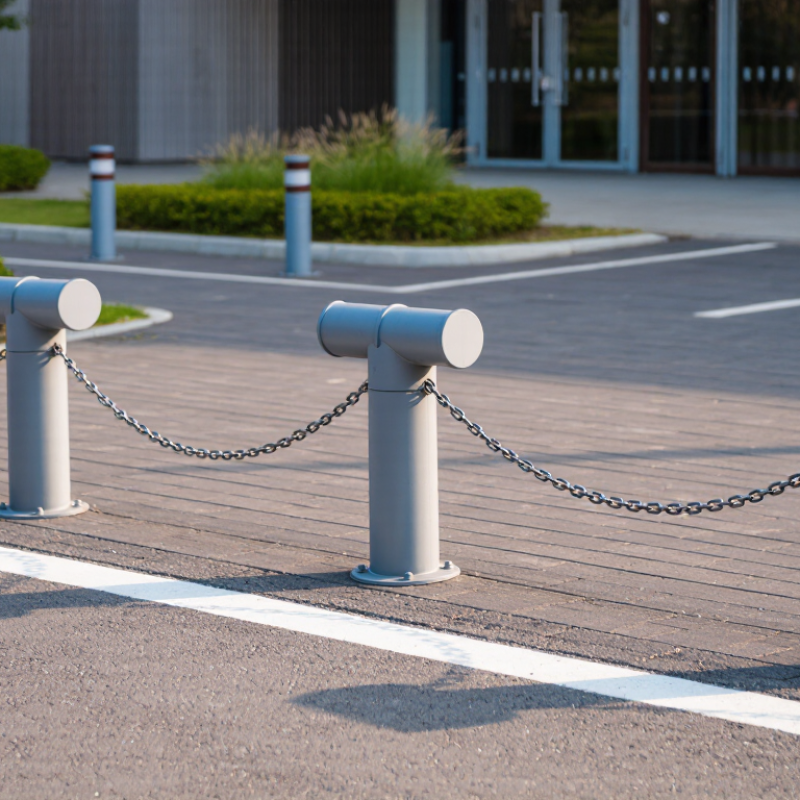
A Tee Head Bollard offers a practical way to mark boundaries, guide movement, and protect selected areas. Its T-shaped top gives pedestrians a clear visual cue and can provide a convenient point for attaching a chain. You may see this design near walkways, parking areas, building entrances, or landscaped edges. It is easy to recognize. That matters when people need to understand where vehicles should stop.

Choosing a bollard involves more than appearance. Consider the site’s traffic, available space, ground conditions, and desired level of protection. A fixed model may suit a permanent boundary, while a removable option can help keep occasional access routes flexible. Materials and finishes also affect maintenance; for example, a painted surface may need periodic inspection where carts or vehicles cause scuffs. Small details count.

A well-chosen Tee Head Bollard can support a tidy, legible site layout, but it is not a universal solution. It should not be treated as a substitute for a complete safety assessment. Measure turning paths, check how the bollard will be anchored, and think about visibility in poor light. Ask the installer or supplier for specifications that match the actual application. Product descriptions can sound reassuring, yet site conditions often tell a more complicated story. The best choice is the one that fits the daily use of the space, not merely the drawing.
Why Choose Tee Head Bollards for Your Project?

What Defines a Tee Head Bollard and How Does Its T-Shaped Design Work?

A tee head bollard is a vertical post finished with a short horizontal bar, forming a clear T shape. The upright anchors the unit; the crosspiece makes its outline easier to notice near a path, driveway, or loading area. In practice, that visible top can help people read the edge of a vehicle zone before they reach it. It may also support a chain when the assembly is specifically designed for that use. Shape alone does not confirm strength.

The T head changes visibility, not the bollard’s basic load path. Vehicle force travels through the post into its base, anchoring, and supporting ground. Each part matters. ASTM F3016/F3016M assesses low-speed vehicle barriers using impact tests at 10, 20, and 30 mph, alongside penetration ratings. Those figures describe tested performance, not every tee head bollard on the market. Check the exact assembly, installation conditions, and test documentation before treating one as a vehicle barrier.

For a site plan, note the crossbar’s width, height, and clearance from nearby walls or signs. A broad cap can improve visibility but may catch bags or narrow the usable route. That detail is easy to miss. Finish and drainage also deserve attention: water trapped around a poorly sealed post can encourage corrosion over time. A T-shaped top looks simple; its safe performance depends on the less visible details below ground.

Why Choose Tee Head Bollards for Your Project? — What Defines a Tee Head Bollard and How Does Its T-Shaped Design Work?
Project Consideration Tee Head Bollard Detail How It Works What to Confirm for Your Project
Basic form A vertical Bollard Post topped by a horizontal crosspiece, creating a T-shaped profile. The upright member provides the main post, while the crosspiece gives the bollard its distinctive visible head. Check the overall height, post diameter, crosspiece length, and clearance around the installation area.
Visibility The wider top profile can make the bollard easier to distinguish from a plain vertical post. The horizontal element creates a recognizable silhouette; contrasting finishes or reflective details can further improve visibility where specified. Consider viewing distance, lighting, background contrast, and any local accessibility or site requirements.
Pedestrian guidance Suitable for use as a visible marker or boundary element in pedestrian areas, subject to the site design. When installed in a planned line, bollards can help indicate the edge of a route or discourage access to a restricted area. Set out spacing and placement to suit pedestrian flow, accessible routes, and emergency access needs.
Vehicle access control A Tee Head shape alone does not establish a bollard’s vehicle-impact performance. Resistance to vehicle impact depends on factors such as the bollard material, construction, foundation, anchoring, and tested system design. For vehicle-impact protection, specify a system with performance documentation appropriate to the required risk level.
Materials and finish Designs may be manufactured in different materials and finishes, depending on the product and intended environment. Material and coating choices affect appearance, maintenance needs, and suitability for exposure to weather or corrosive conditions. Review the product specification, corrosion protection, finish options, and maintenance guidance.
Installation Mounting arrangements vary by product; fixed and removable configurations may be available. The post is secured using the installation method designed for that model and the supporting ground conditions. Confirm the foundation or mounting details, underground services, surface conditions, and any required access clearances.
Best-fit applications Can be considered where a distinctive bollard profile is desired for site demarcation or access management. The T-shaped head provides a different visual form from a simple post, but does not by itself determine the bollard’s function or protection rating. Choose based on the project’s purpose, site layout, required performance, and applicable standards.

Which Materials, Dimensions, and Finishes Determine Tee Head Bollard Performance?

A tee head bollard’s performance starts with its material and the conditions around it. Carbon steel offers strength for busy driveways and loading areas, but exposed surfaces need corrosion protection. Stainless steel can suit coastal or frequently washed sites, though its grade should match local exposure. Cast iron provides a substantial appearance, yet it may not suit every impact or installation requirement. Details matter.

Dimensions affect both visibility and practical clearance. A taller bollard can stand out beside parked vehicles, while its diameter and wall thickness influence stiffness. Measure the clear space between bollards against pedestrian access, carts, and maintenance equipment. Check the base plate or embedment depth too; a strong post with a weak foundation is still a weak installation. For vehicle-impact protection, rely on tested, documented performance rather than appearance alone.

Finishes do more than set the color. Hot-dip galvanizing helps protect steel from corrosion, while a compatible powder coating can add color and another protective layer. Scratches near the base deserve attention, where water, grit, and de-icing salts collect. One detail is easy to overlook: a dark finish may become harder to see at night. Choose contrast and reflectivity for the site, then confirm that repairs and replacement finishes can be matched later. I would not assume one specification fits every entrance; exposure, anchoring, and upkeep change the result.

How Do ASTM F3016 Impact Tests at 10, 20, and 30 mph Guide Security Choices?

Why Choose Tee Head Bollards for Your Project?

ASTM F3016 impact tests help translate vehicle threats into practical security choices. The standard evaluates a 5,000-pound vehicle striking a barrier at 10, 20, or 30 mph. Higher test speeds represent greater impact energy, but a rating alone does not describe every outcome. Check both the speed classification and the penetration rating: ASTM categories distinguish how far the test vehicle travels beyond the barrier. That matters. A Tee head bollard’s shape does not prove its impact performance; results apply to the tested system, including its foundation and installation details. NHTSA’s 2022 Traffic Safety Facts reported 7,522 pedestrian deaths in U.S. traffic crashes, a sobering reminder to assess vehicle access risks carefully.

For a storefront with slow-moving service traffic, a 10 mph test level may suit the assessed threat. A public entrance exposed to faster approaches may warrant evaluating 20 or 30 mph performance. Still, higher ratings can require deeper foundations, more space, and greater project cost. Small detail. Site layout, soil conditions, spacing, and accessible routes all affect the final design. I would avoid treating a speed label as a guarantee; real impacts can differ from controlled tests.

Tip: Ask for the full ASTM F3016 test report, including impact speed, penetration result, bollard spacing, and foundation specification. Confirm those details match the proposed installation—not just the product appearance.

How Should Bollard Height, Spacing, and Foundations Match Site Requirements?

Tee-head bollards need dimensions suited to the site, not just a neat-looking plan. Set height after checking driver sightlines, pedestrian visibility, and the vehicles that must pass. Mock up the proposed height with a stake or tape. It is a small step, but it can reveal a poor fit before concrete is poured.

Plan spacing by the clear gap between bollards, not their center points. The 2010 ADA Standards require an accessible route to be at least 36 inches wide in most conditions. Keep that clear width through the bollard line, and check turning areas, gates, and maintenance access. Measure the clear gap. For vehicle-impact protection, ASTM F2656/F2656M evaluates barriers against specified vehicle mass and speed, with penetration ratings. Select a tested performance level for the site’s risk; appearance alone proves little.

Foundations should reflect soil strength, frost depth, drainage, nearby utilities, and expected impact loads. There is no reliable one-size-fits-all footing depth. Use geotechnical findings and a qualified structural design where impact resistance matters. A tidy drawing can still miss a buried drain. Soil changes everything. Recheck the layout on site before excavation, especially where paving slopes or existing services constrain the footing.

Where Do Tee Head Bollards Support Access Control, Parking, and Streetscape Design?

Tee head bollards help define boundaries without building a solid wall. Their distinctive tops are easy to spot near pedestrian plazas, building entrances, service lanes, and shared streets. Facilities teams can use fixed units for permanent separation or removable models where emergency or delivery access must remain open. A linked chain may suit occasional closures, but it should not obstruct everyday pedestrian movement.

Parking areas benefit when bollards mark the edge of a walkway, protect a corner, or discourage vehicles from crossing into a planted strip. Place them where drivers can see them, including near turning points and the ends of parking rows. Keep clear routes open for wheelchairs, strollers, and delivery carts. NHTSA’s 2022 Traffic Safety Facts: Pedestrians reported 7,522 pedestrian deaths in U.S. traffic crashes. Bollards are one design measure, not a substitute for safe crossings, visibility, or thoughtful vehicle speeds.

On streetscapes, tee head forms can echo nearby lights, signs, and seating while protecting trees or outdoor dining areas. Their usefulness depends on spacing, contrast, foundations, and maintenance. Details matter. A poorly placed post can narrow a route or become a tripping hazard; inspect the layout on foot before installation, not only on a plan.

Article Source:

Powder Coat Booths

For those larger-sized parts, or smaller quantity runs, we have 2 independent powder coat booths and ovens. The quality, durability and affordability of today’s powder coating finishes make this the process of choice for world-class companies.

Powder coating advantages over other forms of coating are many. Materials used in the Powder coating process can be metals and non-metals that come in a multitude of thicknesses, textures, colors, etc. Another of Powder coating’s biggest advantages over conventional coatings is its ability to create finishes in many different textures. Powder Coating Booths allow us the ability to apply these advantages to large products.

Wet Paint Line

Tri-State Fabricators runs a full-service conveyor line for painting. Wet painting can provide protection or decoration to many different part styles. From start to finish, every project is easier to undergo random and point-based inspection by our skilled painting team.

Advantages to our Wet Paint Line are these lines start with product prep and ends with a thorough inspection of a high quality finished product. Our ability to complete large and small projects with a superior finish and doing so in a timely and economical fashion. This passes along the savings in production to our customers. When powder coating ins not an option, our Wet Paint Line gets the job done right the first time.

Wet Paint Booths

When the parts get big and heavy we roll-out our custom paint racks and oversize booth. By utilizing our partnerships with all the major paint brands, we can match virtually any color with wet paint.

The advantages of having access to a Wet Paint Booth are many. Large projects of many different shapes can be loaded into the booth. The Wet Paint Booth offers an environment that is much more controlled than a typical parts painting operation.

Not only are they used because of their controlled environment, but they’re are also advantageous when it comes to applying paint to parts that are needed in industries that require specialty coatings such as medical, aerospace, etc.

Military CARC

Our military forces have some very high standards when it comes to the finish of their vehicles and equipment. From the first pre-treatment step to final coat, it takes a great deal of knowledge and experience to protect the men and women of our armed forces. They deserve only the best, and Tri-State Fabricators provides it.

All of our processes are closely monitored by our staff and management teams. Both of which are highly trained in the processes of metal fabrication and finishing. Tri-State Fabricators’ goal is to always fully satisfy each and every customer, including the military. We will always put a 110% into what we do.

Glass-Bead Blasting

Abrasive media blasting is an excellent way to remove old paint, rust, and increase the paint/powder adhesion. Glass beads produce a much smoother and brighter finish than angular abrasives; leaving the part clean yet without any dimensional change. Chemically inert and environmentally friendly, we can recycle our beads approximately 30 times; making them a more preferred method of metal cleaning or surface finishing.

Advantages to Glass Bead Blasting are many. Glass bead blast media is used when a project is needing rough surfaces need to become smooth for applications of coatings such as paint. It is typically used to clean paint and rust from a product surface without deforming the surface it is being used on. Overall, compared to many other blasting media, Glass Bead Blasting is a very economical choice and those savings are always passed on to our customers.

Part Washing

Tri-State Fabricators utilize a zinc phosphate wash to clean and etch the material to ensure the best paint adhesion possible. The unique design of our 3-stage wash system does the work like a 5-stage. From Cleaning and rinsing to conversion coating and post-treatment, Our Part Washing process is a complete service and works throughout the fabrication service and the finishing service.

Along with the previously mentioned benefits, Curing is a vital chemical reaction that leaves the product finish hard and relatively safe from mild abrasion and aggressive corrosion. This process can be done in more than one way; ambient air-dry or in curing ovens at temps that exceed 240°.

Burn-Off Oven

From fixing paint mistakes (someone else’s of course) to simply cleaning our paint line hooks, our burn-off oven is put to good use. After a quick burn-off, a little clean up, and a fresh coat of paint, your parts will look better than new.

Why does our Burn-Off Oven work so well? Because super heating the air around parts turns the materials into ashes. From paint and powder coatings to rubber and machining oils, high temps do the job without degrading the integrity of the part.

Masking

Masking is a vital part of producing high quality products. We have die-cut masking patterns to protect machined surfaces as well as a wide range of plugs and caps to protect threaded holes and bolts. We provide permanent and temporary masking.

Masking allows the selected sections of a product to be protected from a fabrication or finishing service. This can be with both chemicals when etching and tapes, paints when only finishing just a section of the product. Masking is great in aiding the customization process of a project.

Screen Printing

Screen printing is a photographic process that transfers artwork onto a porous nylon screen which allows colored ink to flow through the screen and be deposited on an aluminum or plastic component. We can generally have just about any design created onto a screen for your parts.

Some of the advantages of Screen Printing are, brand recognition for your business displaying on your products, assembly instructions, product warnings/hazards, etc. Tri-State Fabricators produces Screen Printing of the highest quality so you know it’s durable.

Metal Finishing

Metal Finishing is the art of treating the exterior portion of product, often metal but can also be made of other materials, so that the surface is clean and free of any debris. Then the process of applying coats or either paint of powder coat takes place. This coating process improves the quality of the product in both appearance and resistance to wear and corrosion.

Tri-State Fabricators, Inc., understands that a project typically isn’t complete until a high-quality finish has been added to your product. This is why our painting and powder coating teams continuously inspect the products throughout the Metal Finishing process.


