


Bellows Valves Manufacturers matter when a process demands dependable isolation, especially where hazardous, corrosive, or high-purity fluids leave little room for leakage. A metal bellows forms a flexible barrier between the process fluid and the valve stem. Picture a compact valve on a hot steam line: each operating cycle bends the bellows, while the external stem seal remains separated from the fluid. That detail can make a practical difference.
A capable manufacturer does more than supply a valve. It helps match bellows material, pressure and temperature limits, connection type, and cycle expectations to the application. It should also provide traceable material information, relevant test records, and clear guidance on installation and maintenance. Ask specific questions. What testing supports the stated service life? How are welds inspected? Which operating conditions fall outside the recommendation? Those answers deserve more weight than a broad promise of “zero leakage.”
A trustworthy expert quotation requires a verifiable source. No article or named expert was provided here, so inventing a quotation would undermine the reliability this topic calls for. This introduction therefore avoids attributing unsourced words to an industry professional. That omission is intentional—and worth reflecting on. Bellows valves can reduce certain leakage paths, but they are not maintenance-free or suitable for every service. The following outline should examine performance, materials, quality controls, and manufacturer support, helping readers compare suppliers with evidence rather than slogans.
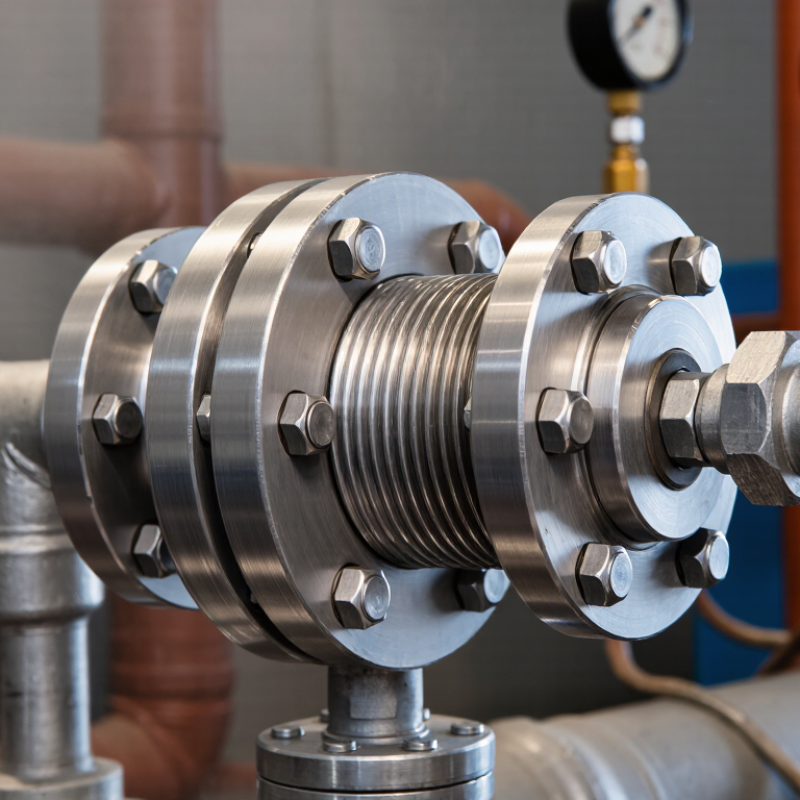
Stem sealing is a small interface with a large consequence. A weak seal can release process gas during routine valve operation. When evaluating bellows-valve manufacturers, ask how they verify the stem seal, not only how they describe its design. Small details matter.
ISO 15848-1 provides a framework for classifying valve fugitive-emission performance through type testing. A manufacturer tests a representative valve by cycling it under specified conditions while measuring leakage around the stem sealing area. Temperature changes and repeated operation challenge the seal. Test records should identify the valve configuration, test conditions, leakage measurements, and achieved classification. Without those details, a certificate tells only part of the story.
The IEA’s Global Methane Tracker 2024 estimated that fossil-fuel operations emitted about 120 million tonnes of methane in 2023. That figure covers the sector, not valve stem leaks specifically, but it shows why dependable sealing deserves attention. Ask for ISO 15848-1 test evidence and confirm it matches the valve’s materials and service conditions. A laboratory result cannot guarantee identical field performance. It is still useful evidence, and worth examining carefully.

Selecting a bellows valve starts with pressure and temperature, not the class number alone. ASME B16.34-2020 sets pressure-temperature ratings by material group and class. Its table for Group 1.1 carbon steel rates Class 150 at 285 psi at 100°F, while Class 2500 reaches 6,170 psi. These figures are not universal; material and operating temperature change the allowable rating.
That distinction matters. A process line carrying hot steam may need a different class than a cool-water line at similar pressure. Engineers should compare maximum operating and upset conditions against the standard’s rating tables, then check the valve’s materials, end connections, and design limits. A bellows can help limit stem leakage, but it does not raise the body’s pressure rating.
Check the metal.
ASME B16.34 also addresses design, materials, dimensions, and testing, giving buyers a consistent basis for comparing valves. Ask manufacturers to identify the applicable material group and provide pressure-temperature documentation for the exact configuration. A neat table can still mislead if the service temperature or alloy is wrong. That small detail is easy to overlook.
API 602 covers compact steel gate, globe, and check valves in NPS 4 and smaller sizes. That limit matters when a bellows-sealed valve must fit a crowded pipe rack or a small equipment skid. A smaller envelope can ease installation, but it does not guarantee a suitable bellows design. Buyers still need to check pressure class, end connections, materials, temperature limits, and the manufacturer’s documented test procedures.
The standard’s scope is a useful starting point, not proof that every bellows valve meets every service need. API 602 addresses valve construction; bellows cycle life and leakage performance require separate evidence. The U.S. Department of Energy’s Improving Steam System Performance sourcebook reports that 15–30 percent of steam traps may fail in systems without regular maintenance. That figure concerns traps, not bellows valves, but it shows why inspection and maintenance plans matter. Ask for test records and clear inspection intervals. Fit matters. One detail is easy to miss: compact bodies can leave less room for insulation or access during maintenance. Check the actual installation drawing before specifying the valve.
| Selection Dimension | Relevant Fact | Why It Matters for Compact Bellows Valves |
|---|---|---|
| API 602 size scope | API 602 covers compact steel gate, globe, and check valves in sizes NPS 4 and smaller. | It provides a relevant standard framework for many small-bore steel valve applications. Confirm that the particular valve type and design are covered by the applicable edition. |
| NPS 4 boundary | NPS 4 is the upper nominal size in API 602’s stated size range; it corresponds approximately to DN 100. | The boundary helps identify when a compact-valve standard may be relevant. NPS is a nominal designation, not a direct measurement of the valve’s outside diameter. |
| Smaller nominal sizes | Common small-bore designations include NPS 1/2 (DN 15), NPS 1 (DN 25), and NPS 2 (DN 50). | Compact valves in these sizes can help with space-constrained piping, but dimensions and end connections should be checked against the project specification. |
| Bellows-seal function | A bellows seal provides a secondary pressure boundary around the stem, reducing reliance on the stem packing as the primary containment barrier. | This design can be considered where minimizing fugitive emissions or process-fluid leakage at the stem is important. Actual performance depends on design, materials, operating conditions, and testing. |
| Standard and design verification | API 602’s scope does not by itself establish that every bellows-seal valve design complies with the standard. | Ask for the applicable standard edition, design documentation, pressure-temperature ratings, materials, and any required inspection or test records. |
| Operating conditions | Allowable pressure and temperature depend on the valve’s pressure class, body and trim materials, end connections, and applicable ratings. | Check the full pressure-temperature rating and bellows suitability for the specified fluid, temperature range, pressure, and cycling frequency. |
| Installation and maintenance | Compact body dimensions do not guarantee identical face-to-face dimensions, actuation requirements, or maintenance clearances. | Review certified drawings, access for operation, installation orientation, and the manufacturer’s guidance for inspection and bellows replacement. |
For a bellows valve, the pressure boundary is only as dependable as its material record. A material certificate connects the valve’s alloy to a specific heat number, linking the finished part to its original melt. That link matters when corrosion resistance, temperature, or service conditions leave little room for guesswork.
ASTM A182/A182M lists F316 stainless steel with 16–18% chromium, 10–14% nickel, and 2–3% molybdenum. These ranges help buyers check whether the reported chemistry matches the ordered grade. An EN 10204 Type 3.1 inspection certificate also provides test results and confirmation against the order. Verify the heat number on the certificate against the valve marking and purchase records. Small mismatches deserve attention.
Paper can look convincing. Errors still happen. Check that the grade, heat number, and test values agree across the certificate, packing records, and valve identification. If a marking is faint or missing, ask the manufacturer for a documented traceability link before installation. A certificate cannot prove every detail about a valve’s history, and that limitation is worth remembering.
Why Choose Bellows Valves Manufacturers?
Which Pressure, Temperature, and Cycle-Test Records Buyers Should Review
Reliable bellows valve selection starts with records, not polished claims. Ask for pressure-test reports linked to the valve model or production batch. Check the test medium, pressure, hold time, acceptance criteria, and instrument calibration status. A passing result should be traceable. A neat report alone proves little.
Temperature records should show the tested range, dwell time, and any leakage or operating checks performed afterward. For cycle testing, review the number of strokes, test conditions, and defined failure limits. Confirm whether results represent a design qualification test or routine production checks; they serve different purposes. Look for notes on bellows material and inspection methods, too. Missing details do happen, and buyers should ask why rather than assume the test was unsuitable. Records are only useful when the test setup reflects the intended service conditions.
Tips: Match the test pressure and temperature to your operating envelope, then verify the report’s serial or batch reference. Ask for raw readings if a summary hides important details. Keep one question in mind: what would make this valve fail in our actual process?
Pressure, Temperature, and Cycle-Test Records Buyers Should Review
How to read this chart: The bars count example record fields to check in each test category; they are not test results or performance benchmarks.
Review pressure records for test pressure, hold time, test medium, and leakage acceptance criteria. Check temperature records for test temperature, soak time, and leakage or operability observations. For cycle tests, verify cycle count, stroke definition, test medium and pressure, and leakage checks before and after cycling. Confirm that the procedures and acceptance criteria match the valve design, applicable standard, and purchase specification.


For those larger-sized parts, or smaller quantity runs, we have 2 independent powder coat booths and ovens. The quality, durability and affordability of today’s powder coating finishes make this the process of choice for world-class companies.
Powder coating advantages over other forms of coating are many. Materials used in the Powder coating process can be metals and non-metals that come in a multitude of thicknesses, textures, colors, etc. Another of Powder coating’s biggest advantages over conventional coatings is its ability to create finishes in many different textures. Powder Coating Booths allow us the ability to apply these advantages to large products.
Tri-State Fabricators runs a full-service conveyor line for painting. Wet painting can provide protection or decoration to many different part styles. From start to finish, every project is easier to undergo random and point-based inspection by our skilled painting team.
Advantages to our Wet Paint Line are these lines start with product prep and ends with a thorough inspection of a high quality finished product. Our ability to complete large and small projects with a superior finish and doing so in a timely and economical fashion. This passes along the savings in production to our customers. When powder coating ins not an option, our Wet Paint Line gets the job done right the first time.
When the parts get big and heavy we roll-out our custom paint racks and oversize booth. By utilizing our partnerships with all the major paint brands, we can match virtually any color with wet paint.
The advantages of having access to a Wet Paint Booth are many. Large projects of many different shapes can be loaded into the booth. The Wet Paint Booth offers an environment that is much more controlled than a typical parts painting operation.
Not only are they used because of their controlled environment, but they’re are also advantageous when it comes to applying paint to parts that are needed in industries that require specialty coatings such as medical, aerospace, etc.
Our military forces have some very high standards when it comes to the finish of their vehicles and equipment. From the first pre-treatment step to final coat, it takes a great deal of knowledge and experience to protect the men and women of our armed forces. They deserve only the best, and Tri-State Fabricators provides it.
All of our processes are closely monitored by our staff and management teams. Both of which are highly trained in the processes of metal fabrication and finishing. Tri-State Fabricators’ goal is to always fully satisfy each and every customer, including the military. We will always put a 110% into what we do.
Abrasive media blasting is an excellent way to remove old paint, rust, and increase the paint/powder adhesion. Glass beads produce a much smoother and brighter finish than angular abrasives; leaving the part clean yet without any dimensional change. Chemically inert and environmentally friendly, we can recycle our beads approximately 30 times; making them a more preferred method of metal cleaning or surface finishing.
Advantages to Glass Bead Blasting are many. Glass bead blast media is used when a project is needing rough surfaces need to become smooth for applications of coatings such as paint. It is typically used to clean paint and rust from a product surface without deforming the surface it is being used on. Overall, compared to many other blasting media, Glass Bead Blasting is a very economical choice and those savings are always passed on to our customers.
Tri-State Fabricators utilize a zinc phosphate wash to clean and etch the material to ensure the best paint adhesion possible. The unique design of our 3-stage wash system does the work like a 5-stage. From Cleaning and rinsing to conversion coating and post-treatment, Our Part Washing process is a complete service and works throughout the fabrication service and the finishing service.
Along with the previously mentioned benefits, Curing is a vital chemical reaction that leaves the product finish hard and relatively safe from mild abrasion and aggressive corrosion. This process can be done in more than one way; ambient air-dry or in curing ovens at temps that exceed 240°.
From fixing paint mistakes (someone else’s of course) to simply cleaning our paint line hooks, our burn-off oven is put to good use. After a quick burn-off, a little clean up, and a fresh coat of paint, your parts will look better than new.
Why does our Burn-Off Oven work so well? Because super heating the air around parts turns the materials into ashes. From paint and powder coatings to rubber and machining oils, high temps do the job without degrading the integrity of the part.
Masking is a vital part of producing high quality products. We have die-cut masking patterns to protect machined surfaces as well as a wide range of plugs and caps to protect threaded holes and bolts. We provide permanent and temporary masking.
Masking allows the selected sections of a product to be protected from a fabrication or finishing service. This can be with both chemicals when etching and tapes, paints when only finishing just a section of the product. Masking is great in aiding the customization process of a project.
Screen printing is a photographic process that transfers artwork onto a porous nylon screen which allows colored ink to flow through the screen and be deposited on an aluminum or plastic component. We can generally have just about any design created onto a screen for your parts.
Some of the advantages of Screen Printing are, brand recognition for your business displaying on your products, assembly instructions, product warnings/hazards, etc. Tri-State Fabricators produces Screen Printing of the highest quality so you know it’s durable.
Metal Finishing is the art of treating the exterior portion of product, often metal but can also be made of other materials, so that the surface is clean and free of any debris. Then the process of applying coats or either paint of powder coat takes place. This coating process improves the quality of the product in both appearance and resistance to wear and corrosion.
Tri-State Fabricators, Inc., understands that a project typically isn’t complete until a high-quality finish has been added to your product. This is why our painting and powder coating teams continuously inspect the products throughout the Metal Finishing process.

