


Why Choose quartz glass tube for Industrial Applications?
In demanding industrial environments, material choice is rarely decorative. It affects uptime, product purity, energy use, and maintenance costs. A quartz glass tube can remain stable under intense heat, sudden temperature changes, and many corrosive chemicals. That matters inside furnace assemblies, semiconductor processing equipment, laboratory reactors, ultraviolet systems, and chemical sampling lines.
Dr. John C. Mauro, a recognized glass scientist and professor, describes the broader principle clearly: “Glass performance begins with understanding its structure.” This idea helps explain why fused quartz is different from ordinary glass. Its high silica content supports excellent thermal resistance and low expansion. A technician can inspect a clear tube after repeated heating cycles and often see little visible change. That clarity also helps operators observe glowing materials, gas movement, or deposits inside the process chamber.
The choice is not automatically perfect. Quartz glass tube can be brittle, costly, and sensitive to mechanical shock. Scratches around fittings may become failure points. Improper cleaning can also leave contamination that weakens process reliability. These details are easy to overlook. They should not be.
A practical evaluation should examine temperature range, wall thickness, purity grade, light transmission, pressure conditions, and installation method. Field experience shows that a well-designed tube often lasts longer than a cheaper substitute. However, service life depends on handling and operating discipline. This article explores those trade-offs and explains where quartz glass tube provides genuine industrial value, rather than treating it as a universal solution.
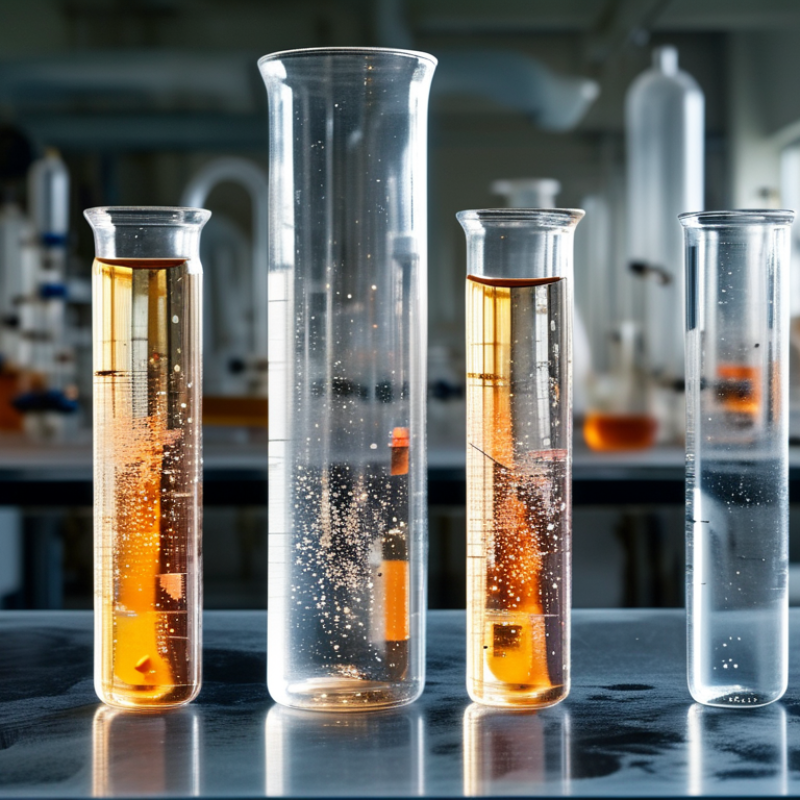
A quartz glass tube is a hollow component made from fused silica, an amorphous form of silicon dioxide. Unlike ordinary soda-lime glass, it contains very few metallic impurities. This structure gives it strong resistance to heat, thermal shock, and chemical attack. It can also transmit ultraviolet light, which supports laboratory lamps, semiconductor equipment, and water-treatment systems.
Its low thermal expansion is a major industrial advantage. The U.S. Geological Survey reported about 110 million metric tons of industrial sand and gravel produced in the United States in 2023. However, that figure covers many applications, not only fused silica. The distinction matters. Raw silica volume does not directly prove finished-tube quality.
In practical use, a quartz tube may sit inside a furnace at several hundred degrees Celsius, carry aggressive process gases, or protect a heating element. Its smooth inner wall helps reduce residue buildup. Its transparency lets technicians observe glowing samples without opening the chamber. ASTM E438 identifies borosilicate and fused silica tubing for laboratory use, while equipment designers still verify purity, wall thickness, and temperature limits for each process.
Not every quartz tube performs equally. Small bubbles, uneven walls, or contamination can shorten service life. I have seen specifications treated as decoration rather than engineering controls. That approach deserves reconsideration. The best selection matches the tube’s grade, dimensions, heating profile, chemical exposure, and cleaning method.
| Property or Evaluation Dimension | Typical Value or Description | Industrial Significance |
|---|---|---|
| Material Definition | A hollow cylindrical component made from fused silica, consisting primarily of silicon dioxide (SiO₂). | Provides a clean, chemically stable, and thermally resistant enclosure for heating, sensing, processing, and laboratory operations. |
| SiO₂ Purity | Common industrial grades typically contain approximately 99.9% to 99.99% SiO₂; the exact level depends on the manufacturing process and application. | Low impurity content helps reduce contamination in semiconductor, laboratory, optical, and high-temperature processes. |
| Maximum Working Temperature | Continuous-use temperatures are commonly around 900–1,100°C, while short-term service can be higher when thermal conditions are carefully controlled. | Suitable for furnace tubes, heat-treatment equipment, combustion systems, and high-temperature reaction environments. |
| Softening Point | Approximately 1,665°C. | Indicates strong resistance to deformation at temperatures where ordinary glass would lose its shape. |
| Coefficient of Thermal Expansion | Approximately 0.5–0.6 × 10⁻⁶/K near room temperature. | Very low expansion improves resistance to thermal shock during rapid heating and cooling cycles. |
| Thermal Shock Resistance | High relative to standard soda-lime and borosilicate glass, provided the tube is correctly designed and free from damage. | Helps minimize cracking when process temperatures change quickly. |
| Chemical Resistance | Resistant to water, many acids, and most process chemicals; concentrated hydrofluoric acid and hot concentrated alkaline solutions can attack silica. | Supports use in chemical processing, analytical equipment, laboratory systems, and corrosive atmospheres. |
| Density | Approximately 2.20 g/cm³. | Offers a relatively low weight while maintaining rigidity and dimensional stability. |
| Electrical Insulation | High electrical resistivity and low dielectric loss across a broad temperature range. | Useful for electrical insulation, high-voltage equipment, heating assemblies, and plasma-related systems. |
| Optical Transmission | High transmission from the ultraviolet into the infrared, with the practical range depending on purity, hydroxyl content, wall thickness, and surface finish. | Enables use in UV lamps, optical sensors, spectroscopy, photochemical equipment, and inspection systems. |
| Dimensional Stability | Maintains shape and size well under repeated thermal cycling when properly supported. | Improves process repeatability and reduces alignment changes in precision equipment. |
| Typical Tube Geometry | Available as straight tubes, capillary tubes, multi-bore tubes, and custom-shaped sections with different outer diameters, wall thicknesses, and lengths. | Allows the component to be adapted to furnaces, flow paths, lamps, sensors, and specialized process chambers. |
| Common Industrial Applications | Semiconductor processing, laboratory furnaces, thermal treatment, UV lighting, analytical instruments, chemical reactors, and protective sensor sleeves. | Combines thermal performance, chemical durability, optical clarity, and cleanliness in one component. |
| Key Selection Factors | Operating temperature, thermal cycling rate, chemical exposure, pressure or vacuum conditions, required optical range, tube dimensions, surface finish, and cleanliness level. | Correct specification helps prevent premature failure, contamination, thermal stress, and poor process performance. |
Note: Values are typical engineering ranges for fused quartz or fused silica and may vary according to grade, geometry, manufacturing method, operating atmosphere, and service conditions.

Why Choose Quartz Glass Tube for Industrial Applications?
Quartz glass earns attention through measurable physical properties, not appearance. Its low expansion coefficient, about 0.55 × 10^-6 K^-1 at 20–300°C, appears in reference data using ISO 7991 testing practices. A tube can move less during rapid heating. That matters in furnace sight ports, UV reactors, and laboratory transfer lines. Technical references commonly place its softening point near 1,680°C. Continuous service still depends on wall thickness, atmosphere, and thermal gradients. High temperature alone is not enough.
Its optical behavior is equally useful. High-purity fused silica can transmit ultraviolet light near 200 nm and visible light with low absorption, according to spectral data from the National Institute of Standards and Technology. Hydroxyl content changes that result. Ask for a transmission curve, not a broad promise. Quartz also resists many acids and maintains strong electrical insulation at elevated temperatures. However, alkali contamination and surface damage can reduce performance. I have seen failures begin at a scratched edge. That detail is easy to miss. ASTM C829-style high-temperature testing can verify deformation, while ISO 7884 methods help assess expansion. These tests improve material selection, but they cannot replace real thermal cycling trials. Process gases may expose weak assumptions.
Quartz glass is widely selected for high-temperature industrial tubes because fused quartz maintains dimensional stability across a broad thermal range. Its low thermal expansion reduces the risk of cracking during rapid temperature changes, while its high chemical resistance and strong ultraviolet transmission support demanding laboratory, semiconductor, lighting, and process applications.
Representative thermal values for fused quartz; exact values vary by material grade and measurement method.
Quartz glass tubes serve as working chambers and protective barriers in demanding industrial equipment. Their high purity limits contamination during semiconductor oxidation, diffusion, and deposition processes. They also tolerate rapid temperature changes better than many ordinary glasses. SEMI’s World Fab Forecast, published in 2024, projects global semiconductor manufacturing capacity to reach about 33.7 million wafers per month in 2025. That scale increases demand for stable furnace components, including quartz tubes, boats, and liners.
Solar manufacturing uses quartz tubes inside diffusion and oxidation furnaces. These tubes help maintain controlled atmospheres while silicon wafers receive precise heat treatment. The IEA PVPS Trends 2024 report recorded about 447 GW of new photovoltaic capacity worldwide during 2023. Even small contamination risks can reduce process consistency across large production lines. Quartz also transmits ultraviolet light, supporting UV disinfection systems for water and air. In chemical plants, transparent tubes allow operators to observe reactions while resisting many acids and thermal stresses. However, quartz is not automatically the best choice. It can crack after mechanical impact, devitrify under prolonged high temperatures, and require careful cleaning. Maintenance teams should inspect cloudy surfaces, scratches, and uneven wall thickness before reuse. The overlooked detail is handling. A clean tube can still fail when exposed to sudden cooling or poorly controlled loading.
Quartz glass tube selection should begin with process conditions, not a catalog diameter. Temperature is critical. Fused quartz softens near 1,680°C, but continuous service limits are much lower. Engineers should check heating rate, cooling rate, and thermal gradients. A tube facing rapid cycling may need better thermal-shock resistance than one operating at a steady temperature.
Chemical exposure matters just as much. Quartz resists many acids and solvents, yet alkaline vapors can attack its surface at elevated temperatures. Purity also affects performance in semiconductor, laboratory, and optical processes. The SEMI International Roadmap for Devices and Systems identifies contamination control as a continuing manufacturing priority. That makes trace metals, surface particles, and cleaning history important selection criteria. Ask for test data, not only a purity percentage.
Dimensions require equal attention. Wall thickness influences mechanical strength, heat transfer, and light transmission. Length tolerance affects furnace alignment. A small scratch can become a crack during thermal cycling. The U.S. Geological Survey’s Mineral Commodity Summaries 2024 estimated U.S. industrial sand production at about 96 million metric tons in 2023, showing the scale of silica-based supply, but this figure does not guarantee tube quality. Feedstock volume is not product reliability.
The uncomfortable part is that a perfect specification sheet can still fail. Inspect the bore, ends, roundness, and surface finish before installation. I would also test a sample under real temperature and chemistry. That step costs time, but replacement usually costs more.
Quartz glass tubes are often selected for industrial heating, sensing, and chemical processing because they tolerate intense heat with limited dimensional change. Their very low thermal expansion helps reduce cracking during controlled temperature cycles. They also resist many acids and transmit ultraviolet light, which is useful in sterilization and photochemical equipment. However, quartz is hard but brittle. A small edge chip can become a serious failure point.
Compared with borosilicate glass, quartz handles higher operating temperatures and transmits more UV energy. Borosilicate is usually easier to manufacture and may cost less, but repeated thermal shock can expose its limits. Metal tubes provide better mechanical strength and impact resistance. They can also react with aggressive chemicals, release unwanted ions, or block light completely. Alumina ceramic withstands extreme temperatures and offers good electrical insulation, yet it remains opaque and can be difficult to machine. Each substitute solves one problem while introducing another.
A practical material review should examine temperature, pressure, chemistry, light transmission, and cleaning methods together. Quartz may outperform alternatives in a clean furnace, but it is not a universal winner. Poor mounting can create stress, even in a carefully made tube. Engineers should inspect wall thickness, surface scratches, seal design, and thermal gradients before approval. Cost calculations also need replacement frequency, not only the purchase price. One overlooked weakness is handling: quartz can fail during installation when operators tighten supports too aggressively. The design may be sound, but the installation process still needs improvement.


For those larger-sized parts, or smaller quantity runs, we have 2 independent powder coat booths and ovens. The quality, durability and affordability of today’s powder coating finishes make this the process of choice for world-class companies.
Powder coating advantages over other forms of coating are many. Materials used in the Powder coating process can be metals and non-metals that come in a multitude of thicknesses, textures, colors, etc. Another of Powder coating’s biggest advantages over conventional coatings is its ability to create finishes in many different textures. Powder Coating Booths allow us the ability to apply these advantages to large products.
Tri-State Fabricators runs a full-service conveyor line for painting. Wet painting can provide protection or decoration to many different part styles. From start to finish, every project is easier to undergo random and point-based inspection by our skilled painting team.
Advantages to our Wet Paint Line are these lines start with product prep and ends with a thorough inspection of a high quality finished product. Our ability to complete large and small projects with a superior finish and doing so in a timely and economical fashion. This passes along the savings in production to our customers. When powder coating ins not an option, our Wet Paint Line gets the job done right the first time.
When the parts get big and heavy we roll-out our custom paint racks and oversize booth. By utilizing our partnerships with all the major paint brands, we can match virtually any color with wet paint.
The advantages of having access to a Wet Paint Booth are many. Large projects of many different shapes can be loaded into the booth. The Wet Paint Booth offers an environment that is much more controlled than a typical parts painting operation.
Not only are they used because of their controlled environment, but they’re are also advantageous when it comes to applying paint to parts that are needed in industries that require specialty coatings such as medical, aerospace, etc.
Our military forces have some very high standards when it comes to the finish of their vehicles and equipment. From the first pre-treatment step to final coat, it takes a great deal of knowledge and experience to protect the men and women of our armed forces. They deserve only the best, and Tri-State Fabricators provides it.
All of our processes are closely monitored by our staff and management teams. Both of which are highly trained in the processes of metal fabrication and finishing. Tri-State Fabricators’ goal is to always fully satisfy each and every customer, including the military. We will always put a 110% into what we do.
Abrasive media blasting is an excellent way to remove old paint, rust, and increase the paint/powder adhesion. Glass beads produce a much smoother and brighter finish than angular abrasives; leaving the part clean yet without any dimensional change. Chemically inert and environmentally friendly, we can recycle our beads approximately 30 times; making them a more preferred method of metal cleaning or surface finishing.
Advantages to Glass Bead Blasting are many. Glass bead blast media is used when a project is needing rough surfaces need to become smooth for applications of coatings such as paint. It is typically used to clean paint and rust from a product surface without deforming the surface it is being used on. Overall, compared to many other blasting media, Glass Bead Blasting is a very economical choice and those savings are always passed on to our customers.
Tri-State Fabricators utilize a zinc phosphate wash to clean and etch the material to ensure the best paint adhesion possible. The unique design of our 3-stage wash system does the work like a 5-stage. From Cleaning and rinsing to conversion coating and post-treatment, Our Part Washing process is a complete service and works throughout the fabrication service and the finishing service.
Along with the previously mentioned benefits, Curing is a vital chemical reaction that leaves the product finish hard and relatively safe from mild abrasion and aggressive corrosion. This process can be done in more than one way; ambient air-dry or in curing ovens at temps that exceed 240°.
From fixing paint mistakes (someone else’s of course) to simply cleaning our paint line hooks, our burn-off oven is put to good use. After a quick burn-off, a little clean up, and a fresh coat of paint, your parts will look better than new.
Why does our Burn-Off Oven work so well? Because super heating the air around parts turns the materials into ashes. From paint and powder coatings to rubber and machining oils, high temps do the job without degrading the integrity of the part.
Masking is a vital part of producing high quality products. We have die-cut masking patterns to protect machined surfaces as well as a wide range of plugs and caps to protect threaded holes and bolts. We provide permanent and temporary masking.
Masking allows the selected sections of a product to be protected from a fabrication or finishing service. This can be with both chemicals when etching and tapes, paints when only finishing just a section of the product. Masking is great in aiding the customization process of a project.
Screen printing is a photographic process that transfers artwork onto a porous nylon screen which allows colored ink to flow through the screen and be deposited on an aluminum or plastic component. We can generally have just about any design created onto a screen for your parts.
Some of the advantages of Screen Printing are, brand recognition for your business displaying on your products, assembly instructions, product warnings/hazards, etc. Tri-State Fabricators produces Screen Printing of the highest quality so you know it’s durable.
Metal Finishing is the art of treating the exterior portion of product, often metal but can also be made of other materials, so that the surface is clean and free of any debris. Then the process of applying coats or either paint of powder coat takes place. This coating process improves the quality of the product in both appearance and resistance to wear and corrosion.
Tri-State Fabricators, Inc., understands that a project typically isn’t complete until a high-quality finish has been added to your product. This is why our painting and powder coating teams continuously inspect the products throughout the Metal Finishing process.

