Why Choose Prefabricated Metal Homes for Your Project?
Why choose Prefabricated Metal Homes for a building project? The appeal is practical: factory-made components can arrive ready for assembly, reducing the amount of cutting, measuring, and weather-exposed work on site. McKinsey & Company’s 2019 report, Modular construction: From projects to products, estimates that modular methods can shorten project timelines by 20 to 50 percent in suitable cases. Jan Mischke, a McKinsey construction-sector expert and report coauthor, frames the approach as a shift “from projects to products.” That is a useful idea, not a promise that every home will be faster or cheaper.
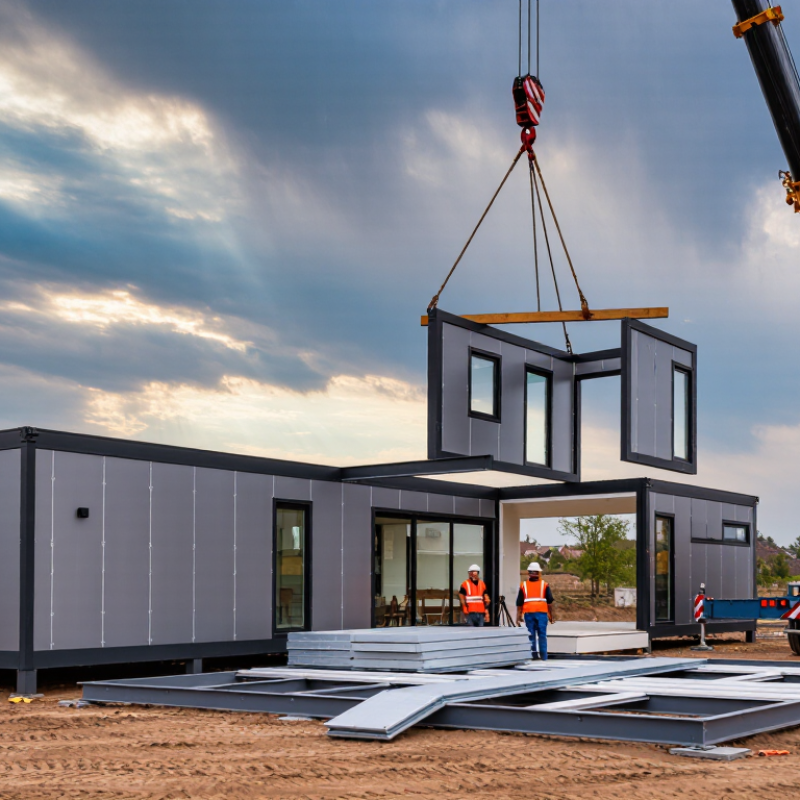
For homeowners and project teams, metal framing can offer consistent dimensions, clear spans, and design flexibility. Imagine wall panels lifted into place while rain clouds gather; less site work may mean fewer weather delays. Still, the final result depends on engineering, insulation, detailing, transport, and skilled installation. Poorly protected steel can corrode. Thermal bridging can also undermine comfort if the envelope is not carefully designed. Small details matter.
This guide examines cost, speed, durability, energy performance, and design options. It also considers the trade-offs. Prefabrication is not a cure-all. Local site conditions, access for delivery trucks, and the builder’s experience can change the calculation. The evidence supports a careful case, not a blanket claim: Prefabricated Metal Homes can be a strong fit when the design and execution are planned together.
Define Prefabricated Metal Homes as Factory-Built Steel Building Systems
Why Choose Prefabricated Metal Homes for Your Project?
Prefabricated metal homes are factory-built steel building systems assembled on site. Their frames, wall panels, roof components, and connections are made to project specifications before delivery. Factory production can support consistent measurements and reduce some weather-related delays. On site, crews position and secure the components, then complete utilities, insulation, and interior finishes. The system is not a finished home in a box. Site preparation still matters.
Steel framing can provide a clear structural layout and useful interior space. Repeated components may also make planning more predictable. However, the best design depends on climate, soil conditions, intended use, and local engineering requirements. Details such as insulation, vapor control, and thermal bridging need careful review; steel transfers heat readily. A tidy factory schedule can still be disrupted by delayed foundations or difficult delivery access. Not always simple. Comparing the system’s specifications with the project’s actual needs is more reliable than choosing by appearance alone.
Tips: Confirm foundation dimensions before fabrication. Ask how roof and wall assemblies manage moisture and temperature changes. Review delivery access, lifting needs, and finish costs early. Leave room for revisions; plans can miss small site details.
Compare Build Methods: Modular Construction Can Be 20–50% Faster (McKinsey)
Prefabricated metal homes can shorten schedules because factory work and site preparation happen at the same time. Industry analysis has estimated that modular construction can be 20–50% faster than conventional building. That range is a potential, not a promise. The result depends on design complexity, factory capacity, transport distance, and local site conditions.
Consider a compact home with wall panels made indoors while crews prepare the foundation. Rain may delay outdoor work, but it is less likely to interrupt panel production. When the panels arrive, a crane can set them in place within days. Not automatic. Utility connections, inspections, and finishing work still take time, and poor coordination can erase the schedule gains.
The method works best when dimensions and material choices are settled early. Late changes can mean revised shop drawings, replacement parts, or idle crews. A project team should compare the full schedule, including permitting, shipping, and site access, rather than focus only on factory production. Metal panels also need careful detailing around openings and insulation. That step is easy to underestimate. Faster construction is valuable, but only when the plan fits the site and the people building it.
Assess Material Circularity: Structural Steel’s 98% Recovery Rate (AISC)
Prefabricated metal homes make material circularity a practical design question. AISC cites a 98% recovery rate for structural steel at end of life. That matters. In a factory-built home, bolted connections, labeled members, and accessible service cavities can make future disassembly easier. A clean stack of salvaged beams is more useful than mixed demolition debris. Still, recovery is not the same as direct reuse. Coatings, cutoffs, transport distances, and local processing capacity affect what returns to production.
World Steel Association data report that 630 million tonnes of steel scrap were used in steelmaking in 2023, avoiding roughly 950 million tonnes of CO2 emissions. These figures describe the wider industry, not a guarantee for one home. Ask the project team for a bill of materials, steel grades, and end-of-life recovery assumptions. Keep the details specific. Without those records, a high recovery rate can remain theoretical.
Evaluate Waste Control: Offsite Building Can Cut Site Waste by Up to 90% (WRAP)
Prefabricated metal homes can reduce waste by moving much of the cutting and assembly from an open site into a controlled factory. WRAP has cited potential site-waste reductions of up to 90% through offsite construction. That figure is a possibility, not a project guarantee. Design accuracy, delivery planning, and how waste is measured all affect the result.
In a factory, measured steel sections can be cut in planned batches, while digital layouts help limit unused lengths. Leftover pieces can be sorted for reuse or recycling instead of being mixed with wet packaging and damaged materials on site. Fewer deliveries of loose components may also mean less protective wrapping around the building area. Less clutter, too.
Still, offsite production does not make waste disappear. It can shift some waste to the factory, and transport packaging may add more. A project team should compare factory and site records, including material inputs, offcuts, damaged items, and packaging. Ask suppliers how they track scrap, and check whether reported savings use a clear baseline. The paperwork can be imperfect; I would not treat a headline percentage as proof on its own. A practical target is to reduce avoidable waste at each stage and document what actually happens.
Why Choose Prefabricated Metal Homes? Less Construction Waste
The chart illustrates the reported potential for offsite building to reduce site waste by up to 90%. The conventional construction baseline is indexed to 100; a 90% reduction corresponds to an index of 10. This is a maximum-reduction scenario, not a guaranteed result for every project.
Check Project Fit: Codes, Site Conditions, Costs, Insulation, and Suppliers
Prefabricated metal homes can suit projects that need predictable assembly, but fit depends on more than the frame price. Check local building codes for snow, wind, fire, energy, and foundation requirements before ordering. Ask a qualified designer or building official to review the plans. Requirements vary by location. Confirm that the proposed structure and its documentation match your site.
Tips: Walk the site after rain. Note soft ground, drainage paths, overhead wires, and truck access. Get a soil assessment where needed. Compare quotes that include foundations, delivery, assembly, insulation, windows, and utility connections. A low package price may leave costly gaps.
Insulation deserves careful review, especially at roof and wall joints where metal can transfer heat. Ask how the design limits condensation and thermal bridging, and check the stated performance against your climate. Request drawings, material specifications, installation details, and a clear list of exclusions from each supplier. Compare the same scope, not just headline prices. A tidy spreadsheet still misses surprises; delivery access or extra site work can change the budget. Allow room for those uncertainties.





