


Why Choose Ppgi Coated Coil for Global Projects?
Global construction projects demand more than attractive steel surfaces. They need predictable performance during ocean transport, warehouse storage, fabrication, and years of outdoor exposure. Ppgi Coated Coil combines a zinc-coated steel substrate with factory-applied paint, helping protect panels from moisture, ultraviolet light, and everyday corrosion. The result is a practical material for roofing, wall cladding, doors, agricultural buildings, and modular structures.
The scale of steel use supports this choice. World Steel Association data recorded approximately 1.89 billion tonnes of crude steel production worldwide in 2023. Its World Steel in Figures 2024 report also shows steel remains essential across construction, infrastructure, transport, and manufacturing. That industrial foundation matters. Buyers can usually find established grades, coating systems, and processing equipment across major markets. Lakshmi Mittal, a veteran steel-industry leader, has said, “Steel is the backbone of the modern world.” PPGI extends that backbone with color, surface protection, and design flexibility.
Still, PPGI is not a universal shortcut. Coastal salt, high humidity, strong sunlight, and poor edge protection can shorten service life. The right paint system, coating mass, steel grade, thickness, and inspection records must match the project environment. ISO 12944 guidance can support corrosion-risk evaluation, while supplier certificates help verify consistency. A cheaper coil may become expensive after peeling, fading, or premature replacement. That detail is easy to miss. Global teams should compare total lifecycle value, not only the initial quotation. Experiences from real sites remain important, because laboratory data cannot capture every handling mistake or climate challenge.
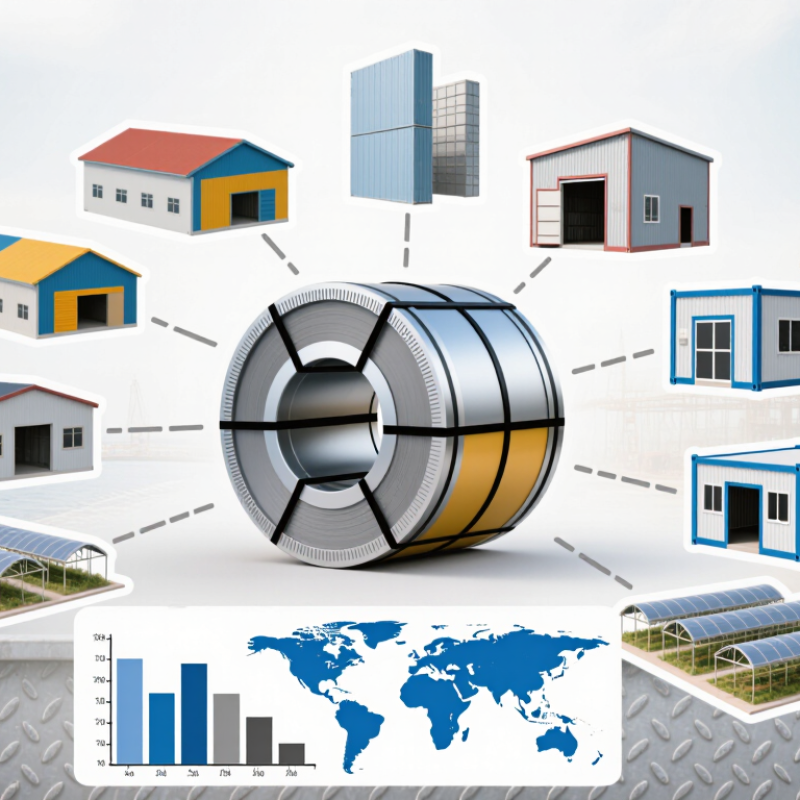
PPGI coated coil means pre-painted galvanized iron or steel coil. A steel strip receives a zinc coating before being painted in a controlled factory line. The zinc layer helps protect the steel from moisture and oxygen. The paint system adds color, appearance, and another barrier against corrosion.
Manufacturers usually clean and chemically treat the galvanized surface before applying primer and topcoat. The finished coil can be cut, roll-formed, or pressed into roofing sheets, wall panels, doors, and other components. Coating thickness, paint type, color consistency, and surface hardness matter during project planning. A reliable supplier should provide test data, production records, and clear tolerances for each shipment.
In my experience, PPGI coil reduces site painting work and supports faster installation. However, it is not maintenance-free. Scratches, exposed edges, poor storage, and trapped water can still cause damage. Coils should remain dry, ventilated, and protected from condensation during transport and storage. Engineers also need to match the coating system with local humidity, salt exposure, temperature changes, and forming requirements. A thicker coating is not automatically better. Sometimes, an unsuitable paint system creates problems despite strong-looking specifications. Careful inspection remains essential.

PPGI coated coil begins as cold-rolled steel with a clean, controlled surface. The strip passes through alkaline cleaning and rinsing lines. This removes oil, dust, and rolling residue. Surface preparation matters because weak adhesion often starts here. The steel is then annealed to improve strength and forming performance. Its temperature must remain stable across the strip width. Small variations can affect the final coating.
After annealing, the strip enters a molten zinc bath. Air knives control the zinc layer as the steel leaves the bath. Cooling follows immediately, helping stabilize the galvanized surface. The coil then receives chemical pretreatment, primer, and a colored topcoat. Each paint layer is applied with measured thickness. An oven cures the coating under controlled heat. Too little heat may reduce durability. Too much heat can damage color and flexibility.
Quality teams inspect gloss, coating thickness, adhesion, surface appearance, and edge condition. They also test samples through bending and impact checks. These tests reflect real handling during cutting, forming, shipping, and installation. The process is highly controlled, but it is not flawless. Minor shade differences may appear between production batches. That limitation deserves attention when global projects require panels from different deliveries. Careful inspection, clear specifications, and traceable production records make PPGI coated coil more dependable for roofs, walls, and fabricated components.
| Manufacturing Stage | Typical Process Data | Purpose and Project Value | Common Reference or Control Point |
|---|---|---|---|
| 1. Steel Substrate Preparation | Low-carbon cold-rolled steel, commonly 0.20–1.20 mm thick and approximately 600–1,600 mm wide. | Provides the base strength, dimensional stability, and formability required for roofing, cladding, panels, and fabricated components. | Thickness, width, flatness, surface cleanliness, and mechanical properties are checked before coating. |
| 2. Continuous Hot-Dip Galvanizing | The cleaned steel strip passes through molten zinc at approximately 450°C; typical total zinc coating masses range from about 60–275 g/m² for both sides, subject to specification. | Zinc provides sacrificial corrosion protection and helps extend service life in many outdoor applications. | Coating mass, adhesion, surface appearance, and coating uniformity are verified across the strip width. |
| 3. Surface Treatment | Chemical pretreatment and, where specified, passivation or a thin protective film are applied before painting. | Improves paint adhesion, reduces storage staining, and supports consistent coating performance during forming and installation. | Treatment type must be compatible with the selected paint system, forming process, and environmental exposure. |
| 4. Primer Application | A corrosion-resistant primer is applied to the prepared steel, typically at a dry-film thickness of about 5–10 μm. | Creates an intermediate bonding layer and improves corrosion resistance beneath the topcoat. | Wet-film or dry-film thickness, coverage, adhesion, and curing conditions are controlled continuously. |
| 5. Organic Topcoat Application | A factory-applied organic coating is commonly around 15–35 μm on the exposed side; the reverse side may receive a thinner backing coat. | Provides color, gloss, weatherability, chemical resistance, and a uniform finish suitable for large-scale projects. | Color, gloss, coating thickness, flexibility, impact resistance, and adhesion are matched to the project specification. |
| 6. Curing and Cooling | The coated strip passes through an oven; the required peak metal temperature commonly falls within approximately 210–250°C, depending on the coating system. | Ensures the paint film develops the required hardness, adhesion, flexibility, and resistance to handling. | Oven temperature, strip speed, residence time, and peak metal temperature are recorded for process control. |
| 7. Quality Inspection | Typical checks include thickness, width, coating mass, color difference, gloss, pencil hardness, bend performance, impact resistance, and adhesion. | Reduces variation between production lots and supports reliable fabrication at different project locations. | Inspection criteria should be defined in the purchase specification and verified against applicable national or international standards. |
| 8. Slitting, Cutting, and Recoiling | The finished strip can be supplied in master coils, slit coils, or cut lengths according to the required dimensions and handling limits. | Enables efficient transport, localized processing, reduced site waste, and easier installation planning. | Edge condition, inner and outer diameter, coil weight, packaging, and marking are confirmed before dispatch. |
| 9. Global Project Suitability | Available in multiple substrate strengths, coating masses, paint systems, colors, widths, and thicknesses. | Supports standardized procurement for roofing, wall cladding, warehouses, agricultural buildings, modular structures, and general fabrication. | Final selection should consider climate, UV exposure, humidity, pollutants, forming method, design life, and local building requirements. |
PPGI coated coil offers a practical balance of corrosion resistance, appearance, and fabrication efficiency. Its pre-painted steel surface helps protect buildings in humid, coastal, and industrial environments. The coating system also reduces the need for repeated site painting. That can shorten installation time. It can also lower maintenance demands.
Global projects often face changing temperatures, long shipping routes, and different construction methods. PPGI coil supports consistent panel production across factories and regions. Controlled coating thickness improves color uniformity and surface protection. Accurate coil dimensions also reduce cutting waste during profiling. Quality teams should verify coating mass, paint thickness, adhesion, and tensile strength before shipment.
Small details matter. Protective packaging can prevent edge damage and moisture staining during transport. Clear labeling supports traceability at busy ports and construction sites. Technical documents should match local project specifications and climate conditions. A suitable coating for a dry inland warehouse may not perform equally near saltwater. This point is easy to overlook.
PPGI is not flawless. Sharp forming, poor storage, or damaged edges can expose the steel beneath the coating. Experienced fabricators therefore control bending radii and inspect finished panels carefully. Sample testing remains valuable, even when previous batches performed well. Reliable results come from material selection, process discipline, and honest inspection records.
Why Choose PPGI Coated Coil for Global Projects?
Factors for Selecting the Right PPGI Coated Coil
Selecting PPGI coated coil starts with the project environment, not the lowest quotation. Coastal buildings need stronger corrosion resistance because salt air attacks exposed edges and cut surfaces. Industrial zones may require a coating system that tolerates chemical pollutants and frequent cleaning. For dry inland projects, color retention and thermal movement can matter more. Small details become expensive later.
Review the steel grade, yield strength, coating mass, paint type, and surface finish together. A forming-intensive roof panel needs balanced ductility, not simply a thicker coating. Check whether the coil can pass bending, adhesion, impact, and accelerated corrosion tests. Ask for traceable mill certificates and independent inspection records. Color samples should be evaluated under the actual project lighting. It sounds minor.
Project teams should also compare coil width, thickness tolerance, packaging, storage guidance, and delivery routes. Poor wrapping can allow moisture staining during long sea transport. I have seen attractive coils lose value because warehouse ventilation was ignored. That mistake is avoidable, though not always prevented. Confirm production schedules, inspection points, and replacement procedures before purchase. Regional standards may differ, so technical documents need careful review by qualified engineers. No coil fits every climate, structure, or budget.
Nominal zinc coating mass used as a practical reference when selecting PPGI coated coil for different exposure and durability requirements.
Higher zinc coating mass generally provides greater protection against atmospheric corrosion, but the correct choice also depends on climate, forming operations, edge protection, paint system, and expected service life. Values shown are common nominal coating designations expressed as total zinc mass on both sides.
PPGI coated coil combines galvanized steel with a factory-applied organic coating. It supports roofing, wall panels, doors, and modular buildings. On project reviews, I often see the same advantage: controlled coating thickness reduces repainting risks at exposed edges. Color consistency also matters when panels come from different production batches. Small differences become obvious across a large warehouse facade.
Standards define whether the material fits the project. EN 10169 addresses continuously organic-coated steel, including coating performance and testing requirements. ASTM A755/A755M covers steel sheet with metallic and organic coatings for construction applications. ISO 12944 helps engineers evaluate corrosion environments, from sheltered interiors to severe coastal exposure. However, a standard is not a guarantee. Designers must check substrate thickness, zinc coating mass, paint system, gloss, adhesion, and forming requirements. The wrong bend radius can crack the surface coating.
Demand also supports careful material planning. The World Steel Association’s October 2024 Short Range Outlook projected global steel demand growth of 1.7% in 2024 and 1.2% in 2025. More construction activity can increase pressure on delivery schedules and inspection capacity. Quality documents should include mill test certificates, coating test results, batch numbers, and storage instructions. Keep coils dry. Condensation can create white rust before installation. One practical weakness remains: published corrosion-life estimates often assume ideal detailing, while real projects face cut edges, trapped water, and maintenance delays. That gap deserves closer review.


For those larger-sized parts, or smaller quantity runs, we have 2 independent powder coat booths and ovens. The quality, durability and affordability of today’s powder coating finishes make this the process of choice for world-class companies.
Powder coating advantages over other forms of coating are many. Materials used in the Powder coating process can be metals and non-metals that come in a multitude of thicknesses, textures, colors, etc. Another of Powder coating’s biggest advantages over conventional coatings is its ability to create finishes in many different textures. Powder Coating Booths allow us the ability to apply these advantages to large products.
Tri-State Fabricators runs a full-service conveyor line for painting. Wet painting can provide protection or decoration to many different part styles. From start to finish, every project is easier to undergo random and point-based inspection by our skilled painting team.
Advantages to our Wet Paint Line are these lines start with product prep and ends with a thorough inspection of a high quality finished product. Our ability to complete large and small projects with a superior finish and doing so in a timely and economical fashion. This passes along the savings in production to our customers. When powder coating ins not an option, our Wet Paint Line gets the job done right the first time.
When the parts get big and heavy we roll-out our custom paint racks and oversize booth. By utilizing our partnerships with all the major paint brands, we can match virtually any color with wet paint.
The advantages of having access to a Wet Paint Booth are many. Large projects of many different shapes can be loaded into the booth. The Wet Paint Booth offers an environment that is much more controlled than a typical parts painting operation.
Not only are they used because of their controlled environment, but they’re are also advantageous when it comes to applying paint to parts that are needed in industries that require specialty coatings such as medical, aerospace, etc.
Our military forces have some very high standards when it comes to the finish of their vehicles and equipment. From the first pre-treatment step to final coat, it takes a great deal of knowledge and experience to protect the men and women of our armed forces. They deserve only the best, and Tri-State Fabricators provides it.
All of our processes are closely monitored by our staff and management teams. Both of which are highly trained in the processes of metal fabrication and finishing. Tri-State Fabricators’ goal is to always fully satisfy each and every customer, including the military. We will always put a 110% into what we do.
Abrasive media blasting is an excellent way to remove old paint, rust, and increase the paint/powder adhesion. Glass beads produce a much smoother and brighter finish than angular abrasives; leaving the part clean yet without any dimensional change. Chemically inert and environmentally friendly, we can recycle our beads approximately 30 times; making them a more preferred method of metal cleaning or surface finishing.
Advantages to Glass Bead Blasting are many. Glass bead blast media is used when a project is needing rough surfaces need to become smooth for applications of coatings such as paint. It is typically used to clean paint and rust from a product surface without deforming the surface it is being used on. Overall, compared to many other blasting media, Glass Bead Blasting is a very economical choice and those savings are always passed on to our customers.
Tri-State Fabricators utilize a zinc phosphate wash to clean and etch the material to ensure the best paint adhesion possible. The unique design of our 3-stage wash system does the work like a 5-stage. From Cleaning and rinsing to conversion coating and post-treatment, Our Part Washing process is a complete service and works throughout the fabrication service and the finishing service.
Along with the previously mentioned benefits, Curing is a vital chemical reaction that leaves the product finish hard and relatively safe from mild abrasion and aggressive corrosion. This process can be done in more than one way; ambient air-dry or in curing ovens at temps that exceed 240°.
From fixing paint mistakes (someone else’s of course) to simply cleaning our paint line hooks, our burn-off oven is put to good use. After a quick burn-off, a little clean up, and a fresh coat of paint, your parts will look better than new.
Why does our Burn-Off Oven work so well? Because super heating the air around parts turns the materials into ashes. From paint and powder coatings to rubber and machining oils, high temps do the job without degrading the integrity of the part.
Masking is a vital part of producing high quality products. We have die-cut masking patterns to protect machined surfaces as well as a wide range of plugs and caps to protect threaded holes and bolts. We provide permanent and temporary masking.
Masking allows the selected sections of a product to be protected from a fabrication or finishing service. This can be with both chemicals when etching and tapes, paints when only finishing just a section of the product. Masking is great in aiding the customization process of a project.
Screen printing is a photographic process that transfers artwork onto a porous nylon screen which allows colored ink to flow through the screen and be deposited on an aluminum or plastic component. We can generally have just about any design created onto a screen for your parts.
Some of the advantages of Screen Printing are, brand recognition for your business displaying on your products, assembly instructions, product warnings/hazards, etc. Tri-State Fabricators produces Screen Printing of the highest quality so you know it’s durable.
Metal Finishing is the art of treating the exterior portion of product, often metal but can also be made of other materials, so that the surface is clean and free of any debris. Then the process of applying coats or either paint of powder coat takes place. This coating process improves the quality of the product in both appearance and resistance to wear and corrosion.
Tri-State Fabricators, Inc., understands that a project typically isn’t complete until a high-quality finish has been added to your product. This is why our painting and powder coating teams continuously inspect the products throughout the Metal Finishing process.

