


Why Choose Polyester TPU for Your Products?

Choosing a flexible material is rarely as simple as comparing price per kilogram. The right option must suit the product’s shape, working conditions, production method, and expected service life. Polyester Tpu is a thermoplastic polyurethane valued for its balance of strength, abrasion resistance, and flexibility. It can be used in items such as protective films, coated fabrics, hoses, and molded components, depending on the grade and design.

Small details matter. A sample may feel smooth and resilient, yet perform differently after repeated bending, exposure to oils, or contact with moisture and heat. Polyester-based TPU often offers useful mechanical strength and resistance to oils and abrasion. However, it may be less suitable than some polyether TPU grades for prolonged exposure to hot, humid conditions. No material wins every comparison. Testing the actual formulation in realistic conditions is more dependable than relying on a general specification sheet.

This article explores why manufacturers consider Polyester Tpu, which product requirements it can address, and what to check before selecting a grade. Key questions include hardness, transparency, processing temperature, bonding needs, and resistance to wear. These factors can affect both product performance and manufacturing consistency. The trade-offs deserve attention, too: a material that works well in one application may disappoint in another. A careful choice starts with the product’s real use, not a broad claim that one polymer suits everything.
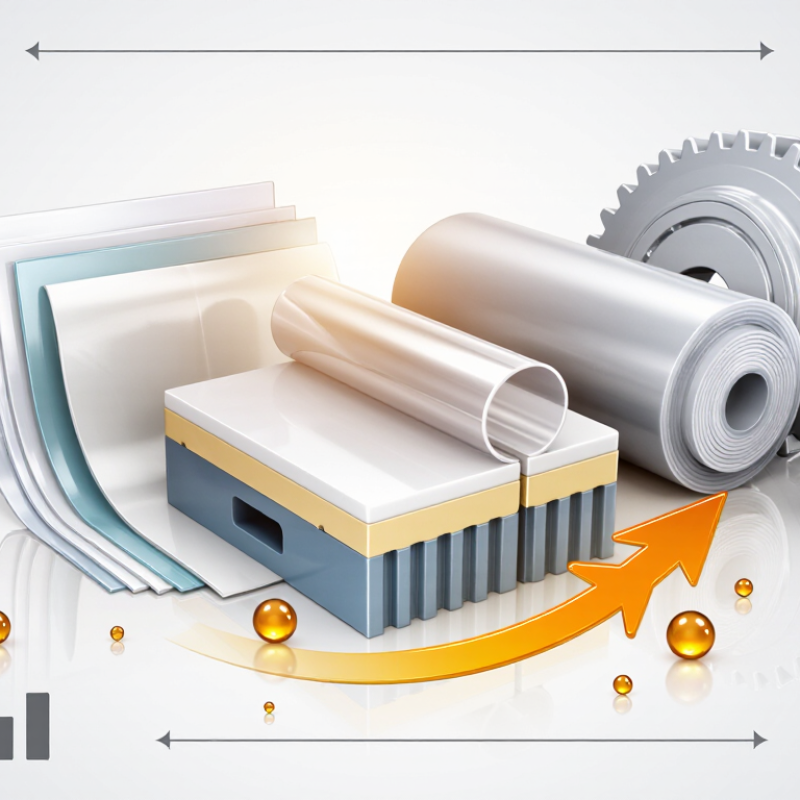
Why Choose Polyester TPU for Your Products?

Polyester TPU: Chemistry, Structure, and Shore Hardness Testing (ASTM D2240)

Polyester TPU combines polyester soft segments with urethane-rich hard segments formed from diisocyanates and chain extenders. The soft segments support flexibility; hard segments contribute strength and shape retention. This structure helps explain its abrasion and oil resistance, but polyester grades can be more vulnerable to prolonged moisture and heat than some alternatives. Chemistry matters.

Shore hardness gives a quick comparison, not a complete performance prediction. ASTM D2240 measures indentation resistance with a specified durometer, such as Shore A for softer materials or Shore D for harder ones. For meaningful results, control specimen thickness, surface condition, temperature, and reading time. Test multiple spots on a flat sample, away from edges, and report the scale and conditions. Small setup differences can shift readings. This is easy to overlook.

Grand View Research estimated the global TPU market at about US$2.8 billion in 2023 and forecast a 6.8% compound annual growth rate from 2024 to 2030. That market figure signals broad use, but it does not establish which grade suits a product. A Shore A reading of 85, for example, says little about tear strength or long-term hydrolysis resistance. Pair hardness data with application-specific testing, and treat a single durometer result as a starting point—not a verdict.


How Tensile Strength and Elongation Are Measured (ASTM D412; ISO 37)

Why Choose Polyester TPU for Your Products?

Tensile strength and elongation help describe how polyester TPU behaves when stretched. ASTM D412 and ISO 37 provide standardized methods for measuring these properties. A lab typically cuts a dumbbell-shaped specimen, measures its thickness, and clamps it in a tensile testing machine. The machine pulls the sample at a controlled rate while recording force and extension. Small details matter.

Tensile strength is calculated from the force carried by the specimen and its original cross-sectional area. Elongation at break is the increase in gauge length, expressed as a percentage of its starting length. A higher value means the material stretched further before breaking under that test setup; it does not guarantee longer product life. Results depend on specimen geometry, thickness, conditioning, and test settings, so comparisons should use the same standard and conditions. This is easy to overlook.

For polyester TPU, the figures can help assess whether a film, coated fabric, or molded component may suit a particular application. But a neat laboratory result cannot reproduce every crease, seam, temperature change, or repeated load in service. I would treat the numbers as useful evidence, not a complete prediction. Review the test method and sample details alongside the data, and test finished parts when their shape or construction could change how stress is distributed.

How Abrasion Resistance Is Quantified (ISO 4649)

For polyester TPU, abrasion resistance should be measured, not judged by touch or appearance. ISO 4649:2017 specifies a rotating-drum method for determining abrasion resistance in rubber and thermoplastic rubber materials. A prepared test piece travels against abrasive sheet under a defined load. The measured mass loss is converted to volume loss using the material’s density, then corrected against a reference compound. The result is reported in cubic millimetres (mm³). Lower volume loss means less material was removed under those test conditions.

The number needs context. ISO 4649 includes different test configurations, so reports should identify the method, load, abrasive sheet, and conditioning procedure. ISO 23529 provides guidance on preparing and conditioning rubber test pieces. Keep those details consistent when comparing TPU grades or production batches. Small changes matter. A rough edge, uneven specimen, or worn abrasive sheet can shift results. I would also record replicate readings; a single number can look more certain than the test really is. Abrasion results help with material selection, but they do not directly predict service life on every floor, belt, or wheel.

Why Choose Polyester TPU for Your Products? — How Abrasion Resistance Is Quantified (ISO 4649)

Dimension What It Means How It Is Evaluated Why It Matters for Product Selection
Polyester TPU material profile Thermoplastic polyurethane made with a polyester-based soft segment. Its properties vary with formulation, hardness, processing, and test conditions. Review the supplier’s technical data and test the specific grade in the intended product design. Can be considered where wear resistance and mechanical performance are important. No single result applies to every polyester TPU grade.
Abrasion test method ISO 4649 specifies methods for determining the abrasion resistance of vulcanized or thermoplastic rubber using a rotating cylindrical drum device. A test piece is moved against abrasive sheet under conditions selected in accordance with the applicable method and material requirements. Using a recognized method makes results more useful for consistent material evaluation and comparison.
Primary result: volume loss Material removed during abrasion, reported as volume loss in cubic millimetres (mm³), where calculated and reported under the selected procedure. Mass loss is converted to volume loss using the test piece’s density: volume loss = mass loss ÷ density. Lower volume loss generally indicates better abrasion resistance under the stated test conditions.
Reference compound and correction Depending on the procedure, results may be related to a reference compound to account for variations in abrasive-sheet aggressiveness. Follow the selected ISO 4649 procedure and report whether a corrected or uncorrected result is given. Comparisons are meaningful only when the method, reporting basis, and relevant test conditions are comparable.
Test conditions to report Key details include the ISO 4649 method used, test-piece details, abrasive sheet, applied force, abrasion distance, and conditioning conditions. Record the conditions and result with the test report; follow the current standard and applicable product specification. These details help prevent misleading comparisons between results produced using different setups.
Product-level validation Laboratory abrasion results measure performance in a defined test and do not reproduce every real-use condition. Assess the finished part under relevant service conditions, including contact surface, load, movement, temperature, and exposure to fluids. Choose a grade based on both standardized test data and the actual wear requirements of the application.
Important limitation ISO 4649 provides a test method; it does not establish one universal pass value for all TPU products or applications. Set acceptance criteria using the product specification, application needs, and comparable test data. Avoid treating an unverified or isolated abrasion figure as a guaranteed service-life prediction.

Note: ISO 4649 results depend on the selected method and test conditions. For a valid material comparison, test the specific grades using the same procedure and report the conditions alongside the results.

Polyester vs. Polyether TPU: Comparing Hydrolysis and Chemical Resistance

Why Choose Polyester TPU for Your Products?

Polyester vs. Polyether TPU: Comparing Hydrolysis and Chemical Resistance

Polyester TPU is often chosen for parts exposed to oils, grease, or some industrial chemicals. Its resistance can make it useful for hoses, coated fabrics, and protective components. But “chemical resistant” is not a universal pass. A cleaning fluid that causes no visible change after one day may still affect a part after months of contact.

Hydrolysis is a different concern. Warm moisture can gradually weaken polyester TPU, especially in parts under repeated flexing. Polyether TPU generally offers better hydrolysis resistance, making it a practical option for humid environments or prolonged water exposure. Small details matter. Temperature, exposure time, stress, and the exact chemical all influence performance.

A useful comparison starts with the real service conditions: name the fluid, estimate contact time, and note whether the part will bend or carry a load. Test samples at realistic temperatures, then check for swelling, tackiness, discoloration, or cracks. One test rarely tells the whole story. Even a material that performs well in a short immersion test may behave differently in a moving assembly. The trade-off is easy to overlook: polyester may resist certain chemicals better, while polyether may last longer in damp heat. A sample test is still worth doing.

Choosing Polyester TPU for Films, Hoses, Cables, and Wear Parts

Polyester-based thermoplastic polyurethane (TPU) can suit products that need toughness, abrasion resistance, and a resilient feel. In films, suitable grades can offer flexibility and clarity while standing up to repeated handling. Picture a protective film bending around a case edge without cracking. Not every grade behaves the same. Thickness, additives, and processing conditions all affect performance.

For hoses and cables, polyester TPU can combine flexibility with resistance to oils and many industrial fluids. Check compatibility against the actual fluid, temperature, and exposure time. Cable jackets may benefit from scuff resistance when dragged across floors or equipment. Wear parts such as rollers, scrapers, and liners can handle repeated contact without feeling brittle. That matters. But the trade-offs deserve attention: prolonged moisture and heat may challenge polyester TPU, and damp resin can cause processing defects. Drying and trial runs are not glamorous, yet they can help prevent bubbles and uneven surfaces. Compare hardness, tear strength, moisture exposure, and service conditions before choosing a grade. The toughest option may be more than the application needs.

Powder Coat Booths

For those larger-sized parts, or smaller quantity runs, we have 2 independent powder coat booths and ovens. The quality, durability and affordability of today’s powder coating finishes make this the process of choice for world-class companies.

Powder coating advantages over other forms of coating are many. Materials used in the Powder coating process can be metals and non-metals that come in a multitude of thicknesses, textures, colors, etc. Another of Powder coating’s biggest advantages over conventional coatings is its ability to create finishes in many different textures. Powder Coating Booths allow us the ability to apply these advantages to large products.

Wet Paint Line

Tri-State Fabricators runs a full-service conveyor line for painting. Wet painting can provide protection or decoration to many different part styles. From start to finish, every project is easier to undergo random and point-based inspection by our skilled painting team.

Advantages to our Wet Paint Line are these lines start with product prep and ends with a thorough inspection of a high quality finished product. Our ability to complete large and small projects with a superior finish and doing so in a timely and economical fashion. This passes along the savings in production to our customers. When powder coating ins not an option, our Wet Paint Line gets the job done right the first time.

Wet Paint Booths

When the parts get big and heavy we roll-out our custom paint racks and oversize booth. By utilizing our partnerships with all the major paint brands, we can match virtually any color with wet paint.

The advantages of having access to a Wet Paint Booth are many. Large projects of many different shapes can be loaded into the booth. The Wet Paint Booth offers an environment that is much more controlled than a typical parts painting operation.

Not only are they used because of their controlled environment, but they’re are also advantageous when it comes to applying paint to parts that are needed in industries that require specialty coatings such as medical, aerospace, etc.

Military CARC

Our military forces have some very high standards when it comes to the finish of their vehicles and equipment. From the first pre-treatment step to final coat, it takes a great deal of knowledge and experience to protect the men and women of our armed forces. They deserve only the best, and Tri-State Fabricators provides it.

All of our processes are closely monitored by our staff and management teams. Both of which are highly trained in the processes of metal fabrication and finishing. Tri-State Fabricators’ goal is to always fully satisfy each and every customer, including the military. We will always put a 110% into what we do.

Glass-Bead Blasting

Abrasive media blasting is an excellent way to remove old paint, rust, and increase the paint/powder adhesion. Glass beads produce a much smoother and brighter finish than angular abrasives; leaving the part clean yet without any dimensional change. Chemically inert and environmentally friendly, we can recycle our beads approximately 30 times; making them a more preferred method of metal cleaning or surface finishing.

Advantages to Glass Bead Blasting are many. Glass bead blast media is used when a project is needing rough surfaces need to become smooth for applications of coatings such as paint. It is typically used to clean paint and rust from a product surface without deforming the surface it is being used on. Overall, compared to many other blasting media, Glass Bead Blasting is a very economical choice and those savings are always passed on to our customers.

Part Washing

Tri-State Fabricators utilize a zinc phosphate wash to clean and etch the material to ensure the best paint adhesion possible. The unique design of our 3-stage wash system does the work like a 5-stage. From Cleaning and rinsing to conversion coating and post-treatment, Our Part Washing process is a complete service and works throughout the fabrication service and the finishing service.

Along with the previously mentioned benefits, Curing is a vital chemical reaction that leaves the product finish hard and relatively safe from mild abrasion and aggressive corrosion. This process can be done in more than one way; ambient air-dry or in curing ovens at temps that exceed 240°.

Burn-Off Oven

From fixing paint mistakes (someone else’s of course) to simply cleaning our paint line hooks, our burn-off oven is put to good use. After a quick burn-off, a little clean up, and a fresh coat of paint, your parts will look better than new.

Why does our Burn-Off Oven work so well? Because super heating the air around parts turns the materials into ashes. From paint and powder coatings to rubber and machining oils, high temps do the job without degrading the integrity of the part.

Masking

Masking is a vital part of producing high quality products. We have die-cut masking patterns to protect machined surfaces as well as a wide range of plugs and caps to protect threaded holes and bolts. We provide permanent and temporary masking.

Masking allows the selected sections of a product to be protected from a fabrication or finishing service. This can be with both chemicals when etching and tapes, paints when only finishing just a section of the product. Masking is great in aiding the customization process of a project.

Screen Printing

Screen printing is a photographic process that transfers artwork onto a porous nylon screen which allows colored ink to flow through the screen and be deposited on an aluminum or plastic component. We can generally have just about any design created onto a screen for your parts.

Some of the advantages of Screen Printing are, brand recognition for your business displaying on your products, assembly instructions, product warnings/hazards, etc. Tri-State Fabricators produces Screen Printing of the highest quality so you know it’s durable.

Metal Finishing

Metal Finishing is the art of treating the exterior portion of product, often metal but can also be made of other materials, so that the surface is clean and free of any debris. Then the process of applying coats or either paint of powder coat takes place. This coating process improves the quality of the product in both appearance and resistance to wear and corrosion.

Tri-State Fabricators, Inc., understands that a project typically isn’t complete until a high-quality finish has been added to your product. This is why our painting and powder coating teams continuously inspect the products throughout the Metal Finishing process.
