


Why Choose a Multi Lane Powder Packing Machine?

Why Choose a Multi-Lane Powder Packing Machine?

Powder packaging looks simple until production begins. Fine particles drift, bridge, cling, or settle unevenly. A Multi-Lane Powder Packing Machine addresses these problems through synchronized filling, sealing, and film control. It creates several sachets during one production cycle. That difference can reshape factory output.

Packaging expert Walter Soroka defines packaging as “the science, art, and technology of enclosing and protecting products.” His statement explains why equipment selection requires more than speed. Operators must examine powder flow, bulk density, moisture sensitivity, target weight, and package format. A machine handling flour may not suit instant coffee or powdered supplements. Small differences matter.

Multiple lanes can increase output without requiring a larger footprint. Servo-driven augers support controlled dosing. Automatic film tracking helps maintain clean seals. Integrated sensors can detect missing film, poor registration, or abnormal filling. These features reduce repetitive manual adjustments and improve batch consistency. They also make quality checks easier.

However, higher speed is not automatically better. Poorly matched tooling can create dust, seal contamination, and costly product loss. Cleaning may also take longer than expected. That part is often overlooked. A practical evaluation should include changeover time, spare-part access, operator training, and sanitation procedures. These details decide whether the investment performs well beyond its brochure promises.

For regulated food, pharmaceutical, and nutritional applications, documentation is equally important. Verify materials, machine records, safety systems, and applicable local requirements. A reliable supplier should demonstrate performance with your actual powder. Ask for test runs. Watch the seals. Measure the weights. Then question the results honestly. The best Multi-Lane Powder Packing Machine is not merely fast; it is stable, serviceable, and suitable for the product.
Why Choose a Multi Lane Powder Packing Machine?

What Is a Multi Lane Powder Packing Machine?

Why Choose a Multi Lane Powder Packing Machine?

What Is a Multi Lane Powder Packing Machine?

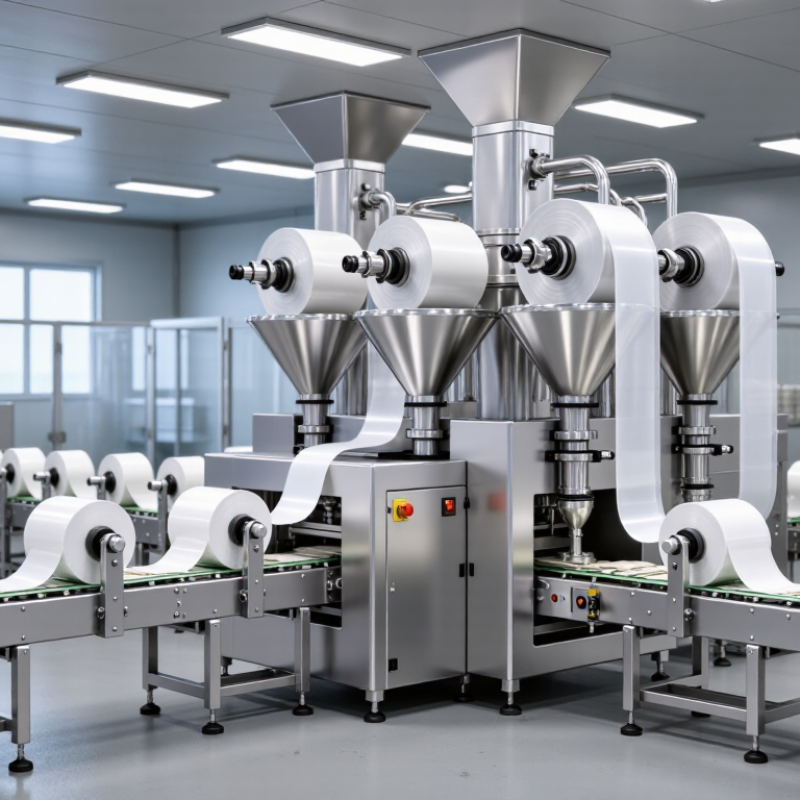
A multi lane powder packing machine forms and fills several small pouches at the same time. Each lane usually includes a film former, powder dosing unit, heat sealer, and cutting system. An auger filler measures powder by controlled screw rotation. This setup suits products such as flour, seasoning, milk powder, and other permitted dry materials.

In daily production, operators adjust the auger speed, filling volume, sealing temperature, and film tension. Accurate settings help reduce product waste and uneven pouch weights. The machine can also use sensors to detect film marks and maintain cutting positions. However, powder behavior is not always predictable. Fine powder may bridge inside the hopper, while humid powder can affect feeding accuracy. Real testing remains essential.

Tips: Check powder flow before selecting the machine. Ask for sample trials using your actual material. Measure pouch weight across every lane, not only the first one. Clean contact surfaces regularly, especially after dusty production. A faster machine is not always better if sealing quality suffers. Operators should record adjustments, because small changes can influence several lanes at once.

Why Choose a Multi Lane Powder Packing Machine? - What Is a Multi Lane Powder Packing Machine?

Typical Multi Lane Powder Packing Machine Configurations and Performance Factors
Comparison Dimension Single Lane 2 Lanes 4 Lanes 6 Lanes 8 Lanes
Basic Operating Principle One dosing and sealing lane produces one pouch at a time. Two synchronized dosing and sealing lanes operate in parallel. Four synchronized lanes increase output within one machine frame. Six lanes are used for higher-volume simultaneous production. Eight lanes provide high-throughput multi-lane production when product demand supports the investment.
Typical Output Range Approximately 20–60 pouches per minute Approximately 40–120 pouches per minute Approximately 80–240 pouches per minute Approximately 120–360 pouches per minute Approximately 160–480 pouches per minute
Common Pouch Format Small stick packs or narrow sachets Stick packs and compact three-side-seal sachets Stick packs or sachets for retail and portion packaging High-volume stick packs or multi-lane sachets High-volume portion packs and narrow-format sachets
Typical Fill Range About 0.5–100 g, depending on the auger and product About 0.5–100 g, depending on the auger and product About 0.5–100 g, depending on the auger and product About 0.5–100 g, depending on the auger and product About 0.5–100 g, depending on the auger and product
Filling Technology Usually an auger filler for powders with stable flow characteristics Multi-head auger dosing with synchronized feed control Independent or centrally driven auger dosing across four lanes Six synchronized auger dosing units with individual adjustment capability Eight synchronized auger dosing units for continuous high-volume operation
Typical Dosing Accuracy Often within approximately ±1–2%, subject to powder properties and calibration Often within approximately ±1–2%, subject to powder properties and calibration Often within approximately ±1–2%, subject to powder properties and calibration Often within approximately ±1–2%, subject to powder properties and calibration Often within approximately ±1–2%, subject to powder properties and calibration
Recommended Production Scale Product trials, low-volume production, and frequent changeovers Small to medium production runs Medium to high production demand High-volume production with regular order schedules Large-scale production requiring maximum lane utilization
Space Efficiency Lowest output density but generally simple to install Higher output per machine footprint than a single-lane unit Good balance between floor space and production capacity High output from a relatively compact continuous packaging system Very high output density, but it requires more installation and service clearance
Operational Advantages Simple operation, easy cleaning, and lower initial investment Improved productivity while retaining manageable setup procedures Higher throughput with better utilization of operators and utilities Reduced cost per pouch when demand is consistently high Maximum production capacity and efficient labor utilization for suitable products
Key Considerations May not meet high-volume demand without adding additional machines Requires lane synchronization and consistent powder feeding Changeover and cleaning procedures require more planning Product flow consistency and preventive maintenance become increasingly important Higher capital cost, more complex maintenance, and greater sensitivity to uneven powder distribution
Suitable Powder Products Seasoning, instant drink powder, flour, spices, and nutritional powders Seasoning, coffee powder, salt, sugar, and powdered supplements Food powders, detergent powders, pharmaceutical powders, and agricultural powders High-demand food, chemical, and household powder products Large-volume retail, food-service, and industrial powder applications
When to Choose This Configuration Choose when flexibility, low investment, and simple operation are more important than maximum output. Choose when production demand is growing and a moderate capacity increase is required. Choose when a strong balance between throughput, floor space, and operating cost is needed. Choose when stable high-volume orders justify greater automation and capacity. Choose when consistent demand, available floor space, and technical support can justify the highest throughput level.

Note: Output, filling range, and dosing accuracy are typical engineering reference values. Actual performance depends on powder flowability, bulk density, moisture, particle size, pouch dimensions, film characteristics, auger design, and machine settings.


How Does a Multi Lane Powder Packing Machine Work?

Why Choose a Multi Lane Powder Packing Machine?

A multi lane powder packing machine divides production across several filling lanes. Each lane forms, fills, seals, and cuts individual sachets. Powder enters a central hopper, then controlled augers or dosing screws measure each portion. Servo motors adjust rotation according to the target weight.

The process begins when packaging film moves through forming collars. The film becomes narrow tubular pouches around each lane. Filling tubes deliver measured powder into these pouches.

Heat sealing closes the vertical and horizontal edges. A cutting unit then separates finished sachets at set lengths. Sensors monitor film position, temperature, and registration marks during operation.

Small details matter.

Powder density can change during a shift. Humidity may affect flow. A minor screw adjustment can create noticeable weight differences. Operators should check sample weights, seal strength, and powder residue regularly. Cleaning between products also protects accuracy and hygiene.

It is not a magic solution. Experienced technicians still need to tune speed, vibration, and dosing time for each powder. Some powders bridge inside the hopper, while others flow too quickly. These behaviors require testing, not assumptions.

A reliable setup records adjustments and reviews performance before full production.

Which Powders Are Suitable for Multi Lane Packing?

Why Choose a Multi Lane Powder Packing Machine?

Which Powders Are Suitable for Multi Lane Packing?

Multi lane packing suits powders that must enter many small sachets quickly and consistently. Common examples include flour, sugar, milk powder, instant drink mixes, spices, starch, and dry soup blends. These materials usually flow well through an auger or volumetric dosing system. Their particles also resist sudden clumping during filling.

Free-flowing powders are the easiest match. Cohesive powders need more care. Cocoa, protein blends, and fine starch may bridge inside the hopper or cling to the auger. Agitation, hopper vibration, and humidity control can improve dosing accuracy. Still, no powder behaves perfectly. A dry-looking blend may change after storage.

FAO’s The State of Food and Agriculture 2019 estimated that 14% of food is lost between harvest and retail. Reliable small-pack filling can help reduce exposure to moisture, air, and handling. Smithers’ Future of Packaging to 2028 report projects the global packaging market will approach 1.2 trillion dollars by 2028, increasing pressure for efficient equipment.

In practical production, operators should test particle size, bulk density, flowability, and moisture before selecting a machine. A multi lane system may deliver impressive output, but speed alone is not enough. Poor sealing or inconsistent weight can waste material quickly. That is an uncomfortable detail, but it matters.

What Are the Main Benefits of Multi Lane Packing?

Why Choose a Multi Lane Powder Packing Machine?

What Are the Main Benefits of Multi Lane Packing?

A multi lane powder packing machine forms and fills several sachets at the same time. This layout can increase output without requiring a much larger production floor. In daily operation, one operator can monitor multiple lanes through a central control panel. That saves labor and reduces repetitive manual handling. It also creates a steadier packing rhythm.

Less waiting.

Accurate dosing is another important benefit. Modern systems can use auger fillers, load cells, or other measured feeding methods for different powder characteristics. Stable dosing helps control material costs and improves package consistency. Sealed sachets also reduce exposure to moisture, dust, and handling. This matters for powdered foods, supplements, and other regulated products. Proper cleaning remains essential.

More lanes do not automatically mean better performance. Powder may bridge, absorb moisture, or flow unevenly inside the hopper. These issues can cause weight variation and unplanned stops. From practical production experience, testing the actual powder before purchase is one of the safest decisions. Operators should also check changeover time, seal temperature control, spare parts access, and cleaning procedures. A fast machine is not useful when maintenance becomes difficult. The best configuration matches the powder, pack size, workforce, and realistic output target.

How Should You Choose the Right Machine for Your Needs?

Choosing a multi lane powder packing machine starts with the powder, not the advertised speed. Fine flour, protein blends, spices, and mineral powders flow differently. Some powders bridge inside the hopper, while others create dust near the sealing area. Ask for a measured test using your own material. A catalog result is useful. It is not proof.

Check the target pack weight, bag size, and daily output. More lanes can increase production, but they also add setup complexity and cleaning time. Match the dosing system to powder behavior. Auger fillers suit many free-flowing and cohesive powders, while gravimetric options may fit sensitive applications. Verify accuracy across small and large doses. Watch the rejects.

Inspect changeover steps, removable contact parts, dust control, and operator access. An impressive machine may become tiring after eight hours. Confirm electrical requirements, spare-part availability, training, and service response before purchasing. Request factory trial records and ask how accuracy is maintained over time. Leave room for doubt. Your first test may not represent every season or batch. Run repeated trials, measure waste, and let operators challenge the specification. Small details often decide whether every lane works together.

Powder Coat Booths

For those larger-sized parts, or smaller quantity runs, we have 2 independent powder coat booths and ovens. The quality, durability and affordability of today’s powder coating finishes make this the process of choice for world-class companies.

Powder coating advantages over other forms of coating are many. Materials used in the Powder coating process can be metals and non-metals that come in a multitude of thicknesses, textures, colors, etc. Another of Powder coating’s biggest advantages over conventional coatings is its ability to create finishes in many different textures. Powder Coating Booths allow us the ability to apply these advantages to large products.

Wet Paint Line

Tri-State Fabricators runs a full-service conveyor line for painting. Wet painting can provide protection or decoration to many different part styles. From start to finish, every project is easier to undergo random and point-based inspection by our skilled painting team.

Advantages to our Wet Paint Line are these lines start with product prep and ends with a thorough inspection of a high quality finished product. Our ability to complete large and small projects with a superior finish and doing so in a timely and economical fashion. This passes along the savings in production to our customers. When powder coating ins not an option, our Wet Paint Line gets the job done right the first time.

Wet Paint Booths

When the parts get big and heavy we roll-out our custom paint racks and oversize booth. By utilizing our partnerships with all the major paint brands, we can match virtually any color with wet paint.

The advantages of having access to a Wet Paint Booth are many. Large projects of many different shapes can be loaded into the booth. The Wet Paint Booth offers an environment that is much more controlled than a typical parts painting operation.

Not only are they used because of their controlled environment, but they’re are also advantageous when it comes to applying paint to parts that are needed in industries that require specialty coatings such as medical, aerospace, etc.

Military CARC

Our military forces have some very high standards when it comes to the finish of their vehicles and equipment. From the first pre-treatment step to final coat, it takes a great deal of knowledge and experience to protect the men and women of our armed forces. They deserve only the best, and Tri-State Fabricators provides it.

All of our processes are closely monitored by our staff and management teams. Both of which are highly trained in the processes of metal fabrication and finishing. Tri-State Fabricators’ goal is to always fully satisfy each and every customer, including the military. We will always put a 110% into what we do.

Glass-Bead Blasting

Abrasive media blasting is an excellent way to remove old paint, rust, and increase the paint/powder adhesion. Glass beads produce a much smoother and brighter finish than angular abrasives; leaving the part clean yet without any dimensional change. Chemically inert and environmentally friendly, we can recycle our beads approximately 30 times; making them a more preferred method of metal cleaning or surface finishing.

Advantages to Glass Bead Blasting are many. Glass bead blast media is used when a project is needing rough surfaces need to become smooth for applications of coatings such as paint. It is typically used to clean paint and rust from a product surface without deforming the surface it is being used on. Overall, compared to many other blasting media, Glass Bead Blasting is a very economical choice and those savings are always passed on to our customers.

Part Washing

Tri-State Fabricators utilize a zinc phosphate wash to clean and etch the material to ensure the best paint adhesion possible. The unique design of our 3-stage wash system does the work like a 5-stage. From Cleaning and rinsing to conversion coating and post-treatment, Our Part Washing process is a complete service and works throughout the fabrication service and the finishing service.

Along with the previously mentioned benefits, Curing is a vital chemical reaction that leaves the product finish hard and relatively safe from mild abrasion and aggressive corrosion. This process can be done in more than one way; ambient air-dry or in curing ovens at temps that exceed 240°.

Burn-Off Oven

From fixing paint mistakes (someone else’s of course) to simply cleaning our paint line hooks, our burn-off oven is put to good use. After a quick burn-off, a little clean up, and a fresh coat of paint, your parts will look better than new.

Why does our Burn-Off Oven work so well? Because super heating the air around parts turns the materials into ashes. From paint and powder coatings to rubber and machining oils, high temps do the job without degrading the integrity of the part.

Masking

Masking is a vital part of producing high quality products. We have die-cut masking patterns to protect machined surfaces as well as a wide range of plugs and caps to protect threaded holes and bolts. We provide permanent and temporary masking.

Masking allows the selected sections of a product to be protected from a fabrication or finishing service. This can be with both chemicals when etching and tapes, paints when only finishing just a section of the product. Masking is great in aiding the customization process of a project.

Screen Printing

Screen printing is a photographic process that transfers artwork onto a porous nylon screen which allows colored ink to flow through the screen and be deposited on an aluminum or plastic component. We can generally have just about any design created onto a screen for your parts.

Some of the advantages of Screen Printing are, brand recognition for your business displaying on your products, assembly instructions, product warnings/hazards, etc. Tri-State Fabricators produces Screen Printing of the highest quality so you know it’s durable.

Metal Finishing

Metal Finishing is the art of treating the exterior portion of product, often metal but can also be made of other materials, so that the surface is clean and free of any debris. Then the process of applying coats or either paint of powder coat takes place. This coating process improves the quality of the product in both appearance and resistance to wear and corrosion.

Tri-State Fabricators, Inc., understands that a project typically isn’t complete until a high-quality finish has been added to your product. This is why our painting and powder coating teams continuously inspect the products throughout the Metal Finishing process.
