


Why Choose Large Outdoor Ceramic Flower Pots?

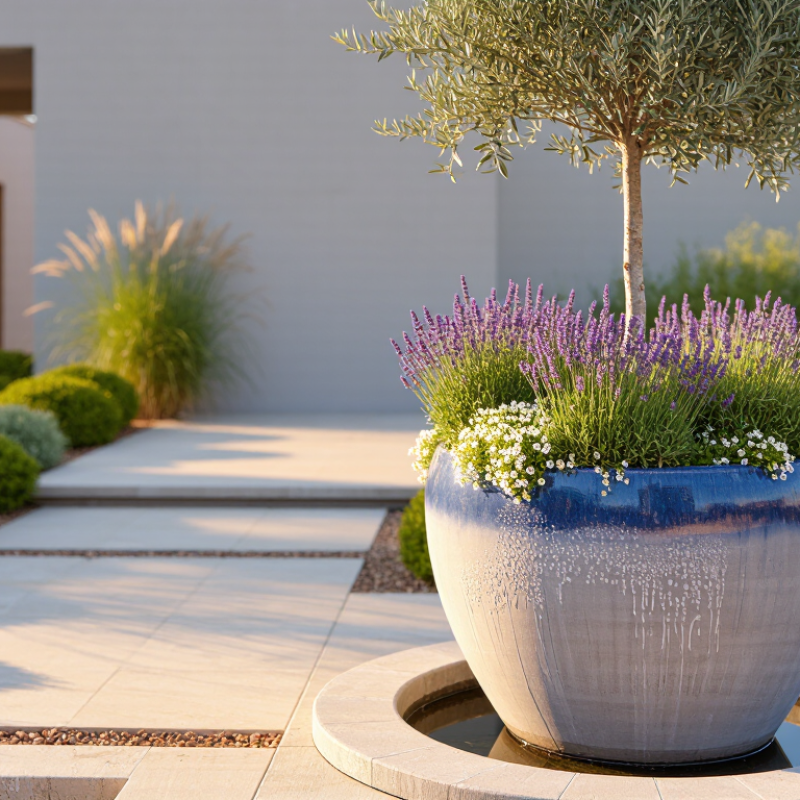
Large outdoor ceramic flower pots can give a patio, entryway, or garden border a stronger focal point. Their height and broad profiles make room for shrubs, small trees, and layered seasonal plantings. The glazed surface also adds color and texture, from soft stone tones to deep blue. In afternoon light, even a simple planter can feel substantial. A young olive tree or upright grass can look especially balanced in a wide, stable vessel.

Choosing ceramic flower pots large outdoor spaces suit means considering more than appearance. A roomy pot holds more soil, which can buffer moisture and give roots space, but it also becomes heavy when filled. Check the planter’s dimensions, drainage opening, and weight before placing it on a balcony or deck. Use a pot with drainage, and raise it slightly so excess water can escape. In cold climates, trapped water may expand and damage ceramic, so frost-resistant construction and sheltered winter storage matter. Details are easy to miss.

Ceramic is not automatically the best choice for every garden. It can chip if struck, and large pieces may be difficult to move once planted. Sun, wind, and local winter conditions also affect how well a pot performs. Still, its stable feel, durable finish, and wide design range make it appealing where a lasting display matters. A careful match between pot, plant, and site usually matters more than choosing the biggest size. Sometimes, smaller is wiser.
Why Choose Large Outdoor Ceramic Flower Pots?

What Defines a Large Outdoor Ceramic Flower Pot?

There is no universal industry size cutoff for a large outdoor ceramic flower pot. In practical terms, it is a fired-clay container with a broad footprint and enough soil capacity for substantial roots or a focal plant. Think of a wide rim, a stable base, and room for soil around the root ball. Large is relative.

An opening of about 18 inches or more is a useful shopping reference, not a formal standard. Shape affects capacity: a tapered pot may hold less soil than a straight-sided one with the same rim width. Check for a drainage hole, a level base, and clear outdoor-use guidance. Ceramic can be heavy once filled. That detail is easy to overlook. In cold climates, ask whether the pot is frost-resistant; water absorbed into porous clay can expand when frozen and cause cracking.

The National Gardening Association’s 2023 National Gardening Survey found that 80% of U.S. households took part in lawn and garden activities in 2022. That broad participation helps explain why container size matters in patios and entryways, where plants need to fit the space without blocking movement. Still, participation data cannot set a pot-size standard. Compare the pot’s actual dimensions, drainage, and weight with your site before choosing.


Common 18–24-Inch Planter Sizes and Their Typical Uses

An 18-inch ceramic planter suits one compact tomato, a dwarf citrus, or a mixed annual display on a patio. At 16 inches deep, a straight-sided pot holds about 19 US gallons by cylinder-volume calculation; tapered pots hold less. A 24-inch planter, about 39 gallons at 20 inches deep, gives larger roots more room and supports combinations such as a central shrub with trailing flowers. These are estimates, not fill-line promises.

Size it for mature roots, not the nursery pot. Penn State Extension’s container-gardening guidance emphasizes drainage, while University of Maryland Extension notes that container plants need regular watering and suitable growing media. In practice, that extra soil volume can buffer hot afternoons, but ceramic walls still warm in direct sun. Feel the pot’s weight. A filled 24-inch ceramic planter can be difficult to move, so place it before adding soil. Heavy, yes. For balconies, check the surface’s load capacity.

Choose 18 inches for herbs, compact vegetables, and seasonal color; choose 24 inches for small shrubs or deeper-rooted plants. Leave room for drainage, and avoid packing soil hard around the root ball. One detail is easy to overlook: a broad pot may look generous but remain too shallow for a woody plant. I have seen that mismatch disappoint. University extension guidance is useful, but local heat, wind, and plant variety still change watering needs.

How Ceramic Body and Glaze Affect Outdoor Performance

Large outdoor ceramic flower pots combine visual weight with practical stability. Their mass helps resist tipping when wind catches tall stems or broad leaves. Yet weight also makes placement a decision worth making before filling the pot. A glazed surface can add color and slow moisture loss, while the ceramic body provides structure. Neither feature makes every pot equally suited to every climate.

Outdoor performance depends on the clay body, firing quality, glaze, and drainage design. Dense, well-fired ceramic generally absorbs less water than porous earthenware, but manufacturing differences matter. If water enters the body and freezes, expansion can cause cracks or flaking. A glossy glaze may shed rain, though small chips or hairline flaws can still admit moisture. Inspect the rim and base, and check that drainage holes remain open. A beautiful pot is not automatically frost-proof. In wet, freezing regions, raise pots slightly off the ground and avoid leaving water trapped in saucers. This is easy to overlook.

Tips: Match the pot to local winter conditions, not just its appearance. Use a liner if appropriate, keep drainage clear, and move especially vulnerable pots under shelter. Even careful handling cannot guarantee a crack-free season.

ASTM C373 Absorption Bands: ≤0.5%, 0.5–3%, 3–7%, and >7%

Large outdoor ceramic flower pots endure rain, wet soil, and repeated temperature changes. Water absorption helps compare fired clay bodies, but it cannot predict every pot’s lifespan. ASTM C373 provides standardized methods for measuring ceramic water absorption; the percentages below are practical screening bands, not a guarantee of frost performance.

≤0.5% — The body absorbs little water, which can reduce moisture entry into the ceramic. That is useful in exposed gardens. Yet drainage holes, glaze defects, and trapped water still matter.

0.5–3% — Absorption remains relatively low, but inspect the pot’s base and rim for chips. Small details count.

3–7% — The band suggests more open porosity. In rainy or freezing conditions, water held in the body may increase stress during temperature swings.

Above 7% — The ceramic is more absorbent, so sheltered placement and a raised, freely draining base become especially important.

There is a catch: absorption alone does not prove freeze-thaw durability. ASTM C1026 separately evaluates ceramic products through freeze-thaw cycling, a useful reminder that performance needs more than one test. Check the maker’s test results where available, and remember that large pots can stay wet longer than their appearance suggests.

Drainage, Freeze–Thaw Exposure, and Placement Considerations

Large outdoor ceramic pots hold more soil, but their weight makes drainage and placement decisions less forgiving. Keep the drain hole clear; water trapped beneath the root ball can displace air and stress roots. Raise the pot on feet over paving, and use a free-draining container mix rather than garden soil. The Royal Horticultural Society’s container-growing guidance also stresses unobstructed drainage.

Water needs an exit.

Freeze–thaw exposure depends on ceramic porosity and where the pot sits. The USDA’s 2023 Plant Hardiness Zone Map uses 1991–2020 climate data and divides average annual extreme minimum temperatures into 10°F zones, with 5°F half-zones. It helps estimate winter cold, but it does not measure wet-pot freeze–thaw cycles. A rain-soaked pot against a cold wall may face different stress from one beneath an eave. Even frost-resistant ceramic benefits from protection against standing water.

Tips: Before winter, clear the drain hole, lift the base, and move the pot away from roof runoff. Set it on firm, level ground; a filled pot can be hard to shift. Check after the first freeze. That detail is easy to miss. Consider sun, wind, and hose reach before planting, since awkward placement can lead to uneven watering.

Powder Coat Booths

For those larger-sized parts, or smaller quantity runs, we have 2 independent powder coat booths and ovens. The quality, durability and affordability of today’s powder coating finishes make this the process of choice for world-class companies.

Powder coating advantages over other forms of coating are many. Materials used in the Powder coating process can be metals and non-metals that come in a multitude of thicknesses, textures, colors, etc. Another of Powder coating’s biggest advantages over conventional coatings is its ability to create finishes in many different textures. Powder Coating Booths allow us the ability to apply these advantages to large products.

Wet Paint Line

Tri-State Fabricators runs a full-service conveyor line for painting. Wet painting can provide protection or decoration to many different part styles. From start to finish, every project is easier to undergo random and point-based inspection by our skilled painting team.

Advantages to our Wet Paint Line are these lines start with product prep and ends with a thorough inspection of a high quality finished product. Our ability to complete large and small projects with a superior finish and doing so in a timely and economical fashion. This passes along the savings in production to our customers. When powder coating ins not an option, our Wet Paint Line gets the job done right the first time.

Wet Paint Booths

When the parts get big and heavy we roll-out our custom paint racks and oversize booth. By utilizing our partnerships with all the major paint brands, we can match virtually any color with wet paint.

The advantages of having access to a Wet Paint Booth are many. Large projects of many different shapes can be loaded into the booth. The Wet Paint Booth offers an environment that is much more controlled than a typical parts painting operation.

Not only are they used because of their controlled environment, but they’re are also advantageous when it comes to applying paint to parts that are needed in industries that require specialty coatings such as medical, aerospace, etc.

Military CARC

Our military forces have some very high standards when it comes to the finish of their vehicles and equipment. From the first pre-treatment step to final coat, it takes a great deal of knowledge and experience to protect the men and women of our armed forces. They deserve only the best, and Tri-State Fabricators provides it.

All of our processes are closely monitored by our staff and management teams. Both of which are highly trained in the processes of metal fabrication and finishing. Tri-State Fabricators’ goal is to always fully satisfy each and every customer, including the military. We will always put a 110% into what we do.

Glass-Bead Blasting

Abrasive media blasting is an excellent way to remove old paint, rust, and increase the paint/powder adhesion. Glass beads produce a much smoother and brighter finish than angular abrasives; leaving the part clean yet without any dimensional change. Chemically inert and environmentally friendly, we can recycle our beads approximately 30 times; making them a more preferred method of metal cleaning or surface finishing.

Advantages to Glass Bead Blasting are many. Glass bead blast media is used when a project is needing rough surfaces need to become smooth for applications of coatings such as paint. It is typically used to clean paint and rust from a product surface without deforming the surface it is being used on. Overall, compared to many other blasting media, Glass Bead Blasting is a very economical choice and those savings are always passed on to our customers.

Part Washing

Tri-State Fabricators utilize a zinc phosphate wash to clean and etch the material to ensure the best paint adhesion possible. The unique design of our 3-stage wash system does the work like a 5-stage. From Cleaning and rinsing to conversion coating and post-treatment, Our Part Washing process is a complete service and works throughout the fabrication service and the finishing service.

Along with the previously mentioned benefits, Curing is a vital chemical reaction that leaves the product finish hard and relatively safe from mild abrasion and aggressive corrosion. This process can be done in more than one way; ambient air-dry or in curing ovens at temps that exceed 240°.

Burn-Off Oven

From fixing paint mistakes (someone else’s of course) to simply cleaning our paint line hooks, our burn-off oven is put to good use. After a quick burn-off, a little clean up, and a fresh coat of paint, your parts will look better than new.

Why does our Burn-Off Oven work so well? Because super heating the air around parts turns the materials into ashes. From paint and powder coatings to rubber and machining oils, high temps do the job without degrading the integrity of the part.

Masking

Masking is a vital part of producing high quality products. We have die-cut masking patterns to protect machined surfaces as well as a wide range of plugs and caps to protect threaded holes and bolts. We provide permanent and temporary masking.

Masking allows the selected sections of a product to be protected from a fabrication or finishing service. This can be with both chemicals when etching and tapes, paints when only finishing just a section of the product. Masking is great in aiding the customization process of a project.

Screen Printing

Screen printing is a photographic process that transfers artwork onto a porous nylon screen which allows colored ink to flow through the screen and be deposited on an aluminum or plastic component. We can generally have just about any design created onto a screen for your parts.

Some of the advantages of Screen Printing are, brand recognition for your business displaying on your products, assembly instructions, product warnings/hazards, etc. Tri-State Fabricators produces Screen Printing of the highest quality so you know it’s durable.

Metal Finishing

Metal Finishing is the art of treating the exterior portion of product, often metal but can also be made of other materials, so that the surface is clean and free of any debris. Then the process of applying coats or either paint of powder coat takes place. This coating process improves the quality of the product in both appearance and resistance to wear and corrosion.

Tri-State Fabricators, Inc., understands that a project typically isn’t complete until a high-quality finish has been added to your product. This is why our painting and powder coating teams continuously inspect the products throughout the Metal Finishing process.
