


Choosing Ion Exchange Membrane Equipment requires more than comparing purchase prices. It demands a clear understanding of water chemistry, operating conditions, and long-term maintenance. These systems use selective membranes and an electric field to move ions through a controlled separation process. The result can be cleaner water, concentrated salts, or recovered acids and bases.
The technology fits several industrial settings. It supports desalination, metal finishing, chemical production, and wastewater treatment. In a properly designed electrodialysis unit, operators can monitor conductivity, voltage, flow rate, and pressure. These measurements reveal whether the process is stable. They also help identify scaling, membrane fouling, or unusual feed contamination before performance declines. Practical experience matters here. A membrane that performs well in laboratory water may behave differently beside a factory drain.
There is no universal solution. Membrane selection, pretreatment, and cleaning schedules strongly influence reliability. Poorly controlled hardness can leave visible deposits on membrane surfaces. High organic loading may reduce ion transport and increase maintenance time. Engineers should review pilot data, supplier documentation, energy consumption, and replacement costs before approval. Independent testing can strengthen that decision.
Ion Exchange Membrane Equipment can improve resource efficiency when matched to the right process. It may reduce chemical handling and support water reuse. However, these benefits depend on disciplined operation and honest performance evaluation. Some projects need more pretreatment than expected. That is worth admitting. A dependable system is not simply efficient on paper; it remains measurable, serviceable, and safe throughout daily industrial use.
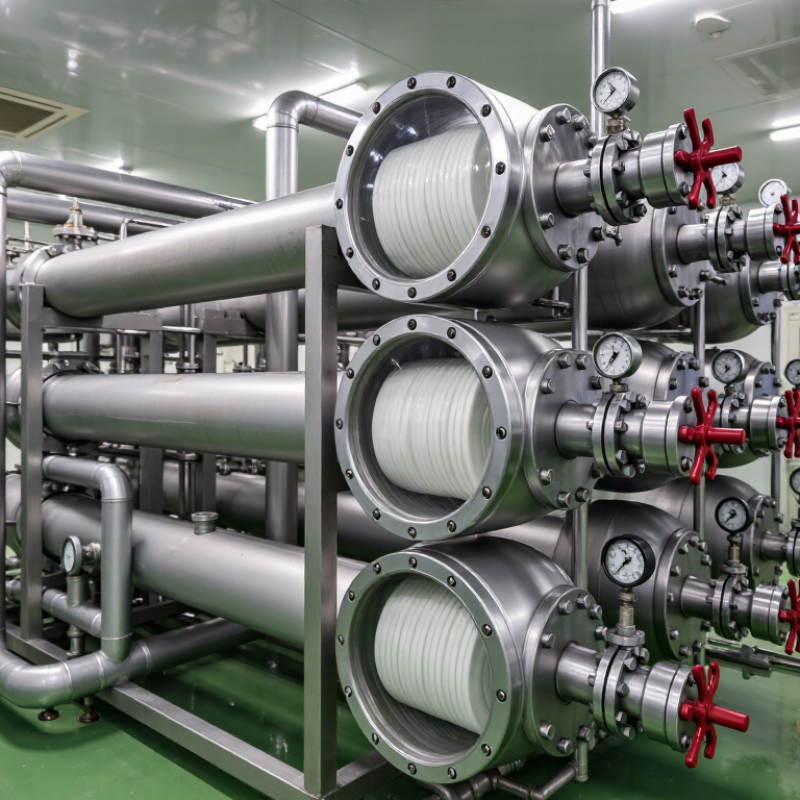
Ion exchange membrane equipment is an electrochemical system that separates ions through selective membranes. These membranes allow certain charged particles to pass while blocking others. An applied electric field drives the separation process. The equipment may support desalination, wastewater treatment, acid recovery, or chemical concentration.
Inside a typical unit, alternating membranes form narrow flow channels. Feed water moves through these channels continuously. Cations and anions travel toward opposite electrodes. Selective membranes guide their movement into separate streams. Operators monitor conductivity, pressure, temperature, and electrical current. These details reveal whether the process is stable. In practical facilities, membrane fouling can reduce performance before problems become obvious. Cleaning schedules must match the water chemistry, not a convenient calendar.
No system is perfect.
Tips: Test the feed water before selecting membranes. Check hardness, suspended solids, organic matter, and temperature. Keep accurate operating records. Small changes in conductivity may signal scaling or membrane damage. Use trained technicians for inspections and maintenance.
Choosing this equipment can reduce chemical consumption and create a controllable separation process. It may also improve resource recovery when streams are properly designed. However, performance depends on pretreatment, membrane selection, flow balance, and regular maintenance. A poorly prepared feed can shorten membrane life quickly. That part is easy to underestimate. Reliable decisions should combine pilot testing, technical data, and site-specific operating experience.

Ion exchange membrane equipment separates dissolved ions through selective membranes and an applied electric field. Inside the stack, alternating cation- and anion-exchange membranes form narrow flow channels. A direct-current power supply drives positive ions toward the cathode and negative ions toward the anode. Each membrane permits mainly one charge type to pass. This controlled movement creates dilute and concentrated streams. The process is precise, not mysterious.
In practical operation, feed water enters under steady pressure and flows across the membrane surfaces. Salt ions migrate through the correct membranes, while larger molecules and neutral compounds usually remain behind. Operators monitor conductivity, voltage, temperature, flow rate, and pressure. A sudden pressure increase may indicate fouling or scaling. Pretreatment matters. Even a well-designed unit can perform poorly with suspended solids or excessive hardness.
The equipment is attractive when continuous ion removal, lower chemical consumption, or adjustable water quality is important. However, real systems are less tidy than diagrams suggest. Membranes age, electrical efficiency changes, and cleaning intervals are easy to underestimate. I would not judge performance from ion removal alone. Energy use, concentrate handling, maintenance records, and stable output deserve equal attention. Small data gaps can produce confident but weak decisions.
Why Choose Ion Exchange Membrane Equipment?
Ion exchange membrane equipment serves several demanding industries. Water treatment is a major user. The UN World Water Development Report 2024 states that 2.2 billion people lacked safely managed drinking water in 2022. Electrodialysis and membrane demineralization can help recover salts and produce process water. They are useful in municipal plants, factories, and remote facilities. Results depend on feed quality, energy costs, and maintenance. No membrane solves everything.
Chemical manufacturers use membrane cells for chlor-alkali production, where controlled ion movement supports the production of essential chemicals. Food and beverage processors also use these systems to concentrate, demineralize, or purify liquids. Pharmaceutical plants require high-purity water and stable operating conditions. The battery and metals sector is expanding too. The International Energy Agency reported nearly 14 million electric cars were sold worldwide in 2023. That growth increases pressure to recover lithium, nickel, cobalt, and other valuable materials from process streams. Membrane separation may reduce chemical use, but performance can vary widely. Pilot testing remains necessary.
Tips: Match the membrane to the ions, temperature, and pH. Track pressure, conductivity, and cleaning frequency. Ask for verified test data, not only attractive recovery claims. Design engineers should also calculate power consumption per cubic metre. A small mistake here becomes expensive. During site work, operators often discover that fouling was underestimated. That lesson deserves attention.
Why Choose Ion Exchange Membrane Equipment?
What Are Its Main Advantages and Limitations?
Ion exchange membrane equipment moves charged ions through selective membranes using an electric field. In operating facilities, conductivity readings and pressure trends reveal process changes early. This makes electrodialysis useful for desalination, demineralization, and selective salt recovery. Its strongest advantage is control. Operators can adjust current, flow rate, and stack stages for changing feedwater quality. The process often runs near ambient temperature, protecting heat-sensitive liquids. It may also reduce chemical handling compared with some conventional treatment methods.
Yet selectivity has limits. Membranes transport ions, not every dissolved substance. Neutral organics, oils, suspended solids, and biological growth can reduce performance. Poor pretreatment causes fouling and scaling. High salinity can also increase energy demand. A blocked channel may show rising pressure before product quality visibly declines. Regular cleaning and careful water analysis are essential. Cleaning is not harmless. Aggressive chemicals may shorten membrane life.
Equipment requires skilled design and monitoring. Stack area, current density, recovery targets, and concentrate management must match the application. A smaller unit may seem economical, yet frequent cleaning can erase that saving. Simple conductivity targets can mislead operators. Temperature, flow balance, pressure drop, and ion composition need attention too. Membrane replacement remains a real operating cost. Pilot testing is wiser than trusting one laboratory result or an attractive performance estimate.
Typical operating characteristics of electrodialysis-based ion exchange membrane systems
Main advantages: Ion exchange membrane equipment generally operates at lower pressure than reverse osmosis, can achieve high water recovery in suitable brackish-water applications, and allows selective ion transfer through electrically driven separation.
Main limitations: Performance depends strongly on feed-water composition. Fouling, scaling, organic matter, oil, suspended solids, and multivalent ions can increase pretreatment requirements and operating costs.
The chart uses representative midpoints from commonly reported engineering ranges: energy consumption of 0.4–2.0 kWh/m³, water recovery of 70–95%, operating pressure of 1–5 bar, and membrane service life of approximately 5–10 years. Actual values vary with salinity, current density, pretreatment, and system design.
Selecting ion exchange membrane equipment starts with the feedwater, not the catalogue. Test conductivity, hardness, silica, organics, temperature, and suspended solids. A small silica error can increase scaling and shorten membrane life.
Define the required product quality, flow rate, recovery, and operating hours before comparing systems. For ultrapure water, electrodeionization may reduce chemical handling. For higher salt loads, electrodialysis can offer better process flexibility. The correct choice depends on water chemistry and duty cycle.
Energy use deserves close attention. The International Energy Agency’s Global Hydrogen Review 2024 reported about 1.4 GW of installed global water-electrolysis capacity by the end of 2023. This growth makes power efficiency, current density, and cooling design increasingly important.
Ask suppliers for tested energy consumption under your actual conductivity and temperature. Laboratory figures can look impressive. Full-scale conditions are less tidy.
Check membrane selectivity, replacement intervals, cleaning methods, sensor accuracy, and local technical support. Confirm whether the skid can handle flow changes without unstable product quality.
Request maintenance records from comparable installations, not only projected savings. Total cost includes pretreatment, electricity, spare membranes, labor, and wastewater management. A lower purchase price may hide higher operating costs.
I have seen models chosen too quickly. The overlooked detail was often pretreatment. Also, published performance data may exclude difficult feedwater. That deserves a second review.


For those larger-sized parts, or smaller quantity runs, we have 2 independent powder coat booths and ovens. The quality, durability and affordability of today’s powder coating finishes make this the process of choice for world-class companies.
Powder coating advantages over other forms of coating are many. Materials used in the Powder coating process can be metals and non-metals that come in a multitude of thicknesses, textures, colors, etc. Another of Powder coating’s biggest advantages over conventional coatings is its ability to create finishes in many different textures. Powder Coating Booths allow us the ability to apply these advantages to large products.
Tri-State Fabricators runs a full-service conveyor line for painting. Wet painting can provide protection or decoration to many different part styles. From start to finish, every project is easier to undergo random and point-based inspection by our skilled painting team.
Advantages to our Wet Paint Line are these lines start with product prep and ends with a thorough inspection of a high quality finished product. Our ability to complete large and small projects with a superior finish and doing so in a timely and economical fashion. This passes along the savings in production to our customers. When powder coating ins not an option, our Wet Paint Line gets the job done right the first time.
When the parts get big and heavy we roll-out our custom paint racks and oversize booth. By utilizing our partnerships with all the major paint brands, we can match virtually any color with wet paint.
The advantages of having access to a Wet Paint Booth are many. Large projects of many different shapes can be loaded into the booth. The Wet Paint Booth offers an environment that is much more controlled than a typical parts painting operation.
Not only are they used because of their controlled environment, but they’re are also advantageous when it comes to applying paint to parts that are needed in industries that require specialty coatings such as medical, aerospace, etc.
Our military forces have some very high standards when it comes to the finish of their vehicles and equipment. From the first pre-treatment step to final coat, it takes a great deal of knowledge and experience to protect the men and women of our armed forces. They deserve only the best, and Tri-State Fabricators provides it.
All of our processes are closely monitored by our staff and management teams. Both of which are highly trained in the processes of metal fabrication and finishing. Tri-State Fabricators’ goal is to always fully satisfy each and every customer, including the military. We will always put a 110% into what we do.
Abrasive media blasting is an excellent way to remove old paint, rust, and increase the paint/powder adhesion. Glass beads produce a much smoother and brighter finish than angular abrasives; leaving the part clean yet without any dimensional change. Chemically inert and environmentally friendly, we can recycle our beads approximately 30 times; making them a more preferred method of metal cleaning or surface finishing.
Advantages to Glass Bead Blasting are many. Glass bead blast media is used when a project is needing rough surfaces need to become smooth for applications of coatings such as paint. It is typically used to clean paint and rust from a product surface without deforming the surface it is being used on. Overall, compared to many other blasting media, Glass Bead Blasting is a very economical choice and those savings are always passed on to our customers.
Tri-State Fabricators utilize a zinc phosphate wash to clean and etch the material to ensure the best paint adhesion possible. The unique design of our 3-stage wash system does the work like a 5-stage. From Cleaning and rinsing to conversion coating and post-treatment, Our Part Washing process is a complete service and works throughout the fabrication service and the finishing service.
Along with the previously mentioned benefits, Curing is a vital chemical reaction that leaves the product finish hard and relatively safe from mild abrasion and aggressive corrosion. This process can be done in more than one way; ambient air-dry or in curing ovens at temps that exceed 240°.
From fixing paint mistakes (someone else’s of course) to simply cleaning our paint line hooks, our burn-off oven is put to good use. After a quick burn-off, a little clean up, and a fresh coat of paint, your parts will look better than new.
Why does our Burn-Off Oven work so well? Because super heating the air around parts turns the materials into ashes. From paint and powder coatings to rubber and machining oils, high temps do the job without degrading the integrity of the part.
Masking is a vital part of producing high quality products. We have die-cut masking patterns to protect machined surfaces as well as a wide range of plugs and caps to protect threaded holes and bolts. We provide permanent and temporary masking.
Masking allows the selected sections of a product to be protected from a fabrication or finishing service. This can be with both chemicals when etching and tapes, paints when only finishing just a section of the product. Masking is great in aiding the customization process of a project.
Screen printing is a photographic process that transfers artwork onto a porous nylon screen which allows colored ink to flow through the screen and be deposited on an aluminum or plastic component. We can generally have just about any design created onto a screen for your parts.
Some of the advantages of Screen Printing are, brand recognition for your business displaying on your products, assembly instructions, product warnings/hazards, etc. Tri-State Fabricators produces Screen Printing of the highest quality so you know it’s durable.
Metal Finishing is the art of treating the exterior portion of product, often metal but can also be made of other materials, so that the surface is clean and free of any debris. Then the process of applying coats or either paint of powder coat takes place. This coating process improves the quality of the product in both appearance and resistance to wear and corrosion.
Tri-State Fabricators, Inc., understands that a project typically isn’t complete until a high-quality finish has been added to your product. This is why our painting and powder coating teams continuously inspect the products throughout the Metal Finishing process.

