


Why Choose Industrial Vacuum Piping for Your Business?

Industrial Vacuum Piping can help businesses move dust, trim, powders, and process waste through enclosed lines. It can reduce manual handling and keep material moving toward a central collection point. Picture a production floor where operators no longer push bins between workstations. The benefit, however, depends on the design.

Pneumatic conveying expert David Mills, author of Pneumatic Conveying Design Guide, offers a relevant principle. A fair paraphrase of his design guidance is: “Match the conveying system to the material and operating conditions, not the other way around.” Particle size, moisture, bulk density, and the route all matter. A tight elbow may increase resistance. A poorly placed branch can affect flow. These details deserve attention.

There are trade-offs. Vacuum lines need suitable pipe sizing, reliable filtration, and access for inspection. A system that looks tidy on a drawing may be awkward to clean or maintain. That is easy to overlook. Before choosing equipment, businesses should review the material, collection points, operating schedule, and future changes with a qualified engineer. Real site measurements matter more than assumptions. Industrial Vacuum Piping is not a universal fix, and the right layout may require revision after operators test it. A thoughtful design can support cleaner handling and steadier production—but only when it fits the work.
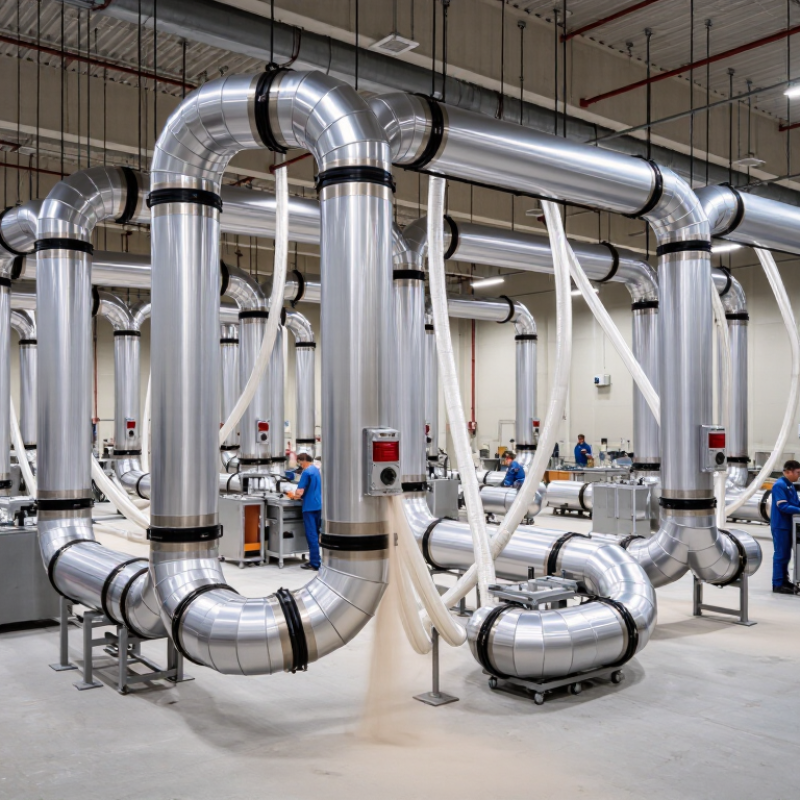
Why Choose Industrial Vacuum Piping for Your Business?

Industrial Vacuum Piping: Components, Layout, and Material Movement

Why Choose Industrial Vacuum Piping for Your Business?

Industrial vacuum piping moves dust, chips, granules, or other process material from pickup points to a collection unit. A typical system includes pipe, bends, branches, valves, filters, and a vacuum source. Each component affects airflow. For example, a tight bend can increase resistance, while an undersized branch may leave material behind. Pipe diameter and routing should match the material, conveying distance, and required pickup rate. A site assessment by a qualified engineer can help verify these choices.

Layout matters on the factory floor. Keep runs as direct as practical, limit unnecessary bends, and allow access to cleanouts and inspection points. Routes must also avoid obstructing walkways, equipment, and maintenance access. Material properties deserve attention: fine powders and heavier particles behave differently, and moisture can cause buildup. Even a well-designed system may need adjustment after installation; actual operating conditions can differ from initial estimates.

Tips: Map pickup points and note the material handled at each one. Check bends, joints, and filters during routine inspections. Watch for reduced suction or recurring blockages. These can signal a leak, buildup, or a layout issue. Keep records of changes, too. Small details get missed.

Why Choose Industrial Vacuum Piping for Your Business? — Components, Layout, and Material Movement

System Dimension Typical Components or Design Consideration How It Supports Material Movement Practical Business Consideration
Pickup points Hood, floor inlet, tool connection, or machine-side pickup connected to the piping network Captures dust, chips, or other compatible material near its source and directs it into the system Position and size each inlet for the task; poorly placed pickups can reduce capture effectiveness
Piping network Branches, main headers, elbows, reducers, tees, and supports Provides a defined route from collection points to the separator or receiver Keep routing as direct as practical and avoid unnecessary bends, abrupt changes, and long runs
Pipe material Material selected for the conveyed substance, temperature, wear, grounding, and operating conditions Forms the pathway through which the air-and-material stream travels Metal piping is commonly used in industrial settings; abrasive, corrosive, combustible, or hot materials may require specific engineering review
Airflow and conveying velocity Fan or vacuum source, duct sizing, system balancing, and operating controls Maintains the airflow needed to carry the intended material through the network Required conditions depend on material properties and layout; undersized or unbalanced systems can lead to settling or poor pickup
Separation and collection Separator, cyclone where appropriate, filter, receiver, and discharge arrangement Separates conveyed solids from the air and collects material for disposal or reuse Select filtration and collection equipment for particle characteristics, dust loading, and applicable emissions requirements
Branch isolation Manual or automatic gates and valves at selected branches Allows airflow to be directed to active pickup points while limiting unused branches Coordinate valve positions and operating procedures to keep the system within its designed airflow range
Material handling Hoppers, bins, rotary airlocks, or other compatible discharge equipment Transfers collected material from the receiver to storage, disposal, or the next process step Discharge equipment should suit the material’s flow behavior and the required containment or process connection
System layout Pickup locations, pipe routes, access points, and space for equipment and maintenance Connects work areas to the collection equipment with a planned path for material transport Allow access for inspection and cleaning; account for future equipment changes and avoid obstructing walkways
Inspection and maintenance Accessible cleanouts, inspection points, filter monitoring, and scheduled checks Helps identify deposits, leaks, blockages, or filter loading that can interrupt material movement Set maintenance intervals according to operating conditions, material type, and equipment guidance
Safety and compatibility Grounding and bonding where required, suitable components, and a hazard assessment Supports controlled movement of material through equipment selected for the application Combustible dust and other hazardous materials require application-specific assessment and compliance with relevant codes and regulations

OSHA PNOR Limits: 15 mg/m³ Total and 5 mg/m³ Respirable Dust

OSHA PNOR limits are 15 mg/m³ for total dust and 5 mg/m³ for the respirable fraction. These figures apply to particulates not otherwise regulated; they are not proof that every workplace dust is harmless. Some materials have their own, stricter exposure limits. Check the substance and the applicable requirements before setting controls.

Industrial vacuum piping can help capture dust close to where it is made. Picture a sanding station with a hood near the work surface, connected to piping sized for the required airflow. Keep bends limited, inspect joints, and check filters and collection containers regularly. Poor airflow can leave fine dust hanging in the room, even when the system sounds powerful.

Measure exposure rather than relying on appearance. Personal air sampling can show whether total and respirable dust levels are within relevant limits during actual tasks. Results may change with production rates, materials, and cleanup practices. A clean-looking floor is not enough. It is easy to assume a vacuum system solves the problem; that assumption deserves checking. Dust control works best when equipment, maintenance, and exposure monitoring are considered together.

NFPA 660 (2025): Managing Combustible-Dust Hazards in Piping Systems

Why Choose Industrial Vacuum Piping for Your Business?
NFPA 660 (2025): Managing Combustible-Dust Hazards in Piping Systems

Industrial vacuum piping moves fine material through long runs, elbows, and branches. Dust can settle inside a line or escape through a worn gasket. If the material is combustible, a small ignition source may create a serious event. NFPA 660 (2025) provides a framework for evaluating combustible-dust hazards across processes and equipment. Start with the actual dust, not assumptions based on appearance.

A qualified assessment can examine dust explosibility, operating conditions, and credible ignition sources. Piping layout matters. Dead ends, sharp turns, and poorly placed cleanouts may complicate inspection or allow deposits to build. Bonding, grounding, and explosion protection should be selected for the specific system and hazard; one standard arrangement will not suit every facility. Check the edition adopted for your site, and involve competent fire-protection and process-safety professionals.

Look closely at elbows and low points. Dust collects there. Inspection routines should check for buildup, damaged joints, and changes in airflow or filter pressure. Staff also need clear procedures for safe cleaning and maintenance. Real systems are rarely perfect: a cleanout may be awkward to reach, or a shift may miss a warning sign. That is worth addressing in the hazard review, not ignoring.

Why Choose Industrial Vacuum Piping? NFPA 660 (2025) and Dust Explosion Severity

KSt measures the rate of pressure rise in a standardized dust-explosion test. The chart shows the recognized severity bands: St 1 (0–200), St 2 (>200–300), and St 3 (>300) bar·m/s. The St 3 bar is capped at 600 for display only; its range has no upper limit. Actual dust properties and system conditions should guide a hazard analysis and piping design under applicable requirements, including NFPA 660 (2025).

Airflow and Pressure Loss: Matching Pipe Diameter to System Demand

In an industrial vacuum system, pipe diameter is not a cosmetic choice. It affects airflow and the pressure needed to move dust through the network. A pipe that is too narrow can increase friction and weaken pickup at distant workstations. Too wide, however, may lower conveying velocity, allowing heavier particles to settle. That balance depends on the material, pipe length, fittings, and number of active inlets. Measure real operating demand, not just the equipment’s peak rating. Small details matter.

Map each branch and identify the farthest pickup point. Elbows, reducers, and long horizontal runs all add resistance. Not always obvious. Estimate airflow with realistic numbers of users working at once, then compare pressure loss across possible pipe diameters. Reliable system data and measurements from the site can guide the choice. A pressure gauge near the vacuum source may reveal losses that a drawing misses. If demand changes by shift or season, one day’s readings may mislead. Record operating conditions and check the system after installation.

Lifecycle Performance: Comparing Energy Use, Maintenance, and Downtime

Why Choose Industrial Vacuum Piping for Your Business?

Lifecycle Performance: Comparing Energy Use, Maintenance, and Downtime

Industrial vacuum piping shapes daily operating costs. A well-sized route with smooth interiors can limit pressure losses, helping the vacuum source meet demand without working harder than necessary. Pipe size alone is not enough. Long runs, sharp bends, poor joints, and dust-loaded filters can increase energy use. Small leaks matter. Compare motor current and pressure readings during normal production, not only at installation.

Maintenance depends on what moves through the system. Abrasive material may wear bends and elbows faster than straight sections, while damp dust can create buildup. Place cleanouts and inspection points where technicians can reach them without dismantling large sections. Keep records of repairs and recurring blockages. They can reveal patterns, though the records may be incomplete at first.

Downtime is shaped by access and repair planning. Isolating a short pipe section can be easier than stopping an entire process, especially when valves and service points are positioned thoughtfully. Even good systems need attention. A layout that looks efficient on a drawing may be awkward above a machine line. Review energy readings, maintenance hours, and unplanned stops together; no single figure tells the whole story.

Powder Coat Booths

For those larger-sized parts, or smaller quantity runs, we have 2 independent powder coat booths and ovens. The quality, durability and affordability of today’s powder coating finishes make this the process of choice for world-class companies.

Powder coating advantages over other forms of coating are many. Materials used in the Powder coating process can be metals and non-metals that come in a multitude of thicknesses, textures, colors, etc. Another of Powder coating’s biggest advantages over conventional coatings is its ability to create finishes in many different textures. Powder Coating Booths allow us the ability to apply these advantages to large products.

Wet Paint Line

Tri-State Fabricators runs a full-service conveyor line for painting. Wet painting can provide protection or decoration to many different part styles. From start to finish, every project is easier to undergo random and point-based inspection by our skilled painting team.

Advantages to our Wet Paint Line are these lines start with product prep and ends with a thorough inspection of a high quality finished product. Our ability to complete large and small projects with a superior finish and doing so in a timely and economical fashion. This passes along the savings in production to our customers. When powder coating ins not an option, our Wet Paint Line gets the job done right the first time.

Wet Paint Booths

When the parts get big and heavy we roll-out our custom paint racks and oversize booth. By utilizing our partnerships with all the major paint brands, we can match virtually any color with wet paint.

The advantages of having access to a Wet Paint Booth are many. Large projects of many different shapes can be loaded into the booth. The Wet Paint Booth offers an environment that is much more controlled than a typical parts painting operation.

Not only are they used because of their controlled environment, but they’re are also advantageous when it comes to applying paint to parts that are needed in industries that require specialty coatings such as medical, aerospace, etc.

Military CARC

Our military forces have some very high standards when it comes to the finish of their vehicles and equipment. From the first pre-treatment step to final coat, it takes a great deal of knowledge and experience to protect the men and women of our armed forces. They deserve only the best, and Tri-State Fabricators provides it.

All of our processes are closely monitored by our staff and management teams. Both of which are highly trained in the processes of metal fabrication and finishing. Tri-State Fabricators’ goal is to always fully satisfy each and every customer, including the military. We will always put a 110% into what we do.

Glass-Bead Blasting

Abrasive media blasting is an excellent way to remove old paint, rust, and increase the paint/powder adhesion. Glass beads produce a much smoother and brighter finish than angular abrasives; leaving the part clean yet without any dimensional change. Chemically inert and environmentally friendly, we can recycle our beads approximately 30 times; making them a more preferred method of metal cleaning or surface finishing.

Advantages to Glass Bead Blasting are many. Glass bead blast media is used when a project is needing rough surfaces need to become smooth for applications of coatings such as paint. It is typically used to clean paint and rust from a product surface without deforming the surface it is being used on. Overall, compared to many other blasting media, Glass Bead Blasting is a very economical choice and those savings are always passed on to our customers.

Part Washing

Tri-State Fabricators utilize a zinc phosphate wash to clean and etch the material to ensure the best paint adhesion possible. The unique design of our 3-stage wash system does the work like a 5-stage. From Cleaning and rinsing to conversion coating and post-treatment, Our Part Washing process is a complete service and works throughout the fabrication service and the finishing service.

Along with the previously mentioned benefits, Curing is a vital chemical reaction that leaves the product finish hard and relatively safe from mild abrasion and aggressive corrosion. This process can be done in more than one way; ambient air-dry or in curing ovens at temps that exceed 240°.

Burn-Off Oven

From fixing paint mistakes (someone else’s of course) to simply cleaning our paint line hooks, our burn-off oven is put to good use. After a quick burn-off, a little clean up, and a fresh coat of paint, your parts will look better than new.

Why does our Burn-Off Oven work so well? Because super heating the air around parts turns the materials into ashes. From paint and powder coatings to rubber and machining oils, high temps do the job without degrading the integrity of the part.

Masking

Masking is a vital part of producing high quality products. We have die-cut masking patterns to protect machined surfaces as well as a wide range of plugs and caps to protect threaded holes and bolts. We provide permanent and temporary masking.

Masking allows the selected sections of a product to be protected from a fabrication or finishing service. This can be with both chemicals when etching and tapes, paints when only finishing just a section of the product. Masking is great in aiding the customization process of a project.

Screen Printing

Screen printing is a photographic process that transfers artwork onto a porous nylon screen which allows colored ink to flow through the screen and be deposited on an aluminum or plastic component. We can generally have just about any design created onto a screen for your parts.

Some of the advantages of Screen Printing are, brand recognition for your business displaying on your products, assembly instructions, product warnings/hazards, etc. Tri-State Fabricators produces Screen Printing of the highest quality so you know it’s durable.

Metal Finishing

Metal Finishing is the art of treating the exterior portion of product, often metal but can also be made of other materials, so that the surface is clean and free of any debris. Then the process of applying coats or either paint of powder coat takes place. This coating process improves the quality of the product in both appearance and resistance to wear and corrosion.

Tri-State Fabricators, Inc., understands that a project typically isn’t complete until a high-quality finish has been added to your product. This is why our painting and powder coating teams continuously inspect the products throughout the Metal Finishing process.


