Why Choose Industrial Panel PC for Your Business Needs?
In today's fast-paced industrial environment, companies face constant pressure to enhance productivity and efficiency. The Industrial Panel PC has emerged as a vital tool in this context. According to a recent market report by Research and Markets, the global industrial PC market is projected to grow at a CAGR of 6.2% from 2021 to 2026. This growth highlights the increasing reliance on advanced computing solutions in manufacturing and automation sectors.
The strength of the Industrial Panel PC lies in its versatility. These devices integrate computing power with a user-friendly interface, suitable for various applications like process control and data visualization. A study by Allied Market Research indicates that 70% of industries transitioning to smart manufacturing are adopting these technologies. However, companies must consider factors such as compatibility and scalability. Not every industrial setting is the same, and a one-size-fits-all solution may not yield the desired ROI.
As the industrial landscape continues to evolve, the adoption of Industrial Panel PCs is pivotal. While they bring undeniable benefits, organizations should carefully evaluate their specific needs and infrastructure. The path to modernization is full of challenges, yet the right technology can pave the way for sustained growth and innovation.
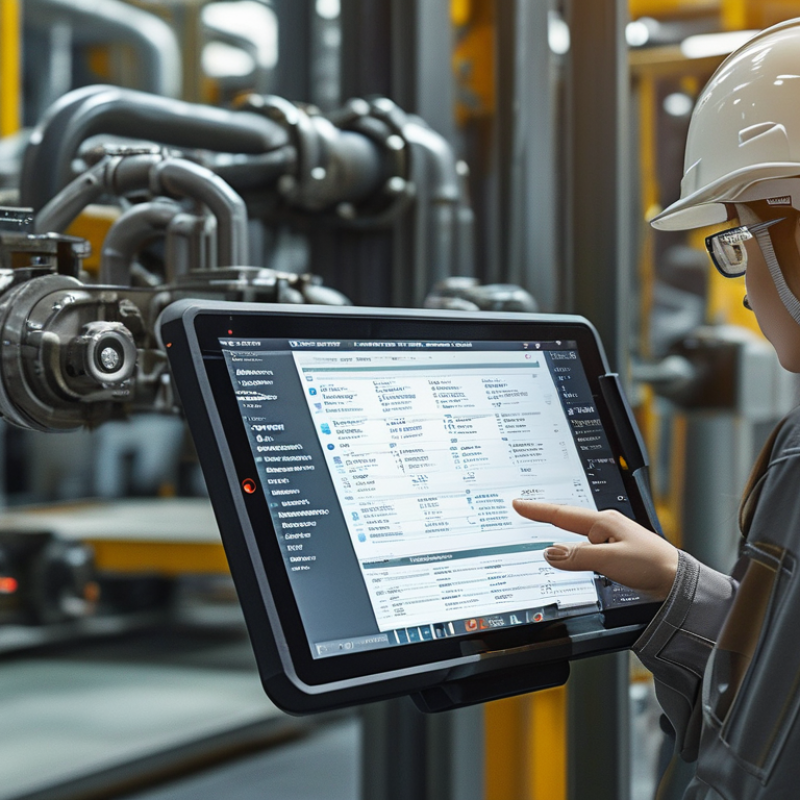
Advantages of Using Industrial Panel PCs in Business Operations
Industrial Panel PCs have become essential tools in enhancing business operations. They offer durability and versatility across various industries, including manufacturing, logistics, and retail. According to research by Industry Research, the global industrial PC market is expected to grow significantly, projected to reach $5.58 billion by 2026. This increase highlights the rising reliance on specialized computing solutions.
One major advantage of Industrial Panel PCs is their robustness. Designed for harsh environments, they withstand dust, moisture, and extreme temperatures. For instance, a report from MarketsandMarkets shows that 70% of manufacturers consider durability a top priority when selecting computing devices. This emphasis on reliability reduces downtime and maintenance costs. Businesses save money as they no longer need frequent replacements.
Another key benefit lies in their space-saving designs. Industrial Panel PCs integrate touchscreens, which streamline operations in confined areas. Many businesses find that they increase productivity while minimizing clutter. However, the initial investment might be higher. Companies need to weigh these costs against potential long-term savings. It’s crucial to carefully evaluate the financial implications and operational needs before making a decision.
Key Features of Industrial Panel PCs That Enhance Efficiency
Industrial Panel PCs are a robust solution for businesses seeking enhanced efficiency. These devices integrate a computer and display into one unit, providing a compact workspace. They are built for harsh environments, ensuring durability and longevity. A key feature is their resistance to dust and moisture, making them ideal for manufacturing settings.
The touchscreen interface also contributes to user-friendly experiences. Operators can quickly input data, monitor processes, and respond to alerts. This intuitive design reduces training time. Additionally, many models offer customizable mounts, allowing for versatile installation options. This flexibility helps businesses optimize their operations.
However, users must consider potential drawbacks. Some models may not support all software applications. This limitation could hinder usability in specific industries. Moreover, while many Panel PCs are energy-efficient, others may consume significant power. Businesses need to assess their needs carefully. Identifying these nuances is essential to maximizing the benefits of Industrial Panel PCs.
Applications of Industrial Panel PCs Across Various Industries
Industrial Panel PCs have gained traction across various sectors, known for their versatility and durability. These devices serve as central touchpoints in many business environments. For instance, in manufacturing, they streamline operations by integrating machine control and monitoring functions. According to a report by Markets and Markets, the global Industrial PC market is projected to reach $5.77 billion by 2025, highlighting the demand for reliable computing solutions in production setups.
In the healthcare industry, Industrial Panel PCs are transforming patient interactions. Hospitals utilize these systems for electronic medical records and patient management. A study by Frost & Sullivan indicates that the healthcare IT market will exceed $280 billion by 2021. This growth underscores the importance of robust, user-friendly devices that enhance workflow efficiency and patient care.
Despite their benefits, challenges remain. Issues like software compatibility and maintenance can complicate implementation. Companies may struggle to integrate these systems with legacy software. Nonetheless, as industries evolve, the need for adaptive and reliable technology continues to shape the future of Industrial Panel PCs.
Factors to Consider When Choosing an Industrial Panel PC
When selecting an industrial panel PC, several crucial factors come into play. One important aspect is the environment in which the computer will operate. Industrial settings often involve dust, moisture, and temperature variability. According to a report by Gartner, up to 70% of industrial businesses fail to consider environmental factors adequately, leading to premature hardware failures. Choosing a panel PC with a durable casing and an IP rating suitable for harsh conditions can significantly enhance reliability.
Another vital factor is the computing power needed for specific applications. Some processes require high-performance graphics or processing capabilities. A study from IDC indicates that 55% of manufacturing companies have faced bottlenecks due to inadequate computing power. Evaluating the system's CPU, RAM, and storage before purchasing is essential. Investing in a panel PC that can handle future upgrades may also prove beneficial, especially in a rapidly evolving digital landscape.
Connectivity is equally crucial. In an age dominated by IoT, seamless communication between devices is a must. A Frost & Sullivan report shows that 85% of automated operations rely on real-time data sharing. Therefore, consider the types of ports and connectivity options available. Ensure the chosen model supports both legacy and modern protocols. Overlooking these details may lead to integration issues down the line. Each decision impacts the overall efficiency and productivity of your operations.
Comparative Analysis: Industrial Panel PCs vs. Traditional Computers
Industrial Panel PCs are becoming the go-to choice for various businesses. Their robustness and design cater to harsh industrial environments. In comparison to traditional computers, these devices often have longer lifespan and better resistance to dust, moisture, and vibrations.
A study by Market Research Future highlights that the global Industrial PC market is expected to reach $4.33 billion by 2025, showcasing a significant growth trend. Unlike traditional desktops, Industrial Panel PCs consolidate processing and display into one unit, saving valuable space. They also provide enhanced connectivity solutions, which is crucial for IoT integration.
Tip: Invest in an Industrial Panel PC with a multi-touch interface. It allows efficient operation even in gloves.
However, it's important to critically evaluate your operational needs. Not every application necessitates the rugged capabilities of an Industrial Panel PC. For less demanding tasks, traditional computers might still suffice.
Tip: Ensure to conduct a thorough assessment of your environment. Determine if the extra durability justifies the cost in your specific case.
Data from Research and Markets indicates that energy efficiency is another strong point for Industrial PCs, offering significant cost savings in the long run. Without question, their specialized features set them apart from conventional systems.





