


Why Choose FM Transmitters for Global Buyers?

Why Choose Fm Transmitters for Global Buyers?

Fm Transmitters remain practical tools for broadcasters serving local, regional, and emergency audiences. Their strength is simple: reliable audio coverage without depending on mobile data, cloud platforms, or subscription access. The International Telecommunication Union’s Radio Regulations provide the global framework for spectrum use, while ITU-R recommendations address planning, interference, and transmission quality. These standards give buyers a professional reference when comparing equipment for different markets.

The demand is not purely theoretical. The WorldDAB Global Update 2024 shows that broadcast markets are expanding digital services while maintaining established terrestrial networks. This mixed environment makes adaptable FM equipment valuable, especially where FM receivers remain common in vehicles, homes, and small businesses. During field installations, engineers often focus on practical details: stable frequency control, clean modulation, efficient cooling, accessible parts, and clear monitoring displays. A transmitter that performs well on paper may still disappoint in a hot cabinet with unstable power. Real conditions matter.

Global buyers should also examine output power, exciter design, RDS support, remote control, and energy consumption. The NAB Engineering Handbook emphasizes disciplined RF design, grounding, filtering, and safe maintenance practices. Buyers must verify local licensing, frequency allocation, electromagnetic compatibility, and import requirements before purchase. Not every low-cost model is a sensible investment. A cheaper unit can create higher service costs later. That is an uncomfortable point, but it deserves attention. The strongest choice balances coverage, reliability, compliance, and long-term technical support.
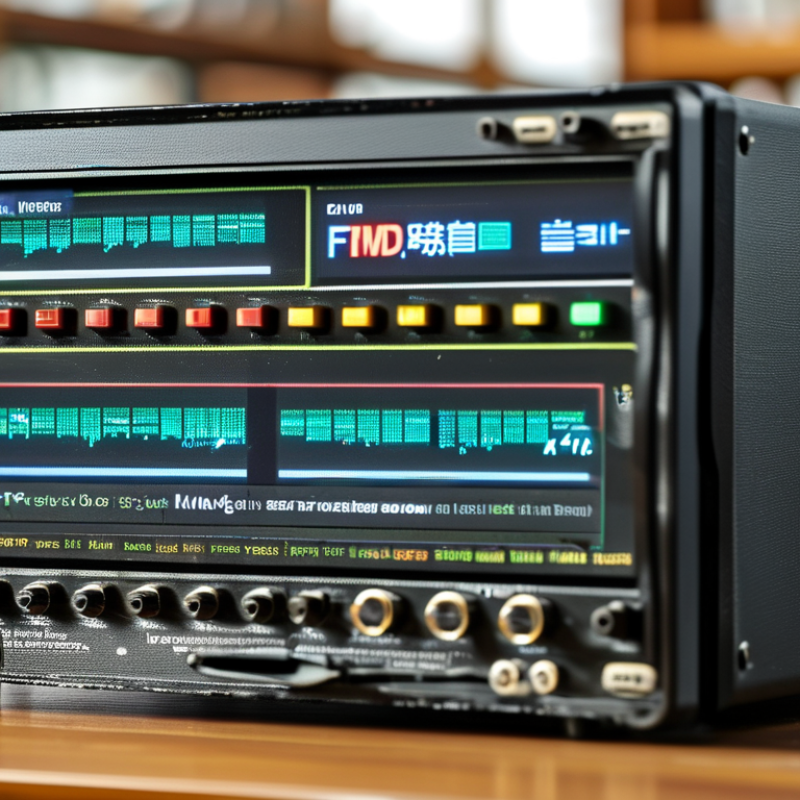
Why Choose FM Transmitters for Global Buyers?

Definition and Core Functions of FM Transmitters

Why Choose FM Transmitters for Global Buyers?

An FM transmitter converts an audio signal into radio-frequency energy. It carries speech, music, or emergency announcements through frequency modulation. Unlike amplitude modulation, FM varies the carrier frequency while keeping signal strength relatively stable. This design usually provides clearer sound and better resistance to ordinary electrical noise.

The core system contains an audio processor, stereo encoder, exciter, power amplifier, filter, and antenna connection. The exciter creates the modulated signal. The amplifier raises its power for wider coverage. Filters reduce unwanted emissions, while monitoring circuits check frequency, temperature, reflected power, and audio deviation. Small details matter. Poor impedance matching can waste power and heat the equipment.

Nielsen’s 2024 Audio Today report measured weekly AM/FM radio reach at 82% among U.S. adults. The figure is regional, not universal. ITU’s Facts and Figures 2023 reported that 67% of the world’s population used the internet, leaving many people dependent on accessible broadcast channels. For global buyers, voltage input, channel spacing, cooling design, and local certification need careful review. A transmitter may perform well in a test room but struggle in humid coastal air or unstable power conditions. That is an easy detail to underestimate. Coverage also depends on antenna height, terrain, cable loss, and permitted operating power. Professional buyers should request test records and harmonic-emission data, not rely only on catalog claims.


How FM Transmitters Support International Broadcasting Needs

Why Choose FM Transmitters for Global Buyers?

FM transmitters support international broadcasting through stable audio, practical coverage, and flexible installation options. They can serve local stations, emergency information channels, educational programs, and community networks. Field engineers often value consistent frequency control, clear signal output, and accessible maintenance. These details matter when technical support is several time zones away.

A transmitter should match the site, not only the desired coverage distance. Mountain terrain, heavy rain, building density, and available power can change performance. Buyers should check operating bands, output power, cooling design, audio inputs, remote monitoring, and local frequency requirements. Certified equipment and complete documentation also make installation safer and easier. No system is perfect. A design that worked in one region may perform poorly elsewhere.

Tips: Request test data before purchase. Confirm voltage and connector standards. Ask how faults are diagnosed remotely. Keep spare cooling parts and cables available. Test the full audio chain, not only the transmitter. A small field trial can reveal problems that product sheets miss. Also review local licensing rules with qualified professionals before deployment. This step may feel slow, but it prevents costly changes later.

Key Technical Features for Global Buyers to Evaluate

Global buyers often choose FM transmitters for their flexible coverage, clear audio, and practical deployment options. Yet the technical details deserve closer attention. Frequency stability is essential. A drifting carrier can reduce audio quality and create compliance concerns. Look for a precise frequency reference, adjustable channels, and clear operating-band information.

Power output should match the intended coverage area, not simply appear impressive on paper. A small community site may need different performance from a regional relay station. Check continuous power ratings, cooling design, antenna impedance, and protection against overheating. Efficient cooling matters in hot rooms. It also matters in dusty environments. Confirm whether the transmitter supports common power supplies, such as 110V or 220V systems. Ask for measured efficiency, not optimistic estimates.

Audio performance requires more than a high wattage figure. Evaluate frequency response, signal-to-noise ratio, stereo separation, and modulation control. Digital inputs can simplify studio connections, while analog inputs may help older equipment. Remote monitoring is useful when the transmitter operates far from technical staff. However, network features can add complexity. They need secure access and dependable documentation. Review alarms, restart behavior, spare-part availability, and service instructions before purchasing. A polished datasheet is not enough. Independent test records and clear warranty terms provide stronger evidence. I would also question any specification that lacks testing conditions. That small omission can become expensive later.

Regulatory, Compatibility, and Installation Considerations

Why Choose FM Transmitters for Global Buyers?
Regulatory, Compatibility, and Installation Considerations

For global buyers, an FM transmitter is not simply a box with an output rating. Permitted frequencies, power limits, channel spacing, and certifications vary by country. Check the destination authority before ordering. A supplier’s test report helps, but it may not replace local approval. Rules change. That detail is easy to miss.

Compatibility deserves equal attention. Confirm input connectors, audio levels, mains voltage, frequency steps, and emission standards. A transmitter designed for one region may not match another region’s channel plan. Test it with the intended mixer, antenna system, and monitoring receiver. Small mismatches can create hum, unstable audio, or unexpected coverage. Written specifications are useful, although real-site conditions can be less tidy than laboratory results.

Installation should provide safe airflow, cable access, and room for future servicing. Use a correctly rated power supply and a suitable antenna load. Grounding and surge protection require assessment by a qualified technician. Keep the unit away from heat-producing equipment. During commissioning, record frequency, power settings, cable lengths, and measured results. Rushing this record is a common mistake. One connector assumption can delay an entire project. Even a careful checklist may miss local interference, so allow time for on-site adjustment.

Why Choose FM Transmitters for Global Buyers? - Regulatory, Compatibility, and Installation Considerations

Evaluation Dimension Typical Requirement or Range Why It Matters to Global Buyers Recommended Verification
Broadcast frequency Usually within the VHF FM broadcast band of 87.5–108 MHz; some markets use a narrower allocation. A transmitter must operate within the frequency plan permitted in the destination country. Confirm the locally permitted band, channel spacing, and frequency-assignment procedure with the national regulator.
Channel spacing Common plans use 100 kHz or 200 kHz spacing, while other spacing values may apply by market. Incorrect spacing can cause adjacent-channel interference or prevent legal frequency assignment. Check the regional frequency table and ensure the transmitter supports the required tuning increments.
Regulatory authorization Most broadcast installations require a license, assigned frequency, or other approval before operation. A technically compatible device may still be unlawful to operate without authorization. Identify the responsible authority, license class, permitted power, antenna location, and emission limits before purchase.
RF output power Commercial equipment may range from low-power units to transmitters rated at several kilowatts; legal limits vary by service and location. Higher power does not automatically provide better coverage and may require additional licensing, cooling, and infrastructure. Match rated power to the authorized effective radiated power, site coverage plan, and antenna system.
Frequency stability A temperature-compensated or oven-controlled reference may be used where tighter frequency accuracy is required. Stable frequency operation helps reduce drift and the risk of interference with neighboring assignments. Review the specified frequency tolerance, warm-up behavior, and performance across the rated temperature range.
Audio compatibility Common inputs include balanced analog audio, unbalanced analog audio, and digital interfaces; 50 µs or 75 µs pre-emphasis may apply by region. Matching audio interfaces and processing standards helps avoid distortion, low loudness, or incorrect spectral balance. Confirm connector type, input level, impedance, stereo encoding, pilot tone, and regional pre-emphasis setting.
Emission and spectral limits The transmitter should meet the applicable limits for occupied bandwidth, unwanted emissions, harmonics, and spurious radiation. Clean emissions protect other radio services and support regulatory approval. Request test data or conformity documentation relevant to the destination market and operating power.
Electrical supply AC systems commonly use approximately 100–127 V or 220–240 V, with 50 Hz or 60 Hz mains depending on the country. A mismatched supply can damage equipment, reduce reliability, or require costly electrical conversion. Verify input voltage range, frequency, phase requirement, plug type, breaker rating, grounding, and surge protection.
Cooling and ventilation Air-cooled systems require unobstructed airflow; higher-power installations may need dedicated ventilation or climate control. Excess heat can shorten component life and trigger protective shutdowns. Check heat output, fan arrangement, clearance requirements, ambient temperature limits, and filter-maintenance procedures.
Antenna and transmission line The antenna, feeder, connectors, and transmitter should be designed for the operating frequency and forward power. Impedance mismatch and feeder loss reduce coverage and can activate reflected-power protection. Use the specified impedance, commonly 50 ohms for RF systems, and verify VSWR, connector type, cable loss, and lightning protection.
Installation location A secure, dry, clean, and adequately ventilated technical room is generally preferred. The site affects equipment life, operator safety, maintenance access, and electromagnetic compatibility. Assess humidity, dust, vibration, altitude, fire protection, rack space, cable routing, and access control.
Grounding and lightning protection A properly bonded site earth, surge protection, and suitable antenna discharge and lightning-protection measures are essential. Outdoor antenna systems are exposed to static buildup and lightning-related transients. Have the installation assessed by a qualified electrical or RF professional in accordance with local codes.
Monitoring and protection Useful functions include forward/reflected power monitoring, over-temperature protection, alarms, and remote status reporting. Monitoring reduces downtime and helps operators identify antenna, cooling, or power faults quickly. Confirm alarm contacts, remote-management protocols, display accuracy, event logging, and safe fault-recovery behavior.
Maintenance and spare parts Routine tasks may include cleaning air filters, inspecting RF connectors, checking cooling fans, and verifying output measurements. Local service capability and spare-part availability are important for installations far from the supplier. Evaluate manuals, diagnostic tools, training, replacement-part lead times, warranty terms, and authorized service options.
Documentation and conformity Technical files may include specifications, wiring diagrams, user manuals, test reports, declarations, and safety information. Complete documentation supports customs clearance, installation, licensing, maintenance, and compliance reviews. Request destination-market documentation before ordering and confirm that ratings match the exact supplied configuration.

Note: Regulatory limits, licensing procedures, permitted frequencies, channel spacing, power restrictions, and conformity requirements differ by country and service. Always confirm the current local rules before importing, installing, or operating an FM transmitter.

Cost, Reliability, and Supplier Selection Factors

FM transmitters remain attractive to global buyers because they deliver stable audio coverage without excessive operating costs.

A well-designed unit can reduce power consumption, cooling demand, and routine maintenance. However, the cheapest quotation is rarely the lowest total cost. Buyers should compare output efficiency, spare-part prices, shipping fees, installation needs, and warranty coverage. A simple cost sheet can reveal hidden expenses.

Reliability depends on more than advertised power. Check thermal protection, voltage tolerance, cooling design, and component accessibility. In a busy control room, a clear alarm panel saves valuable minutes. Ask for factory test reports, operating data, and realistic service intervals. Request a sample warranty process before placing a large order. Good support should include technical drawings, setup guidance, and responsive communication across time zones.

Supplier selection also requires careful verification. Review production experience, quality procedures, export documentation, and references from similar installations. Confirm that the transmitter can meet the destination market’s frequency, safety, and electromagnetic requirements. Local approval still matters. Do not assume an international shipment is automatically compliant. A low price may reflect efficient manufacturing, or missing documentation. That difference deserves investigation. No supplier is perfect, and specifications can be misunderstood. A short video inspection, written acceptance checklist, and independent technical review can prevent expensive surprises. Reliability is built through evidence, not confident promises.

Powder Coat Booths

For those larger-sized parts, or smaller quantity runs, we have 2 independent powder coat booths and ovens. The quality, durability and affordability of today’s powder coating finishes make this the process of choice for world-class companies.

Powder coating advantages over other forms of coating are many. Materials used in the Powder coating process can be metals and non-metals that come in a multitude of thicknesses, textures, colors, etc. Another of Powder coating’s biggest advantages over conventional coatings is its ability to create finishes in many different textures. Powder Coating Booths allow us the ability to apply these advantages to large products.

Wet Paint Line

Tri-State Fabricators runs a full-service conveyor line for painting. Wet painting can provide protection or decoration to many different part styles. From start to finish, every project is easier to undergo random and point-based inspection by our skilled painting team.

Advantages to our Wet Paint Line are these lines start with product prep and ends with a thorough inspection of a high quality finished product. Our ability to complete large and small projects with a superior finish and doing so in a timely and economical fashion. This passes along the savings in production to our customers. When powder coating ins not an option, our Wet Paint Line gets the job done right the first time.

Wet Paint Booths

When the parts get big and heavy we roll-out our custom paint racks and oversize booth. By utilizing our partnerships with all the major paint brands, we can match virtually any color with wet paint.

The advantages of having access to a Wet Paint Booth are many. Large projects of many different shapes can be loaded into the booth. The Wet Paint Booth offers an environment that is much more controlled than a typical parts painting operation.

Not only are they used because of their controlled environment, but they’re are also advantageous when it comes to applying paint to parts that are needed in industries that require specialty coatings such as medical, aerospace, etc.

Military CARC

Our military forces have some very high standards when it comes to the finish of their vehicles and equipment. From the first pre-treatment step to final coat, it takes a great deal of knowledge and experience to protect the men and women of our armed forces. They deserve only the best, and Tri-State Fabricators provides it.

All of our processes are closely monitored by our staff and management teams. Both of which are highly trained in the processes of metal fabrication and finishing. Tri-State Fabricators’ goal is to always fully satisfy each and every customer, including the military. We will always put a 110% into what we do.

Glass-Bead Blasting

Abrasive media blasting is an excellent way to remove old paint, rust, and increase the paint/powder adhesion. Glass beads produce a much smoother and brighter finish than angular abrasives; leaving the part clean yet without any dimensional change. Chemically inert and environmentally friendly, we can recycle our beads approximately 30 times; making them a more preferred method of metal cleaning or surface finishing.

Advantages to Glass Bead Blasting are many. Glass bead blast media is used when a project is needing rough surfaces need to become smooth for applications of coatings such as paint. It is typically used to clean paint and rust from a product surface without deforming the surface it is being used on. Overall, compared to many other blasting media, Glass Bead Blasting is a very economical choice and those savings are always passed on to our customers.

Part Washing

Tri-State Fabricators utilize a zinc phosphate wash to clean and etch the material to ensure the best paint adhesion possible. The unique design of our 3-stage wash system does the work like a 5-stage. From Cleaning and rinsing to conversion coating and post-treatment, Our Part Washing process is a complete service and works throughout the fabrication service and the finishing service.

Along with the previously mentioned benefits, Curing is a vital chemical reaction that leaves the product finish hard and relatively safe from mild abrasion and aggressive corrosion. This process can be done in more than one way; ambient air-dry or in curing ovens at temps that exceed 240°.

Burn-Off Oven

From fixing paint mistakes (someone else’s of course) to simply cleaning our paint line hooks, our burn-off oven is put to good use. After a quick burn-off, a little clean up, and a fresh coat of paint, your parts will look better than new.

Why does our Burn-Off Oven work so well? Because super heating the air around parts turns the materials into ashes. From paint and powder coatings to rubber and machining oils, high temps do the job without degrading the integrity of the part.

Masking

Masking is a vital part of producing high quality products. We have die-cut masking patterns to protect machined surfaces as well as a wide range of plugs and caps to protect threaded holes and bolts. We provide permanent and temporary masking.

Masking allows the selected sections of a product to be protected from a fabrication or finishing service. This can be with both chemicals when etching and tapes, paints when only finishing just a section of the product. Masking is great in aiding the customization process of a project.

Screen Printing

Screen printing is a photographic process that transfers artwork onto a porous nylon screen which allows colored ink to flow through the screen and be deposited on an aluminum or plastic component. We can generally have just about any design created onto a screen for your parts.

Some of the advantages of Screen Printing are, brand recognition for your business displaying on your products, assembly instructions, product warnings/hazards, etc. Tri-State Fabricators produces Screen Printing of the highest quality so you know it’s durable.

Metal Finishing

Metal Finishing is the art of treating the exterior portion of product, often metal but can also be made of other materials, so that the surface is clean and free of any debris. Then the process of applying coats or either paint of powder coat takes place. This coating process improves the quality of the product in both appearance and resistance to wear and corrosion.

Tri-State Fabricators, Inc., understands that a project typically isn’t complete until a high-quality finish has been added to your product. This is why our painting and powder coating teams continuously inspect the products throughout the Metal Finishing process.
