


An Induction Soup Pot can turn a slow, uneven cooking task into a more controlled kitchen routine. Its magnetic base transfers heat directly into the cookware, rather than heating a burner first. The U.S. Department of Energy reports that induction cooking can deliver about 85% energy-transfer efficiency, compared with roughly 32% for gas cooking. That difference matters when simmering broth for hours. Less wasted heat can also mean a cooler kitchen, especially in compact apartments.
The practical advantage appears in small details. A magnetic stainless-steel pot can heat soup steadily, maintain a gentle simmer, and reduce scorching during long cooking. Many models also provide precise temperature controls and automatic safety features. The ENERGY STAR program recognizes induction technology for efficient, responsive cooking performance. Market evidence supports growing interest. Grand View Research’s 2024 Induction Cooktop Market report forecasts continued expansion through 2030, driven partly by energy awareness and appliance modernization.
Still, an Induction Soup Pot is not automatically the best choice. The pot must have a magnetic base, which a simple refrigerator magnet can test. Some cookware may look suitable but fail to heat properly. I would not promise perfect results without checking the induction zone size, capacity, and control range. Users should also consider cleaning, handle strength, and whether the pot supports low-temperature simmering. Small weaknesses matter. Choosing carefully makes the efficiency claims more useful in everyday cooking.
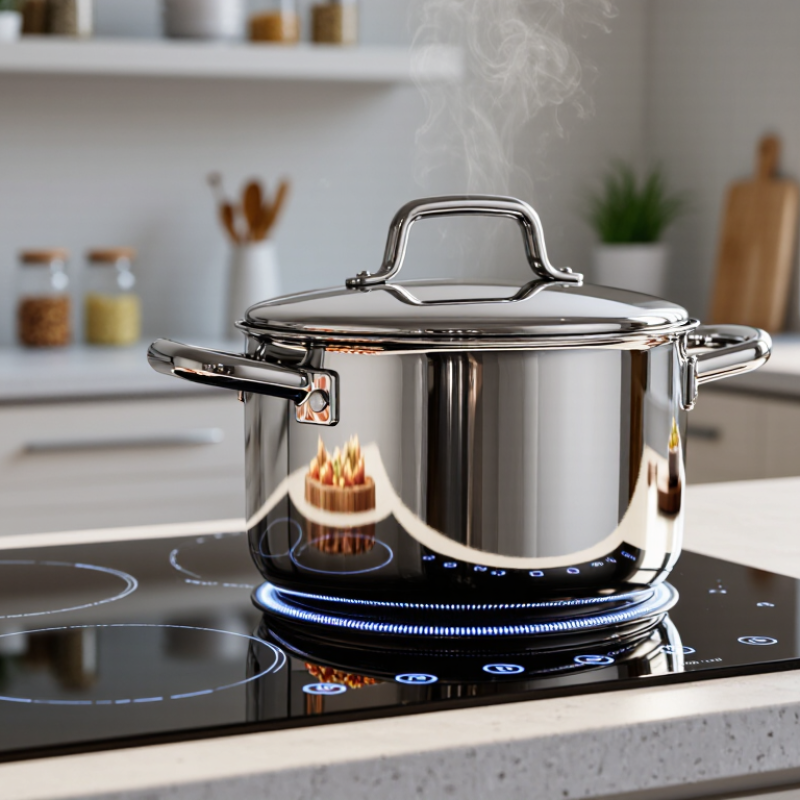
An induction soup pot is a deep cooking vessel designed for an induction cooktop. Its base contains magnetic stainless steel or another ferromagnetic layer. When the cooktop creates a changing magnetic field, the pot itself generates heat. The surface remains comparatively cooler, while broth, vegetables, and meat warm directly inside the vessel. A simple magnet test can confirm compatibility.
The design suits soups because its tall walls reduce splashing and hold steady simmering liquid. Many models also use thick, multi-layer bases to distribute heat more evenly.
According to the U.S. Department of Energy, induction cooking can transfer about 85% of energy to cookware, compared with roughly 32% for gas. ENERGY STAR reports that induction cooking is typically more efficient than conventional electric cooking as well. These figures explain why less heat escapes around the pot.
However, the label can mislead. Not every stainless-steel pot works. A thin base may create hot spots, even when the soup looks calm. In practical kitchen testing, lifting the pot can interrupt heating immediately. That responsiveness is useful, but it also demands closer attention.
The International Energy Agency identifies efficient electrification as an important route for reducing household energy use, yet actual savings depend on electricity sources, cooking habits, and pot construction. Real kitchens are messier.

An induction soup pot works through electromagnetic energy, not a glowing burner. Beneath the glass surface, a copper coil creates a rapidly alternating magnetic field. When the pot has a magnetic base, that field produces electric currents inside the metal. The base heats directly, sending heat into the soup from below.
This direct transfer helps explain its efficiency.
The U.S. Department of Energy estimates that induction cooking delivers about 85% of heating energy to cookware, compared with roughly 32% for gas. Less heat escapes around the pot, so covered broth can reach a simmer with less wasted energy. Power also drops quickly when adjusted, which helps control milk, stock, and cream. Keep the base flat. Warped cookware heats unevenly.
In practice, I test a soup pot with a magnet before cooking and watch the first simmer instead of trusting the dial. Magnetic stainless steel or cast iron usually works, while aluminum alone does not. The International Energy Agency’s Energy Efficiency 2023 report supports efficient electrification, but results still depend on electricity sources and cooking habits.
That caveat matters. Efficiency is not magic.
A large pot on a small coil may heat slowly, while a thin base can scorch onions before the liquid warms. A heavy, flat base usually offers steadier control.
An induction soup pot heats through magnetic energy, not an exposed flame. The base warms quickly and spreads heat across the cooking surface. The U.S. Department of Energy reports that induction transfers about 85% of energy to cookware, compared with roughly 32% for gas. That difference can reduce wasted heat during daily boiling, simmering, and reheating.
It also supports more controlled cooking. A steady low setting can keep broth gently bubbling without constant stirring. The surrounding surface stays cooler, which may make cleanup easier after a busy meal. In my experience, a thick, induction-compatible base helps prevent hot spots when cooking beans or tomato soup. The result feels more predictable.
Small kitchens benefit too. Less heat escapes into the room during summer cooking. According to the International Energy Agency, energy efficiency remains central to reducing household energy demand worldwide.
Yet induction is not perfect. The pot must have a magnetic base, and poor-quality cookware may heat unevenly. I once trusted a thin pot and scorched the bottom of a lentil soup. That mistake was avoidable.
Checking magnet compatibility and choosing a flat base matter more than attractive appearance. Safety still requires attention, especially when a full pot is lifted from the surface.
Why Choose an Induction Soup Pot for Your Kitchen?
Choosing the right induction soup pot starts with the base. Look for stainless steel or cast iron with magnetic properties. A simple magnet test works well. If it sticks firmly, the pot should work on most induction cooktops. The base must also be flat and thick. A warped bottom can create uneven heating and wasted energy.
Capacity matters too. A four-liter pot suits small families and daily soups. Larger households may need six liters, but oversized cookware can heat slowly on smaller zones. Match the pot diameter with the cooking area. This small detail is often overlooked. The U.S. Department of Energy reports that induction transfers about 85% of its energy to cookware, compared with roughly 32% for gas cooking. Better contact supports that efficiency in real kitchens.
Choose handles that stay stable when the pot is full. Riveted handles feel secure, but they can collect food around the joints. Welded designs are easier to clean, though quality varies. A glass lid helps monitor simmering without releasing heat. According to the U.S. Energy Information Administration, space heating and water heating remain major household energy uses, making efficient cooking a practical supporting choice. Still, efficiency is not everything. I once preferred a lighter pot, then regretted it when soup splashed during stirring. Weight, cleaning, and storage deserve equal attention.
Induction cooktops heat cookware through a magnetic field, so the pot must contain a ferromagnetic base.
Cast iron, carbon steel, and magnetic stainless steel are generally induction-compatible. Aluminum, copper, and glass cookware require a built-in magnetic base or an induction adapter to work.
An induction soup pot offers precise heat control and a safer cooking routine. The cooktop heats compatible cookware directly, while the surrounding surface stays cooler than traditional burners. This reduces accidental contact burns, especially in a busy kitchen. Use a flat, magnetic pot with a stable base. Check it with a magnet before cooking.
Safety still depends on daily habits. Keep the pot centered on the cooking zone, and avoid heating it while empty. Steam can burn quickly, so lift the lid away from your face. Keep handles turned inward. Wipe water from the pot’s exterior before placing it on the surface. A dry towel prevents slippery handling and protects against sudden splashes. Do not leave simmering soup unattended, even when the temperature setting seems low.
Induction cooking can also improve efficiency because heat transfers directly into the pot. I usually begin at medium-high heat, then reduce the setting after the soup reaches a gentle simmer. This limits boiling over and preserves delicate vegetables. A timer helps when preparing stock during a busy evening. Small habits matter. However, I still sometimes forget that the pot remains hot after the power stops. Residual heat can continue cooking soup and may cause burns. Let the cookware cool before cleaning, and follow the appliance manual for ventilation, cookware limits, and control-lock features.
| Evaluation Dimension | Induction Soup Pot | Practical Kitchen Benefit |
|---|---|---|
| Heating Efficiency | Typically about 80–90% of the electrical energy is transferred to the cookware. | Less heat is lost to the surrounding air, which can reduce cooking time and energy waste. |
| Heat Response | Power changes take effect quickly because the cooking vessel is heated directly. | Useful for switching between simmering soup and rapid boiling with greater control. |
| Surface Safety | The cooking surface generally produces less residual heat than gas or conventional electric cooking, although it can remain hot from the pot. | Lower risk of accidental burns from an open flame; safe handling is still required after cooking. |
| Open-Flame Risk | No open flame is used. | Helps reduce flame-related fire hazards and is suitable for kitchens where open flames are undesirable. |
| Cookware Requirement | Requires magnetic cookware, such as cast iron or magnetic stainless steel, with a flat base. | A simple magnet test can help confirm compatibility before purchasing or using a soup pot. |
| Soup Simmering | Low power levels can maintain a controlled simmer when the pot and cooktop are properly matched. | Helps preserve texture and reduces the chance of vigorous boiling or scorching. |
| Cleaning Convenience | The smooth cooking surface has fewer raised parts around the pot. | Spills are generally easier to wipe away after the surface has cooled. |
| Energy Use in the Kitchen | Direct heating can reduce wasted heat compared with gas cooking, whose typical efficiency is often around 35–40%. | May help lower cooking energy consumption, depending on electricity rates, cooking habits, and pot size. |
| Kitchen Temperature | Transfers less unused heat into the room than many flame-based cooking methods. | Can make long soup-cooking sessions more comfortable and may reduce the need for additional ventilation or cooling. |
| Safety Controls | Many induction cooktops provide pan-detection, automatic shutoff, child-lock, and residual-heat indicators. | These features can help prevent operation without suitable cookware and reduce unattended-cooking risks. |
| Best Use Practice | Use a flat, centered, magnetic pot; avoid sliding it across the surface; follow the cooktop’s maximum weight and diameter limits. | Promotes even heating, protects the cooking surface, and supports safer, more efficient soup preparation. |
Note: Efficiency figures are typical industry ranges under test conditions. Actual results vary with cookware material, pot size, heat setting, cooking time, ventilation, and household electricity rates.


For those larger-sized parts, or smaller quantity runs, we have 2 independent powder coat booths and ovens. The quality, durability and affordability of today’s powder coating finishes make this the process of choice for world-class companies.
Powder coating advantages over other forms of coating are many. Materials used in the Powder coating process can be metals and non-metals that come in a multitude of thicknesses, textures, colors, etc. Another of Powder coating’s biggest advantages over conventional coatings is its ability to create finishes in many different textures. Powder Coating Booths allow us the ability to apply these advantages to large products.
Tri-State Fabricators runs a full-service conveyor line for painting. Wet painting can provide protection or decoration to many different part styles. From start to finish, every project is easier to undergo random and point-based inspection by our skilled painting team.
Advantages to our Wet Paint Line are these lines start with product prep and ends with a thorough inspection of a high quality finished product. Our ability to complete large and small projects with a superior finish and doing so in a timely and economical fashion. This passes along the savings in production to our customers. When powder coating ins not an option, our Wet Paint Line gets the job done right the first time.
When the parts get big and heavy we roll-out our custom paint racks and oversize booth. By utilizing our partnerships with all the major paint brands, we can match virtually any color with wet paint.
The advantages of having access to a Wet Paint Booth are many. Large projects of many different shapes can be loaded into the booth. The Wet Paint Booth offers an environment that is much more controlled than a typical parts painting operation.
Not only are they used because of their controlled environment, but they’re are also advantageous when it comes to applying paint to parts that are needed in industries that require specialty coatings such as medical, aerospace, etc.
Our military forces have some very high standards when it comes to the finish of their vehicles and equipment. From the first pre-treatment step to final coat, it takes a great deal of knowledge and experience to protect the men and women of our armed forces. They deserve only the best, and Tri-State Fabricators provides it.
All of our processes are closely monitored by our staff and management teams. Both of which are highly trained in the processes of metal fabrication and finishing. Tri-State Fabricators’ goal is to always fully satisfy each and every customer, including the military. We will always put a 110% into what we do.
Abrasive media blasting is an excellent way to remove old paint, rust, and increase the paint/powder adhesion. Glass beads produce a much smoother and brighter finish than angular abrasives; leaving the part clean yet without any dimensional change. Chemically inert and environmentally friendly, we can recycle our beads approximately 30 times; making them a more preferred method of metal cleaning or surface finishing.
Advantages to Glass Bead Blasting are many. Glass bead blast media is used when a project is needing rough surfaces need to become smooth for applications of coatings such as paint. It is typically used to clean paint and rust from a product surface without deforming the surface it is being used on. Overall, compared to many other blasting media, Glass Bead Blasting is a very economical choice and those savings are always passed on to our customers.
Tri-State Fabricators utilize a zinc phosphate wash to clean and etch the material to ensure the best paint adhesion possible. The unique design of our 3-stage wash system does the work like a 5-stage. From Cleaning and rinsing to conversion coating and post-treatment, Our Part Washing process is a complete service and works throughout the fabrication service and the finishing service.
Along with the previously mentioned benefits, Curing is a vital chemical reaction that leaves the product finish hard and relatively safe from mild abrasion and aggressive corrosion. This process can be done in more than one way; ambient air-dry or in curing ovens at temps that exceed 240°.
From fixing paint mistakes (someone else’s of course) to simply cleaning our paint line hooks, our burn-off oven is put to good use. After a quick burn-off, a little clean up, and a fresh coat of paint, your parts will look better than new.
Why does our Burn-Off Oven work so well? Because super heating the air around parts turns the materials into ashes. From paint and powder coatings to rubber and machining oils, high temps do the job without degrading the integrity of the part.
Masking is a vital part of producing high quality products. We have die-cut masking patterns to protect machined surfaces as well as a wide range of plugs and caps to protect threaded holes and bolts. We provide permanent and temporary masking.
Masking allows the selected sections of a product to be protected from a fabrication or finishing service. This can be with both chemicals when etching and tapes, paints when only finishing just a section of the product. Masking is great in aiding the customization process of a project.
Screen printing is a photographic process that transfers artwork onto a porous nylon screen which allows colored ink to flow through the screen and be deposited on an aluminum or plastic component. We can generally have just about any design created onto a screen for your parts.
Some of the advantages of Screen Printing are, brand recognition for your business displaying on your products, assembly instructions, product warnings/hazards, etc. Tri-State Fabricators produces Screen Printing of the highest quality so you know it’s durable.
Metal Finishing is the art of treating the exterior portion of product, often metal but can also be made of other materials, so that the surface is clean and free of any debris. Then the process of applying coats or either paint of powder coat takes place. This coating process improves the quality of the product in both appearance and resistance to wear and corrosion.
Tri-State Fabricators, Inc., understands that a project typically isn’t complete until a high-quality finish has been added to your product. This is why our painting and powder coating teams continuously inspect the products throughout the Metal Finishing process.

