


Moving heavy loads can slow a business when crews rely on manual effort or equipment that does not match the job. An Electric Winch can provide controlled pulling power for workshops, warehouses, service vehicles, and other demanding work settings. With suitable capacity and installation, it can help teams move loads more consistently and reduce strenuous handling.
The right choice depends on more than rated pulling capacity. Consider the load’s weight, the distance and direction of the pull, the duty cycle, and the available power supply. A winch used for occasional equipment recovery has different needs from one operating throughout a busy shift. Cable or rope type, mounting strength, controls, and environmental exposure also matter. Small details count. A weak mounting point, for example, can undermine an otherwise capable unit.
Electric models are often valued for convenient operation, steady performance, and straightforward integration into existing workflows. Their practical benefits still depend on correct selection, trained operators, and regular inspection. Follow the manufacturer’s instructions, check components for wear, and keep the work area clear before use. These steps support dependable operation; they do not remove every risk. And not every job suits a winch. Comparing specifications with real working conditions helps businesses avoid paying for unnecessary capacity or choosing a unit that falls short. The sections ahead explore these trade-offs, key features, and selection questions, so decision-makers can judge whether an Electric Winch fits their daily operations. A careful assessment may take longer, but that is usually time well spent.
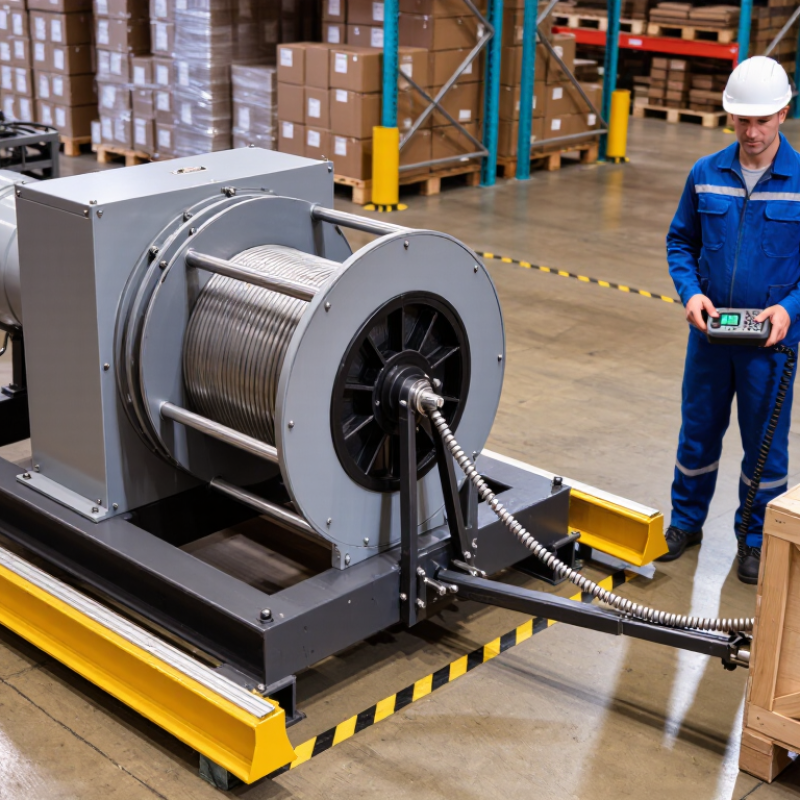
An electric winch converts electrical energy into controlled pulling force. When an operator presses the control, current powers a motor, which turns a gearbox. The gearbox reduces speed and increases torque, rotating a drum. A steel cable or synthetic line wraps around the drum and draws a load toward the winch. Direction controls let the operator pay out or retrieve the line. Simple, but not effortless.
When power stops, a brake helps keep the drum from turning freely. Brake behavior varies by design. Heavy pulls can draw substantial current, while long cables or weak connections may reduce performance and heat components. Check the rated capacity, line condition, mounting points, and duty cycle before use.
Keep the line aligned and stand clear of its path. That matters. A winch can stall or overheat if pushed too hard.
A higher capacity rating does not solve every problem; anchoring and setup matter just as much. Follow the equipment instructions, and reassess if the load moves unevenly.

An electric winch is only as dependable as its load path: motor, gearbox, drum, brake, rope, and controls. Each part has a job. The brake holds the load; it cannot compensate for an undersized gearbox or damaged rope. Inspect the first wraps on the drum, its flanges, and connectors, where wear can hide beneath grease and dust.
Power selection starts with line pull and speed, not horsepower alone. Mechanical output is roughly force multiplied by rope speed; electrical input rises with motor and gearbox losses. Account for starting current, supply voltage, duty cycle, and starts per hour. Brief, slow lifts create different thermal demands from continuous hauling. The U.S. Department of Energy’s 2014 U.S. Industrial and Commercial Motor System Market Assessment Report attributes about 68% of U.S. manufacturing electricity use to motor-driven systems. That figure is not a winch-sizing rule, but it underscores why efficiency and heat management matter.
Compare the heaviest realistic pull with the rated pull on the drum’s first rope layer; additional layers can reduce available line pull. Leave a margin. It is easy to overlook. Check emergency stops, travel limits, and cable routing against the installation. Measure voltage at the winch under load, since long cables can cause voltage drop and sluggish starts. Revisit the calculations after installation. Real friction and operator habits may differ from the worksheet.
Estimated motor input power rises with line pull when line speed and system efficiency are held constant.
Illustrative estimates assume a line speed of 5 m/min and 75% overall efficiency, using input power = pull force × line speed ÷ efficiency. Actual requirements depend on operating conditions, starting loads, duty cycle, and the winch manufacturer’s specifications. Key components include the electric motor, gearbox, drum, brake, and controller.
Electric winches help businesses move loads when forklifts cannot reach or fit. In repair shops, crews use them to pull engines or machinery onto service beds. On construction sites, they can position materials along ramps or guide equipment into tight spaces. Marine operators use them to retrieve boats and handle dockside lines. The useful detail is controlled pulling: an operator can pause while a load clears a threshold or aligns with a trailer. Small adjustments matter.
The U.S. Bureau of Labor Statistics reported 2.6 million nonfatal workplace injury and illness cases in private industry in its 2023 report, Employer-Reported Workplace Injuries and Illnesses. That figure does not show that winches prevent injuries, but it underlines why planned material handling matters. Match the winch’s rated capacity to the load, and check the anchor point, cable condition, brake, and duty cycle before use. A pulling winch is not automatically suitable for lifting. In practice, teams sometimes underestimate the awkward setup. A crooked pull can shift a load, even when the motor has ample power.
An electric winch replaces repeated hand cranking with a powered pull. The operator can guide the load while controlling movement from a pendant. In a busy loading bay, that can reduce time spent on repetitive winding and make frequent lifting or pulling tasks easier to schedule. It also helps maintain a steadier pull when a load needs careful positioning. Small gains add up.
The U.S. Bureau of Labor Statistics reported 2.6 million nonfatal workplace injuries and illnesses in private industry in 2023. This broad figure is not winch-specific, so it cannot prove that electric models prevent injuries. It does, however, underline why businesses should assess repetitive physical work rather than dismiss it. An electric winch still needs a suitable anchor, rated capacity, regular inspection, and an operator who keeps clear of the loaded line. A manual winch may suit occasional jobs or sites without reliable power. Electric equipment adds power and maintenance requirements, too. That trade-off is easy to overlook. Check duty cycle and load details before choosing; a poor fit can create delays instead of saving time.
Choosing an electric winch starts with the job, not the catalog headline. Record the load’s weight, travel distance, lifting speed, and operating frequency. Include friction, shock loading, and rigging weight. A 1,000-kilogram load may require more than 1,000 kilograms of line pull. Check capacity at the drum layer you will actually use; pull can decrease as rope builds up. Small detail. Big consequence.
Power and duty cycle matter just as much. The IEA’s 2011 report, Energy-Efficiency Policy Opportunities for Electric Motor-Driven Systems, estimates that motor-driven systems use about 45% of global electricity. The U.S. Department of Energy’s motor-system sourcebook reports that they account for about 69% of electricity used in U.S. manufacturing. These figures are not winch-specific, but they underline the value of checking motor efficiency and heat management. Confirm voltage, phase, available current, brake behavior, and duty rating against your real work cycle. A workshop outlet may not be enough.
Match the winch’s construction to dust, moisture, temperature, corrosion, and visibility at the worksite. Check rope type, drum capacity, emergency-stop access, guarding, and inspection needs. Ask for duty-cycle ratings and test documentation, not just peak pull. A spreadsheet helps. It may still miss a jammed load or awkward mounting point, so measure the site and allow a suitable safety margin.


For those larger-sized parts, or smaller quantity runs, we have 2 independent powder coat booths and ovens. The quality, durability and affordability of today’s powder coating finishes make this the process of choice for world-class companies.
Powder coating advantages over other forms of coating are many. Materials used in the Powder coating process can be metals and non-metals that come in a multitude of thicknesses, textures, colors, etc. Another of Powder coating’s biggest advantages over conventional coatings is its ability to create finishes in many different textures. Powder Coating Booths allow us the ability to apply these advantages to large products.
Tri-State Fabricators runs a full-service conveyor line for painting. Wet painting can provide protection or decoration to many different part styles. From start to finish, every project is easier to undergo random and point-based inspection by our skilled painting team.
Advantages to our Wet Paint Line are these lines start with product prep and ends with a thorough inspection of a high quality finished product. Our ability to complete large and small projects with a superior finish and doing so in a timely and economical fashion. This passes along the savings in production to our customers. When powder coating ins not an option, our Wet Paint Line gets the job done right the first time.
When the parts get big and heavy we roll-out our custom paint racks and oversize booth. By utilizing our partnerships with all the major paint brands, we can match virtually any color with wet paint.
The advantages of having access to a Wet Paint Booth are many. Large projects of many different shapes can be loaded into the booth. The Wet Paint Booth offers an environment that is much more controlled than a typical parts painting operation.
Not only are they used because of their controlled environment, but they’re are also advantageous when it comes to applying paint to parts that are needed in industries that require specialty coatings such as medical, aerospace, etc.
Our military forces have some very high standards when it comes to the finish of their vehicles and equipment. From the first pre-treatment step to final coat, it takes a great deal of knowledge and experience to protect the men and women of our armed forces. They deserve only the best, and Tri-State Fabricators provides it.
All of our processes are closely monitored by our staff and management teams. Both of which are highly trained in the processes of metal fabrication and finishing. Tri-State Fabricators’ goal is to always fully satisfy each and every customer, including the military. We will always put a 110% into what we do.
Abrasive media blasting is an excellent way to remove old paint, rust, and increase the paint/powder adhesion. Glass beads produce a much smoother and brighter finish than angular abrasives; leaving the part clean yet without any dimensional change. Chemically inert and environmentally friendly, we can recycle our beads approximately 30 times; making them a more preferred method of metal cleaning or surface finishing.
Advantages to Glass Bead Blasting are many. Glass bead blast media is used when a project is needing rough surfaces need to become smooth for applications of coatings such as paint. It is typically used to clean paint and rust from a product surface without deforming the surface it is being used on. Overall, compared to many other blasting media, Glass Bead Blasting is a very economical choice and those savings are always passed on to our customers.
Tri-State Fabricators utilize a zinc phosphate wash to clean and etch the material to ensure the best paint adhesion possible. The unique design of our 3-stage wash system does the work like a 5-stage. From Cleaning and rinsing to conversion coating and post-treatment, Our Part Washing process is a complete service and works throughout the fabrication service and the finishing service.
Along with the previously mentioned benefits, Curing is a vital chemical reaction that leaves the product finish hard and relatively safe from mild abrasion and aggressive corrosion. This process can be done in more than one way; ambient air-dry or in curing ovens at temps that exceed 240°.
From fixing paint mistakes (someone else’s of course) to simply cleaning our paint line hooks, our burn-off oven is put to good use. After a quick burn-off, a little clean up, and a fresh coat of paint, your parts will look better than new.
Why does our Burn-Off Oven work so well? Because super heating the air around parts turns the materials into ashes. From paint and powder coatings to rubber and machining oils, high temps do the job without degrading the integrity of the part.
Masking is a vital part of producing high quality products. We have die-cut masking patterns to protect machined surfaces as well as a wide range of plugs and caps to protect threaded holes and bolts. We provide permanent and temporary masking.
Masking allows the selected sections of a product to be protected from a fabrication or finishing service. This can be with both chemicals when etching and tapes, paints when only finishing just a section of the product. Masking is great in aiding the customization process of a project.
Screen printing is a photographic process that transfers artwork onto a porous nylon screen which allows colored ink to flow through the screen and be deposited on an aluminum or plastic component. We can generally have just about any design created onto a screen for your parts.
Some of the advantages of Screen Printing are, brand recognition for your business displaying on your products, assembly instructions, product warnings/hazards, etc. Tri-State Fabricators produces Screen Printing of the highest quality so you know it’s durable.
Metal Finishing is the art of treating the exterior portion of product, often metal but can also be made of other materials, so that the surface is clean and free of any debris. Then the process of applying coats or either paint of powder coat takes place. This coating process improves the quality of the product in both appearance and resistance to wear and corrosion.
Tri-State Fabricators, Inc., understands that a project typically isn’t complete until a high-quality finish has been added to your product. This is why our painting and powder coating teams continuously inspect the products throughout the Metal Finishing process.

