


Why Choose Air Pollution Detection Drones?

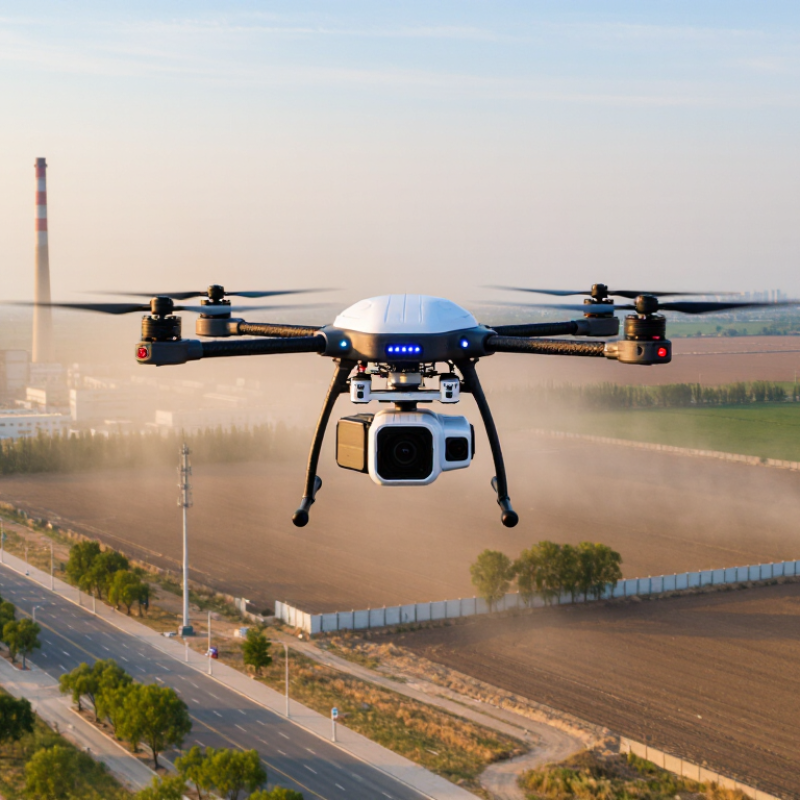
Air Pollution Detection Drones offer a closer view of pollution than a single fixed monitor can provide. They can sample air along streets, near industrial boundaries, or above fields after a dust event. A small sensor payload may record particulate matter, gases, temperature, and humidity. Together, these readings can help teams spot local patterns and decide where ground checks are needed. The value is practical: measurements arrive from places that are difficult or costly to monitor continuously.

The equipment is only part of the story. Sensor calibration, flight height, wind, and battery limits all affect what the data means. A drone reading is not automatically a complete picture of exposure, and different sensors may respond differently to moisture or nearby sources. Atmospheric scientist Dr. James Crawford, whose work includes airborne air-quality research, offers a relevant principle—paraphrased here, not presented as a direct quotation: “Useful pollution maps depend on trustworthy measurements gathered in the right place and time.” That distinction matters.

There are trade-offs. Short flights produce snapshots, not continuous records. Data also needs careful review before it supports public-health or operational decisions. Still, Air Pollution Detection Drones can add fine-grained observations to established monitoring networks, especially when teams compare their readings with calibrated ground instruments. The method is promising, but not magic. A sensor can miss what it was not designed to detect. Choosing a drone system therefore means weighing coverage, sensor quality, flight endurance, and the people who will interpret the results. That is the real question behind “Why Choose Air Pollution Detection Drones?”
Why Choose Air Pollution Detection Drones?

What Air Pollution Detection Drones Are and How They Work

Air pollution detection drones are aircraft fitted with sensors that measure pollutants while moving through the air. Depending on the equipment, they may monitor fine particles, ozone, or gases such as nitrogen dioxide. The drone also records its position and altitude, so each reading can be linked to a place and height.

Here is how a typical survey works. A trained operator plans a route and checks weather conditions before flight. Air passes through an inlet to the sensors, which estimate pollutant levels at regular intervals. GPS data, timestamps, and sometimes wind measurements help researchers interpret the results. On a map, readings can reveal how pollution changes near a road, above a work site, or across different heights. Small details matter.

These measurements are useful, but they are not automatically precise. Rotor airflow can disturb samples, and humidity or sensor response time may affect readings. Careful calibration and comparison with trusted ground monitors help identify errors. A drone shows a moving snapshot, not a complete picture of long-term exposure. That distinction is easy to overlook. Even a well-planned flight may need repeating under different conditions.

Why Choose Air Pollution Detection Drones? - What Air Pollution Detection Drones Are and How They Work
Data Dimension How It Works What It Measures or Provides Practical Considerations
Air pollution detection drone An unmanned aircraft carries air-quality sensors and records measurements along a planned flight route. Pollutant readings associated with location, time, and—when recorded—altitude. It complements fixed monitors and ground sampling; it does not automatically replace regulatory monitoring stations.
Particulate matter (PM2.5 and PM10) Many compact sensors estimate particle concentration by measuring how particles scatter light inside a sensing chamber. Estimated concentrations of fine particles (PM2.5) and inhalable particles (PM10), commonly reported in µg/m³. Readings can be affected by humidity, particle composition, and sensor design. Optical estimates may need comparison with reference instruments.
Gaseous pollutants Depending on the instrument, electrochemical, optical, or other gas sensors detect specific gases in sampled air. Potential targets include ozone (O3), nitrogen dioxide (NO2), carbon monoxide (CO), and sulfur dioxide (SO2); results are often expressed in ppb or ppm. Each sensor has its own detection range, response time, and possible cross-sensitivity. The drone payload must be selected for the target gases.
Carbon dioxide (CO2) A compact nondispersive infrared (NDIR) sensor estimates CO2 by measuring absorption of infrared light. CO2 concentration, typically reported in ppm; useful for studying ventilation or localized emissions when interpreted in context. CO2 is not a direct measure of overall air quality. Background levels, wind, and nearby sources affect interpretation.
Location, time, and altitude Navigation data and sensor timestamps are combined with pollutant readings during logging or post-processing. Georeferenced measurements and, when available, vertical profiles showing how concentrations vary with height. Position and altitude accuracy depend on the aircraft, navigation equipment, and flight conditions. Sensor and navigation clocks should be synchronized.
Air sampling and sensor placement Air reaches the sensor through natural airflow or a pump, depending on the payload design; the sensor converts its response into a recorded reading. A sequence of measurements collected while the drone follows a route or holds at selected locations. Propeller airflow, vibration, heat, and the sensor’s response time can influence readings. Placement and flight speed should be considered during testing.
Typical mission duration Battery-powered multirotor drones collect data during a planned flight and return for landing or battery replacement. A single sortie provides a time-limited survey; repeated flights can help compare locations or conditions. Flight time varies substantially with aircraft, payload, battery, wind, and operating conditions. Payload weight and safety reserves reduce usable survey time.
Data quality and validation Operators calibrate or check sensors, log relevant conditions, and compare results with suitable reference measurements where possible. Quality-checked readings that can reveal spatial patterns and support follow-up investigation. Low-cost sensors can be useful for screening and mapping, but their uncertainty and limitations should be reported; results are not automatically regulatory-grade.
Suitable applications A planned route samples selected locations, heights, or times that are difficult to cover with a stationary instrument alone. Examples include localized pollution surveys, vertical profiling, industrial-site screening, and research into changing air-quality patterns. Findings depend on sensor capability, sampling design, weather, and access. A drone survey identifies patterns but does not by itself prove a source or cause.
Safety and operating rules A trained operator plans the flight, checks the aircraft and surroundings, and follows applicable aviation requirements. A controlled survey that accounts for people, structures, airspace, and environmental conditions. Requirements vary by jurisdiction and operation. Airspace restrictions, permissions, privacy, weather, and safe separation must be assessed before flight.

Which Pollutants and Environmental Conditions They Can Measure

Why Choose Air Pollution Detection Drones?
Which Pollutants and Environmental Conditions They Can Measure

Air pollution detection drones can sample air across rooftops, roadsides, and industrial perimeters that fixed stations may not represent. Depending on the sensor payload, they can measure particulate matter, including PM2.5 and PM10, alongside gases such as ozone, nitrogen dioxide, sulfur dioxide, and carbon monoxide. Some instruments also detect selected volatile organic compounds. No single drone measures everything. Sensor choice matters.

Drones can record temperature, humidity, air pressure, and wind conditions alongside pollutant readings. These details help explain why concentrations change between a shaded street and a sunlit roof. Wind can also shift a plume before the drone reaches it. That matters. A reading is a snapshot, not a complete picture of exposure. Sensor calibration, flight height, battery limits, and changing weather all affect data quality. Humidity, for example, can influence some particle sensors. Even careful surveys need comparison with reliable reference instruments. A colourful map looks convincing, but it cannot correct a poorly calibrated sensor. The measurements are useful; their limits deserve attention, too.

How Drones Improve the Coverage and Speed of Air Quality Surveys

Air-quality surveys can miss sharp changes between fixed monitoring stations. The World Health Organization’s 2022 air quality database reported that 99% of people lived where its air quality guideline levels were not met. That scale makes local detail important. A drone can follow a planned route across a roadside, school boundary, or industrial perimeter in one survey. Its logged position and time help connect each reading to a specific place. Useful detail.

Repeated flights can compare readings across locations and, where safe and practical, at different heights. This can reveal patterns that a ground-level route may overlook, such as a pollutant peak beside a busy road. But speed is not the same as accuracy. Wind, humidity, sensor response, and payload limits can affect measurements. The U.S. Environmental Protection Agency’s Air Sensor Guidebook emphasizes careful evaluation and quality assurance for air sensors. Teams should check drone-mounted readings against suitable reference instruments and record weather and flight conditions. Some readings will still be imperfect. That uncertainty belongs in the survey record, not hidden in a polished map.

Where Air Pollution Detection Drones Are Commonly Used

Air pollution detection drones are commonly used around factories, power facilities, and waste-processing sites. They can carry sensors over rooftops, storage areas, or fenced boundaries where fixed monitors provide limited coverage. During a survey, operators may compare readings at several heights and distances. This helps identify possible pollution hotspots, though a single reading cannot confirm a source.

Cities also use drones to examine traffic corridors, construction zones, and neighborhoods near busy roads. A flight can map changing particulate levels near an intersection or downwind from a building site. Some teams use them after wildfires to track smoke and support ground-based sampling. Conditions matter: wind, humidity, sensor calibration, and flight altitude can all affect measurements. Small differences may be misleading.

Useful, but not magic. Drone data works best alongside verified ground monitors and careful logging of weather and location. Teams should repeat flights under comparable conditions and review unexpected readings before drawing conclusions. That extra check takes time. It is easy to overlook. Still, aerial measurements can reveal patterns that fixed sensors miss, especially across wide or hard-to-reach areas.

What Factors to Consider When Choosing an Air Monitoring Drone

Why Choose Air Pollution Detection Drones?

What Factors to Consider When Choosing an Air Monitoring Drone

Choosing an air monitoring drone starts with the pollutant you need to measure. A sensor suited to particulate matter may not detect ozone or nitrogen dioxide accurately. Check its detection range, response time, and sensitivity to other gases. A clear reading is not automatically a reliable one. Compare sensor results with calibrated reference equipment, especially before interpreting small changes.

The drone must carry the sensor, inlet, and data logger without sacrificing useful flight time. Check the payload limit under real operating conditions, not just the advertised maximum. Placement matters: rotor wash can disturb a sample, so the inlet should sit where airflow is less affected. It is easy to overlook this detail. Weather resistance, repeatable routes, precise timestamps, and secure data storage also matter. On a windy day, even a well-planned flight can produce uneven samples. That happens. Review maintenance needs and battery performance, too; a setup that works for one short survey may not suit repeated monitoring. A practical trial flight can reveal weak points before routine measurements begin.

Powder Coat Booths

For those larger-sized parts, or smaller quantity runs, we have 2 independent powder coat booths and ovens. The quality, durability and affordability of today’s powder coating finishes make this the process of choice for world-class companies.

Powder coating advantages over other forms of coating are many. Materials used in the Powder coating process can be metals and non-metals that come in a multitude of thicknesses, textures, colors, etc. Another of Powder coating’s biggest advantages over conventional coatings is its ability to create finishes in many different textures. Powder Coating Booths allow us the ability to apply these advantages to large products.

Wet Paint Line

Tri-State Fabricators runs a full-service conveyor line for painting. Wet painting can provide protection or decoration to many different part styles. From start to finish, every project is easier to undergo random and point-based inspection by our skilled painting team.

Advantages to our Wet Paint Line are these lines start with product prep and ends with a thorough inspection of a high quality finished product. Our ability to complete large and small projects with a superior finish and doing so in a timely and economical fashion. This passes along the savings in production to our customers. When powder coating ins not an option, our Wet Paint Line gets the job done right the first time.

Wet Paint Booths

When the parts get big and heavy we roll-out our custom paint racks and oversize booth. By utilizing our partnerships with all the major paint brands, we can match virtually any color with wet paint.

The advantages of having access to a Wet Paint Booth are many. Large projects of many different shapes can be loaded into the booth. The Wet Paint Booth offers an environment that is much more controlled than a typical parts painting operation.

Not only are they used because of their controlled environment, but they’re are also advantageous when it comes to applying paint to parts that are needed in industries that require specialty coatings such as medical, aerospace, etc.

Military CARC

Our military forces have some very high standards when it comes to the finish of their vehicles and equipment. From the first pre-treatment step to final coat, it takes a great deal of knowledge and experience to protect the men and women of our armed forces. They deserve only the best, and Tri-State Fabricators provides it.

All of our processes are closely monitored by our staff and management teams. Both of which are highly trained in the processes of metal fabrication and finishing. Tri-State Fabricators’ goal is to always fully satisfy each and every customer, including the military. We will always put a 110% into what we do.

Glass-Bead Blasting

Abrasive media blasting is an excellent way to remove old paint, rust, and increase the paint/powder adhesion. Glass beads produce a much smoother and brighter finish than angular abrasives; leaving the part clean yet without any dimensional change. Chemically inert and environmentally friendly, we can recycle our beads approximately 30 times; making them a more preferred method of metal cleaning or surface finishing.

Advantages to Glass Bead Blasting are many. Glass bead blast media is used when a project is needing rough surfaces need to become smooth for applications of coatings such as paint. It is typically used to clean paint and rust from a product surface without deforming the surface it is being used on. Overall, compared to many other blasting media, Glass Bead Blasting is a very economical choice and those savings are always passed on to our customers.

Part Washing

Tri-State Fabricators utilize a zinc phosphate wash to clean and etch the material to ensure the best paint adhesion possible. The unique design of our 3-stage wash system does the work like a 5-stage. From Cleaning and rinsing to conversion coating and post-treatment, Our Part Washing process is a complete service and works throughout the fabrication service and the finishing service.

Along with the previously mentioned benefits, Curing is a vital chemical reaction that leaves the product finish hard and relatively safe from mild abrasion and aggressive corrosion. This process can be done in more than one way; ambient air-dry or in curing ovens at temps that exceed 240°.

Burn-Off Oven

From fixing paint mistakes (someone else’s of course) to simply cleaning our paint line hooks, our burn-off oven is put to good use. After a quick burn-off, a little clean up, and a fresh coat of paint, your parts will look better than new.

Why does our Burn-Off Oven work so well? Because super heating the air around parts turns the materials into ashes. From paint and powder coatings to rubber and machining oils, high temps do the job without degrading the integrity of the part.

Masking

Masking is a vital part of producing high quality products. We have die-cut masking patterns to protect machined surfaces as well as a wide range of plugs and caps to protect threaded holes and bolts. We provide permanent and temporary masking.

Masking allows the selected sections of a product to be protected from a fabrication or finishing service. This can be with both chemicals when etching and tapes, paints when only finishing just a section of the product. Masking is great in aiding the customization process of a project.

Screen Printing

Screen printing is a photographic process that transfers artwork onto a porous nylon screen which allows colored ink to flow through the screen and be deposited on an aluminum or plastic component. We can generally have just about any design created onto a screen for your parts.

Some of the advantages of Screen Printing are, brand recognition for your business displaying on your products, assembly instructions, product warnings/hazards, etc. Tri-State Fabricators produces Screen Printing of the highest quality so you know it’s durable.

Metal Finishing

Metal Finishing is the art of treating the exterior portion of product, often metal but can also be made of other materials, so that the surface is clean and free of any debris. Then the process of applying coats or either paint of powder coat takes place. This coating process improves the quality of the product in both appearance and resistance to wear and corrosion.

Tri-State Fabricators, Inc., understands that a project typically isn’t complete until a high-quality finish has been added to your product. This is why our painting and powder coating teams continuously inspect the products throughout the Metal Finishing process.


