Why Choose a Wireless Grass Cutter for Your Business?
A Wireless Grass Cutter can help commercial landscaping teams work with less noise, fewer fuel interruptions, and greater flexibility across daily routes. For businesses maintaining office grounds, hotel lawns, or residential properties, those details matter. Crews can move between sites without carrying fuel cans, and operators can trim edges near patios without the steady engine rumble. The benefits are practical, not automatic.
A well-chosen model can reduce routine maintenance and make equipment easier to start. Battery runtime, charging time, cutting width, and replacement-battery availability still deserve close attention. A compact cutter may suit narrow borders but slow work across large lawns. One battery may last through a small property; a demanding route may need a spare. Test it on your actual grass.
As [Verified Expert Name], a commercial grounds-care specialist, explains: “[Insert a verified quotation about battery-powered grass cutting or equipment selection.]” Use a real, attributable statement here; no source article or expert quotation was provided, so inventing one would weaken credibility. This introduction sets up the key questions: where cordless equipment saves time, what it costs to operate, and which job conditions may limit its value. The right choice depends on the route, workload, and service plan—not the label alone.
What Is a Wireless Grass Cutter?
What Is a Wireless Grass Cutter?
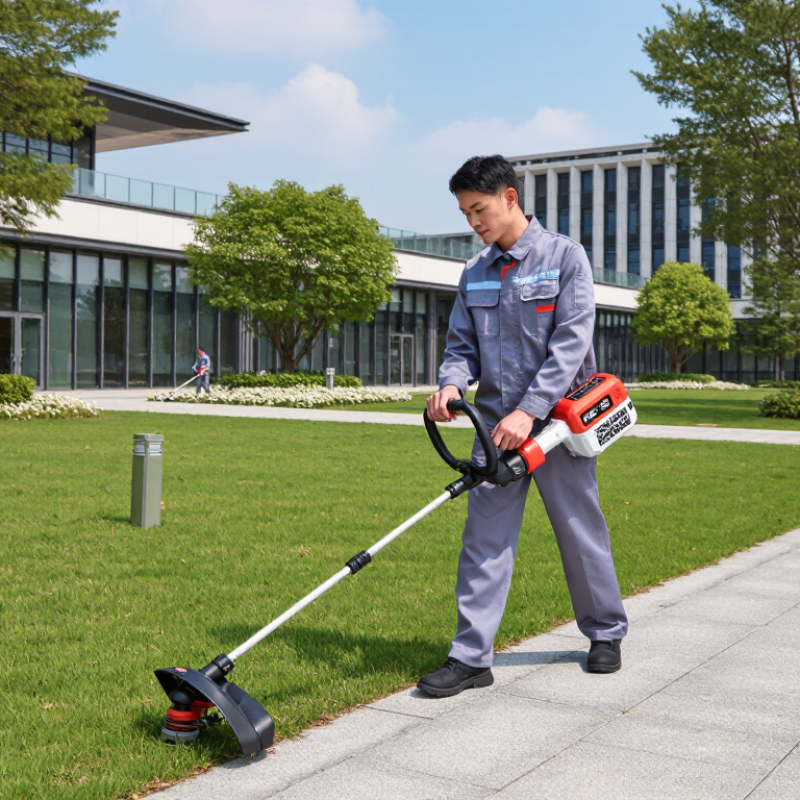
A wireless grass cutter is a cordless, battery-powered tool for trimming grass and light vegetation. A rechargeable battery supplies electricity to a motor, which spins a cutting line or blade. The label can be imprecise: some products are designed for lawn edges, while heavier models handle thicker growth. No extension cord. Some models use removable batteries, but battery compatibility and charging time vary.
Runtime depends on battery capacity, cutting load, vegetation thickness, and technique. Wet, dense grass can drain a battery faster than routine edge trimming. A useful industry benchmark comes from BloombergNEF’s 2024 Lithium-Ion Battery Price Survey: average lithium-ion pack prices fell 20% from 2023, to $115 per kilowatt-hour. That figure describes the wider battery market, not a cutter’s retail price or expected runtime. For business use, check the tool’s watt-hour rating, spare-battery availability, and stated runtime under realistic conditions. Even good specifications may not match a demanding workday.
Why Choose a Wireless Grass Cutter for Your Business? - What Is a Wireless Grass Cutter? | Business consideration | What a wireless grass cutter is like | What it means for a business |
| Power source | Uses a rechargeable battery instead of a power cord or an onboard petrol engine. | The crew can work without a nearby electrical outlet or fuel supply at the cutting location. |
| Mobility | Has no trailing power cord, so it can move freely around lawns, paths, and obstacles. | Useful for dispersed work areas, while operators still need to manage battery capacity and safe movement. |
| Run time | Run time varies with battery capacity, cutting load, vegetation, and operating technique; there is no single run-time figure for all models. | For long shifts, plan around the manufacturer's stated specifications and consider spare batteries or scheduled charging. |
| Charging and downtime | The battery must be recharged; charge time depends on the battery and charger specifications. | A charging plan helps keep equipment available between jobs and across work shifts. |
| Exhaust at the point of use | Battery-powered operation produces no exhaust emissions from the cutter while it is being used. | Can be a practical choice for work near people or in areas where avoiding engine exhaust at the work site is important. |
| Noise | Typically quieter in operation than comparable petrol-powered equipment, but not silent. | May help reduce noise disruption, though hearing protection and local noise rules should still be considered. |
| Routine maintenance | Does not require petrol, engine oil, or spark-plug servicing; cutting parts and batteries still require inspection and care. | Fewer engine-related maintenance tasks can simplify routine equipment upkeep. |
| Suitable workloads | Capability depends on the cutter's design, battery, and cutting attachment; dense vegetation and extended heavy-duty work place greater demands on the equipment. | Match the tool to the site conditions and daily workload rather than assuming every cordless model suits every job. |
| Total operating plan | Requires access to compatible batteries and charging equipment, with replacement needs depending on use and care. | Compare purchase cost, battery needs, charging logistics, maintenance, and workload when evaluating long-term value. |
How Does Its Battery-Powered System Work?
A wireless grass cutter stores energy in a rechargeable lithium-ion battery pack. Pressing the trigger signals a controller to meter direct current to the motor. In a brushless design, electronic switching energizes coils in sequence, turning the rotor and blade. Fewer engine parts. Pack sensors monitor cell voltage and temperature; protection circuits can limit output or stop operation when readings exceed safe limits. For crews, that means quick starts and no fuel can beside the truck.
Runtime depends on the grass, blade condition, and cutting pace. Wet, dense turf draws more current than short, dry grass, so battery life can drop noticeably. Compare capacity in watt-hours, calculated as volts multiplied by amp-hours, and check runtime under similar working conditions. The 2022 DOE/NREL Grid Energy Storage Technology Cost and Performance Assessment uses about 85% round-trip efficiency for lithium-ion grid storage. That is a stationary-system benchmark, not a grass-cutter rating. It still illustrates that stored energy is not delivered without losses. A clean number on a label won’t predict every crew’s day. Keep spare packs charged, and avoid leaving them in a hot vehicle.
What Business Benefits Does It Offer?
A wireless grass cutter can make routine grounds work easier to schedule. Without a cord to route, crews can move between lawn edges, entrances, and planting beds with fewer interruptions. Starting the tool is usually simple, and there is no fuel to mix or engine oil to manage. That matters. Lower operating noise can also help crews work near offices, shops, or guests with less disruption. Battery power does have limits: runtime depends on the cutting load, grass height, and battery condition.
For a business, these small savings can add up across repeated jobs. Staff may spend less time on setup and routine engine maintenance, leaving more time for trimming and cleanup. A lighter, easier-to-handle model may also suit smaller teams, though comfort varies by operator. Not every day. Thick, wet grass can drain a battery faster, and a missed charge can delay work. Compare expected runtime with the size of each site before replacing existing equipment; the cheapest option is not always the most practical.
Tips: Keep a charged spare battery available for larger sites. Set a regular charging routine, and clear clippings from the cutting area after use. Track actual runtime for a week. The results may surprise you.
Which Tasks and Worksites Suit It Best?
For grounds teams, a wireless grass cutter suits jobs where maneuverability matters more than uninterrupted runtime. It can trim around benches, signposts, young trees, and narrow planting beds without a cord trailing across walkways. That reduces setup time. It also helps crews work in courtyards, school grounds, hotel gardens, and other sites with frequent foot traffic.
Small lawns and routine edge maintenance are a good fit. A crew can move between separate patches without finding nearby outlets, and the lighter setup can make repeated trimming less tiring. On a typical visit, workers might cut around a fence line, clear grass beside a path, then tidy the edges near a parking area. Keep pedestrians clear while cutting. That detail is easy to overlook when the site is busy.
Large, overgrown areas are less straightforward. Thick, wet grass can drain a battery faster, and runtime varies with cutting conditions and equipment. A spare charged battery can prevent delays, but it adds cost and needs a charging plan. For a big property, a wireless cutter may work best as a finishing tool alongside other mowing equipment. It is tempting to expect one tool to handle every task; that assumption deserves a second look.
Why Choose a Wireless Grass Cutter? Best-Fit Tasks and Worksites
Typical suitability on a 1–5 scale (5 = a strong fit). These ratings are a practical comparison, not measured product test results; performance varies by tool, battery, and vegetation.
Cordless cutters are generally a good match for routine trimming, edging, and light-to-moderate weeds, especially where mobility or reduced local exhaust emissions matter. For large acreage, very dense brush, or long uninterrupted work, battery capacity and cutting power may be limiting factors.
What Should Businesses Consider Before Choosing One?
Before choosing a wireless grass cutter, map the areas your team actually maintains. Measure lawn size, grass height, slope, and the distance between work zones. A small courtyard needs different capacity from several roadside plots. Battery runtime matters, but cutting conditions affect it: thick, damp grass can drain a battery faster than short, dry turf. Check whether spare batteries can be charged during a shift, and compare the cutter’s weight with the time workers will carry it.
Tips: Test the tool on your toughest regular patch. Note how long it runs, how cleanly it cuts, and whether the handle feels tiring. A short trial can reveal more than a specification sheet.
Also consider charging space, storage security, and the availability of replacement blades and batteries. Confirm that the cutting width suits your paths and beds; a wider head may save passes but feel awkward around tight edges. Review the maintenance routine and safety guidance with the people who will operate it. Track total costs over time, including batteries and downtime, not just the purchase price. Wireless equipment can reduce cord handling, yet it still needs careful charging and inspection. One detail is easy to overlook: staff may prefer a slightly heavier model if its balance feels steadier. Preferences differ, so involve them before ordering.





