


A vacuum coating machine can turn a surface into a product advantage. It applies thin films that may improve wear resistance, appearance, or functional performance. The details matter: coating material, chamber size, cycle time, and production volume all affect the investment. A polished sample is not enough. Buyers should also ask how consistently the machine coats a full batch and how much downtime maintenance may require.
Market data offers useful context, but not a guarantee of returns. Fortune Business Insights valued the global physical vapor deposition market at USD 20.36 billion in 2023 and projected growth to USD 34.83 billion by 2032. This figure covers the PVD market, not machine sales alone; it signals demand across applications rather than proving any single machine will pay for itself. Dr. Donald M. Mattox, a leading PVD authority, describes the process as “material vaporized from a solid or liquid source” and deposited onto a substrate in a vacuum, as outlined in his Handbook of Physical Vapor Deposition (PVD) Processing. The practical takeaway is control. A stable vacuum, repeatable recipes, and trained operators can matter as much as headline capacity. Real shop floors are less tidy than brochures. Before choosing a system, compare sample results, throughput, service support, and total operating costs against your actual production needs. A careful trial can reveal limitations early. That is worth the extra time.
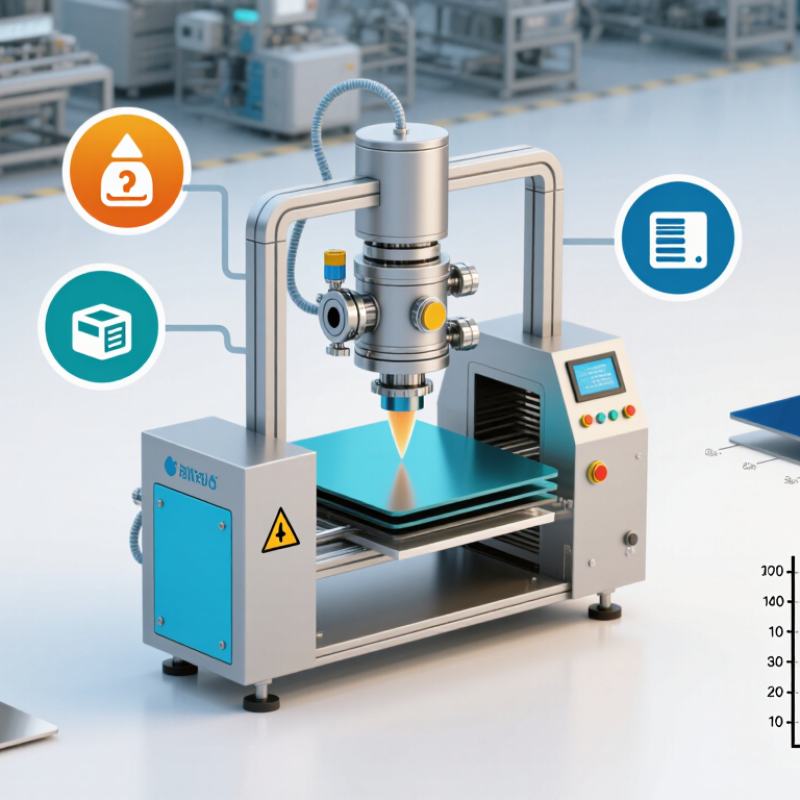
A vacuum coating machine deposits a thin functional layer inside a sealed chamber after air is pumped out. In physical vapor deposition, material is evaporated or sputtered from a source, then settles onto a prepared surface. The result may improve wear resistance, reflectivity, or appearance. Common substrates include metal parts, glass panels, and some plastics. Not every system uses the same process: chamber size, coating source, temperature, and fixture design all affect the finished layer. Small details matter.
SEMI’s 2024 mid-year World Fab Forecast projected global semiconductor manufacturing equipment sales of about $109 billion that year. This figure covers a broad equipment category, not vacuum coating machines alone, but it shows the precision and capital investment surrounding advanced manufacturing. For a business, the practical question is whether the machine can coat its actual parts consistently. Ask for sample runs using your substrate, target thickness, and production rate. Inspect the edges and recessed areas, not just the center. A glossy surface can still hide uneven coverage. Pump-down time and maintenance also deserve attention; they are easy to underestimate. That distinction matters.

How Does the Vacuum Coating Process Work?
A vacuum coating machine applies a thin layer of material to a prepared surface inside a sealed chamber. The part is cleaned, dried, and mounted so the coating can reach the intended areas. Small details matter. Fingerprints or leftover moisture may affect adhesion, even when the surface looks clean.
The chamber is then pumped down to low pressure. Depending on the coating method, the coating material is evaporated or sputtered into fine particles. These particles travel through the chamber and settle on the part, forming a thin film. The machine’s settings, such as power, time, and pressure, influence the coating’s thickness and uniformity. After deposition, the chamber returns to normal pressure, and the coated part is removed for inspection. Not every run behaves alike; part shape and surface preparation can change the result.
Tips: Keep parts clean and evenly spaced, and follow the equipment maker’s operating instructions. Test a sample when changing materials or settings. A quick visual check helps, but it cannot confirm every coating property.
What Business Benefits Can Vacuum Coating Provide?
Vacuum coating can help a business create durable, consistent surfaces on metal, plastic, glass, and other compatible parts. A thin film may improve wear resistance, reduce tarnishing, or add a controlled finish. For a production line, that can mean fewer appearance defects and less frequent replacement of coated components. Results depend on the material, coating process, and part design.
The commercial opportunity is growing. Grand View Research estimated the global physical vapor deposition market at USD 21.9 billion in 2023, with a projected 6.5% compound annual growth rate from 2024 to 2030. This forecast signals investment and demand, but it does not guarantee returns for an individual factory. A vacuum coating machine can also require substantial upfront spending, trained operators, and planned maintenance. That trade-off is easy to underestimate.
Tips: Test representative parts before committing. Track coating thickness, defect rates, cycle time, and cost per acceptable unit. Ask whether the finish solves a real production or customer problem. A glossy sample looks convincing; repeatable results matter more.
Typical PVD coating thickness ranges by application
PVD coatings are typically microns thin, enabling products to gain functional or decorative surface properties without adding substantial bulk. These approximate thickness ranges vary with coating material, equipment, and product requirements; they are not guaranteed performance or cost savings.
Vacuum coating machines serve businesses that need thin, consistent surface layers. Electronics makers use them on components and housings to improve appearance or functional performance. Automotive suppliers coat interior trim, reflectors, and selected metal parts. In optics, controlled coatings can help lenses and glass manage reflection or light transmission. Decorative goods, tools, and packaging components may also benefit. The exact result depends on the coating process, equipment setup, and part geometry.
Common substrates include stainless steel, aluminum, copper, glass, and some engineering plastics. Metals often accept coatings well after suitable cleaning and preparation. Plastics need careful temperature control because heat can warp or soften them. Glass surfaces also require thorough cleaning; even small fingerprints may affect the finish. Compatibility is not automatic, though. A material that works in one process may perform poorly in another, so production trials matter.
Tips: Test representative parts before committing to a large run. Check adhesion, appearance, and wear after coating. Keep records of cleaning steps and process settings; small changes can shift results. It is tempting to judge a coating by its shine alone, but that can miss weak bonding or uneven coverage. A few imperfect test pieces can reveal useful problems early.
| Industry | Typical materials and parts | Common vacuum coating approaches | Typical applications | Potential business benefits and considerations |
|---|---|---|---|---|
| Cutting tools and industrial components | Tool steel, stainless steel, cemented carbide, and selected ceramic parts | Physical vapor deposition (PVD), including cathodic arc and magnetron sputtering | Hard, wear-resistant coatings such as titanium nitride and related nitride coatings on cutting and forming tools | Can improve surface hardness and wear performance. Part cleanliness, temperature limits, coating selection, and fixture design must match the component and its use. |
| Automotive and transport | Metal components, glass, and suitable engineered plastics | PVD for functional or decorative layers; vacuum evaporation for reflective metallization | Decorative trim, reflectors, and selected wear- or corrosion-resistant components | Supports consistent surface finishes and functional layers. Adhesion depends on substrate preparation, and complex part shapes may need careful fixturing or multiple coating angles. |
| Optics and photonics | Optical glass, fused silica, and some optical polymers | Thermal or electron-beam evaporation and magnetron sputtering | Anti-reflection, reflective, and other optical thin-film stacks for lenses, filters, and mirrors | Enables precise multilayer films. Optical performance depends on layer thickness control, substrate cleanliness, and the coating design required for the wavelength range. |
| Electronics and electrical equipment | Silicon wafers, glass, ceramics, and metal parts | Magnetron sputtering and thermal or electron-beam evaporation | Thin conductive, resistive, or dielectric layers used in electronic devices, sensors, and electrical components | Provides controlled thin-film deposition for suitable production processes. Film composition, thickness uniformity, vacuum level, and substrate compatibility are critical. |
| Architectural and solar glass | Flat glass and glass panels | Large-area magnetron sputtering; other processes may be used for particular coating designs | Low-emissivity and solar-control glazing, as well as selected thin-film photovoltaic layers | Can deposit uniform functional layers across large surfaces. Production typically requires equipment sized for the glass format and careful control of process conditions. |
| Packaging and consumer products | Plastic films, bottles, cosmetic packaging, and selected metal or glass products | Vacuum evaporation, often used to deposit aluminum, with suitable substrate preparation | Reflective or metallic-looking finishes on packaging and consumer goods | Can create a bright metallic appearance without using a thick metal part. Heat-sensitive plastics may require process controls, and barrier performance depends on the full packaging structure. |
| Medical devices and instruments | Stainless steel, titanium, and selected engineering materials | PVD coatings selected for the device and its intended function | Surface modification of certain instruments and components, including wear- or friction-focused applications | May provide useful surface properties, but a coating is not automatically biocompatible or suitable for every medical use. Validation and regulatory requirements depend on the device and application. |
| Furniture, hardware, and decorative products | Stainless steel, brass, zinc alloys, and suitable plastics | Decorative PVD coatings and vacuum metallization | Decorative finishes on handles, fittings, fixtures, and product components | Offers a range of metallic appearances and can support repeatable production. Appearance and durability depend on the base material, pretreatment, coating stack, and service conditions. |
Selection note: Vacuum coating is a family of processes, not a single universal method. The best machine and coating process depend on the substrate, part geometry, required film properties, production volume, and quality targets.
A vacuum coating machine suits a business when its products need consistent, thin films and existing methods cannot meet that requirement. Start with a small production audit: record part dimensions, materials, weekly volume, reject rates, and required coating thickness. Then compare these figures with a supplier’s stated chamber capacity and cycle time. A glossy sample is not enough. Test representative parts, including awkward shapes and the materials you actually use.
Energy and utilization deserve close attention. The International Energy Agency’s Energy Efficiency 2023 report estimates that industry uses about 37% of global energy demand. That figure is not specific to coating, but it underlines why a machine’s power use and idle time belong in the cost model. Calculate cost per acceptable part, including maintenance, consumables, operator time, and downtime—not just the purchase price. Check whether your planned shifts can keep the chamber productive.
Ask for a trial run using your own parts. Measure coating uniformity, adhesion, cycle time, and the number of parts rejected. Compare those results with your current process over several batches. Small samples can mislead. A machine may fit the product but not the floor plan, staffing, or order pattern. Leave room for uncertainty: demand forecasts change, and maintenance needs are easy to underestimate.


For those larger-sized parts, or smaller quantity runs, we have 2 independent powder coat booths and ovens. The quality, durability and affordability of today’s powder coating finishes make this the process of choice for world-class companies.
Powder coating advantages over other forms of coating are many. Materials used in the Powder coating process can be metals and non-metals that come in a multitude of thicknesses, textures, colors, etc. Another of Powder coating’s biggest advantages over conventional coatings is its ability to create finishes in many different textures. Powder Coating Booths allow us the ability to apply these advantages to large products.
Tri-State Fabricators runs a full-service conveyor line for painting. Wet painting can provide protection or decoration to many different part styles. From start to finish, every project is easier to undergo random and point-based inspection by our skilled painting team.
Advantages to our Wet Paint Line are these lines start with product prep and ends with a thorough inspection of a high quality finished product. Our ability to complete large and small projects with a superior finish and doing so in a timely and economical fashion. This passes along the savings in production to our customers. When powder coating ins not an option, our Wet Paint Line gets the job done right the first time.
When the parts get big and heavy we roll-out our custom paint racks and oversize booth. By utilizing our partnerships with all the major paint brands, we can match virtually any color with wet paint.
The advantages of having access to a Wet Paint Booth are many. Large projects of many different shapes can be loaded into the booth. The Wet Paint Booth offers an environment that is much more controlled than a typical parts painting operation.
Not only are they used because of their controlled environment, but they’re are also advantageous when it comes to applying paint to parts that are needed in industries that require specialty coatings such as medical, aerospace, etc.
Our military forces have some very high standards when it comes to the finish of their vehicles and equipment. From the first pre-treatment step to final coat, it takes a great deal of knowledge and experience to protect the men and women of our armed forces. They deserve only the best, and Tri-State Fabricators provides it.
All of our processes are closely monitored by our staff and management teams. Both of which are highly trained in the processes of metal fabrication and finishing. Tri-State Fabricators’ goal is to always fully satisfy each and every customer, including the military. We will always put a 110% into what we do.
Abrasive media blasting is an excellent way to remove old paint, rust, and increase the paint/powder adhesion. Glass beads produce a much smoother and brighter finish than angular abrasives; leaving the part clean yet without any dimensional change. Chemically inert and environmentally friendly, we can recycle our beads approximately 30 times; making them a more preferred method of metal cleaning or surface finishing.
Advantages to Glass Bead Blasting are many. Glass bead blast media is used when a project is needing rough surfaces need to become smooth for applications of coatings such as paint. It is typically used to clean paint and rust from a product surface without deforming the surface it is being used on. Overall, compared to many other blasting media, Glass Bead Blasting is a very economical choice and those savings are always passed on to our customers.
Tri-State Fabricators utilize a zinc phosphate wash to clean and etch the material to ensure the best paint adhesion possible. The unique design of our 3-stage wash system does the work like a 5-stage. From Cleaning and rinsing to conversion coating and post-treatment, Our Part Washing process is a complete service and works throughout the fabrication service and the finishing service.
Along with the previously mentioned benefits, Curing is a vital chemical reaction that leaves the product finish hard and relatively safe from mild abrasion and aggressive corrosion. This process can be done in more than one way; ambient air-dry or in curing ovens at temps that exceed 240°.
From fixing paint mistakes (someone else’s of course) to simply cleaning our paint line hooks, our burn-off oven is put to good use. After a quick burn-off, a little clean up, and a fresh coat of paint, your parts will look better than new.
Why does our Burn-Off Oven work so well? Because super heating the air around parts turns the materials into ashes. From paint and powder coatings to rubber and machining oils, high temps do the job without degrading the integrity of the part.
Masking is a vital part of producing high quality products. We have die-cut masking patterns to protect machined surfaces as well as a wide range of plugs and caps to protect threaded holes and bolts. We provide permanent and temporary masking.
Masking allows the selected sections of a product to be protected from a fabrication or finishing service. This can be with both chemicals when etching and tapes, paints when only finishing just a section of the product. Masking is great in aiding the customization process of a project.
Screen printing is a photographic process that transfers artwork onto a porous nylon screen which allows colored ink to flow through the screen and be deposited on an aluminum or plastic component. We can generally have just about any design created onto a screen for your parts.
Some of the advantages of Screen Printing are, brand recognition for your business displaying on your products, assembly instructions, product warnings/hazards, etc. Tri-State Fabricators produces Screen Printing of the highest quality so you know it’s durable.
Metal Finishing is the art of treating the exterior portion of product, often metal but can also be made of other materials, so that the surface is clean and free of any debris. Then the process of applying coats or either paint of powder coat takes place. This coating process improves the quality of the product in both appearance and resistance to wear and corrosion.
Tri-State Fabricators, Inc., understands that a project typically isn’t complete until a high-quality finish has been added to your product. This is why our painting and powder coating teams continuously inspect the products throughout the Metal Finishing process.

