


A Sliding Drive Shaft helps transfer engine torque while accommodating changes in driveline length as the suspension moves. That movement matters on uneven roads, during acceleration, and when a vehicle’s axle shifts under load. Without adequate sliding travel, the shaft may bind, transmit unwanted vibration, or place extra stress on nearby components.
The design is practical, but not a cure-all. A correctly selected shaft must match the vehicle’s torque, operating angle, travel range, and connection points. For example, a lifted truck may need a different shaft length or joint arrangement than the factory setup. Small measurement errors can create noticeable vibration at highway speed. Fit matters.
Routine inspection also counts. Look for damaged seals, rust, unusual play, or fresh grease around the sliding section. These signs do not always prove failure, but they deserve attention before a long trip or heavy-duty use. A qualified technician can check the shaft’s dimensions, balance, and compatibility with the vehicle.
A named expert quotation should be verified against a reliable source before publication; no source was provided here, so attributing invented words would undermine trust. The key takeaway remains clear: a Sliding Drive Shaft can support smoother power delivery when its travel and specifications suit the vehicle. The right part depends on the application.
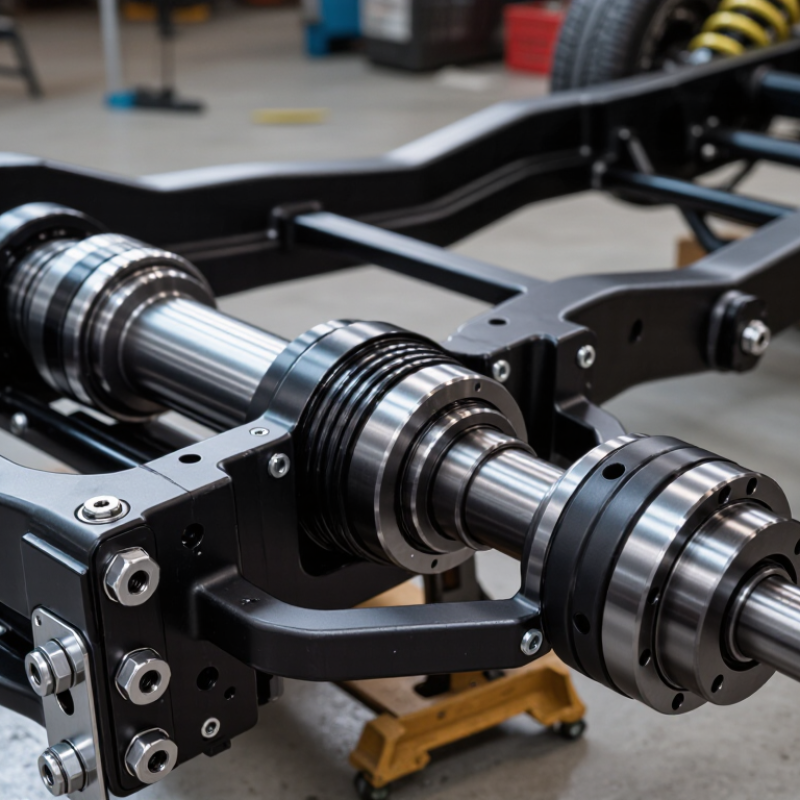
A sliding drive shaft is a rotating component that transfers torque from the transmission or transfer case to the differential. Its sliding section, often made with interlocking splines, lets the shaft extend or shorten slightly as the distance between these components changes. This movement helps accommodate suspension travel and drivetrain motion. Without enough sliding movement, parts may bind or experience extra stress. The exact design varies by vehicle.
You may notice the shaft beneath the vehicle, with a jointed section near one end. As the wheels move over a dip or bump, the suspension shifts, and the shaft’s sliding joint helps maintain the connection. It still has to transmit substantial force while rotating. Small parts matter here.
Tips: Follow the vehicle’s service guidance for inspection and lubrication. Look for looseness, damaged splines, or unusual vibration. These signs can have several causes, so don’t assume the drive shaft is at fault without a proper check.
A sliding drive shaft can support smoother power delivery across changing operating conditions, but it is not a performance upgrade by itself. Wear, incorrect installation, or poor alignment can affect its operation. I’d be cautious about diagnosing a vibration from sound alone; a qualified technician can inspect the shaft and related components together.

A sliding drive shaft, often called a slip-yoke or telescoping shaft, changes length as the vehicle moves. Its splined sections slide in and out while remaining engaged, so engine torque can still travel toward the differential. When the rear suspension compresses over a pothole, the axle moves closer to the transmission; when it extends, the distance grows. The sliding section absorbs that movement instead of forcing the shaft or transmission output to take the load. It is a small movement with a demanding job.
The shaft’s universal joints also work at changing angles. SAE International’s driveline engineering literature describes how a single Cardan joint produces speed fluctuation twice per revolution; at 10 degrees of joint angle, the calculated swing is about 3.1 percent peak-to-peak. That figure describes joint kinematics, not a guaranteed vehicle performance result. A properly phased pair of joints can help cancel the fluctuation, while the sliding splines accommodate length change. Wear, poor lubrication, or damaged splines can cause binding, clunks, or vibration. Not every vibration comes from the shaft, though. Checking joint angles, shaft balance, and suspension movement helps pinpoint the cause.
Vehicles with a live rear axle often benefit most from a sliding drive shaft. This includes many pickup trucks, vans, four-wheel-drive vehicles, and older rear-wheel-drive cars. As the axle rises over a speed bump or drops into a rut, the distance between the transmission and differential changes. A sliding joint lets the shaft adjust instead of forcing the drivetrain to absorb that movement. That movement is real.
The feature can matter even more on vehicles that carry varying loads or travel on uneven roads. A loaded truck may sit lower, while suspension travel still shifts the axle’s position. Off-road vehicles also need room for suspension articulation. Without enough slip, the shaft may bind, stress its joints, or contribute to vibration. But a sliding shaft alone cannot fix poor alignment or worn components.
Not every vehicle needs one. Some drivetrains use different arrangements, and the required shaft design depends on suspension layout, ride height, and operating conditions. A lifted vehicle, for example, may need more than a longer shaft; angles and balance matter too. Fit matters. If a vehicle develops a clunk when shifting or vibration under acceleration, have the shaft and its joints inspected before choosing a replacement. I’d avoid assuming the sliding section is the cause without checking the whole driveline.
A sliding section lets a drive shaft accommodate changes in distance between drivetrain components as the suspension moves or the vehicle articulates.
Typical configurations, not universal fitment rules. Front-wheel-drive cars commonly accommodate axle movement with plunging CV joints rather than a sliding propeller shaft; actual designs vary by vehicle.
A sliding drive shaft accommodates changes in distance between the transmission and differential as the suspension moves. Its splined section extends or compresses, helping prevent axial loads from being forced into the joints. SAE International technical literature on driveline design treats shaft plunge and joint angle as key measurements across the suspension’s full travel. For example, if a vehicle’s measured movement requires 20 mm of plunge, the shaft needs enough usable sliding travel to cover that movement, with suitable reserve. That figure is illustrative, not a universal specification.
Compared with a fixed-length shaft, a sliding design can better handle suspension articulation, frame flex, and assembly tolerances. It may also simplify installation because the shaft can move axially into position. Not a cure-all. Incorrect spline engagement, poor lubrication, or imbalance can still cause vibration and wear. A sliding joint also needs regular inspection; dirt around the splines can restrict movement.
Tips: Measure required plunge at ride height and through full suspension travel, then compare it with the shaft’s usable range. Check spline engagement and joint angles against the vehicle’s service data. Don’t guess from appearance alone.
A sliding drive shaft allows length changes as the suspension moves, helping maintain power transfer through changing angles and distances. The right choice depends on how the vehicle is used, not just its model. A work truck carrying heavy loads may need different capacity from a lightly loaded road vehicle. Consider torque, operating speed, suspension travel, and how often the vehicle encounters rough surfaces.
Fit matters.
Check the shaft’s compressed and extended lengths against the vehicle’s available space. Too little travel can cause binding; too much can reduce spline engagement. Measure carefully, since estimates can be misleading. Also compare joint angles, shaft diameter, material, and balance requirements with the vehicle’s specifications.
Mud, water, and road salt may affect component life, so sealing and corrosion resistance deserve attention. A common mistake is choosing by length alone. Installation alignment and clearance near the exhaust or chassis matter too.
When specifications are unclear, have a qualified technician verify measurements and operating angles before ordering. A small mismatch can create vibration that appears only under load.
The ideal specification is not always the heaviest one; unnecessary mass can add stress elsewhere.


For those larger-sized parts, or smaller quantity runs, we have 2 independent powder coat booths and ovens. The quality, durability and affordability of today’s powder coating finishes make this the process of choice for world-class companies.
Powder coating advantages over other forms of coating are many. Materials used in the Powder coating process can be metals and non-metals that come in a multitude of thicknesses, textures, colors, etc. Another of Powder coating’s biggest advantages over conventional coatings is its ability to create finishes in many different textures. Powder Coating Booths allow us the ability to apply these advantages to large products.
Tri-State Fabricators runs a full-service conveyor line for painting. Wet painting can provide protection or decoration to many different part styles. From start to finish, every project is easier to undergo random and point-based inspection by our skilled painting team.
Advantages to our Wet Paint Line are these lines start with product prep and ends with a thorough inspection of a high quality finished product. Our ability to complete large and small projects with a superior finish and doing so in a timely and economical fashion. This passes along the savings in production to our customers. When powder coating ins not an option, our Wet Paint Line gets the job done right the first time.
When the parts get big and heavy we roll-out our custom paint racks and oversize booth. By utilizing our partnerships with all the major paint brands, we can match virtually any color with wet paint.
The advantages of having access to a Wet Paint Booth are many. Large projects of many different shapes can be loaded into the booth. The Wet Paint Booth offers an environment that is much more controlled than a typical parts painting operation.
Not only are they used because of their controlled environment, but they’re are also advantageous when it comes to applying paint to parts that are needed in industries that require specialty coatings such as medical, aerospace, etc.
Our military forces have some very high standards when it comes to the finish of their vehicles and equipment. From the first pre-treatment step to final coat, it takes a great deal of knowledge and experience to protect the men and women of our armed forces. They deserve only the best, and Tri-State Fabricators provides it.
All of our processes are closely monitored by our staff and management teams. Both of which are highly trained in the processes of metal fabrication and finishing. Tri-State Fabricators’ goal is to always fully satisfy each and every customer, including the military. We will always put a 110% into what we do.
Abrasive media blasting is an excellent way to remove old paint, rust, and increase the paint/powder adhesion. Glass beads produce a much smoother and brighter finish than angular abrasives; leaving the part clean yet without any dimensional change. Chemically inert and environmentally friendly, we can recycle our beads approximately 30 times; making them a more preferred method of metal cleaning or surface finishing.
Advantages to Glass Bead Blasting are many. Glass bead blast media is used when a project is needing rough surfaces need to become smooth for applications of coatings such as paint. It is typically used to clean paint and rust from a product surface without deforming the surface it is being used on. Overall, compared to many other blasting media, Glass Bead Blasting is a very economical choice and those savings are always passed on to our customers.
Tri-State Fabricators utilize a zinc phosphate wash to clean and etch the material to ensure the best paint adhesion possible. The unique design of our 3-stage wash system does the work like a 5-stage. From Cleaning and rinsing to conversion coating and post-treatment, Our Part Washing process is a complete service and works throughout the fabrication service and the finishing service.
Along with the previously mentioned benefits, Curing is a vital chemical reaction that leaves the product finish hard and relatively safe from mild abrasion and aggressive corrosion. This process can be done in more than one way; ambient air-dry or in curing ovens at temps that exceed 240°.
From fixing paint mistakes (someone else’s of course) to simply cleaning our paint line hooks, our burn-off oven is put to good use. After a quick burn-off, a little clean up, and a fresh coat of paint, your parts will look better than new.
Why does our Burn-Off Oven work so well? Because super heating the air around parts turns the materials into ashes. From paint and powder coatings to rubber and machining oils, high temps do the job without degrading the integrity of the part.
Masking is a vital part of producing high quality products. We have die-cut masking patterns to protect machined surfaces as well as a wide range of plugs and caps to protect threaded holes and bolts. We provide permanent and temporary masking.
Masking allows the selected sections of a product to be protected from a fabrication or finishing service. This can be with both chemicals when etching and tapes, paints when only finishing just a section of the product. Masking is great in aiding the customization process of a project.
Screen printing is a photographic process that transfers artwork onto a porous nylon screen which allows colored ink to flow through the screen and be deposited on an aluminum or plastic component. We can generally have just about any design created onto a screen for your parts.
Some of the advantages of Screen Printing are, brand recognition for your business displaying on your products, assembly instructions, product warnings/hazards, etc. Tri-State Fabricators produces Screen Printing of the highest quality so you know it’s durable.
Metal Finishing is the art of treating the exterior portion of product, often metal but can also be made of other materials, so that the surface is clean and free of any debris. Then the process of applying coats or either paint of powder coat takes place. This coating process improves the quality of the product in both appearance and resistance to wear and corrosion.
Tri-State Fabricators, Inc., understands that a project typically isn’t complete until a high-quality finish has been added to your product. This is why our painting and powder coating teams continuously inspect the products throughout the Metal Finishing process.

