Why Choose Self Locking Winding Air Duct?

Choosing a Self‑Locking Winding Air Duct can simplify ductwork where reliable connections and efficient installation matter. Formed from a continuous metal strip, its spiral seam locks the material into a sturdy tube. The smooth, rounded profile can help air move through the system with less turbulence than some sharply edged designs. It also gives installers a practical option for workshops, commercial buildings, and ventilation upgrades.

The advantages are not automatic. A duct’s performance depends on its material, diameter, wall thickness, pressure rating, and the quality of its joints. During installation, check that sections align properly, supports are spaced as specified, and connections are sealed for the system’s operating conditions. Small details matter. Poorly fitted joints can cause leakage, noise, or extra energy use, even when the duct itself is well made. It is also worth comparing transport, cutting, and installation needs with those of alternative duct types. Not every site benefits equally.

This guide explores why buyers consider self-locking winding ducts, how the construction affects everyday use, and which specifications deserve close attention. It also looks at practical limitations, so readers can weigh convenience against project requirements rather than rely on broad claims. A careful choice starts with the airflow target and installation environment. Then comes the product data. Sometimes, the simplest-looking option needs the most checking.
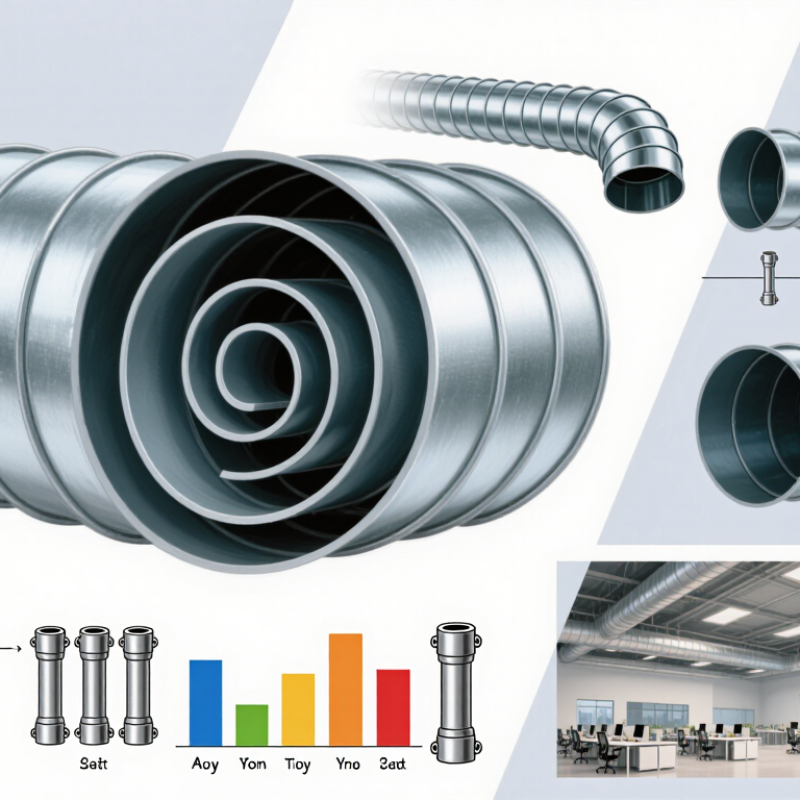
Why Choose Self Locking Winding Air Duct?

What Is a Self-Locking Winding Air Duct?

Why Choose Self Locking Winding Air Duct?
What Is a Self-Locking Winding Air Duct?

A self-locking winding air duct is made by winding a narrow metal strip into a spiral. The strip’s edges fold together and lock, creating a continuous tube without a long welded seam. This joint helps the duct retain its shape during handling and installation. The round profile can fit neatly above ceilings or along service areas. Material, thickness, and joint design vary by product, so check the specifications before selecting one.

Tips: Match the duct diameter and material to the system design. Support it at suitable intervals, and seal connections where required. Small gaps matter.

The spiral construction can make transport and routing easier than handling some rigid duct sections, especially in spaces with limited access. However, “self-locking” does not mean leak-proof or suitable for every pressure and temperature. Inspect the seam for dents or separation, and follow the product’s installation guidance. In practice, alignment can be fiddly. A duct may look secure while a poorly fitted connection still leaks, a detail that is easy to overlook.

How Its Self-Locking Structure Works

Why Choose Self Locking Winding Air Duct?

How Its Self-Locking Structure Works

A self-locking winding air duct is formed from a long, narrow strip of metal. As the strip is wound into a spiral, its shaped edges fold together and engage along a continuous seam. The interlocking joint helps hold the duct’s round form without relying on separate fasteners at every connection. That seam matters. Its strength comes from consistent forming, not just appearance.

In use, the spiral lock helps the duct resist deformation during handling and airflow. It also provides a continuous joint, but it should not automatically be treated as airtight. Not a seal. Leakage performance depends on the duct design, joint fit, and any specified sealing method. A practical inspection checks for uneven seams, dents, and gaps, especially near cut ends and connections.

Installation details still matter. Measure the route before cutting, support the duct at suitable intervals, and avoid forcing it around tight bends. A crushed section can restrict airflow even when its seam remains locked. The structure is simple, but it is not foolproof; tolerances and workmanship can vary. For critical systems, confirm pressure and leakage requirements against the project specification.

Key Benefits for Airflow and Installation

Self-locking winding air duct is formed from a continuous metal strip, with its edges folded into a spiral seam. That seam holds the tube together without separate fasteners along every section. A secure wall matters. It helps the duct retain its shape during handling and normal operation, when the material and diameter suit the system. In a properly sized run, the round interior supports steady airflow. Poorly aligned joints, sharp bends, or crushed sections can still create turbulence and pressure loss.

The seam cannot fix those problems.

Installation can be simpler because the duct arrives in manageable lengths and connects with compatible fittings. A crew can measure and cut sections on site, then seal the joints to limit leakage. Less fuss. Lightweight sections may be easier to lift into a ceiling space, though long unsupported spans can sag or vibrate. Keep supports close enough for the duct’s size and weight, and avoid squeezing it between framing members. Check airflow needs, pressure, temperature, moisture, and corrosion exposure against product specifications.

One detail is easy to miss: allow access for inspection and cleaning. A quick installation is not always a good one.

Common Applications Across Industries

Self-locking winding air ducts are used where ventilation routes need a formed, durable metal passage. Their spiral-wound strip and interlocking seam help the duct retain its shape during handling and operation. In commercial buildings, they can connect air-handling equipment to branches serving offices, kitchens, and utility rooms. Exact suitability depends on pressure, temperature, airflow, and duct material.

In workshops and production areas, these ducts may carry general exhaust or light process dust when the design allows. A short run above a workbench can keep hoses clear of the floor. They also appear in equipment enclosures, drying systems, and agricultural ventilation, where routes pass around beams or machinery. Clearance matters. Abrasive particles, corrosive vapors, or high heat may call for a different duct construction and carefully selected joints.

Installers value the ability to cut and route sections on site, but a neat spiral seam does not replace proper support. Hangers, bend radius, and sealed connections affect leakage and performance. Teams sometimes focus on duct diameter and overlook access for cleaning. That can make routine maintenance awkward. Checking operating conditions and installation requirements is more reliable than choosing by appearance alone.


Factors to Consider When Choosing a Duct

Why Choose Self Locking Winding Air Duct?

Factors to Consider When Choosing a Duct

A self-locking winding air duct can suit projects that need a compact, joined duct section. The locking seam helps hold the spiral shape, but it does not solve every installation problem. Start with the system’s required airflow and static pressure. Then check the duct diameter against the design, rather than choosing by appearance alone. A mismatch can increase noise or restrict air movement.

Consider the air temperature, moisture level, and surrounding conditions before selecting a duct material and thickness. Measure the route carefully, including tight corners and available ceiling space. A duct that fits on paper may be awkward to connect around beams or equipment. Check how joints will be sealed and supported, too; a secure seam is not automatically an airtight connection. Local project requirements should also guide the final choice.

Tips: Confirm dimensions at the installation site. Inspect sample sections for sharp edges, consistent seams, and a snug fit. Keep access points reachable for cleaning or inspection. If pressure or temperature requirements are unclear, ask a qualified HVAC professional to review the system details before ordering.

Powder Coat Booths

For those larger-sized parts, or smaller quantity runs, we have 2 independent powder coat booths and ovens. The quality, durability and affordability of today’s powder coating finishes make this the process of choice for world-class companies.

Powder coating advantages over other forms of coating are many. Materials used in the Powder coating process can be metals and non-metals that come in a multitude of thicknesses, textures, colors, etc. Another of Powder coating’s biggest advantages over conventional coatings is its ability to create finishes in many different textures. Powder Coating Booths allow us the ability to apply these advantages to large products.

Wet Paint Line

Tri-State Fabricators runs a full-service conveyor line for painting. Wet painting can provide protection or decoration to many different part styles. From start to finish, every project is easier to undergo random and point-based inspection by our skilled painting team.

Advantages to our Wet Paint Line are these lines start with product prep and ends with a thorough inspection of a high quality finished product. Our ability to complete large and small projects with a superior finish and doing so in a timely and economical fashion. This passes along the savings in production to our customers. When powder coating ins not an option, our Wet Paint Line gets the job done right the first time.

Wet Paint Booths

When the parts get big and heavy we roll-out our custom paint racks and oversize booth. By utilizing our partnerships with all the major paint brands, we can match virtually any color with wet paint.

The advantages of having access to a Wet Paint Booth are many. Large projects of many different shapes can be loaded into the booth. The Wet Paint Booth offers an environment that is much more controlled than a typical parts painting operation.

Not only are they used because of their controlled environment, but they’re are also advantageous when it comes to applying paint to parts that are needed in industries that require specialty coatings such as medical, aerospace, etc.

Military CARC

Our military forces have some very high standards when it comes to the finish of their vehicles and equipment. From the first pre-treatment step to final coat, it takes a great deal of knowledge and experience to protect the men and women of our armed forces. They deserve only the best, and Tri-State Fabricators provides it.

All of our processes are closely monitored by our staff and management teams. Both of which are highly trained in the processes of metal fabrication and finishing. Tri-State Fabricators’ goal is to always fully satisfy each and every customer, including the military. We will always put a 110% into what we do.

Glass-Bead Blasting

Abrasive media blasting is an excellent way to remove old paint, rust, and increase the paint/powder adhesion. Glass beads produce a much smoother and brighter finish than angular abrasives; leaving the part clean yet without any dimensional change. Chemically inert and environmentally friendly, we can recycle our beads approximately 30 times; making them a more preferred method of metal cleaning or surface finishing.

Advantages to Glass Bead Blasting are many. Glass bead blast media is used when a project is needing rough surfaces need to become smooth for applications of coatings such as paint. It is typically used to clean paint and rust from a product surface without deforming the surface it is being used on. Overall, compared to many other blasting media, Glass Bead Blasting is a very economical choice and those savings are always passed on to our customers.

Part Washing

Tri-State Fabricators utilize a zinc phosphate wash to clean and etch the material to ensure the best paint adhesion possible. The unique design of our 3-stage wash system does the work like a 5-stage. From Cleaning and rinsing to conversion coating and post-treatment, Our Part Washing process is a complete service and works throughout the fabrication service and the finishing service.

Along with the previously mentioned benefits, Curing is a vital chemical reaction that leaves the product finish hard and relatively safe from mild abrasion and aggressive corrosion. This process can be done in more than one way; ambient air-dry or in curing ovens at temps that exceed 240°.

Burn-Off Oven

From fixing paint mistakes (someone else’s of course) to simply cleaning our paint line hooks, our burn-off oven is put to good use. After a quick burn-off, a little clean up, and a fresh coat of paint, your parts will look better than new.

Why does our Burn-Off Oven work so well? Because super heating the air around parts turns the materials into ashes. From paint and powder coatings to rubber and machining oils, high temps do the job without degrading the integrity of the part.

Masking

Masking is a vital part of producing high quality products. We have die-cut masking patterns to protect machined surfaces as well as a wide range of plugs and caps to protect threaded holes and bolts. We provide permanent and temporary masking.

Masking allows the selected sections of a product to be protected from a fabrication or finishing service. This can be with both chemicals when etching and tapes, paints when only finishing just a section of the product. Masking is great in aiding the customization process of a project.

Screen Printing

Screen printing is a photographic process that transfers artwork onto a porous nylon screen which allows colored ink to flow through the screen and be deposited on an aluminum or plastic component. We can generally have just about any design created onto a screen for your parts.

Some of the advantages of Screen Printing are, brand recognition for your business displaying on your products, assembly instructions, product warnings/hazards, etc. Tri-State Fabricators produces Screen Printing of the highest quality so you know it’s durable.

Metal Finishing

Metal Finishing is the art of treating the exterior portion of product, often metal but can also be made of other materials, so that the surface is clean and free of any debris. Then the process of applying coats or either paint of powder coat takes place. This coating process improves the quality of the product in both appearance and resistance to wear and corrosion.

Tri-State Fabricators, Inc., understands that a project typically isn’t complete until a high-quality finish has been added to your product. This is why our painting and powder coating teams continuously inspect the products throughout the Metal Finishing process.


