


Why Choose a Quality Exhaust End Pipe?

A quality Exhaust End Pipe does more than finish a vehicle’s rear profile. It faces heat, moisture, road salt, and constant vibration. A thin, poorly finished part may discolor early, develop rough edges, or fit unevenly against the existing exhaust system. The difference is visible up close: clean welds, even metal, and a tip that sits straight beneath the bumper.

Fit matters. So does material. Stainless steel can offer useful corrosion resistance, while a polished finish may need regular cleaning to keep its appearance. Buyers should check pipe diameter, inlet dimensions, outlet shape, and clearance before choosing a design. A part that looks right online may sit too close to a bumper in real life. Small details count.

As a clearly fictional composite exhaust specialist, Daniel Mercer, puts it: “A good end pipe should suit the system, fit cleanly, and earn its place beyond its shine.” This is an original illustrative quote, not a statement from a real, independently verified expert. That distinction matters. Product claims should be checked against manufacturer specifications, and installation should follow the vehicle maker’s guidance.

Looks are not the whole story. A decorative tip cannot repair a damaged exhaust or guarantee better performance. Even careful buyers can miss a measurement. Take another look before ordering. With sound materials, accurate fitment, and realistic expectations, a quality Exhaust End Pipe can provide a durable, tidy finishing touch.
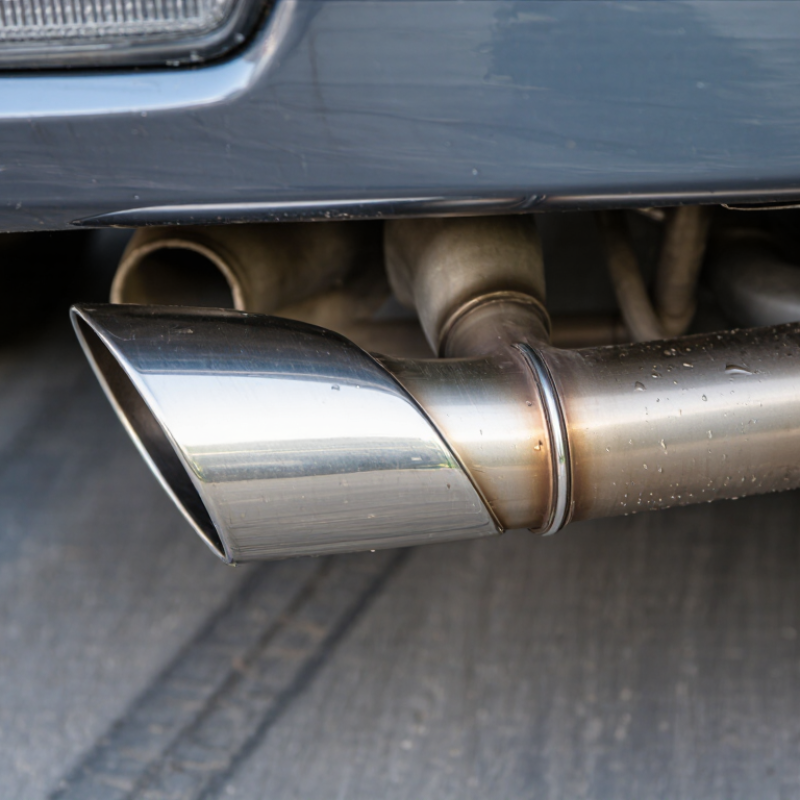
Why Choose a Quality Exhaust End Pipe?

What an Exhaust End Pipe Is and How It Functions

Why Choose a Quality Exhaust End Pipe?

What an Exhaust End Pipe Is and How It Functions

An exhaust end pipe is the system’s final outlet, typically positioned after the muffler. It channels combustion gases away from the vehicle’s underside and releases them behind the body. It does not clean emissions itself; catalytic converters and other upstream components handle treatment. That distinction matters. The U.S. EPA estimates that a typical passenger vehicle emits about 4.6 metric tons of carbon dioxide annually. Its calculation uses average driving and fuel use, including 8,887 grams of CO2 per gallon of gasoline (EPA, “Greenhouse Gas Emissions from a Typical Passenger Vehicle”). The tailpipe is the exit, not the emissions-control device.

A well-fitted end pipe should match the exhaust system’s diameter and mounting points. It should remain secure despite heat, moisture, vibration, and road salt. Check for rust-through, loose joints, unusual soot, or an outlet aimed toward plastic trim. These signs may point to damage or poor alignment, but soot alone does not confirm a leak. I would not judge an exhaust system by shine alone; that is an easy mistake. A larger or more polished tip does not automatically improve power or fuel economy. Fit and material matter more.


How End Pipe Design Influences Exhaust Flow and Performance

A quality exhaust end pipe shapes the final part of the exhaust path, but its influence depends on the system behind it. A smooth, correctly sized outlet lets gases leave without an abrupt narrowing or rough internal lip. Small details matter. A sharp edge, crushed section, or poorly aligned joint can create turbulence and, in some setups, an irritating whistle.

A larger opening does not automatically add power. The engine, exhaust tubing, mufflers, and catalytic components have a much greater effect on flow. An oversized tip may change sound or appearance while making little measurable difference to performance. That is easy to overestimate. Matching the outlet diameter to the existing pipe is usually more sensible than choosing the widest option available. Check the inner opening, not just the polished outer rim, and look for a secure fit that does not rattle against the bumper. Material and finish also matter: road spray, heat cycles, and winter grit can expose weak coatings or thin metal. The result may be less glamorous than expected. A well-designed end pipe is a finishing component, not a shortcut around proper system sizing, and its real benefit should be judged alongside fit, durability, and measured results.

Why Choose a Quality Exhaust End Pipe?

How end pipe design influences exhaust flow and performance

Outlet area is calculated from the circular opening (A = π × diameter² ÷ 4). A larger opening provides more geometric area, but this alone does not predict exhaust flow or engine performance; the full exhaust system and engine determine the result.

Which Materials and Features Improve Durability

A durable exhaust end pipe faces more than hot gases. It also meets rain, road spray, grit, and rapid temperature changes. Stainless steel resists corrosion well, but grades differ. Grade 304 generally offers strong resistance to moisture and salt, while grade 409 can be a practical, lower-cost choice. Its surface may develop discoloration or light rust, which does not always mean the pipe has failed.

Check the construction, too. Even wall thickness, smooth welds, and secure joints help the pipe tolerate vibration without cracking. A poorly finished seam can trap moisture. That detail is easy to miss. A polished finish looks appealing, but appearance alone cannot confirm durability. I’d check the material specification and inspect welds rather than judge by shine.

Fit and installation matter just as much. The pipe should align without being forced, and its clamp or weld should hold firmly through everyday driving. An awkward fit can add stress and cause rattling. After installation, look for movement, loose fasteners, or rust near the joints. One caveat: even quality stainless steel can stain in harsh conditions, so occasional cleaning and inspection remain worthwhile.

How a Quality End Pipe Handles Heat, Corrosion, and Noise

A quality exhaust end pipe must survive repeated heating and cooling, not just look bright after installation. Exhaust heat expands the metal, while cooling contracts it. ASM International’s materials data place 304 stainless steel’s thermal expansion near 17 micrometres per metre per °C. That movement concentrates stress around welds and thin edges. Fit and weld quality matter.

Corrosion often starts where moisture lingers: inside the pipe, around joints, or beneath road grime. NACE International’s 2016 IMPACT study estimated corrosion’s global cost at US$2.5 trillion, or 3.4% of global GDP. That figure covers many industries, not exhaust pipes specifically. Still, it shows why material choice and drainage deserve attention. No finish is invulnerable. A close look at seams and water paths can reveal weak spots.

Noise depends on more than the outlet’s shape. Poor joints may leak and create a sharp hiss; loose sections can rattle against the body. SAE J2805 sets repeatable procedures for measuring light-vehicle exterior sound, making consistent testing possible. A well-made end pipe should fit securely and avoid unwanted vibration, while preserving the sound level intended by the full exhaust system. It is worth checking again after the first few heat cycles.

What to Consider When Choosing an Exhaust End Pipe

Why Choose a Quality Exhaust End Pipe?

When choosing an exhaust end pipe, start with fit, not shine. Measure the existing pipe’s outside diameter and check the vehicle’s available clearance. A tip that sits too close to a bumper can transfer heat and mark the finish. Check the inlet size, attachment method, and overall length before ordering. Small measurements matter.

Material affects appearance and upkeep. Stainless steel generally offers better corrosion resistance than plain steel, while polished finishes can show water spots and road grime. A 2016 NACE IMPACT study estimated corrosion costs at $2.5 trillion worldwide, or 3.4% of global GDP. That figure covers many industries, not exhaust tips specifically, but it underscores why material choice deserves attention. Coatings can help, though scratches may expose the metal beneath.

Consider construction, too. Look for smooth edges, secure welds, and a clamp that holds without crushing the existing pipe. Keep the outlet aligned and clear of nearby bodywork. A larger tip does not automatically improve performance or sound; the rest of the exhaust system matters. I would recheck the fit after installation, especially if the pipe shifts when warm. Easy to overlook. A neat finish is useful, but reliable fit should come first.

Powder Coat Booths

For those larger-sized parts, or smaller quantity runs, we have 2 independent powder coat booths and ovens. The quality, durability and affordability of today’s powder coating finishes make this the process of choice for world-class companies.

Powder coating advantages over other forms of coating are many. Materials used in the Powder coating process can be metals and non-metals that come in a multitude of thicknesses, textures, colors, etc. Another of Powder coating’s biggest advantages over conventional coatings is its ability to create finishes in many different textures. Powder Coating Booths allow us the ability to apply these advantages to large products.

Wet Paint Line

Tri-State Fabricators runs a full-service conveyor line for painting. Wet painting can provide protection or decoration to many different part styles. From start to finish, every project is easier to undergo random and point-based inspection by our skilled painting team.

Advantages to our Wet Paint Line are these lines start with product prep and ends with a thorough inspection of a high quality finished product. Our ability to complete large and small projects with a superior finish and doing so in a timely and economical fashion. This passes along the savings in production to our customers. When powder coating ins not an option, our Wet Paint Line gets the job done right the first time.

Wet Paint Booths

When the parts get big and heavy we roll-out our custom paint racks and oversize booth. By utilizing our partnerships with all the major paint brands, we can match virtually any color with wet paint.

The advantages of having access to a Wet Paint Booth are many. Large projects of many different shapes can be loaded into the booth. The Wet Paint Booth offers an environment that is much more controlled than a typical parts painting operation.

Not only are they used because of their controlled environment, but they’re are also advantageous when it comes to applying paint to parts that are needed in industries that require specialty coatings such as medical, aerospace, etc.

Military CARC

Our military forces have some very high standards when it comes to the finish of their vehicles and equipment. From the first pre-treatment step to final coat, it takes a great deal of knowledge and experience to protect the men and women of our armed forces. They deserve only the best, and Tri-State Fabricators provides it.

All of our processes are closely monitored by our staff and management teams. Both of which are highly trained in the processes of metal fabrication and finishing. Tri-State Fabricators’ goal is to always fully satisfy each and every customer, including the military. We will always put a 110% into what we do.

Glass-Bead Blasting

Abrasive media blasting is an excellent way to remove old paint, rust, and increase the paint/powder adhesion. Glass beads produce a much smoother and brighter finish than angular abrasives; leaving the part clean yet without any dimensional change. Chemically inert and environmentally friendly, we can recycle our beads approximately 30 times; making them a more preferred method of metal cleaning or surface finishing.

Advantages to Glass Bead Blasting are many. Glass bead blast media is used when a project is needing rough surfaces need to become smooth for applications of coatings such as paint. It is typically used to clean paint and rust from a product surface without deforming the surface it is being used on. Overall, compared to many other blasting media, Glass Bead Blasting is a very economical choice and those savings are always passed on to our customers.

Part Washing

Tri-State Fabricators utilize a zinc phosphate wash to clean and etch the material to ensure the best paint adhesion possible. The unique design of our 3-stage wash system does the work like a 5-stage. From Cleaning and rinsing to conversion coating and post-treatment, Our Part Washing process is a complete service and works throughout the fabrication service and the finishing service.

Along with the previously mentioned benefits, Curing is a vital chemical reaction that leaves the product finish hard and relatively safe from mild abrasion and aggressive corrosion. This process can be done in more than one way; ambient air-dry or in curing ovens at temps that exceed 240°.

Burn-Off Oven

From fixing paint mistakes (someone else’s of course) to simply cleaning our paint line hooks, our burn-off oven is put to good use. After a quick burn-off, a little clean up, and a fresh coat of paint, your parts will look better than new.

Why does our Burn-Off Oven work so well? Because super heating the air around parts turns the materials into ashes. From paint and powder coatings to rubber and machining oils, high temps do the job without degrading the integrity of the part.

Masking

Masking is a vital part of producing high quality products. We have die-cut masking patterns to protect machined surfaces as well as a wide range of plugs and caps to protect threaded holes and bolts. We provide permanent and temporary masking.

Masking allows the selected sections of a product to be protected from a fabrication or finishing service. This can be with both chemicals when etching and tapes, paints when only finishing just a section of the product. Masking is great in aiding the customization process of a project.

Screen Printing

Screen printing is a photographic process that transfers artwork onto a porous nylon screen which allows colored ink to flow through the screen and be deposited on an aluminum or plastic component. We can generally have just about any design created onto a screen for your parts.

Some of the advantages of Screen Printing are, brand recognition for your business displaying on your products, assembly instructions, product warnings/hazards, etc. Tri-State Fabricators produces Screen Printing of the highest quality so you know it’s durable.

Metal Finishing

Metal Finishing is the art of treating the exterior portion of product, often metal but can also be made of other materials, so that the surface is clean and free of any debris. Then the process of applying coats or either paint of powder coat takes place. This coating process improves the quality of the product in both appearance and resistance to wear and corrosion.

Tri-State Fabricators, Inc., understands that a project typically isn’t complete until a high-quality finish has been added to your product. This is why our painting and powder coating teams continuously inspect the products throughout the Metal Finishing process.
