


Choosing a Maize Mill Machine is a practical decision about product quality, operating costs, and the customers your business serves. A well-matched mill can turn clean maize into consistent flour, grits, or meal, while helping reduce avoidable waste. Picture a small bakery needing fine flour each morning, or a local wholesaler filling larger sacks for nearby shops. Their requirements differ. Capacity, adjustable settings, motor power, and ease of cleaning all deserve careful attention before purchase.
A dependable machine should fit your grain supply, power conditions, available space, and maintenance skills. Ask suppliers for capacity figures under stated conditions; maize variety and moisture can affect real output. Request a demonstration, inspect the finished meal, and ask how quickly wear parts can be replaced. Small details matter. A machine that looks efficient on paper may be frustrating when cleaning takes too long or service support is distant. Not always obvious.
As a concise principle, “Choose for the product you need, not the capacity you hope to sell,” captures a useful buyer’s test. This is proposed wording, not a verified quotation; replace it with a sourced statement from a named maize-milling expert before publication. That distinction matters for credibility. The right Maize Mill Machine can support steady production, but it cannot guarantee profit by itself. Compare total operating costs, test output with your maize, and speak with mill owners whose businesses resemble yours. Real conditions can surprise you. A careful choice starts with questions, not promises.
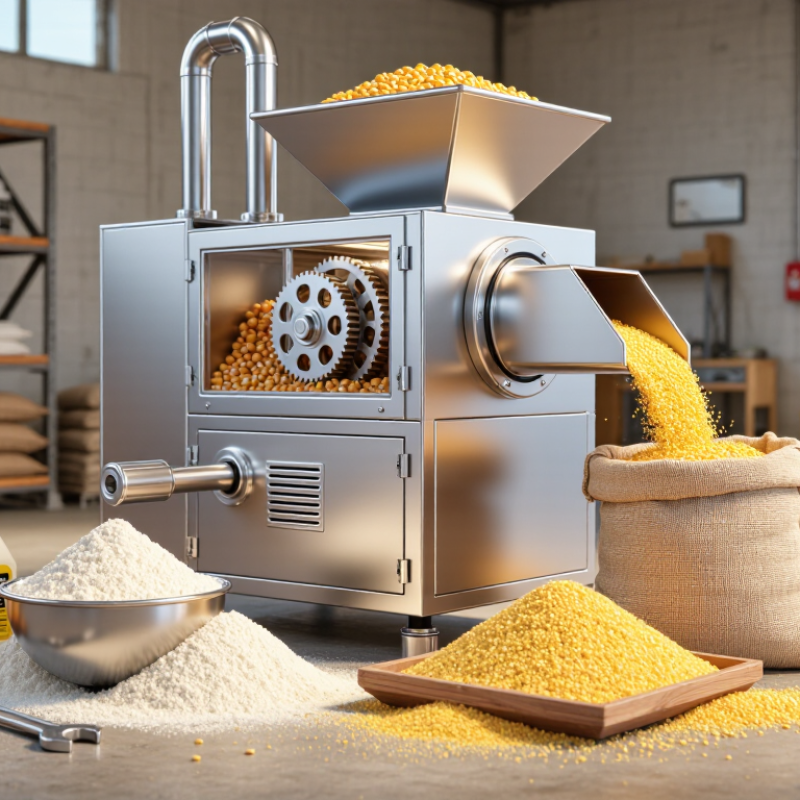
A maize mill machine turns cleaned kernels into meal or flour through controlled grinding and sifting. Its role is not simply to crush grain. It helps a business choose particle size, manage output, and serve local cooking needs. Coarse meal may suit porridge, while finer flour works better for dough. Small details matter. A worn screen can produce uneven flour, and damp kernels may clog equipment or shorten storage life.
The scale of supply makes dependable processing important. FAOSTAT reports that global maize production exceeded 1.2 billion tonnes in 2023. That figure describes the crop, not the amount available to mills, but it shows why processing capacity matters across food supply chains. FAO’s Food Loss Index estimated that 13.2% of food was lost between harvest and retail in 2021. This is not a maize-specific estimate; careful handling and suitable processing can still help businesses reduce avoidable waste.
For an operator, the machine should match daily grain volume, desired flour texture, power availability, and cleaning routines. Ask how quickly parts such as screens and hammers can be inspected or replaced. Record kernel moisture and finished-product yield during trial runs. A mill can look efficient on paper. Real results may differ when grain quality changes, and that deserves regular review. Don’t overlook dust control, noise, or the space needed to collect flour safely.

Understanding how milling separates the main parts of a maize kernel helps explain its role in producing flour and other useful products.
Kernel fractions are approximate and vary by maize variety. A suitable mill can process the grain to meet different flour and meal requirements.
How a Maize Mill Machine Processes Grain
A maize mill machine turns harvested kernels into meal through a controlled sequence. The work begins at intake, where operators check grain condition and remove stones, dust, and stalk fragments with screens and aspiration. A magnet can catch stray metal. Small checks matter. USDA’s 2024/25 Production, Supply and Distribution estimates put global maize production at about 1.2 billion tonnes, illustrating the scale of grain moving through supply chains. For an individual mill, however, incoming moisture and cleanliness matter more than global totals.
Clean kernels are conditioned to suit the intended product and milling system. In dry milling, degermination may separate the germ and bran before kernels pass through rollers or a hammer mill. Screens then sort particles by size; oversized pieces return for further grinding, while fine meal moves to storage or packing. A mill operator should monitor screen wear, temperature, and meal texture during a shift. These checks help identify uneven output before it fills a silo. The right settings depend on grain variety and the desired texture, so a fixed recipe can disappoint. That part is easy to underestimate. Regular sampling and equipment records make adjustments more reliable, though they cannot compensate for poor incoming grain.
A maize mill can help a business earn more from grain than it would by selling unprocessed maize alone. Milling creates flour in different textures for local shops, bakeries, or household customers. Freshness can also be a practical selling point when buyers prefer flour produced nearby. Less waiting. More control.
For a small grain trader, this difference matters. A mill allows the operator to schedule production around local demand and manage batch sizes instead of relying entirely on outside processors. It can also make it easier to monitor grain quality, remove damaged kernels, and keep finished flour consistent. These steps require care, not just machinery. Cleaning and maintenance take time, and a poorly planned workflow can slow production.
The financial benefit depends on real operating conditions. Before investing, compare the machine’s capacity with the amount of maize you can reliably source and sell. Include electricity, labor, spare parts, packaging, and downtime in the calculation. The numbers may look less tidy than a sales brochure suggests. Still, a well-matched mill can support steadier supply, create room for value-added products, and help a business serve customers with more predictable quality.
Maize mill machines serve different production needs, so the right type depends on the flour you want and the volume you process. A plate or disc mill is often suited to small shops and farms. Rotating plates crack and grind kernels, with adjustable settings for a coarser or finer meal. It is compact and relatively straightforward to operate, but heat and wear can affect grind consistency during long runs. Simple, but not trivial.
Hammer mills use fast-moving hammers to break maize into meal or flour. They can handle steady workloads and are useful where a flexible, robust machine matters more than producing a very uniform particle size. A screen controls the output size. If it clogs or wears, the flour may become uneven, so routine inspection matters. These mills may also create more dust, making sensible ventilation and housekeeping important.
Roller mills compress kernels between rollers and are commonly used in larger operations seeking controlled, consistent milling. When paired with cleaning and degermination equipment, they can separate parts of the kernel for different products. Stone mills offer a slower, traditional grind that some small producers prefer for meal texture, though throughput is limited.
A planning mistake is choosing by capacity alone. Kernel moisture, available power, cleaning access, and the desired flour all affect daily performance. It is worth testing local maize before committing; specifications do not always predict the texture customers prefer.
Choosing a maize mill machine begins with the grain and the workday, not just the advertised capacity. Estimate how many kilograms you need to process per hour, then allow room for busy periods. A machine rated for a high output may perform differently with damp or uneven kernels. Measure the grain. Moisture and cleanliness can affect feeding, milling, and the consistency of the flour. Ask for a test using maize similar to yours, and check the fineness of the sample rather than relying on a brochure figure.
Consider power use, available space, and routine maintenance together. Measure the floor area, including room to feed grain and collect flour safely. Check the noise. Ask how often screens, hammers, or other wear parts need inspection, and whether replacements are easy to obtain. A sturdy frame matters, but access for cleaning matters too; trapped meal can make daily work slower. Request clear operating instructions and a realistic estimate of energy use. I would not choose on price alone, though this is easy to say when budgets are tight. Compare the full cost with the mill’s expected workload, and leave time to train the operator.
| Key Factor | What to Evaluate | Why It Matters to Your Business | Practical Checks Before Purchase |
|---|---|---|---|
| Processing Capacity | Expected throughput, usually stated in kilograms or tonnes per hour, and the conditions used for the rating. | A machine that is too small can limit production; an oversized machine may increase equipment and operating costs unnecessarily. | Compare the rated capacity with your expected daily output, operating hours, maize condition, and required finished product. |
| Finished Product | Whether you need whole maize meal, finer flour, grits, or products with different particle sizes. | Different customers and markets require different textures and product specifications. | Ask for a product sample made from maize similar to yours, and check the available screens, settings, or milling stages. |
| Milling Method | The machine’s milling mechanism and whether it is designed for straightforward grinding or more controlled separation. | The milling method affects the product’s texture, processing steps, and suitability for your intended market. | Confirm what products the machine can make and whether it includes cleaning, sifting, or separation equipment when needed. |
| Raw Maize Preparation | Requirements for cleaning, removing stones and metal, and managing grain moisture before milling. | Foreign material can damage equipment, while grain condition can affect milling performance and product consistency. | Check whether the setup needs a cleaner, destoner, magnet, or moisture-control step, and clarify which items are included. |
| Power and Utilities | Electrical supply, motor power, phase requirements, and any need for compressed air or other utilities. | The machine must match the power available at your site; power use also contributes to ongoing production costs. | Verify the electrical specifications with a qualified electrician and ask for power consumption under stated operating conditions. |
| Product Quality and Consistency | Ability to produce a consistent particle size and meet your buyers’ requirements from batch to batch. | Consistent output can make quality control, packaging, and repeat sales easier. | Request clear product specifications and test more than one sample if you will process different maize varieties or batches. |
| Operating and Maintenance Costs | Wear parts, routine servicing, cleaning needs, labor, and energy use. | Purchase price alone does not show the full cost of operating a mill over time. | Ask which parts need periodic replacement, how often maintenance is recommended, and whether replacement parts are readily available. |
| Installation and Space | Floor space, foundations, material flow, ventilation, dust control, and access for maintenance. | A suitable layout supports safer work and smoother movement of grain, finished product, and packaging. | Obtain an equipment layout and installation requirements, then compare them with your building and handling arrangements. |
| Food Safety and Dust Management | Cleanable product-contact surfaces, guarding, dust extraction, and safe handling procedures. | Good hygiene and dust control support safer operations and help protect product quality. | Review cleaning access, dust collection arrangements, operator safeguards, and applicable local food-safety requirements. |
| Supplier Support and Training | Availability of installation guidance, operator training, documentation, and technical assistance. | Proper setup and operation can reduce avoidable downtime and operating errors. | Confirm what support is included, response arrangements, warranty terms, manuals, and training for operators. |
| Business Fit and Payback | Equipment cost, expected sales volume, product demand, financing, and ongoing expenses. | A mill is most useful when its capacity and output match a realistic market opportunity. | Estimate costs and revenue using your own local prices, expected utilization, labor, energy, maintenance, and packaging costs. |
Note: Actual capacity, power use, product quality, and operating costs depend on the machine configuration, maize condition, operating settings, and site conditions. Ask for specifications and test results for the exact configuration you plan to purchase.


For those larger-sized parts, or smaller quantity runs, we have 2 independent powder coat booths and ovens. The quality, durability and affordability of today’s powder coating finishes make this the process of choice for world-class companies.
Powder coating advantages over other forms of coating are many. Materials used in the Powder coating process can be metals and non-metals that come in a multitude of thicknesses, textures, colors, etc. Another of Powder coating’s biggest advantages over conventional coatings is its ability to create finishes in many different textures. Powder Coating Booths allow us the ability to apply these advantages to large products.
Tri-State Fabricators runs a full-service conveyor line for painting. Wet painting can provide protection or decoration to many different part styles. From start to finish, every project is easier to undergo random and point-based inspection by our skilled painting team.
Advantages to our Wet Paint Line are these lines start with product prep and ends with a thorough inspection of a high quality finished product. Our ability to complete large and small projects with a superior finish and doing so in a timely and economical fashion. This passes along the savings in production to our customers. When powder coating ins not an option, our Wet Paint Line gets the job done right the first time.
When the parts get big and heavy we roll-out our custom paint racks and oversize booth. By utilizing our partnerships with all the major paint brands, we can match virtually any color with wet paint.
The advantages of having access to a Wet Paint Booth are many. Large projects of many different shapes can be loaded into the booth. The Wet Paint Booth offers an environment that is much more controlled than a typical parts painting operation.
Not only are they used because of their controlled environment, but they’re are also advantageous when it comes to applying paint to parts that are needed in industries that require specialty coatings such as medical, aerospace, etc.
Our military forces have some very high standards when it comes to the finish of their vehicles and equipment. From the first pre-treatment step to final coat, it takes a great deal of knowledge and experience to protect the men and women of our armed forces. They deserve only the best, and Tri-State Fabricators provides it.
All of our processes are closely monitored by our staff and management teams. Both of which are highly trained in the processes of metal fabrication and finishing. Tri-State Fabricators’ goal is to always fully satisfy each and every customer, including the military. We will always put a 110% into what we do.
Abrasive media blasting is an excellent way to remove old paint, rust, and increase the paint/powder adhesion. Glass beads produce a much smoother and brighter finish than angular abrasives; leaving the part clean yet without any dimensional change. Chemically inert and environmentally friendly, we can recycle our beads approximately 30 times; making them a more preferred method of metal cleaning or surface finishing.
Advantages to Glass Bead Blasting are many. Glass bead blast media is used when a project is needing rough surfaces need to become smooth for applications of coatings such as paint. It is typically used to clean paint and rust from a product surface without deforming the surface it is being used on. Overall, compared to many other blasting media, Glass Bead Blasting is a very economical choice and those savings are always passed on to our customers.
Tri-State Fabricators utilize a zinc phosphate wash to clean and etch the material to ensure the best paint adhesion possible. The unique design of our 3-stage wash system does the work like a 5-stage. From Cleaning and rinsing to conversion coating and post-treatment, Our Part Washing process is a complete service and works throughout the fabrication service and the finishing service.
Along with the previously mentioned benefits, Curing is a vital chemical reaction that leaves the product finish hard and relatively safe from mild abrasion and aggressive corrosion. This process can be done in more than one way; ambient air-dry or in curing ovens at temps that exceed 240°.
From fixing paint mistakes (someone else’s of course) to simply cleaning our paint line hooks, our burn-off oven is put to good use. After a quick burn-off, a little clean up, and a fresh coat of paint, your parts will look better than new.
Why does our Burn-Off Oven work so well? Because super heating the air around parts turns the materials into ashes. From paint and powder coatings to rubber and machining oils, high temps do the job without degrading the integrity of the part.
Masking is a vital part of producing high quality products. We have die-cut masking patterns to protect machined surfaces as well as a wide range of plugs and caps to protect threaded holes and bolts. We provide permanent and temporary masking.
Masking allows the selected sections of a product to be protected from a fabrication or finishing service. This can be with both chemicals when etching and tapes, paints when only finishing just a section of the product. Masking is great in aiding the customization process of a project.
Screen printing is a photographic process that transfers artwork onto a porous nylon screen which allows colored ink to flow through the screen and be deposited on an aluminum or plastic component. We can generally have just about any design created onto a screen for your parts.
Some of the advantages of Screen Printing are, brand recognition for your business displaying on your products, assembly instructions, product warnings/hazards, etc. Tri-State Fabricators produces Screen Printing of the highest quality so you know it’s durable.
Metal Finishing is the art of treating the exterior portion of product, often metal but can also be made of other materials, so that the surface is clean and free of any debris. Then the process of applying coats or either paint of powder coat takes place. This coating process improves the quality of the product in both appearance and resistance to wear and corrosion.
Tri-State Fabricators, Inc., understands that a project typically isn’t complete until a high-quality finish has been added to your product. This is why our painting and powder coating teams continuously inspect the products throughout the Metal Finishing process.

