


Why Choose a Tile Laser Cutting Machine?

Tile production is becoming more design-led, customized, and time-sensitive. According to Grand View Research, the global ceramic tiles market was valued at approximately USD 227.6 billion in 2023. Its report also identifies renovation, premium surfaces, and construction growth as important demand drivers. These trends create pressure for cleaner edges, smaller batches, and more flexible processing.

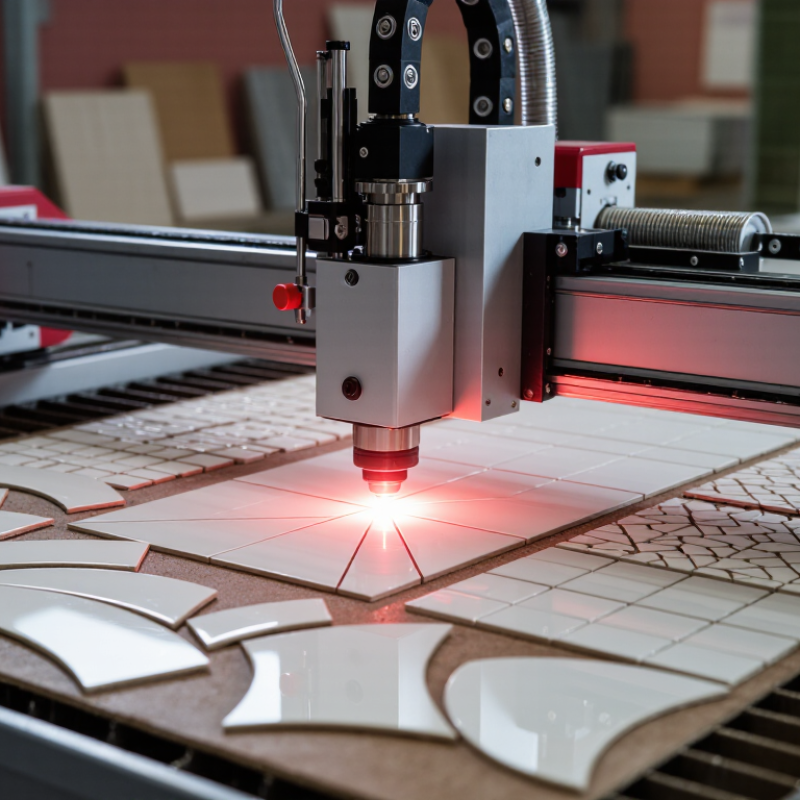
A Tile Laser Cutting Machine uses a focused beam to shape ceramic, porcelain, and selected stone materials with digital precision. It can produce intricate mosaics, narrow strips, logos, and repeatable openings without changing mechanical tooling. The result may be especially valuable when a project includes curved patterns or several dimensions. The machine also reduces direct blade contact, which can help limit chipping in suitable applications. However, performance depends on material density, glaze composition, thickness, laser type, power, and cooling control.

Market research from MarketsandMarkets describes laser cutting as a growing industrial technology, supported by automation and demand for accurate manufacturing. Yet purchasing decisions should not rely on growth figures alone. No machine is a miracle. Thermal stress may still damage glossy surfaces, and dust extraction requires serious attention. A practical evaluation should test the exact tile batch, measure edge quality, check cutting speed, and calculate energy and maintenance costs. ISO 11553-1 addresses laser-processing machine safety, while local workplace rules may add further requirements. That assumption deserves testing. When technical trials, operator training, and after-sales support are considered together, a Tile Laser Cutting Machine can become a controlled investment rather than an expensive experiment.
Why Choose a Tile Laser Cutting Machine?

What Is a Tile Laser Cutting Machine?

Why Choose a Tile Laser Cutting Machine?

A tile laser cutting machine uses a focused laser beam to cut or engrave tile surfaces. Its computer-controlled head follows digital drawings with consistent movement. Unlike a handheld cutter, it can create curves, narrow slots, and detailed openings around outlets. The beam removes material through heat, while extraction equipment manages smoke and fine particles.

In practical use, the machine suits ceramic, porcelain, and some glass tiles, depending on their composition. Operators place the tile on a stable bed and set power, speed, and focus. A small test cut on scrap tile is essential. Glazed surfaces may react differently, even within the same box. I have found that a clean lens and accurate measurements matter as much as laser power. Small errors remain visible.

Very precise work.

Laser cutting can reduce chipping along intricate edges, but it is not magic. Reflective surfaces may require careful settings, and excessive heat can discolor a glazed finish. Proper ventilation, eye protection, guarding, and trained operation are necessary. The machine also needs regular calibration and waste removal. For renovation projects, its value becomes clearer when a design includes repeated shapes, curved corners, or tight plumbing cutouts. A skilled operator still checks every finished tile by hand before installation.


How Does Laser Cutting Improve Tile Processing?

How Does Laser Cutting Improve Tile Processing?

Laser cutting replaces much of the force used by mechanical blades with a concentrated heat beam. The result is cleaner profiling around sockets, drains, curves, and narrow corners. A 2023 report from Grand View Research valued the global ceramic tiles market at more than USD 400 billion, showing why small process improvements matter at scale. Less chipping can reduce rejected panels and protect expensive surface finishes.

The improvement is practical, not magical. Laser systems can follow digital drawings with repeatable accuracy, while operators change patterns without replacing a blade. The European Commission’s Best Available Techniques reference document identifies dust control as a major concern in ceramic manufacturing. A properly enclosed laser process can reduce airborne cutting dust, although extraction remains essential. It does not remove every hazard.

Field experience also reveals limits. Thick, highly reflective, or glazed tiles may need slower settings and test cuts. Heat can discolor an edge or create a small heat-affected zone. That detail is easy to overlook. ISO 13006 defines tile classification and performance requirements, but it does not guarantee perfect laser results. Skilled operators still check focus, feed speed, ventilation, and edge quality on sample pieces before production. This combination of measurable control and human inspection makes tile laser cutting more consistent, especially for detailed custom work.

Why Choose a Tile Laser Cutting Machine?

Laser cutting improves tile processing by reducing kerf width, minimizing edge chipping, shortening setup time, and enabling more complex designs than conventional abrasive cutting.

The comparison uses typical engineering values for ceramic and porcelain tile processing. Actual results vary with tile composition, thickness, laser power, cutting speed, and tooling condition. Lower values indicate less material loss, less setup time, or fewer damaged edges.

Which Tile Materials Can a Laser Cutting Machine Handle?

A laser cutting machine can handle many tile materials, but each reacts differently to heat. Glazed ceramic tiles usually cut cleanly, especially in thin wall formats. Porcelain is denser and harder. Slower passes and repeated scans may reduce edge chipping. That difference matters. Natural stone, including marble, granite, and slate, can be processed in selected thicknesses. However, moisture, veins, and mineral density can change results across one tile. Glass tile is also possible, but thermal shock may create microcracks near the cut. Test pieces are essential.

Fortune Business Insights valued the global ceramic tiles market at USD 97.82 billion in 2023. This large market includes varied surfaces, thicknesses, and finishes. Operators should record power, speed, focus, assist gas, and cooling conditions for every material. A 6 mm porcelain sample may need a different setup than a 3 mm ceramic tile. Cement-based and composite tiles require extra testing because binders can discolor or release residue. Metallic-effect glazes may behave unpredictably. I have seen attractive samples fail after installation. That risk is easy to overlook. Cutting precision depends on glaze composition, backing mesh, edge geometry, and machine calibration. Laser technology is accurate, but it is not universally risk-free.

What Are the Main Benefits for Tile Manufacturers?

Why Choose a Tile Laser Cutting Machine?

For tile manufacturers, precision is becoming a production requirement, not a luxury. The MECS/ACIMAC World Production and Consumption of Ceramic Tiles report estimates that global tile production reached approximately 16.7 billion square metres in 2023. At this scale, small cutting errors can create significant material losses. A laser cutting machine produces narrow, digitally controlled cuts for outlets, curves, mosaics, and custom edges. It also reduces dependence on physical dies and repeated manual marking.

The details matter.

A stable laser system can improve repeatability across large batches. Operators can load a digital pattern, adjust dimensions, and reproduce the same geometry with fewer interruptions. This is valuable for architectural projects, where replacement tiles must match the original layout. The European Commission’s Ceramic Manufacturing BREF highlights process dust and material efficiency as important environmental considerations for ceramic production. Laser cutting may reduce some mechanical debris, although extraction and filtration remain essential. Results depend on tile density, glaze composition, thickness, and operator settings.

There is a learning curve. The machine is not magic. Poor focusing can leave heat marks, while incorrect speed may damage a glazed surface. In practical workshops, testing one sample tile before a production run is still sensible. Reduced tooling, cleaner custom work, and faster design changes can strengthen margins, but manufacturers should measure scrap rates and cycle time before claiming savings.

Why Choose a Tile Laser Cutting Machine? - What Are the Main Benefits for Tile Manufacturers?

Evaluation Dimension Laser Cutting Diamond Saw Cutting Waterjet Cutting Manufacturing Benefit
Typical kerf width Approximately 0.1–0.5 mm, depending on laser type and settings Typically about 2–4 mm, depending on blade thickness Commonly about 0.8–1.5 mm, depending on nozzle and abrasive use Less material loss and better suitability for narrow strips, inlays, and intricate layouts
Contact with the tile Non-contact thermal process Mechanical contact between blade and tile High-pressure water stream, usually with abrasive Reduces tool wear, vibration, and the risk of mechanical chipping during cutting
Cutting geometry Straight lines, curves, holes, slots, and programmed patterns Mainly straight cuts and selected miter operations Straight, curved, and complex two-dimensional profiles Supports customized tile shapes without changing mechanical cutting tools
Typical setup or changeover Software-based parameter and pattern change; no blade replacement for different shapes May require fixture, guide, or blade adjustments Usually requires nozzle, abrasive-flow, or fixture adjustments Shorter changeover time for mixed orders and small production batches
Dry-process capability Yes, with suitable fume extraction and process control Dry cutting can generate respirable crystalline silica dust Wet process; produces slurry and wastewater requiring management Can reduce water consumption and eliminate slurry handling when the application is suitable
Consumable tooling No cutting blade; optical components and filters still require scheduled maintenance Diamond blades require dressing, adjustment, and eventual replacement Abrasive, nozzles, or orifices require periodic replacement Fewer shape-specific tools and more consistent production planning
Edge and surface quality Clean, narrow cuts are possible; results depend on tile composition, glazing, focus, and speed Reliable for many straight cuts, but mechanical chipping may occur Good edge quality, although abrasive cutting may leave a textured edge Improves the appearance of visible edges when the process is correctly calibrated
Automation potential High; compatible with CAD/CAM files, nesting, vision alignment, and robotic loading Moderate; automation is possible but often involves mechanical handling systems High for programmed profiles, with additional water and abrasive-management systems Supports repeatable production, digital scheduling, and reduced operator intervention
Best-fit production scenarios Decorative patterns, custom orders, small batches, precision openings, and material-saving layouts High-volume straight cutting and common rectangular formats Thick materials, complex profiles, and applications requiring a cold cutting process Enables manufacturers to expand customization while maintaining digital process control

Note: Performance ranges are typical industry estimates, not guaranteed specifications. Actual results depend on tile composition, thickness, glaze, laser wavelength and power, cutting speed, assist gas, extraction system, and machine configuration.

How to Choose the Right Tile Laser Cutting Machine?

Why Choose a Tile Laser Cutting Machine?

Mordor Intelligence’s 2024 Ceramic Tiles Market report projects growth above 6% through 2029. That expansion increases pressure for faster, cleaner, and more flexible cutting. A laser machine can produce narrow kerfs and detailed shapes. However, choosing the right system requires more than checking its wattage.

Start with your tile material and thickness. Porcelain, glazed ceramic, glass mosaic, and stone respond differently to heat. Ask the supplier to cut your actual tiles, not a sample from a catalog. Inspect the edge under bright light. Look for glaze chipping, discoloration, and taper. A 0.1-millimeter edge defect can become obvious during close installation. It happens.

Confirm the working area against your largest format. Check motion accuracy, extraction performance, cooling, and software compatibility. A high-power source is not automatically better. Excess energy may darken the glaze or create microcracks.

According to IEC 60825-1, laser equipment requires controlled access, protective systems, and verified safety procedures. Treat those requirements as operating essentials, not paperwork.

Request measured data for cutting speed, kerf width, repeatability, and energy use. The U.S. Department of Energy notes that industrial motor systems can represent a major share of facility electricity consumption, so auxiliary systems deserve attention. Compare total ownership costs, including filters, lenses, cooling, maintenance, and operator training. I would also test a small production batch for one week. Real dust, changing tile batches, and tired operators reveal weaknesses that showroom demonstrations hide.

Powder Coat Booths

For those larger-sized parts, or smaller quantity runs, we have 2 independent powder coat booths and ovens. The quality, durability and affordability of today’s powder coating finishes make this the process of choice for world-class companies.

Powder coating advantages over other forms of coating are many. Materials used in the Powder coating process can be metals and non-metals that come in a multitude of thicknesses, textures, colors, etc. Another of Powder coating’s biggest advantages over conventional coatings is its ability to create finishes in many different textures. Powder Coating Booths allow us the ability to apply these advantages to large products.

Wet Paint Line

Tri-State Fabricators runs a full-service conveyor line for painting. Wet painting can provide protection or decoration to many different part styles. From start to finish, every project is easier to undergo random and point-based inspection by our skilled painting team.

Advantages to our Wet Paint Line are these lines start with product prep and ends with a thorough inspection of a high quality finished product. Our ability to complete large and small projects with a superior finish and doing so in a timely and economical fashion. This passes along the savings in production to our customers. When powder coating ins not an option, our Wet Paint Line gets the job done right the first time.

Wet Paint Booths

When the parts get big and heavy we roll-out our custom paint racks and oversize booth. By utilizing our partnerships with all the major paint brands, we can match virtually any color with wet paint.

The advantages of having access to a Wet Paint Booth are many. Large projects of many different shapes can be loaded into the booth. The Wet Paint Booth offers an environment that is much more controlled than a typical parts painting operation.

Not only are they used because of their controlled environment, but they’re are also advantageous when it comes to applying paint to parts that are needed in industries that require specialty coatings such as medical, aerospace, etc.

Military CARC

Our military forces have some very high standards when it comes to the finish of their vehicles and equipment. From the first pre-treatment step to final coat, it takes a great deal of knowledge and experience to protect the men and women of our armed forces. They deserve only the best, and Tri-State Fabricators provides it.

All of our processes are closely monitored by our staff and management teams. Both of which are highly trained in the processes of metal fabrication and finishing. Tri-State Fabricators’ goal is to always fully satisfy each and every customer, including the military. We will always put a 110% into what we do.

Glass-Bead Blasting

Abrasive media blasting is an excellent way to remove old paint, rust, and increase the paint/powder adhesion. Glass beads produce a much smoother and brighter finish than angular abrasives; leaving the part clean yet without any dimensional change. Chemically inert and environmentally friendly, we can recycle our beads approximately 30 times; making them a more preferred method of metal cleaning or surface finishing.

Advantages to Glass Bead Blasting are many. Glass bead blast media is used when a project is needing rough surfaces need to become smooth for applications of coatings such as paint. It is typically used to clean paint and rust from a product surface without deforming the surface it is being used on. Overall, compared to many other blasting media, Glass Bead Blasting is a very economical choice and those savings are always passed on to our customers.

Part Washing

Tri-State Fabricators utilize a zinc phosphate wash to clean and etch the material to ensure the best paint adhesion possible. The unique design of our 3-stage wash system does the work like a 5-stage. From Cleaning and rinsing to conversion coating and post-treatment, Our Part Washing process is a complete service and works throughout the fabrication service and the finishing service.

Along with the previously mentioned benefits, Curing is a vital chemical reaction that leaves the product finish hard and relatively safe from mild abrasion and aggressive corrosion. This process can be done in more than one way; ambient air-dry or in curing ovens at temps that exceed 240°.

Burn-Off Oven

From fixing paint mistakes (someone else’s of course) to simply cleaning our paint line hooks, our burn-off oven is put to good use. After a quick burn-off, a little clean up, and a fresh coat of paint, your parts will look better than new.

Why does our Burn-Off Oven work so well? Because super heating the air around parts turns the materials into ashes. From paint and powder coatings to rubber and machining oils, high temps do the job without degrading the integrity of the part.

Masking

Masking is a vital part of producing high quality products. We have die-cut masking patterns to protect machined surfaces as well as a wide range of plugs and caps to protect threaded holes and bolts. We provide permanent and temporary masking.

Masking allows the selected sections of a product to be protected from a fabrication or finishing service. This can be with both chemicals when etching and tapes, paints when only finishing just a section of the product. Masking is great in aiding the customization process of a project.

Screen Printing

Screen printing is a photographic process that transfers artwork onto a porous nylon screen which allows colored ink to flow through the screen and be deposited on an aluminum or plastic component. We can generally have just about any design created onto a screen for your parts.

Some of the advantages of Screen Printing are, brand recognition for your business displaying on your products, assembly instructions, product warnings/hazards, etc. Tri-State Fabricators produces Screen Printing of the highest quality so you know it’s durable.

Metal Finishing

Metal Finishing is the art of treating the exterior portion of product, often metal but can also be made of other materials, so that the surface is clean and free of any debris. Then the process of applying coats or either paint of powder coat takes place. This coating process improves the quality of the product in both appearance and resistance to wear and corrosion.

Tri-State Fabricators, Inc., understands that a project typically isn’t complete until a high-quality finish has been added to your product. This is why our painting and powder coating teams continuously inspect the products throughout the Metal Finishing process.
