


Why Choose a Hydraulic Regulation Joystick?

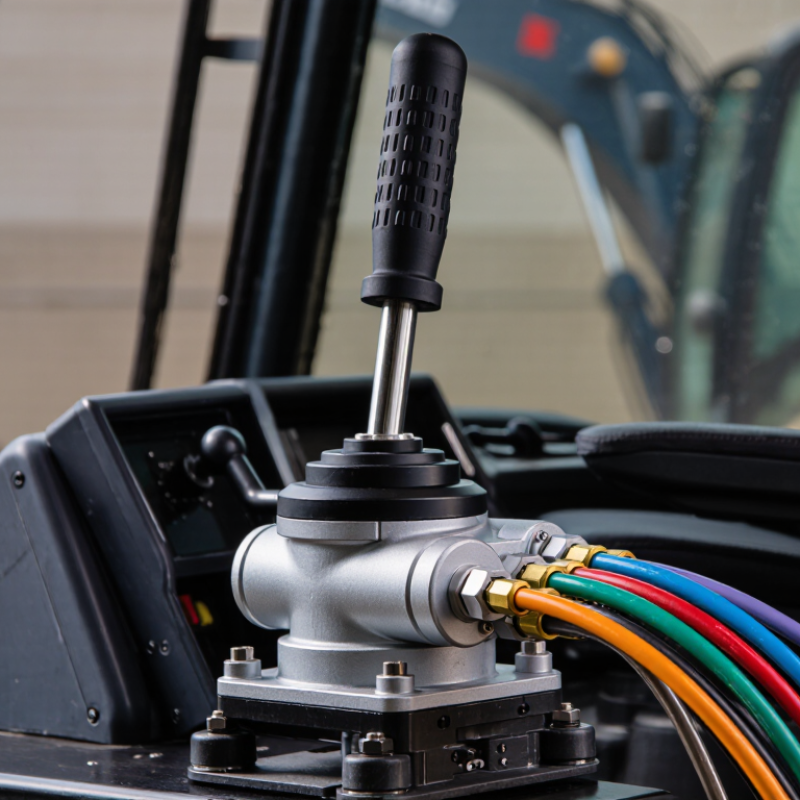
A Hydraulic Regulation Joystick gives an operator direct, hand-level control over hydraulic functions. Depending on its design, it can regulate oil flow or signal a valve to move a machine function. That control matters when positioning a loader bucket, adjusting an excavator boom, or steering equipment through a confined work area. Smooth movement can make the task easier to manage. Small inputs matter.

The main reason to choose this control is the potential for precise, responsive operation without requiring large hand movements. In a cab, a well-placed joystick can help reduce awkward reaches and make repeated adjustments feel more consistent. However, performance depends on more than the handle. Valve compatibility, hydraulic pressure and flow, control response, mounting position, and electrical connections on electrohydraulic models all deserve review. Fit matters.

A practical selection starts with the machine’s specifications and the work it performs. Check the required axes and functions, the expected operating environment, and the manufacturer’s guidance for installation and maintenance. A joystick that feels smooth on one machine may respond differently when paired with another valve or hydraulic circuit. That detail is easy to overlook. Operators should also consider grip comfort, clear function labeling, and whether routine inspection is straightforward. The right choice is not automatically the most elaborate model. It is the one that provides predictable control, suits the system, and supports dependable operation over time.
Why Choose a Hydraulic Regulation Joystick?

What a Hydraulic Regulation Joystick Is

A hydraulic regulation joystick is a hand-operated controller that adjusts how a machine’s hydraulic functions respond. Moving the handle sends either pilot pressure or an electrical command to a control valve. The valve then directs fluid toward an actuator, such as a boom cylinder or travel motor. The joystick itself usually does not carry the machine’s main hydraulic flow. A small movement can produce a gradual response; a larger movement can request faster movement. That relationship depends on the valve, controller settings, and system design.

The term is not completely consistent across manufacturers or industries. Some joysticks operate hydraulic pilot valves directly, while others use sensors and electronic signals to control proportional valves. This distinction matters when diagnosing delayed or uneven movement. Allied Market Research’s Hydraulic Equipment Market report estimated the global market at $39.8 billion in 2020 and projected $54.9 billion by 2030. That figure describes the wider equipment market, not joystick performance. ISO 4413 provides general requirements for hydraulic fluid power systems, including safety-related design considerations. In practice, check the joystick’s signal type, travel range, and return-to-neutral behavior against the machine’s service information. Small details matter. A worn linkage can feel like a valve problem.

Why Choose a Hydraulic Regulation Joystick? — What a Hydraulic Regulation Joystick Is

Dimension What It Means How It Works Why It Matters
Definition A hand-operated control that uses hydraulic pressure to help command one or more machine functions. Moving the lever changes a control signal. In a pilot-operated system, hydraulic pilot pressure acts on a main control valve spool. It lets an operator control hydraulic functions from a conveniently positioned lever.
Control signal The joystick may use hydraulic pilot pressure, mechanical linkage, or electrical signals, depending on its design. Hydraulic pilot models meter pressure to the main valve; electrohydraulic models convert lever movement into electrical signals for a valve controller. Identifying the signal type helps ensure compatibility with the machine’s control system.
Controlled functions Common functions include lifting, lowering, tilting, swinging, and travel or steering control. Each lever axis or direction is connected to a corresponding valve section or control channel. One control can provide intuitive access to several machine movements.
Movement and response Lever travel and valve response determine how gradually a function can be controlled. Proportional control allows output to vary with joystick movement, subject to the valve and system design. Gradual control can support accurate positioning and smoother operation.
Operator effort Pilot-operated designs use hydraulic pressure to shift the main valve rather than relying solely on direct manual force at that valve. The joystick sends a control pressure to the main valve’s pilot stage. This arrangement can reduce the effort needed to operate larger hydraulic functions.
System compatibility Important factors include the required pilot pressure, flow, port arrangement, number of axes, and valve configuration. These requirements are specified by the machine and hydraulic circuit design. Checking specifications before selection helps avoid poor response or installation mismatch.
Operating environment Machines may operate in conditions involving vibration, dust, moisture, or temperature variation. Housing, seals, mounting, and electrical protection (where applicable) should suit the intended environment. Appropriate environmental protection supports dependable operation and service life.
Maintenance and safety Inspection should follow the machine and component service instructions. Check for leaks, damaged lines, loose mounting, unusual lever response, and correct neutral behavior. Relieve stored hydraulic pressure before servicing. Regular checks help identify wear or faults; safe isolation reduces the risk of injury from pressurized fluid or unexpected movement.
When it is a good choice A hydraulic regulation joystick is suitable when a machine needs hand-operated, controlled input to hydraulic functions. The best design depends on the machine’s circuit, required control feel, operating environment, and service requirements. Choosing to match the application can improve controllability, ergonomics, and system integration.

Note: “Hydraulic regulation joystick” can describe different control arrangements. Confirm whether the required unit is hydraulic pilot-operated, mechanically linked, or electrohydraulic, and verify the machine manufacturer’s specifications before installation.


How Hydraulic Regulation Controls Machine Movement

A hydraulic regulation joystick controls machine movement by changing the hydraulic signal sent to a valve. In many systems, a small joystick movement adjusts pilot pressure, which shifts a spool valve and directs oil toward a cylinder or motor. Push the lever gently, and a loader arm may rise slowly. Move it farther, and more flow can produce faster movement. The exact response depends on the machine’s valve design, pump output, and load.

Tips: Make small, steady inputs and watch the attachment, not just the joystick. Test response in a clear area before lifting a load. If movement feels jerky, check the machine’s operating guidance and arrange an inspection; do not assume the control needs more force.

Good regulation helps operators place forks, buckets, or booms with less overshoot. It can also make repeated movements feel more consistent. Small inputs matter. Still, joystick feel is not a perfect measure of what the hydraulics are doing. Cold oil, wear, or a heavy load can change response, sometimes in subtle ways. That difference is worth noticing, rather than correcting with a sudden lever movement.

Why Choose a Hydraulic Regulation Joystick?

How hydraulic regulation controls machine movement

This idealized proportional-control profile shows how increasing joystick input can increase hydraulic valve opening, allowing operators to regulate actuator movement. Values are normalized for illustration; actual response depends on machine calibration, hydraulic flow, and load.

Key Advantages of Hydraulic Regulation Joysticks

Hydraulic regulation joysticks give operators more controlled input than simple on/off levers. A small hand movement can meter hydraulic flow gradually, helping a loader raise a bucket smoothly or a lift position a platform with less overshoot. This finer control can improve task accuracy and reduce abrupt movements. It also helps operators make small corrections without repeatedly releasing and reapplying a control. Feel matters, but it is not magic.

Reliable response depends on the whole hydraulic system, not the joystick alone. ISO 4406:2021 classifies fluid cleanliness by particle counts at three size thresholds: 4, 6, and 14 micrometres. Each increase in its cleanliness code represents roughly double the particle count. Contamination can affect valves and other components, so even a well-designed joystick may feel inconsistent when fluid condition or maintenance is poor. This is an easy detail to overlook.

Tips: Match joystick travel and resistance to the machine’s task, then test with the actual attachment installed. Check for smooth, repeatable movement at low and high engine speeds. If control feels vague, inspect the hydraulic system before changing operator technique.

Where Hydraulic Regulation Joysticks Are Used

Why Choose a Hydraulic Regulation Joystick?

Where Hydraulic Regulation Joysticks Are Used

Hydraulic regulation joysticks are common in machines where operators need controlled movement from a compact hand control. On excavators, a small lever movement can meter hydraulic flow for raising a boom or curling a bucket. Loaders use similar controls to lift, tilt, and position attachments. The operator can make gradual adjustments rather than relying only on fully on-or-off movement. That matters near a truck bed or a narrow work area.

You will also find them in cranes, agricultural machinery, and material-handling equipment. A crane operator may use separate joystick axes to manage boom movement and load positioning. On a tractor, the control can operate a loader or another hydraulic attachment. In warehouses, hydraulic equipment may use joysticks to guide lifting and tilting functions. Every setup differs. Valve design, hydraulic pressure, and machine layout affect how the control feels and responds.

Comfort and consistency matter during long shifts. A well-matched joystick should allow a steady grip and predictable input, even when the operator wears gloves. Installation details deserve attention: poorly placed controls can cause fatigue, while an overly sensitive response can make precise work harder. Not every machine needs one. For simple tasks, a basic control may be more practical; the right choice depends on the work, the operator, and the hydraulic system.

Factors to Consider When Choosing a Joystick

Why Choose a Hydraulic Regulation Joystick?

Factors to Consider When Choosing a Joystick

Choosing a hydraulic regulation joystick starts with the machine’s actual movements. Check which functions it controls, how much travel each function needs, and whether operators need fine, proportional adjustments. A bucket that creeps forward requires a different feel from a circuit that moves quickly. Small details matter. Compare the joystick’s pressure and flow requirements with the hydraulic system, and confirm that neutral positioning keeps attachments steady. If possible, test the control on the machine rather than relying on a specification sheet alone.

Ergonomics affect control throughout a long shift. Look at grip shape, operating force, lever travel, and whether the handle remains comfortable with work gloves. Mounting position matters too: a joystick placed too far forward can strain the wrist, even if its response feels precise. Consider dust, moisture, vibration, and temperature at the installation point. These conditions influence enclosure protection, seals, and service life. Ask how easily connections can be inspected or replaced. Compatibility can seem obvious on paper, but hose routing and connector access sometimes create surprises. There is no perfect setup for every operator, so gather feedback after real use and adjust where practical.

Powder Coat Booths

For those larger-sized parts, or smaller quantity runs, we have 2 independent powder coat booths and ovens. The quality, durability and affordability of today’s powder coating finishes make this the process of choice for world-class companies.

Powder coating advantages over other forms of coating are many. Materials used in the Powder coating process can be metals and non-metals that come in a multitude of thicknesses, textures, colors, etc. Another of Powder coating’s biggest advantages over conventional coatings is its ability to create finishes in many different textures. Powder Coating Booths allow us the ability to apply these advantages to large products.

Wet Paint Line

Tri-State Fabricators runs a full-service conveyor line for painting. Wet painting can provide protection or decoration to many different part styles. From start to finish, every project is easier to undergo random and point-based inspection by our skilled painting team.

Advantages to our Wet Paint Line are these lines start with product prep and ends with a thorough inspection of a high quality finished product. Our ability to complete large and small projects with a superior finish and doing so in a timely and economical fashion. This passes along the savings in production to our customers. When powder coating ins not an option, our Wet Paint Line gets the job done right the first time.

Wet Paint Booths

When the parts get big and heavy we roll-out our custom paint racks and oversize booth. By utilizing our partnerships with all the major paint brands, we can match virtually any color with wet paint.

The advantages of having access to a Wet Paint Booth are many. Large projects of many different shapes can be loaded into the booth. The Wet Paint Booth offers an environment that is much more controlled than a typical parts painting operation.

Not only are they used because of their controlled environment, but they’re are also advantageous when it comes to applying paint to parts that are needed in industries that require specialty coatings such as medical, aerospace, etc.

Military CARC

Our military forces have some very high standards when it comes to the finish of their vehicles and equipment. From the first pre-treatment step to final coat, it takes a great deal of knowledge and experience to protect the men and women of our armed forces. They deserve only the best, and Tri-State Fabricators provides it.

All of our processes are closely monitored by our staff and management teams. Both of which are highly trained in the processes of metal fabrication and finishing. Tri-State Fabricators’ goal is to always fully satisfy each and every customer, including the military. We will always put a 110% into what we do.

Glass-Bead Blasting

Abrasive media blasting is an excellent way to remove old paint, rust, and increase the paint/powder adhesion. Glass beads produce a much smoother and brighter finish than angular abrasives; leaving the part clean yet without any dimensional change. Chemically inert and environmentally friendly, we can recycle our beads approximately 30 times; making them a more preferred method of metal cleaning or surface finishing.

Advantages to Glass Bead Blasting are many. Glass bead blast media is used when a project is needing rough surfaces need to become smooth for applications of coatings such as paint. It is typically used to clean paint and rust from a product surface without deforming the surface it is being used on. Overall, compared to many other blasting media, Glass Bead Blasting is a very economical choice and those savings are always passed on to our customers.

Part Washing

Tri-State Fabricators utilize a zinc phosphate wash to clean and etch the material to ensure the best paint adhesion possible. The unique design of our 3-stage wash system does the work like a 5-stage. From Cleaning and rinsing to conversion coating and post-treatment, Our Part Washing process is a complete service and works throughout the fabrication service and the finishing service.

Along with the previously mentioned benefits, Curing is a vital chemical reaction that leaves the product finish hard and relatively safe from mild abrasion and aggressive corrosion. This process can be done in more than one way; ambient air-dry or in curing ovens at temps that exceed 240°.

Burn-Off Oven

From fixing paint mistakes (someone else’s of course) to simply cleaning our paint line hooks, our burn-off oven is put to good use. After a quick burn-off, a little clean up, and a fresh coat of paint, your parts will look better than new.

Why does our Burn-Off Oven work so well? Because super heating the air around parts turns the materials into ashes. From paint and powder coatings to rubber and machining oils, high temps do the job without degrading the integrity of the part.

Masking

Masking is a vital part of producing high quality products. We have die-cut masking patterns to protect machined surfaces as well as a wide range of plugs and caps to protect threaded holes and bolts. We provide permanent and temporary masking.

Masking allows the selected sections of a product to be protected from a fabrication or finishing service. This can be with both chemicals when etching and tapes, paints when only finishing just a section of the product. Masking is great in aiding the customization process of a project.

Screen Printing

Screen printing is a photographic process that transfers artwork onto a porous nylon screen which allows colored ink to flow through the screen and be deposited on an aluminum or plastic component. We can generally have just about any design created onto a screen for your parts.

Some of the advantages of Screen Printing are, brand recognition for your business displaying on your products, assembly instructions, product warnings/hazards, etc. Tri-State Fabricators produces Screen Printing of the highest quality so you know it’s durable.

Metal Finishing

Metal Finishing is the art of treating the exterior portion of product, often metal but can also be made of other materials, so that the surface is clean and free of any debris. Then the process of applying coats or either paint of powder coat takes place. This coating process improves the quality of the product in both appearance and resistance to wear and corrosion.

Tri-State Fabricators, Inc., understands that a project typically isn’t complete until a high-quality finish has been added to your product. This is why our painting and powder coating teams continuously inspect the products throughout the Metal Finishing process.
