


Why Use a Concentric Reducer Fitting?

Why use a Concentric Reducer Fitting in a process pipeline? The answer begins with geometry. Its centerlines remain aligned, creating a gradual diameter transition between two pipes. This design can reduce turbulence, simplify support layout, and maintain a cleaner flow path in vertical installations.

Industry data supports careful fitting selection. Grand View Research reports continued growth in the global pipe fittings market, driven by oil and gas, chemicals, water treatment, and industrial construction. The report also highlights rising demand for durable, standardized components. ASME B16.9 establishes dimensional requirements for factory-made wrought butt-welding fittings. However, compliance alone does not guarantee suitable system performance.

Mohinder L. Nayyar, P.E., a respected piping-engineering author, emphasizes that sound piping design must balance safety, reliability, and economy. That principle applies directly to a Concentric Reducer Fitting. A reducer may look simple on a fabrication table. In service, it influences velocity, pressure loss, vibration, and inspection access.

The details are tangible. Imagine a vertical pump discharge line with a smooth, centered transition and properly aligned welds. Fewer abrupt changes can mean fewer flow disturbances. Yet the assumption needs testing. A concentric design is not automatically ideal for every horizontal suction line. Entrapped air, cavitation risk, and installation orientation still require engineering review.

This article examines where concentric reducers perform best, how standards guide selection, and which practical mistakes can undermine their advantages. The fitting is small. Its consequences may not be.
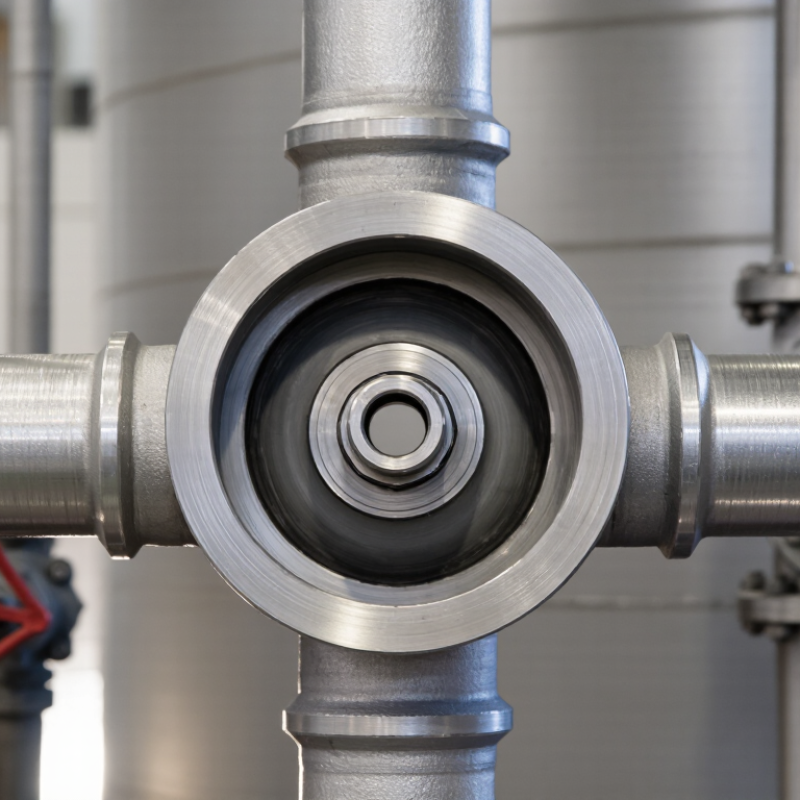
Why Use a Concentric Reducer Fitting?

What Is a Concentric Reducer Fitting?

What Is a Concentric Reducer Fitting?

A concentric reducer fitting connects two pipes with different diameters along one shared centerline. Its cone-shaped body reduces the flow path evenly from the larger opening to the smaller one. This design is common in vertical piping, pump discharge lines, and systems where balanced flow matters.

During installation, the reducer helps maintain a clean, centered pipe arrangement. A properly selected fitting can reduce turbulence, support stable pressure, and simplify alignment. However, it is not suitable for every layout. In horizontal liquid lines, an eccentric reducer may prevent air pockets or unwanted sediment collection more effectively. This detail is easy to overlook.

Tips: Check the pipe outside diameters, pressure rating, temperature range, and connection type before ordering. Inspect the fitting for dents, cracks, or rough internal surfaces. Keep the reducer aligned with nearby valves and supports. Avoid forcing a misaligned joint into place. Small errors can create stress later.

Material choice also matters. Stainless steel can resist corrosion in demanding environments, while carbon steel may suit standard industrial service. Plastic options can work well in selected chemical or low-pressure applications. Always compare the fitting material with the transported fluid and surrounding conditions. Field measurements should guide the final choice, because drawings are sometimes outdated.

Why Use a Concentric Reducer Fitting? - What Is a Concentric Reducer Fitting?

Data Dimension Concentric Reducer Fitting Practical Significance
Definition A pipe fitting used to connect two pipes with different nominal diameters while keeping their centerlines aligned. It provides a compact and direct transition between larger and smaller pipe sections.
Geometry The fitting is symmetrical around one common center axis, and the reducer body generally has a conical profile. The centered flow path is suitable for straight-line piping layouts and axial equipment connections.
Size transition Connects a larger pipe size to a smaller pipe size; the exact dimensions depend on the applicable piping standard and nominal pipe sizes. Allows the designer to match different pipe diameters within one piping system.
Flow direction Can be installed for flow from the larger end to the smaller end or in the reverse direction, subject to system design requirements. The installation direction should be selected according to drainage, pumping, equipment, and process-flow requirements.
Main purpose To reduce or increase the pipe diameter without changing the pipe centerline. Simplifies piping arrangement and supports a controlled change in flow area.
Typical connection types Common configurations include butt-weld, socket-weld, threaded, and flanged connections, depending on the product design and piping specification. The connection type must match the adjoining pipe, valve, flange, and joining method.
Common materials Carbon steel, stainless steel, alloy steel, ductile iron, copper alloys, and thermoplastics are used for different service conditions. Material selection depends on pressure, temperature, corrosion resistance, fluid compatibility, and applicable codes.
Typical applications Process piping, water distribution, HVAC systems, fire-protection piping, industrial utilities, and equipment connections. Useful wherever a centered transition is required between different pipe diameters.
Advantages Compact design, aligned centerline, simple installation concept, and compatibility with many joining methods. Can reduce layout complexity when the connected piping and equipment are on the same axis.
Important limitation The centered transition may not be suitable where an offset flow path, bottom-level drainage, or top-level vapor clearance is required. An eccentric reducer may be more appropriate in systems where fluid accumulation or air pockets must be minimized.
Selection factors Nominal pipe size, pressure class or wall thickness, temperature, material, connection type, corrosion allowance, applicable standards, and installation orientation. Correct selection helps ensure dimensional compatibility, mechanical integrity, and reliable long-term service.

Note: Dimensions, pressure ratings, and tolerances should be verified against the applicable piping standard and project specification before fabrication or installation.


How Does a Concentric Reducer Fitting Work?

Why Use a Concentric Reducer Fitting?

How Does a Concentric Reducer Fitting Work?

A concentric reducer fitting connects larger and smaller pipes along one shared centerline. Its tapered body narrows the flow passage gradually. This transition helps maintain a balanced layout in vertical piping and equipment connections. As the diameter decreases, fluid velocity usually increases. Pressure may also change, depending on flow rate, fluid properties, and system resistance. Engineers check these factors before selecting the fitting size.

During installation, the reducer is aligned with the pipe axis and joined by welding, threading, or another approved connection method. Correct alignment matters. Even a small offset can create stress at the joint. In practical work, technicians inspect the taper, wall thickness, and connection ends before fitting. A concentric design may support smoother flow than an abrupt size change, but it cannot remove turbulence completely. The wrong reducer can still cause vibration, noise, or unwanted pressure loss.

Tips: Confirm the inlet and outlet diameters from current drawings. Measure twice. Keep the fitting centered, especially near pumps, valves, and vertical runs. Follow qualified engineering guidance for material selection, temperature, pressure, and corrosion conditions. A clean-looking installation can still be poorly supported. That detail is easy to overlook.

What Are the Main Uses of Concentric Reducers?

A concentric reducer connects a larger pipe to a smaller pipe while keeping both centerlines aligned. Its main use is to manage diameter changes in compact piping systems. Engineers often install it near pumps, tanks, valves, and process equipment where space is limited. The fitting creates a gradual transition, which can reduce sudden turbulence compared with an abrupt size change.

It is especially useful in vertical pipe runs. For example, a 100-millimeter supply line may reduce to 50 millimeters before entering a control valve. The shared centerline helps maintain a neat layout and supports easier alignment during installation. Concentric reducers are also common in water, air, steam, and selected chemical service lines, provided the material and pressure rating suit the application. Weld preparation matters. Poor alignment can create stress and uneven flow.

Horizontal liquid piping needs more thought. A concentric reducer may trap air near the upper side of the fitting, depending on the layout and flow direction. I have seen drawings accept this detail too quickly. An eccentric reducer can be better in some liquid services, especially where drainage or pump suction conditions matter. The correct choice depends on flow behavior, pipe orientation, pressure loss, maintenance access, and the equipment connection. A clean appearance is helpful, but it should not replace a proper engineering check.

What Benefits Does a Concentric Reducer Provide?

A concentric reducer connects larger and smaller pipes along the same centerline. Its main benefit is a smooth, controlled change in diameter. This design helps reduce sudden turbulence and limits unnecessary pressure losses when properly sized. In pump discharge lines, the centered transition can also support cleaner alignment and a more compact installation.

The fitting is especially useful where space is limited or where piping must remain symmetrical. Its balanced shape distributes flow around the pipe axis. That can reduce vibration risks in some systems. It may also make welding, inspection, and support placement more straightforward. Small detail. Big difference.

In practical installations, engineers still need to check flow direction, velocity, wall thickness, and material compatibility. A concentric reducer is not a magic fitting. In horizontal liquid lines, it may create unwanted air pockets, depending on the arrangement. That assumption can fail. An eccentric reducer may work better in those cases. Correct selection depends on the medium, equipment connection, and pipeline position. Reliable results come from matching the fitting to actual operating conditions, not choosing by appearance alone. Consistent measurements and proper installation remain essential.

Why Use a Concentric Reducer Fitting?

The chart shows the theoretical flow-area retained when reducing between idealized circular pipe inside diameters.

A concentric reducer keeps the inlet and outlet on the same centerline. This symmetrical geometry provides a compact transition, supports straightforward alignment, and is commonly suitable for vertical pipe runs or systems where uniform radial flow distribution is important.

The percentages are calculated using the circular area formula A = πd² / 4. As the inside diameter decreases, the available flow area decreases and fluid velocity may increase when flow rate remains constant. Actual performance depends on pipe dimensions, flow rate, fluid properties, reducer angle, and installation conditions.

How to Select and Install the Right Reducer Fitting

Why Use a Concentric Reducer Fitting?

How to Select and Install the Right Reducer Fitting

A concentric reducer fitting connects pipes with different diameters while keeping their centerlines aligned. This design supports balanced flow in many vertical piping systems. It can also simplify equipment connections where space is limited.

Selection should begin with the pipe sizes, fluid type, operating pressure, and temperature. Check the required material compatibility carefully. Stainless steel, carbon steel, and plastic systems need different fitting specifications. The reducer must also match the pipe schedule and connection method.

Never select by diameter alone.

During installation, inspect the fitting for dents, cracks, and damaged threads. Remove dirt from every joining surface. For welded systems, confirm the bevel, gap, and alignment before tacking. Excessive force can distort the pipe. Install the reducer without creating a visible offset.

Add suitable supports nearby, especially on heavy vertical sections. I once treated support placement as a minor detail. It was not. Unbalanced weight can stress the joint and create future leaks.

Tips:

Confirm flow direction and allowable pressure before installation. Use calibrated tools when tightening threaded connections. Avoid over-tightening. For welded joints, follow the approved procedure and inspect the finished weld. Pressure-test the completed line according to the applicable project standard. Record the fitting material, size, and test results. A small record helps later maintenance, although it is easy to overlook during a busy installation.

Powder Coat Booths

For those larger-sized parts, or smaller quantity runs, we have 2 independent powder coat booths and ovens. The quality, durability and affordability of today’s powder coating finishes make this the process of choice for world-class companies.

Powder coating advantages over other forms of coating are many. Materials used in the Powder coating process can be metals and non-metals that come in a multitude of thicknesses, textures, colors, etc. Another of Powder coating’s biggest advantages over conventional coatings is its ability to create finishes in many different textures. Powder Coating Booths allow us the ability to apply these advantages to large products.

Wet Paint Line

Tri-State Fabricators runs a full-service conveyor line for painting. Wet painting can provide protection or decoration to many different part styles. From start to finish, every project is easier to undergo random and point-based inspection by our skilled painting team.

Advantages to our Wet Paint Line are these lines start with product prep and ends with a thorough inspection of a high quality finished product. Our ability to complete large and small projects with a superior finish and doing so in a timely and economical fashion. This passes along the savings in production to our customers. When powder coating ins not an option, our Wet Paint Line gets the job done right the first time.

Wet Paint Booths

When the parts get big and heavy we roll-out our custom paint racks and oversize booth. By utilizing our partnerships with all the major paint brands, we can match virtually any color with wet paint.

The advantages of having access to a Wet Paint Booth are many. Large projects of many different shapes can be loaded into the booth. The Wet Paint Booth offers an environment that is much more controlled than a typical parts painting operation.

Not only are they used because of their controlled environment, but they’re are also advantageous when it comes to applying paint to parts that are needed in industries that require specialty coatings such as medical, aerospace, etc.

Military CARC

Our military forces have some very high standards when it comes to the finish of their vehicles and equipment. From the first pre-treatment step to final coat, it takes a great deal of knowledge and experience to protect the men and women of our armed forces. They deserve only the best, and Tri-State Fabricators provides it.

All of our processes are closely monitored by our staff and management teams. Both of which are highly trained in the processes of metal fabrication and finishing. Tri-State Fabricators’ goal is to always fully satisfy each and every customer, including the military. We will always put a 110% into what we do.

Glass-Bead Blasting

Abrasive media blasting is an excellent way to remove old paint, rust, and increase the paint/powder adhesion. Glass beads produce a much smoother and brighter finish than angular abrasives; leaving the part clean yet without any dimensional change. Chemically inert and environmentally friendly, we can recycle our beads approximately 30 times; making them a more preferred method of metal cleaning or surface finishing.

Advantages to Glass Bead Blasting are many. Glass bead blast media is used when a project is needing rough surfaces need to become smooth for applications of coatings such as paint. It is typically used to clean paint and rust from a product surface without deforming the surface it is being used on. Overall, compared to many other blasting media, Glass Bead Blasting is a very economical choice and those savings are always passed on to our customers.

Part Washing

Tri-State Fabricators utilize a zinc phosphate wash to clean and etch the material to ensure the best paint adhesion possible. The unique design of our 3-stage wash system does the work like a 5-stage. From Cleaning and rinsing to conversion coating and post-treatment, Our Part Washing process is a complete service and works throughout the fabrication service and the finishing service.

Along with the previously mentioned benefits, Curing is a vital chemical reaction that leaves the product finish hard and relatively safe from mild abrasion and aggressive corrosion. This process can be done in more than one way; ambient air-dry or in curing ovens at temps that exceed 240°.

Burn-Off Oven

From fixing paint mistakes (someone else’s of course) to simply cleaning our paint line hooks, our burn-off oven is put to good use. After a quick burn-off, a little clean up, and a fresh coat of paint, your parts will look better than new.

Why does our Burn-Off Oven work so well? Because super heating the air around parts turns the materials into ashes. From paint and powder coatings to rubber and machining oils, high temps do the job without degrading the integrity of the part.

Masking

Masking is a vital part of producing high quality products. We have die-cut masking patterns to protect machined surfaces as well as a wide range of plugs and caps to protect threaded holes and bolts. We provide permanent and temporary masking.

Masking allows the selected sections of a product to be protected from a fabrication or finishing service. This can be with both chemicals when etching and tapes, paints when only finishing just a section of the product. Masking is great in aiding the customization process of a project.

Screen Printing

Screen printing is a photographic process that transfers artwork onto a porous nylon screen which allows colored ink to flow through the screen and be deposited on an aluminum or plastic component. We can generally have just about any design created onto a screen for your parts.

Some of the advantages of Screen Printing are, brand recognition for your business displaying on your products, assembly instructions, product warnings/hazards, etc. Tri-State Fabricators produces Screen Printing of the highest quality so you know it’s durable.

Metal Finishing

Metal Finishing is the art of treating the exterior portion of product, often metal but can also be made of other materials, so that the surface is clean and free of any debris. Then the process of applying coats or either paint of powder coat takes place. This coating process improves the quality of the product in both appearance and resistance to wear and corrosion.

Tri-State Fabricators, Inc., understands that a project typically isn’t complete until a high-quality finish has been added to your product. This is why our painting and powder coating teams continuously inspect the products throughout the Metal Finishing process.
