


Why Choose a Chocolate Processing Plant?
Choosing a Chocolate Processing Plant can turn a promising recipe into a consistent commercial product. It brings roasting, refining, conching, tempering, molding, and cooling into one controlled workflow. Each stage affects flavor, texture, appearance, and shelf stability. A well-designed plant also reduces unnecessary handling. That matters.
In my experience, small process changes can create visible differences. A few degrees during tempering may cause dull surfaces or unwanted streaks. Poor particle refinement can leave chocolate feeling sandy. Reliable equipment helps production teams monitor temperature, viscosity, sanitation, and batch records more carefully. These controls support repeatable quality and stronger customer trust.
Dr. Carla D. Martin, executive director of the Fine Cacao and Chocolate Institute, has said, “Chocolate is a lens through which we can understand the world.” Her observation reaches beyond taste. A processing plant connects farmers, technicians, product developers, and consumers through measurable decisions. It can help manufacturers protect cocoa character while meeting practical production demands.
Still, a Chocolate Processing Plant is not a magic solution. Equipment requires skilled operators, preventive maintenance, responsible sourcing, and realistic capacity planning. Energy use and cleaning time also deserve honest attention. A larger factory may increase output, yet it can create waste when demand forecasts are weak. That is an uncomfortable possibility.
The best choice depends on product goals, batch size, available capital, and technical competence. Careful planning should come before impressive machinery. When those elements align, the plant becomes more than a production site. It becomes a dependable foundation for safe, efficient, and distinctive chocolate.
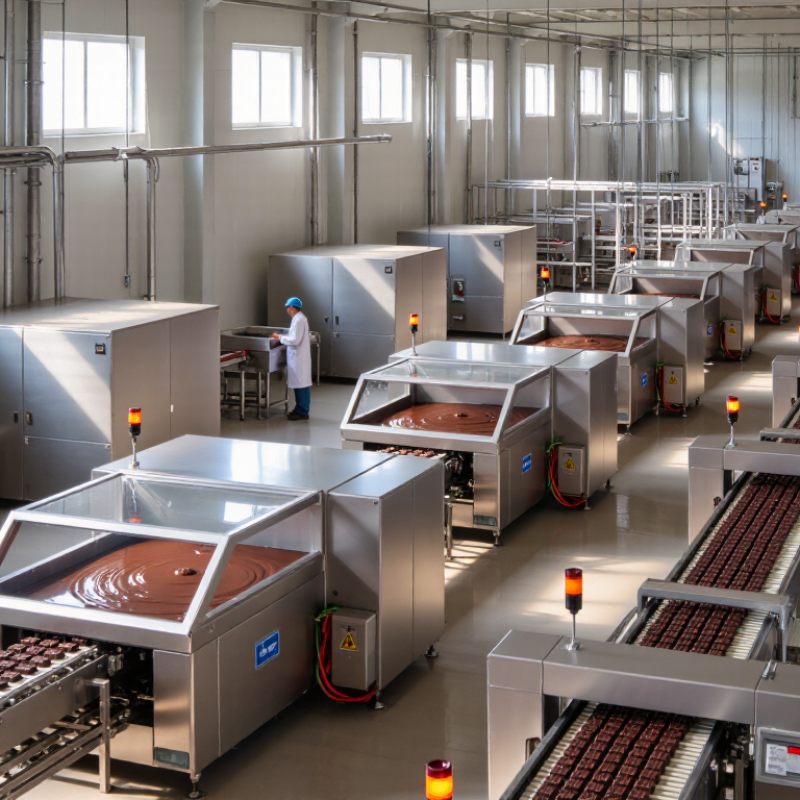
Why Choose a Chocolate Processing Plant?
Cocoa Bean Roasting at 120–140°C: Developing Flavor and Safety
A professional chocolate processing plant provides controlled roasting conditions for cocoa beans. At 120–140°C, heat reduces moisture and helps develop deeper cocoa aromas. The beans may release notes of nuts, caramel, toast, or dried fruit. Roasting time must match bean size, origin, moisture, and machine airflow. Temperature alone never tells the whole story.
Operators monitor the roast with calibrated probes and regular sensory checks. A clean, even batch should show consistent color and a crisp shell. Safe processing also requires documented sanitation, allergen controls, and validated time-temperature procedures. These practices reduce microbial risks without depending on guesswork. Small changes matter. A few extra minutes can create harsh, smoky flavors.
Experienced teams usually compare each batch with approved reference samples. They record inlet temperature, product temperature, roast duration, and cooling speed. Rapid cooling helps prevent residual heat from overdeveloping the flavor. Still, no roasting profile is perfect. Natural cocoa beans vary, and one setting may perform differently during humid weather. I have found that careful sampling often reveals problems before laboratory results do. That human check remains important, even in a highly automated plant.
| Processing Dimension | Typical Operating Range or Target | Effect on Cocoa Beans | Plant-Level Control Point |
|---|---|---|---|
| Roasting temperature | 120–140°C bean or air temperature | Promotes Maillard reactions, reduces raw or acidic notes, and develops chocolate, nutty, caramel, and roasted aromas. | Use calibrated temperature sensors and maintain a validated roast profile for each cocoa origin and bean size. |
| Roasting time | Commonly about 15–45 minutes, depending on equipment, batch size, bean size, and target flavor | Longer or more intense roasting generally produces darker roast notes but may reduce delicate origin aromas and create bitterness if excessive. | Control time together with temperature; temperature alone does not define the thermal treatment. |
| Bean moisture | Typically approximately 5–8% before roasting; the exact specification depends on raw-bean quality and plant standards | Moisture loss supports crispness and shell separation. Excessive moisture can extend roasting time and produce uneven flavor development. | Measure incoming moisture and verify final moisture to maintain consistent roasting and winnowing performance. |
| Flavor development | Profile selected according to origin, fermentation level, bean size, and desired chocolate style | Roasting transforms fermentation-derived precursors into aroma compounds associated with cocoa, toast, nuts, caramel, and dried fruit. | Combine sensory evaluation with color, aroma, moisture, and roast-loss records rather than relying on a single measurement. |
| Acidity and astringency | Reduced progressively as the roast becomes more intense | Moderate roasting can soften sharp acidity and astringency; excessive roasting may mask desirable origin character. | Set sensory limits for acidity, bitterness, and astringency for each product specification. |
| Microbial safety | A validated time–temperature process is required; 120–140°C is not, by itself, a universal safety guarantee | Roasting substantially reduces vegetative microorganisms when the required heat exposure reaches the coldest part of the product. | Validate the process using product-core temperature, residence time, airflow, load, and microbiological verification. |
| Uniformity of roasting | Consistent bean temperature and airflow throughout the batch | Uniform roasting minimizes under-roasted beans, burnt beans, uneven aroma, and inconsistent color. | Use controlled agitation, even loading, airflow monitoring, and routine sampling from different points in the batch. |
| Cooling after roasting | Rapid cooling immediately after the target roast is reached | Stops further roasting and protects the intended flavor, color, and aroma profile. | Verify cooling-air cleanliness and reduce bean temperature promptly before storage or grinding. |
| Quality verification | Batch records, sensory checks, moisture testing, color assessment, and food-safety monitoring | Provides evidence that flavor, safety, and process consistency meet the defined product specification. | Maintain traceable records for raw beans, roast profile, cooling, deviations, corrective actions, and release testing. |
Note: Actual roasting conditions vary by cocoa origin, fermentation, bean size, equipment design, batch load, and product requirements. Food-safety performance must be confirmed through a documented and validated process.

A professional chocolate processing plant controls particle size with calibrated grinding and refining equipment. The 15–30 μm range usually creates a noticeably smooth texture on the tongue. Larger particles may feel sandy, especially in dark chocolate. Extremely fine particles can increase viscosity and make pumping more difficult. This balance requires more than a single machine setting. Operators monitor product temperature, feed rate, moisture, and refining time during each production run.
In practical processing, samples should be checked throughout the batch. Laser particle-size testing offers useful data, while trained sensory checks reveal texture changes that instruments may miss. Refining must also protect the chocolate’s flavor. Excessive heat can soften delicate cocoa notes and create inconsistent flow. A target is not a guarantee. Small variations in cocoa solids, sugar crystals, or fat content can shift the final result. That is why reliable plants record every adjustment and compare it with previous batches.
Tips: Keep the refining area clean and temperature-stable. Test particle size before changing machine settings. If the chocolate feels thick, do not immediately grind it finer. Check moisture, fat balance, and processing temperature first. A short trial can prevent a costly full-batch correction. Even experienced teams sometimes overlook seasonal ingredient changes.
Why Choose a Chocolate Processing Plant?
Conching for 4–72 Hours: Reducing Moisture and Volatile Acids
A chocolate processing plant provides controlled conching conditions that are difficult to maintain consistently by hand. During conching, warm chocolate moves continuously while air contacts its surface. This action helps release moisture and sharp volatile acids, including acidic notes that may taste harsh or vinegary.
Four hours can be suitable for some refined recipes. Other formulations need 24, 48, or even 72 hours. The correct time depends on cocoa solids, particle size, fat content, temperature, and airflow. Longer processing is not automatically better. It can soften useful aromas or increase energy consumption.
Small changes matter. A batch may shift from thick and pasty to smooth and flowing as moisture decreases. Operators should check viscosity, moisture, temperature, and aroma during the cycle. Sensory evaluation also matters. A laboratory result may look acceptable while the chocolate still tastes overly sharp.
In practical production, records from each batch help identify patterns. However, equipment readings are not perfect. Sampling errors happen, and flavor judgments can differ between trained evaluators. This is why experienced plants combine calibrated instruments with repeated tasting and process adjustments. The final hours often require restraint, not simply more time.
Tempering at 31–32°C helps stabilize cocoa butter crystals in dark chocolate. This temperature range encourages stable Form V crystals to develop. The result is a firm snap, smooth gloss, and cleaner release from molds. In a processing plant, operators monitor the chocolate with calibrated thermometers and continuous temperature controls. Small changes matter. A rise of one degree can weaken the final structure.
Experienced teams also watch viscosity, cooling speed, and room conditions. Chocolate should move evenly through the tempering unit, without sudden thickening or streaks. Samples are often tested on a cool surface before production continues. A properly tempered sample sets quickly and appears even. If it remains dull or soft, the process needs adjustment. This practical check supports instrument readings.
Tempering is not foolproof. Operators can misread a sensor or overlook warm equipment. That is why reliable plants record temperatures, batch times, and test results.
Clean pipes and stable humidity also reduce avoidable variation. The 31–32°C target suits many dark chocolate formulas, but recipes can behave differently. Milk and white chocolate usually require other working temperatures. Careful processing respects those differences instead of forcing one setting onto every product.
An automated chocolate processing plant protects consistency from mixing through final packaging. Inline sensors monitor fat content, viscosity, temperature, and particle size during production. These measurements help maintain a smooth texture and predictable melting behavior. Automated dosing also reduces ingredient variation between batches. In practice, operators can see live readings instead of relying only on end-of-shift tests. That makes quality decisions faster and more traceable. Small differences still matter. A slightly warmer conche can soften flavor and alter mouthfeel.
Flavor control requires more than machines. Processing software records roasting conditions, refining time, and conching performance. Quality technicians compare these records with laboratory results and sensory observations. They can detect flat aroma, excessive bitterness, or a dry finish before products leave the facility. However, automation is not infallible. Sensors may drift, and calibration can be overlooked during busy production periods. Human review remains essential. This is where experienced operators add practical judgment.
Tips: Calibrate sensors on a scheduled basis, not only after failures. Keep clear records for every batch and ingredient lot. Check viscosity at several temperatures, because chocolate can behave differently during cooling. Use trained sensory panels to confirm what instruments cannot measure. Review unusual results instead of deleting them. Those imperfect batches often reveal process weaknesses. A reliable plant combines accurate equipment, disciplined testing, and people willing to question the data.


For those larger-sized parts, or smaller quantity runs, we have 2 independent powder coat booths and ovens. The quality, durability and affordability of today’s powder coating finishes make this the process of choice for world-class companies.
Powder coating advantages over other forms of coating are many. Materials used in the Powder coating process can be metals and non-metals that come in a multitude of thicknesses, textures, colors, etc. Another of Powder coating’s biggest advantages over conventional coatings is its ability to create finishes in many different textures. Powder Coating Booths allow us the ability to apply these advantages to large products.
Tri-State Fabricators runs a full-service conveyor line for painting. Wet painting can provide protection or decoration to many different part styles. From start to finish, every project is easier to undergo random and point-based inspection by our skilled painting team.
Advantages to our Wet Paint Line are these lines start with product prep and ends with a thorough inspection of a high quality finished product. Our ability to complete large and small projects with a superior finish and doing so in a timely and economical fashion. This passes along the savings in production to our customers. When powder coating ins not an option, our Wet Paint Line gets the job done right the first time.
When the parts get big and heavy we roll-out our custom paint racks and oversize booth. By utilizing our partnerships with all the major paint brands, we can match virtually any color with wet paint.
The advantages of having access to a Wet Paint Booth are many. Large projects of many different shapes can be loaded into the booth. The Wet Paint Booth offers an environment that is much more controlled than a typical parts painting operation.
Not only are they used because of their controlled environment, but they’re are also advantageous when it comes to applying paint to parts that are needed in industries that require specialty coatings such as medical, aerospace, etc.
Our military forces have some very high standards when it comes to the finish of their vehicles and equipment. From the first pre-treatment step to final coat, it takes a great deal of knowledge and experience to protect the men and women of our armed forces. They deserve only the best, and Tri-State Fabricators provides it.
All of our processes are closely monitored by our staff and management teams. Both of which are highly trained in the processes of metal fabrication and finishing. Tri-State Fabricators’ goal is to always fully satisfy each and every customer, including the military. We will always put a 110% into what we do.
Abrasive media blasting is an excellent way to remove old paint, rust, and increase the paint/powder adhesion. Glass beads produce a much smoother and brighter finish than angular abrasives; leaving the part clean yet without any dimensional change. Chemically inert and environmentally friendly, we can recycle our beads approximately 30 times; making them a more preferred method of metal cleaning or surface finishing.
Advantages to Glass Bead Blasting are many. Glass bead blast media is used when a project is needing rough surfaces need to become smooth for applications of coatings such as paint. It is typically used to clean paint and rust from a product surface without deforming the surface it is being used on. Overall, compared to many other blasting media, Glass Bead Blasting is a very economical choice and those savings are always passed on to our customers.
Tri-State Fabricators utilize a zinc phosphate wash to clean and etch the material to ensure the best paint adhesion possible. The unique design of our 3-stage wash system does the work like a 5-stage. From Cleaning and rinsing to conversion coating and post-treatment, Our Part Washing process is a complete service and works throughout the fabrication service and the finishing service.
Along with the previously mentioned benefits, Curing is a vital chemical reaction that leaves the product finish hard and relatively safe from mild abrasion and aggressive corrosion. This process can be done in more than one way; ambient air-dry or in curing ovens at temps that exceed 240°.
From fixing paint mistakes (someone else’s of course) to simply cleaning our paint line hooks, our burn-off oven is put to good use. After a quick burn-off, a little clean up, and a fresh coat of paint, your parts will look better than new.
Why does our Burn-Off Oven work so well? Because super heating the air around parts turns the materials into ashes. From paint and powder coatings to rubber and machining oils, high temps do the job without degrading the integrity of the part.
Masking is a vital part of producing high quality products. We have die-cut masking patterns to protect machined surfaces as well as a wide range of plugs and caps to protect threaded holes and bolts. We provide permanent and temporary masking.
Masking allows the selected sections of a product to be protected from a fabrication or finishing service. This can be with both chemicals when etching and tapes, paints when only finishing just a section of the product. Masking is great in aiding the customization process of a project.
Screen printing is a photographic process that transfers artwork onto a porous nylon screen which allows colored ink to flow through the screen and be deposited on an aluminum or plastic component. We can generally have just about any design created onto a screen for your parts.
Some of the advantages of Screen Printing are, brand recognition for your business displaying on your products, assembly instructions, product warnings/hazards, etc. Tri-State Fabricators produces Screen Printing of the highest quality so you know it’s durable.
Metal Finishing is the art of treating the exterior portion of product, often metal but can also be made of other materials, so that the surface is clean and free of any debris. Then the process of applying coats or either paint of powder coat takes place. This coating process improves the quality of the product in both appearance and resistance to wear and corrosion.
Tri-State Fabricators, Inc., understands that a project typically isn’t complete until a high-quality finish has been added to your product. This is why our painting and powder coating teams continuously inspect the products throughout the Metal Finishing process.

