Why Choose a Brushless Motor?
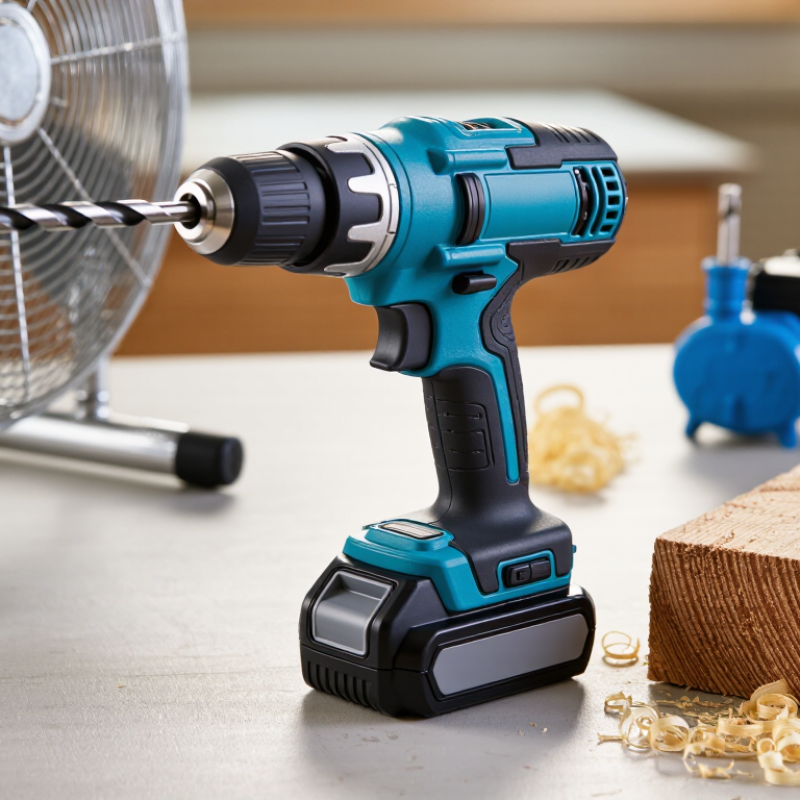
A brushless motor is often presented as the obvious upgrade for a drill, fan, or small pump. Its electronic controller switches current through the windings instead of relying on brushes to make contact. That design removes one common source of friction and wear. In a cordless drill, the difference may show up as steadier speed when a bit meets dense timber, or less frequent brush-related maintenance over time.
The benefits depend on the whole system. A well-matched brushless motor can use battery energy efficiently, run with less electrical noise, and offer precise speed control. But the controller, cooling, and motor design matter too. A poorly managed motor can still overheat under sustained load. Not magic. For buyers, the useful comparison is not just the motor label; it is runtime, torque at the working speed, noise, repair options, and the tool’s price.
There is also a trade-off. Brushless models often cost more upfront, and their electronic controls can make repairs less straightforward. For occasional light work, a reliable brushed tool may be perfectly practical. For frequent use, long operating periods, or equipment where compact size and controlled output matter, brushless technology may justify the extra cost. That judgment deserves a closer look. The right choice comes from matching measured performance and service needs to the job, rather than assuming newer always means better. A product’s specifications help, but real results vary with workload, battery condition, and operating temperature.
How Brushless Motors Generate Motion
Why Choose a Brushless Motor?
How Brushless Motors Generate Motion
A brushless motor turns electrical energy into rotation through coordinated magnetic fields. Stationary coils form the stator, while permanent magnets sit on the rotor. When a controller sends current through selected coils, they create a magnetic field that pulls the rotor around. The controller then changes which coils are energized, keeping the rotor moving. This switching process is called electronic commutation. No brushes are needed to transfer current to the spinning part.
Timing matters. Some motors use position sensors to tell the controller where the rotor is; others estimate its position from voltage generated as it spins. Sensorless control can be harder at startup, when little motion is available to measure. Pulse-width modulation can adjust the current, helping control speed and torque. In a small fan, this means the blades can turn steadily without the scrape of brush contact. Quiet, too. But the neat diagram is not the whole story: heat, load, and controller settings all affect performance. Brushless does not mean maintenance-free. Bearings can still wear, and a poorly matched controller may cause rough operation.
Why Choose a Brushless Motor? — How Brushless Motors Generate Motion
In this idealized three-phase example, phase currents are normalized to a peak value of 1. Their changing currents create a rotating magnetic field in the stator, which the rotor magnets follow to produce motion. Real motor waveforms vary with the motor and its controller.
How Brushless Motors Differ from Brushed Motors
Brushed motors switch current through carbon brushes touching a rotating commutator. That contact makes control simple, but it also creates friction, heat, and wear. In a small fan, worn brushes can mean intermittent starts or visible dust near the motor. Brushless motors use an electronic controller to switch current through stationary windings instead. There are no brushes to replace. The trade-off is real: the controller adds cost and complexity, and may need careful tuning.
The difference matters at scale. The U.S. Department of Energy’s 2014 sourcebook, Improving Motor and Drive System Performance, reports that motor-driven systems use about 68% of electricity in U.S. manufacturing. That figure covers many motor types; it is not a direct brushless-versus-brushed test. A brushless design can reduce losses and maintenance in some applications, especially where motors run for long periods. But results depend on load, speed, cooling, and controller quality. A brushed motor may still suit an inexpensive device used briefly. It is easy to overlook that detail. Compare measured efficiency across the actual operating range, not just a peak-efficiency figure.
Why Choose a Brushless Motor? — How Brushless Motors Differ from Brushed Motors | Comparison Dimension | Brushless Motor | Brushed Motor |
| Commutation | An electronic controller switches current through the windings to keep the motor turning. | Brushes make physical contact with a commutator to switch current through the windings. |
| Brush Wear | Has no brushes to wear out, although bearings and other components can still require service. | Brushes gradually wear through friction and may need inspection or replacement. |
| Maintenance | Often requires less routine maintenance related to commutation, but still needs appropriate care. | May require brush and commutator checks, especially in frequent-use applications. |
| Efficiency | Can be more efficient in many applications because it avoids brush-contact losses; actual performance depends on the motor, controller, and operating conditions. | Brush friction and electrical contact losses can reduce efficiency, though performance varies by design and load. |
| Speed and Control | Electronic control supports precise speed and torque management, but requires a compatible controller. | Speed can often be controlled with simpler circuitry, though advanced control may require additional electronics. |
| Electrical Noise and Arcing | Avoids brush-contact arcing; the electronic controller can still produce electrical switching noise. | Brush contact can cause electrical noise and arcing, depending on the motor and operating conditions. |
| Initial System Cost | May have a higher system cost because electronic control is generally needed. | Can be less expensive and simpler to operate in applications that do not need sophisticated control. |
| Typical Suitability | A good option when efficiency, precise control, reduced brush maintenance, or frequent operation is important. | A practical option when simplicity, low upfront cost, or straightforward speed control is the priority. |
What Advantages Brushless Motors Offer
Brushless motors replace mechanical brushes with electronic switching, reducing friction inside the motor. That design can improve efficiency, especially in equipment that runs for long periods. Less wear matters. A small fan operating through a full workday, for example, may need fewer brush-related repairs over time. The motor can also deliver smooth speed control when paired with a suitable controller.
Efficiency has practical effects. Less energy lost as heat can help a motor stay cooler under comparable conditions, though airflow and load still matter. In a handheld tool, responsive electronic control can make speed changes feel more precise. Brushless designs also avoid brush-generated electrical sparking, which can be useful in some applications. They are not maintenance-free, however; bearings, wiring, and control electronics can still fail.
The trade-off is real. Brushless motors usually depend on more complex control electronics, so diagnosis and replacement may take specialized knowledge. Their benefits are most noticeable in demanding or frequently used equipment, not necessarily in a simple device that runs briefly. A buyer should compare the whole system: motor, controller, cooling, and expected workload. Efficiency figures alone do not tell the full story.
Where Brushless Motors Are Commonly Used
Why Choose a Brushless Motor?
Where Brushless Motors Are Commonly Used
Brushless motors are common wherever equipment needs compact power, speed control, and reduced routine maintenance. In electric vehicles, they drive wheels, coolant pumps, and cabin fans. The International Energy Agency’s Global EV Outlook 2024 reports nearly 14 million electric cars were sold worldwide in 2023, about 18% of all car sales. That expanding market makes brushless traction motors increasingly visible, though motor designs vary by vehicle and task.
You’ll also find them in factory conveyors, robotic arms, ventilation systems, cordless tools, and household appliances. A small fan motor can adjust airflow quietly; an industrial drive can vary conveyor speed as products move along a line. Drones and battery-powered garden tools use them where low weight and efficient power matter. Still, brushless does not mean maintenance-free: bearings, electronics, and cooling parts can wear or fail. It’s easy to overlook those details.
Tips: Match the motor to its load and operating speed. Check heat, airflow, and controller compatibility before installation. If a unit runs hot, investigate the cause rather than assuming the motor is undersized.
What to Consider When Choosing a Brushless Motor
Why Choose a Brushless Motor?
What to Consider When Choosing a Brushless Motor
Choosing a brushless motor starts with the actual load, not the largest power rating on a datasheet. Check required speed, continuous torque, and short bursts of peak torque. A conveyor may run steadily, while a robotic joint repeatedly starts and stops. Those duty cycles create different heat loads. Fit matters. Measure the available space, shaft dimensions, and mounting points before comparing models. The International Energy Agency’s 2011 report, Energy-Efficiency Policy Opportunities for Electric Motor-Driven Systems, estimated that motor-driven systems use about 45% of global electricity. That figure describes whole systems, but it underscores why matching motor, drive, and load matters.
Next, examine the controller, supply voltage, and feedback needs. Some applications need precise speed control or an encoder; others can use simpler feedback. Ask for the torque-speed curve and thermal limits, not just peak output. Heat adds up. A motor that meets a brief test may overheat during repeated cycles, especially inside a sealed housing. Check ambient temperature, cooling, vibration, and protection requirements. I would also compare efficiency across the operating range, rather than assume the highest headline figure fits every task. It is easy to over-specify a motor and miss a practical issue, such as connector clearance or difficult maintenance access. A sample run under the real load can reveal those details.





