A Bathroom Towel Holder may seem like a minor purchase, but in a hotel, spa, gym, or serviced apartment, small details shape the guest experience. A secure, well-placed holder keeps towels off counters and floors, helps bathrooms feel orderly, and makes fresh towels easier to reach. Small detail. Real impact.
The business case is practical, not magical. Houzz’s 2024 U.S. Bathroom Trends Study reported a median spend of $15,000 on primary-bathroom renovations. That figure does not prove a towel holder increases revenue. It does show that owners invest substantially in bathroom improvements, where durable fixtures contribute to a finished, usable space. Choose materials suited to moisture, sturdy mounting, and a design that fits the room’s traffic and cleaning routine. A polished finish can look appealing in a sample; daily use may tell a different story.
Design expert Charles Eames offered a useful principle: “The details are not the details. They make the design.” For businesses, that idea applies to the fixtures guests touch and staff maintain. A Bathroom Towel Holder should support easy access, reliable upkeep, and a consistent look—not merely fill an empty wall. Consider replacement parts and installation before buying. The best choice depends on your space, budget, and maintenance needs. It is a modest fixture, not a complete service strategy.
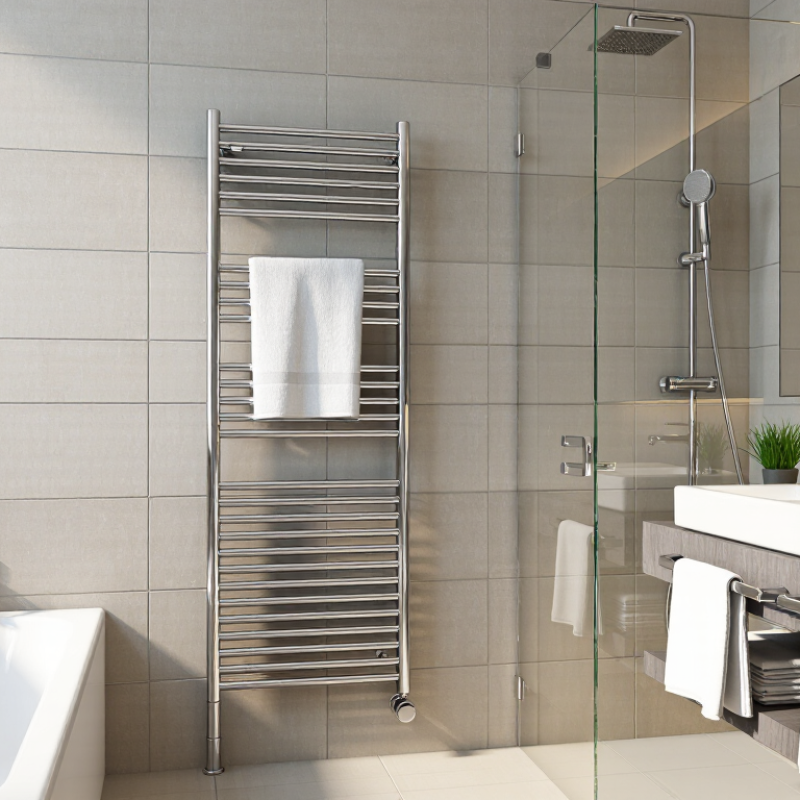
A bathroom towel holder is a wall-mounted or counter-mounted fixture that stores and dispenses paper towels. In a business restroom, it keeps towels within reach of the sink and helps prevent loose stacks from getting wet or scattered. Common options include covered dispensers for folded towels and units designed for rolls. The right format depends on traffic, available wall space, refill routines, and the amount of counter clutter staff can manage.
Businesses use them in offices, restaurants, hotels, gyms, and clinics. Staff may check towel levels during routine restroom inspections, especially during busy periods. A 2024 U.S. Healthy Handwashing Survey reported that 79% of respondents would avoid an establishment with an unclean restroom. The figure reflects surveyed consumers, not every customer, but it shows how restroom details can shape impressions. Small fixture. Visible impact.
Placement matters. A holder installed too far from the sink can leave drips across the floor; one mounted too high may be awkward for some users. Managers should test reach and refill access before fixing the unit in place. A holder does not make a restroom clean by itself. It can, however, support a more orderly setup when paired with regular restocking and surface checks. Some layouts still miss the mark.
In a busy restroom, a bathroom towel holder gives clean hand towels a fixed, easy-to-find place. That small detail can reduce loose stacks near sinks, where splashes may dampen towels before anyone uses them. Staff can see at a glance when supplies are running low. Guests spend less time searching. Less clutter helps.
Choose a holder that suits the traffic and the towel type. A dispenser can limit unnecessary handling, while an open rack may work well where staff can refresh towels frequently. Smooth surfaces are easier to wipe, and moisture-resistant materials can hold up better in damp rooms. Keep the holder within comfortable reach, but away from direct sink spray and door swings. Placement matters.
Daily checks make the fixture useful. Refill it before peak periods, remove wet or visibly soiled towels, and clean the holder on a schedule that matches restroom use. A simple checklist can help teams keep the routine consistent across shifts. Still, a holder alone cannot ensure good hygiene; handwashing access, cleaning, and reliable restocking all matter. One detail is easy to miss: an overfilled holder can make towels harder to take cleanly. Test the setup during a busy hour, then adjust it if guests struggle.
Commercial washrooms need towel holders that match traffic, cleaning routines, and available wall space. A quiet office may work well with a compact, surface-mounted paper towel dispenser beside the sink. It is easy to inspect. In a busy restaurant, a high-capacity folded-towel unit can reduce refill trips during lunch service. Look for a sturdy cover and a feed opening that does not snag damp hands.
Recessed holders keep narrow corridors clear, which can help in older buildings with tight layouts. They need a suitable wall cavity, though, and retrofitting one may involve more work than expected. Automatic dispensers suit clinics and shared facilities where reducing contact is a priority, but batteries and sensors need regular checks. A manual lever model is simpler, yet it can be awkward for some users if mounted too high.
Gyms and pool areas often benefit from enclosed, moisture-resistant dispensers because splashes and humid air are routine. Hotels may prefer a polished, wall-mounted holder that fits the room’s finish, while staff still need quick access for refills. For low-traffic lounges, an open countertop basket can look welcoming, but towels may shift or get wet near the basin. There is no perfect choice. Test the refill process with the actual towel size before ordering; small mismatches are easy to overlook.
For a business towel holder, start with traffic and refill routines. A small café may need a compact dispenser, while a busy gym benefits from higher capacity and quick access. Check how staff load towels and clear jams. If refilling requires tools, it may not happen promptly during a rush. I would not choose by finish alone; that is an easy mistake.
Placement matters as much as capacity. The U.S. Access Board’s 2010 ADA Standards set common accessible reach ranges at 15 to 48 inches above the floor, with limits depending on approach and obstruction. Keep the towel opening within the applicable range, and test it from a wheelchair-height position. A holder that looks reachable on a plan can feel awkward beside a deep sink or narrow partition.
Consider material, mounting, and cleaning time. Stainless steel handles frequent wiping well, while coated surfaces may show scratches sooner. Verify wall strength and fixing points before installation; a loaded dispenser can pull loose from weak backing. Choose a design with a visible refill level if possible. It saves guesswork, though no indicator replaces a quick daily check.
A well-placed towel holder keeps paper towels dry, reachable, and off busy counters. For cafés, offices, and clinics, that small detail can make a restroom feel easier to use. Choose a sturdy, corrosion-resistant unit suited to daily traffic. During installation, anchor it into solid backing, check that the cover opens fully, and leave enough space for hands to reach the towels without brushing a wall. Measure twice. A rushed installation can leave a loose fitting that damages the wall over time.
Cleaning and maintenance protect both appearance and function. Wipe the holder daily with a compatible cleaner, then dry seams and edges where moisture collects. Avoid abrasive pads; they can scratch the finish and make grime harder to remove.
The CDC’s handwashing guidance reports that handwashing can reduce respiratory illnesses by 16–21%. That supports making hygiene supplies easy to access, though it does not prove any particular holder prevents infection.
Inspect the hinge, lock, and mounting screws regularly. Small parts matter. Replace damaged components before the unit rattles or jams.
Tips: Refill before the holder is empty, and keep a simple weekly check on your cleaning sheet. Look for water spots, loose screws, and torn paper. One practical point is easy to overlook: cleaning products vary, so test an unfamiliar one on a hidden area first. A little extra checking can prevent finish damage.



For those larger-sized parts, or smaller quantity runs, we have 2 independent powder coat booths and ovens. The quality, durability and affordability of today’s powder coating finishes make this the process of choice for world-class companies.
Powder coating advantages over other forms of coating are many. Materials used in the Powder coating process can be metals and non-metals that come in a multitude of thicknesses, textures, colors, etc. Another of Powder coating’s biggest advantages over conventional coatings is its ability to create finishes in many different textures. Powder Coating Booths allow us the ability to apply these advantages to large products.
Tri-State Fabricators runs a full-service conveyor line for painting. Wet painting can provide protection or decoration to many different part styles. From start to finish, every project is easier to undergo random and point-based inspection by our skilled painting team.
Advantages to our Wet Paint Line are these lines start with product prep and ends with a thorough inspection of a high quality finished product. Our ability to complete large and small projects with a superior finish and doing so in a timely and economical fashion. This passes along the savings in production to our customers. When powder coating ins not an option, our Wet Paint Line gets the job done right the first time.
When the parts get big and heavy we roll-out our custom paint racks and oversize booth. By utilizing our partnerships with all the major paint brands, we can match virtually any color with wet paint.
The advantages of having access to a Wet Paint Booth are many. Large projects of many different shapes can be loaded into the booth. The Wet Paint Booth offers an environment that is much more controlled than a typical parts painting operation.
Not only are they used because of their controlled environment, but they’re are also advantageous when it comes to applying paint to parts that are needed in industries that require specialty coatings such as medical, aerospace, etc.
Our military forces have some very high standards when it comes to the finish of their vehicles and equipment. From the first pre-treatment step to final coat, it takes a great deal of knowledge and experience to protect the men and women of our armed forces. They deserve only the best, and Tri-State Fabricators provides it.
All of our processes are closely monitored by our staff and management teams. Both of which are highly trained in the processes of metal fabrication and finishing. Tri-State Fabricators’ goal is to always fully satisfy each and every customer, including the military. We will always put a 110% into what we do.
Abrasive media blasting is an excellent way to remove old paint, rust, and increase the paint/powder adhesion. Glass beads produce a much smoother and brighter finish than angular abrasives; leaving the part clean yet without any dimensional change. Chemically inert and environmentally friendly, we can recycle our beads approximately 30 times; making them a more preferred method of metal cleaning or surface finishing.
Advantages to Glass Bead Blasting are many. Glass bead blast media is used when a project is needing rough surfaces need to become smooth for applications of coatings such as paint. It is typically used to clean paint and rust from a product surface without deforming the surface it is being used on. Overall, compared to many other blasting media, Glass Bead Blasting is a very economical choice and those savings are always passed on to our customers.
Tri-State Fabricators utilize a zinc phosphate wash to clean and etch the material to ensure the best paint adhesion possible. The unique design of our 3-stage wash system does the work like a 5-stage. From Cleaning and rinsing to conversion coating and post-treatment, Our Part Washing process is a complete service and works throughout the fabrication service and the finishing service.
Along with the previously mentioned benefits, Curing is a vital chemical reaction that leaves the product finish hard and relatively safe from mild abrasion and aggressive corrosion. This process can be done in more than one way; ambient air-dry or in curing ovens at temps that exceed 240°.
From fixing paint mistakes (someone else’s of course) to simply cleaning our paint line hooks, our burn-off oven is put to good use. After a quick burn-off, a little clean up, and a fresh coat of paint, your parts will look better than new.
Why does our Burn-Off Oven work so well? Because super heating the air around parts turns the materials into ashes. From paint and powder coatings to rubber and machining oils, high temps do the job without degrading the integrity of the part.
Masking is a vital part of producing high quality products. We have die-cut masking patterns to protect machined surfaces as well as a wide range of plugs and caps to protect threaded holes and bolts. We provide permanent and temporary masking.
Masking allows the selected sections of a product to be protected from a fabrication or finishing service. This can be with both chemicals when etching and tapes, paints when only finishing just a section of the product. Masking is great in aiding the customization process of a project.
Screen printing is a photographic process that transfers artwork onto a porous nylon screen which allows colored ink to flow through the screen and be deposited on an aluminum or plastic component. We can generally have just about any design created onto a screen for your parts.
Some of the advantages of Screen Printing are, brand recognition for your business displaying on your products, assembly instructions, product warnings/hazards, etc. Tri-State Fabricators produces Screen Printing of the highest quality so you know it’s durable.
Metal Finishing is the art of treating the exterior portion of product, often metal but can also be made of other materials, so that the surface is clean and free of any debris. Then the process of applying coats or either paint of powder coat takes place. This coating process improves the quality of the product in both appearance and resistance to wear and corrosion.
Tri-State Fabricators, Inc., understands that a project typically isn’t complete until a high-quality finish has been added to your product. This is why our painting and powder coating teams continuously inspect the products throughout the Metal Finishing process.


