


Choosing the right dump truck can shape daily productivity, operating costs, and driver confidence. A 4x2 Dump Truck offers a practical balance for contractors, landscapers, municipal teams, and regional construction fleets. Its single powered rear axle usually reduces weight, tire expense, and routine maintenance compared with heavier configurations. That difference matters when the truck carries gravel through narrow streets or delivers sand across paved urban routes.
Veteran fleet consultant Tom Berg captures the practical perspective: “A vocational truck earns its keep when its configuration matches the work, not when it simply looks stronger.” That principle deserves attention. A 4x2 Dump Truck can provide useful payload capacity without the added complexity of an extra drive axle. It may also improve maneuverability around job sites, especially where turning space is limited. Less can be enough.
The decision is not automatic. Muddy construction entrances, steep grades, frequent off-road hauling, and heavy seasonal loads may demand a 6x4 model. A smaller configuration can struggle when conditions become severe. Fleet managers should compare axle ratings, body volume, payload limits, fuel consumption, service access, and local road conditions before purchasing. A short test route can reveal more than a brochure. Watch the suspension settle under load. Listen for drivetrain strain. Measure fuel use honestly.
For many businesses, the 4x2 Dump Truck remains a focused, economical tool. It is not perfect for every assignment. That is precisely why careful specification matters.
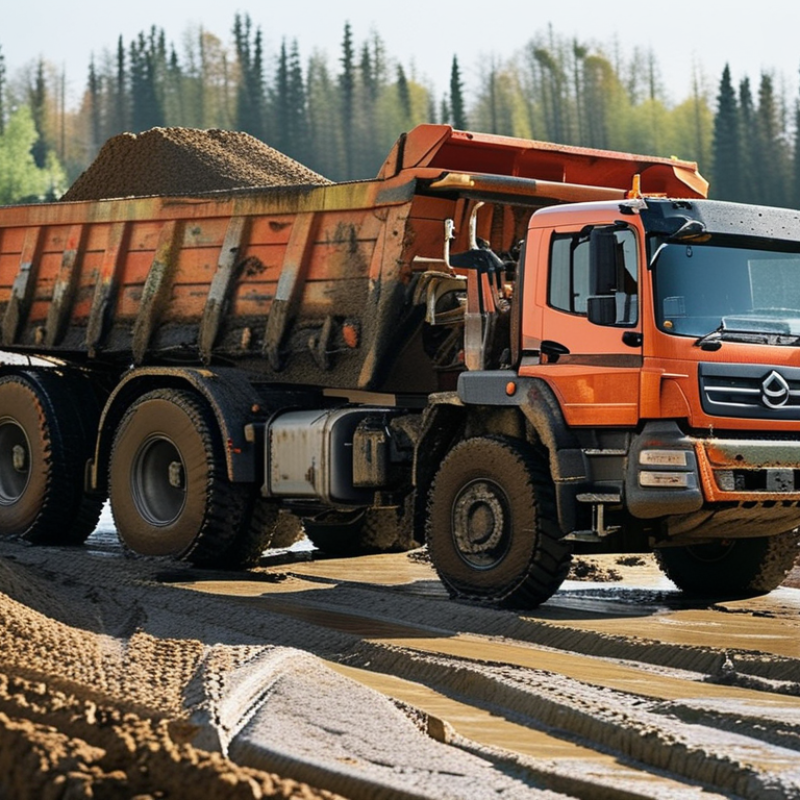
A 4x2 dump truck has four wheel positions and two powered wheels. One front axle steers, while one rear axle transfers engine power to the road. Its hydraulic system raises the dump body, allowing loose materials to slide out at a controlled site.
This layout is common for urban construction, landscaping, road maintenance, and short-distance aggregate delivery. With fewer driven components, the truck can weigh less and consume less fuel than a multi-axle-drive model. Its tighter turning circle also helps when navigating narrow streets, compact yards, and crowded building sites.
That distinction matters.
In practical operation, a driver should check the body hinge, hydraulic lines, tires, and load distribution before departure. Uneven loading can affect braking and stability, even on a paved route. A 4x2 configuration usually performs well on firm surfaces, but mud, loose gravel, steep grades, and icy roads can expose its limits. Not everywhere. Selecting the truck only by purchase price is an easy mistake. Payload requirements, axle ratings, local road rules, service access, and typical driving conditions deserve equal attention. Specifications also vary between vehicle configurations, so verified data from the manufacturer and an experienced technician should guide the final choice.

A 4x2 dump truck works through a coordinated chain of mechanical and hydraulic systems. “4x2” means four wheel positions, with two driven wheels. The front axle steers. The rear axle supplies traction. Power travels from the engine through the transmission and driveshaft to the differential. This layout leaves the chassis lighter than many multi-axle designs. It can also reduce fuel use on paved routes. Yet traction can suffer on mud, loose gravel, or steep construction sites.
When loading begins, the body rests on a reinforced frame above the rear axle. The operator engages a power take-off, which drives a hydraulic pump. Pressurized fluid then enters a lifting cylinder. The cylinder extends slowly, raising the front of the body. Gravity allows sand, soil, or aggregate to slide through the open tailgate. Lowering the body requires controlled valve movement, not a sudden release. A level load matters. Uneven material can shift the center of gravity and make unloading unstable.
Reliable operation depends on inspection and correct loading practice. Experienced drivers check hydraulic hoses, pins, tires, brakes, and the tailgate before leaving. They also confirm that the payload matches the axle rating and local road rules. Small leaks are not harmless. They can become lifting failures. The system looks simple, but it is not foolproof. Wet material may cling inside the body, so a driver might raise it higher than expected. That is where judgment matters. Regular maintenance records help technicians find repeated faults before they interrupt a workday.
Why Choose a 4x2 Dump Truck for Your Business?
What Jobs Suit a 4x2 Dump Truck Best?
A 4x2 dump truck suits short-haul work on paved roads and firm construction sites. Its two-axle layout usually offers easier steering, tighter turning, and lower operating costs. These features help contractors move sand, gravel, soil, and demolition debris around towns. Landscaping crews can use it for mulch, topsoil, stone, and small excavation projects. Municipal teams may also rely on it for road repairs, drainage work, and seasonal maintenance.
It works best when loading areas remain stable and travel distances stay moderate. A 4x2 truck can serve urban building sites where access is narrow. It may also support agricultural deliveries on dry, maintained lanes. However, soft ground, steep grades, and frequent heavy loads can expose its limits. I have seen operators focus on purchase price and overlook traction. That mistake can create delays, extra tire wear, and recovery costs. Payload should match the chassis, suspension, axle ratings, and local road requirements.
Tips: Inspect the route before assigning the truck. Check turning space, ground firmness, and unloading height. Keep each load balanced inside the body. Avoid carrying maximum weight on every trip. Review fuel use, maintenance records, and driver feedback each month. Sometimes, a smaller truck completes more useful trips. Sometimes, it does not. Test the real workload before choosing.
| Job Type | Typical Operating Environment | Recommended Payload Range | Why a 4x2 Is Suitable | Traction Requirement | Suitability | Key Operating Considerations |
|---|---|---|---|---|---|---|
| Urban Construction | City streets, building sites, paved access roads, and compact work areas | Approximately 5–12 tonnes, depending on chassis and local regulations | Lower weight, a tighter turning circle, and simpler maneuvering help the truck operate efficiently in crowded areas. | Low to moderate | ★★★★★ Excellent | Check overall vehicle height, axle-load limits, site access, and reversing space. |
| Sand and Gravel Delivery | Quarries, aggregate yards, paved roads, and short- to medium-distance delivery routes | Approximately 6–15 tonnes, subject to body capacity and legal axle limits | Efficient road performance and lower drivetrain complexity can reduce operating and maintenance costs on firm surfaces. | Low to moderate | ★★★★★ Excellent | Use a body volume that matches material density to avoid exceeding the legal payload. |
| Asphalt and Roadwork | Paved roads, urban rehabilitation projects, and prepared construction zones | Approximately 5–12 tonnes | Good maneuverability supports repeated loading and unloading near paving crews and road-repair equipment. | Low to moderate | ★★★★★ Excellent | Insulated or specialized bodies may be required for hot asphalt applications. |
| Landscaping and Soil Hauling | Residential developments, parks, gardens, and prepared dirt roads | Approximately 4–10 tonnes | Compact dimensions make it easier to access residential areas, narrow entrances, and landscaped sites. | Low to moderate | ★★★★★ Excellent | Consider a smaller body or payload-control system when working near soft lawns or finished surfaces. |
| Municipal Maintenance | Road maintenance, drainage work, public-works sites, and local service routes | Approximately 5–12 tonnes | Lower operating complexity and easy road maneuvering suit frequent stops and mixed municipal duties. | Low to moderate | ★★★★☆ Very Good | Optional equipment may include warning beacons, tool storage, auxiliary hydraulics, or snow equipment. |
| Demolition Debris Removal | Building sites with paved or stabilized access and short haul distances | Approximately 6–14 tonnes | A 4x2 can be cost-effective when debris is collected on firm ground and transported mainly on roads. | Moderate | ★★★★☆ Very Good | Use a reinforced body and observe load distribution requirements; avoid overloading with dense debris. |
| Agricultural Hauling | Farm roads, fields, loading areas, and seasonal transport routes | Approximately 5–12 tonnes | Suitable for firm farm tracks and road transport where the truck does not regularly enter wet or deeply rutted fields. | Moderate to high | ★★★☆☆ Conditional | Wet soil, steep grades, and unpaved fields may require a 4x4 or another higher-traction configuration. |
| Remote Off-Road Construction | Muddy sites, steep terrain, loose soil, rocky access roads, and undeveloped areas | Payload depends strongly on terrain, tire selection, and vehicle design | Its lower purchase and operating complexity may not offset the traction limitations of a single driven axle. | High | ★☆☆☆☆ Limited | A 4x4, 6x4, or articulated dump truck is generally more appropriate for sustained off-road work. |
| Long-Haul Heavy Dumping | Long-distance routes involving high payloads and frequent heavy-duty cycles | Payload must remain within the truck's certified gross and axle-weight ratings | It can perform on paved routes, but a larger multi-axle configuration may offer better payload capacity and durability. | Low on roads; moderate at sites | ★★★☆☆ Conditional | Compare fuel use, payload revenue, axle limits, body volume, and expected annual mileage before selecting the configuration. |
Note: Payload ranges are general planning values rather than a substitute for the vehicle manufacturer's ratings or local road regulations. Actual capacity depends on chassis specifications, body weight, axle configuration, material density, and legally permitted gross vehicle weight.
Why Choose a 4x2 Dump Truck for Your Business?
What Business Benefits Does a 4x2 Dump Truck Offer?
A 4x2 dump truck can reduce operating complexity for businesses handling urban construction, landscaping, and local aggregate deliveries. Its two-axle layout usually weighs less than multi-axle alternatives. That can improve maneuverability on narrow streets, compact sites, and crowded loading areas. Less drivetrain hardware may also simplify routine servicing and reduce maintenance points. Small details matter, such as easier access around the rear axle during inspections.
Fuel remains a major business expense. The American Transportation Research Institute reported an average trucking operating cost of $2.27 per mile in its 2023 Operational Costs of Trucking report. Fuel accounted for about $0.64 per mile. The U.S. Department of Energy identifies vehicle weight, rolling resistance, and idling as important fuel-use factors. A lighter 4x2 configuration may therefore support lower fuel consumption on frequent short routes, although actual savings depend on payload, terrain, and driver behavior. Results vary.
A 4x2 can also lower the purchase price and leave more budget for safety equipment, body customization, or fleet training. Its turning radius may help drivers position loads beside curbs or construction entrances with fewer corrections. However, selecting the smallest chassis is not always wise. Poor payload planning can increase wear, reduce productivity, or create scheduling problems. Businesses should compare axle ratings, local road conditions, annual mileage, and typical load density before buying. The cheaper option can become expensive. Performance data from real routes is worth collecting before making a final decision.
A 4x2 dump truck can suit businesses working mainly on paved roads and firm construction sites. Its lighter drivetrain often improves fuel efficiency, tire life, and purchase affordability. However, lower operating cost does not guarantee better performance. Consider your typical load, route length, and unloading frequency before choosing this layout. A truck carrying soil through a crowded urban area has different needs from one hauling gravel across uneven ground.
Payload is only one part of the decision. Check the permitted gross vehicle weight, axle ratings, bed volume, and hydraulic capacity. These figures should match local safety and road requirements. An oversized body may look productive, but it can encourage unstable loading or reduce braking confidence. Measure your loading equipment, too. A bed that sits too high may slow every cycle. Small details matter.
Maintenance access deserves practical attention. Inspect the engine bay, tipping cylinder, frame joints, and suspension design with a qualified technician. Ask for service records and estimate routine costs before signing anything. During field work, operators often notice warning signs earlier than managers do. Listen to their experience. I have seen buyers focus on the lowest price and regret ignoring cab comfort, visibility, and reliable parts availability. That mistake is avoidable, though not always obvious. Test the truck with a realistic load, not an empty vehicle, and compare its behavior on your actual routes.


For those larger-sized parts, or smaller quantity runs, we have 2 independent powder coat booths and ovens. The quality, durability and affordability of today’s powder coating finishes make this the process of choice for world-class companies.
Powder coating advantages over other forms of coating are many. Materials used in the Powder coating process can be metals and non-metals that come in a multitude of thicknesses, textures, colors, etc. Another of Powder coating’s biggest advantages over conventional coatings is its ability to create finishes in many different textures. Powder Coating Booths allow us the ability to apply these advantages to large products.
Tri-State Fabricators runs a full-service conveyor line for painting. Wet painting can provide protection or decoration to many different part styles. From start to finish, every project is easier to undergo random and point-based inspection by our skilled painting team.
Advantages to our Wet Paint Line are these lines start with product prep and ends with a thorough inspection of a high quality finished product. Our ability to complete large and small projects with a superior finish and doing so in a timely and economical fashion. This passes along the savings in production to our customers. When powder coating ins not an option, our Wet Paint Line gets the job done right the first time.
When the parts get big and heavy we roll-out our custom paint racks and oversize booth. By utilizing our partnerships with all the major paint brands, we can match virtually any color with wet paint.
The advantages of having access to a Wet Paint Booth are many. Large projects of many different shapes can be loaded into the booth. The Wet Paint Booth offers an environment that is much more controlled than a typical parts painting operation.
Not only are they used because of their controlled environment, but they’re are also advantageous when it comes to applying paint to parts that are needed in industries that require specialty coatings such as medical, aerospace, etc.
Our military forces have some very high standards when it comes to the finish of their vehicles and equipment. From the first pre-treatment step to final coat, it takes a great deal of knowledge and experience to protect the men and women of our armed forces. They deserve only the best, and Tri-State Fabricators provides it.
All of our processes are closely monitored by our staff and management teams. Both of which are highly trained in the processes of metal fabrication and finishing. Tri-State Fabricators’ goal is to always fully satisfy each and every customer, including the military. We will always put a 110% into what we do.
Abrasive media blasting is an excellent way to remove old paint, rust, and increase the paint/powder adhesion. Glass beads produce a much smoother and brighter finish than angular abrasives; leaving the part clean yet without any dimensional change. Chemically inert and environmentally friendly, we can recycle our beads approximately 30 times; making them a more preferred method of metal cleaning or surface finishing.
Advantages to Glass Bead Blasting are many. Glass bead blast media is used when a project is needing rough surfaces need to become smooth for applications of coatings such as paint. It is typically used to clean paint and rust from a product surface without deforming the surface it is being used on. Overall, compared to many other blasting media, Glass Bead Blasting is a very economical choice and those savings are always passed on to our customers.
Tri-State Fabricators utilize a zinc phosphate wash to clean and etch the material to ensure the best paint adhesion possible. The unique design of our 3-stage wash system does the work like a 5-stage. From Cleaning and rinsing to conversion coating and post-treatment, Our Part Washing process is a complete service and works throughout the fabrication service and the finishing service.
Along with the previously mentioned benefits, Curing is a vital chemical reaction that leaves the product finish hard and relatively safe from mild abrasion and aggressive corrosion. This process can be done in more than one way; ambient air-dry or in curing ovens at temps that exceed 240°.
From fixing paint mistakes (someone else’s of course) to simply cleaning our paint line hooks, our burn-off oven is put to good use. After a quick burn-off, a little clean up, and a fresh coat of paint, your parts will look better than new.
Why does our Burn-Off Oven work so well? Because super heating the air around parts turns the materials into ashes. From paint and powder coatings to rubber and machining oils, high temps do the job without degrading the integrity of the part.
Masking is a vital part of producing high quality products. We have die-cut masking patterns to protect machined surfaces as well as a wide range of plugs and caps to protect threaded holes and bolts. We provide permanent and temporary masking.
Masking allows the selected sections of a product to be protected from a fabrication or finishing service. This can be with both chemicals when etching and tapes, paints when only finishing just a section of the product. Masking is great in aiding the customization process of a project.
Screen printing is a photographic process that transfers artwork onto a porous nylon screen which allows colored ink to flow through the screen and be deposited on an aluminum or plastic component. We can generally have just about any design created onto a screen for your parts.
Some of the advantages of Screen Printing are, brand recognition for your business displaying on your products, assembly instructions, product warnings/hazards, etc. Tri-State Fabricators produces Screen Printing of the highest quality so you know it’s durable.
Metal Finishing is the art of treating the exterior portion of product, often metal but can also be made of other materials, so that the surface is clean and free of any debris. Then the process of applying coats or either paint of powder coat takes place. This coating process improves the quality of the product in both appearance and resistance to wear and corrosion.
Tri-State Fabricators, Inc., understands that a project typically isn’t complete until a high-quality finish has been added to your product. This is why our painting and powder coating teams continuously inspect the products throughout the Metal Finishing process.

