


Choosing Ss Strip Coil 304 Stainless Steel Coil begins with understanding real operating conditions, not relying on attractive specifications alone. Grade 304 combines chromium and nickel, creating a passive surface that resists moisture, food acids, detergents, and many everyday chemicals. Its balanced composition also supports forming, stamping, slitting, and welding. That flexibility makes it useful for kitchen equipment, architectural trim, medical components, tanks, and precision parts.
Dr. John C. Lippold, a respected welding metallurgy expert, states, “Stainless steel performance depends on composition, processing, and service conditions.” This principle matters when selecting Ss Strip Coil 304 Stainless Steel Coil. A narrow strip may pass through a stamping die repeatedly without cracking, while a polished coil can provide a clean, reflective finish for visible panels. Proper annealing and controlled rolling also influence hardness, flatness, edge quality, and dimensional consistency.
Small details matter.
In my experience, buyers sometimes focus only on price per kilogram. That approach can create hidden costs through burrs, inconsistent thickness, surface scratches, or difficult forming. A reliable supplier should provide mill certificates, heat numbers, thickness tolerances, and practical guidance for the intended application. Still, 304 is not perfect. Salt-rich environments may require 316 stainless steel, especially near seawater or de-icing chemicals. That limitation deserves honest attention.
When its strengths match the application, Ss Strip Coil 304 Stainless Steel Coil offers a dependable balance of corrosion resistance, workability, appearance, and long service life. The best choice comes from verified data, experienced processing, and realistic service expectations.
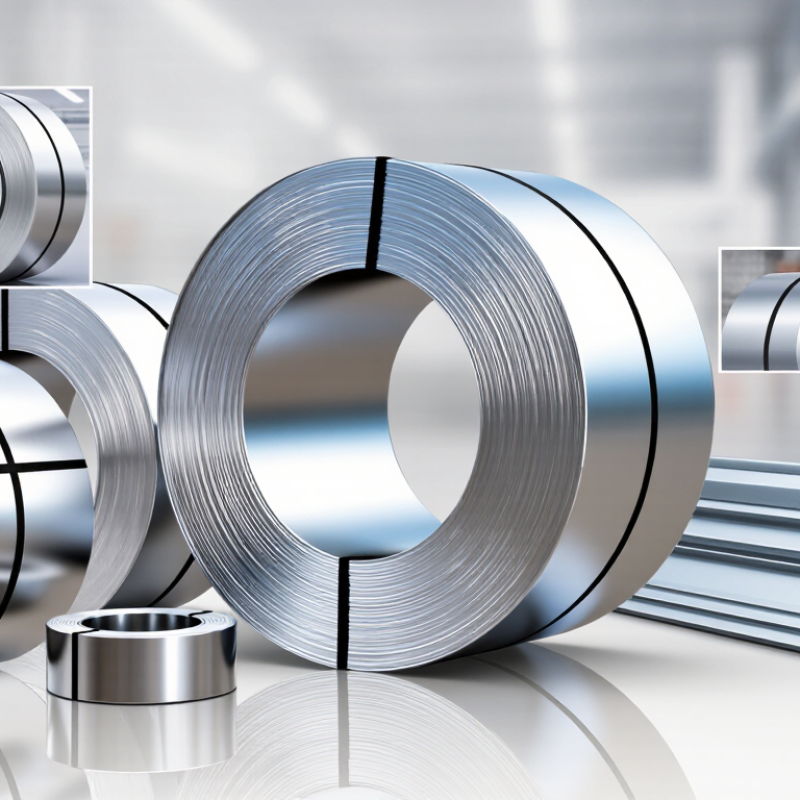
What Is SS Strip Coil 304 Stainless Steel Coil?
SS strip coil 304 stainless steel coil is a narrow, continuously wound strip made from 304 stainless steel. It usually contains about 18% chromium and 8% nickel. This composition helps the steel resist moisture, oxidation, and many common chemicals. The coil may be cold rolled for a smoother surface and tighter thickness control. It may also receive slitting, leveling, or edge finishing before fabrication.
The coil form makes storage and processing more efficient. Manufacturers can feed it into stamping, roll forming, cutting, or welding equipment. Typical uses include kitchen components, fasteners, tubes, enclosures, and architectural trim. Its clean appearance is useful in visible applications. It also performs well in many indoor and mildly corrosive environments.
Details matter here. I would check thickness, width tolerance, edge condition, surface finish, and heat identification before production. A certificate can confirm chemical composition and mechanical properties. The phrase “corrosion resistant” should not be treated as unlimited protection. Saltwater, high heat, and strong chemicals may require another grade or added protection. That assumption needs checking. During handling, sharp edges can cause injuries and surface scratches can reduce value. Proper packaging and dry storage help prevent avoidable damage. 304 is versatile, but it is not always the best choice. A careful application review is still necessary.

| Data Dimension | Typical Data or Requirement | Why It Matters |
|---|---|---|
| Material designation | 304 stainless steel; UNS S30400; EN 1.4301 | Provides a widely recognized austenitic stainless steel grade for strip and coil production. |
| Product form | Cold-rolled or annealed strip supplied in coil form | Continuous coil format supports slitting, stamping, forming, and high-volume fabrication. |
| Principal alloying elements | Chromium: 18.0–20.0%; Nickel: 8.0–10.5% | Chromium helps form the passive corrosion-resistant surface, while nickel stabilizes the austenitic structure. |
| Carbon content | Maximum 0.07% by mass for standard 304 chemistry | The controlled carbon level supports corrosion resistance and welding performance in common applications. |
| Manganese and silicon | Manganese: maximum 2.00%; Silicon: maximum 1.00% | These elements assist steelmaking and processing while remaining within standard 304 composition limits. |
| Tensile strength | Typically minimum 515 MPa in annealed material | Indicates the material’s resistance to breaking under tensile loading; actual values depend on specification and temper. |
| Yield strength | Typically minimum 205 MPa in annealed material | Helps engineers evaluate permanent deformation during forming and service. |
| Elongation | Typically minimum 40% in 50 mm for annealed material | High ductility makes 304 suitable for bending, deep drawing, and other forming operations. |
| Density | Approximately 8.0 g/cm³ | Useful for calculating coil weight, material consumption, shipping loads, and component mass. |
| Melting range | Approximately 1,400–1,450°C | Provides a general reference for thermal processing and high-temperature fabrication conditions. |
| Magnetic behavior | Generally non-magnetic when fully annealed; may become slightly magnetic after cold working | Important when selecting material for components where magnetic response must be limited. |
| Corrosion resistance | Good resistance in many atmospheric, food-processing, and mildly corrosive environments | The chromium-rich passive film provides dependable general-purpose corrosion protection, although it is not immune to chloride attack. |
| Weldability | Excellent weldability using common stainless steel welding processes | Suitable for fabricated assemblies; post-weld cleaning can help restore surface corrosion resistance. |
| Formability | Very good ductility and deep-drawing capability | Enables production of precise stamped parts, clips, covers, springs, and formed profiles. |
| Common surface finishes | 2B, BA, No. 3, No. 4, and other specified finishes | Finish selection affects appearance, reflectivity, roughness, cleanability, and suitability for decorative or industrial use. |
| Typical thickness range | Commonly supplied from approximately 0.05 mm to 3.00 mm; availability depends on specification and processing | A broad thickness range supports precision electronics, general fabrication, and heavier industrial components. |
| Slit width capability | Custom slit widths based on the parent coil and dimensional tolerances | Slit-to-width supply can reduce material waste and simplify downstream production. |
| Relevant standards | Common references include ASTM A240, ASTM A666, EN 10088-2, and JIS G4305 | Standards define chemistry, mechanical properties, dimensions, testing, and delivery requirements. |
| Typical applications | Kitchen equipment, food-processing components, architectural trim, automotive parts, tubing, fasteners, and electrical enclosures | The combination of corrosion resistance, formability, weldability, and availability makes 304 a versatile general-purpose choice. |
| Key selection limitation | Not the preferred grade for severe chloride exposure or strongly reducing chemical environments | For demanding chloride, marine, or higher-temperature conditions, a different stainless steel grade may be more appropriate. |
Why Choose SS Strip Coil 304 Stainless Steel Coil?
304 stainless steel strip coil combines corrosion resistance, formability, and clean surface performance. ASTM A240 specifies approximately 17.5–19.5% chromium and 8–10.5% nickel for common 304 grades. Its carbon limit is typically 0.07%, helping reduce carbide precipitation after welding. The material also offers a minimum tensile strength of about 515 MPa and yield strength near 205 MPa in the annealed condition, according to ASTM A240 data.
The key property is balanced corrosion resistance. Chromium forms a thin passive film that protects the surface in humid kitchens, workshops, and indoor processing areas. However, 304 is not immune to corrosion. Salt spray, stagnant moisture, and chloride deposits can cause pitting, especially near scratches or welds. That detail is easy to overlook. Regular cleaning and suitable surface finishing still matter.
304 strip coil also bends well for clips, covers, tubing, and formed components. Annealed material is generally nonmagnetic, while cold rolling may create slight magnetism through deformation-induced martensite. Its thermal conductivity is about 16 W/m·K near room temperature, based on engineering property data. Actual performance changes with thickness, temper, edge quality, and finishing. I would not select the grade from chemistry alone. Application testing remains necessary.
Manufacturing 304 stainless steel strip coil begins with carefully selected raw materials. In practical mill work, chemistry control matters before the first rolling pass. Chromium and nickel levels are tested to support corrosion resistance, formability, and stable performance.
The steel is melted, cast into slabs, and reheated before hot rolling reduces its thickness. Surface condition matters here. Scale, heat marks, or uneven edges can create problems later.
After hot rolling, the strip is annealed to soften its structure. Pickling removes oxide scale from the surface. The cleaned strip then passes through cold rolling mills, where precise pressure creates the required thickness and smoothness.
This stage can involve several passes. Operators check flatness, width, and tension during production. Small deviations may appear.
They should not be ignored.
Final annealing restores ductility after cold working. Depending on the required finish, the coil may receive another cleaning treatment and surface inspection. It is then slit into narrower widths, with edges checked for burrs and cracks.
Experienced inspectors use gauges, visual checks, and documented test results. A reliable coil should meet the agreed chemical, mechanical, dimensional, and surface requirements.
Still, no production line is perfectly uniform. One detail often deserves more attention: packaging must prevent moisture, impact, and edge damage during storage and transport.
304 stainless steel coil is widely used because it combines corrosion resistance, strength, and clean surface quality. Its chromium and nickel content supports reliable performance in many indoor and outdoor environments. Fabricators can slit, roll, stamp, and form this coil with consistent results. That flexibility reduces material waste during production. It also supports smooth welding and straightforward maintenance.
In food-processing equipment, 304 coil becomes tanks, worktables, conveyors, and protective panels. Its non-porous surface is easy to clean after contact with water, oils, or food residue. Kitchen sinks, counters, and appliance panels also use it for appearance and durability. In construction, contractors apply it to handrails, wall cladding, trim, and elevator interiors. These surfaces face frequent touching and cleaning.
It also serves chemical containers, heat exchangers, medical equipment, and transport components. The right thickness depends on load, forming depth, temperature, and installation conditions. Careful selection matters. A polished finish may suit visible interiors, while a brushed finish can hide minor marks better. However, 304 is not perfect. Salt exposure, tight crevices, and poor cleaning can still cause staining or corrosion. It can stain. Practical testing remains important, especially near coastlines or chemical processing areas. Surface protection during cutting and storage should not be overlooked, because embedded iron particles may create misleading rust marks.
Choosing SS strip coil 304 stainless steel starts with the application, not only the grade. Type 304 offers strong corrosion resistance, clean appearance, and good forming performance. It suits food equipment, enclosures, heat exchangers, and many indoor components.
Check thickness, width, coil weight, edge condition, and surface finish carefully. A 2B finish may suit general fabrication, while BA offers a brighter appearance. Confirm annealed or temper-rolled material before ordering. Request a mill test certificate, dimensional report, and chemical composition data. Small differences matter.
I once focused too heavily on price and overlooked width tolerance. That caused extra slitting work. I still review this point twice. Sample inspection should include thickness readings, scratches, rust stains, burrs, and coil shape.
Store the coil indoors on stable supports, above the floor. Keep it away from rain, condensation, salt, and carbon-steel dust. Dry surroundings help.
Use clean lifting tools and avoid dragging the coil across rough surfaces. Keep protective wrapping intact, but inspect trapped moisture after delivery. A damp package can mark the surface surprisingly fast.
Apply clear identification tags showing grade, size, heat number, and receiving date. Rotate older stock first. Storage records are often neglected, yet they reveal repeated handling problems.
If the service environment contains strong chlorides, reconsider 304 and evaluate a more suitable stainless grade.


For those larger-sized parts, or smaller quantity runs, we have 2 independent powder coat booths and ovens. The quality, durability and affordability of today’s powder coating finishes make this the process of choice for world-class companies.
Powder coating advantages over other forms of coating are many. Materials used in the Powder coating process can be metals and non-metals that come in a multitude of thicknesses, textures, colors, etc. Another of Powder coating’s biggest advantages over conventional coatings is its ability to create finishes in many different textures. Powder Coating Booths allow us the ability to apply these advantages to large products.
Tri-State Fabricators runs a full-service conveyor line for painting. Wet painting can provide protection or decoration to many different part styles. From start to finish, every project is easier to undergo random and point-based inspection by our skilled painting team.
Advantages to our Wet Paint Line are these lines start with product prep and ends with a thorough inspection of a high quality finished product. Our ability to complete large and small projects with a superior finish and doing so in a timely and economical fashion. This passes along the savings in production to our customers. When powder coating ins not an option, our Wet Paint Line gets the job done right the first time.
When the parts get big and heavy we roll-out our custom paint racks and oversize booth. By utilizing our partnerships with all the major paint brands, we can match virtually any color with wet paint.
The advantages of having access to a Wet Paint Booth are many. Large projects of many different shapes can be loaded into the booth. The Wet Paint Booth offers an environment that is much more controlled than a typical parts painting operation.
Not only are they used because of their controlled environment, but they’re are also advantageous when it comes to applying paint to parts that are needed in industries that require specialty coatings such as medical, aerospace, etc.
Our military forces have some very high standards when it comes to the finish of their vehicles and equipment. From the first pre-treatment step to final coat, it takes a great deal of knowledge and experience to protect the men and women of our armed forces. They deserve only the best, and Tri-State Fabricators provides it.
All of our processes are closely monitored by our staff and management teams. Both of which are highly trained in the processes of metal fabrication and finishing. Tri-State Fabricators’ goal is to always fully satisfy each and every customer, including the military. We will always put a 110% into what we do.
Abrasive media blasting is an excellent way to remove old paint, rust, and increase the paint/powder adhesion. Glass beads produce a much smoother and brighter finish than angular abrasives; leaving the part clean yet without any dimensional change. Chemically inert and environmentally friendly, we can recycle our beads approximately 30 times; making them a more preferred method of metal cleaning or surface finishing.
Advantages to Glass Bead Blasting are many. Glass bead blast media is used when a project is needing rough surfaces need to become smooth for applications of coatings such as paint. It is typically used to clean paint and rust from a product surface without deforming the surface it is being used on. Overall, compared to many other blasting media, Glass Bead Blasting is a very economical choice and those savings are always passed on to our customers.
Tri-State Fabricators utilize a zinc phosphate wash to clean and etch the material to ensure the best paint adhesion possible. The unique design of our 3-stage wash system does the work like a 5-stage. From Cleaning and rinsing to conversion coating and post-treatment, Our Part Washing process is a complete service and works throughout the fabrication service and the finishing service.
Along with the previously mentioned benefits, Curing is a vital chemical reaction that leaves the product finish hard and relatively safe from mild abrasion and aggressive corrosion. This process can be done in more than one way; ambient air-dry or in curing ovens at temps that exceed 240°.
From fixing paint mistakes (someone else’s of course) to simply cleaning our paint line hooks, our burn-off oven is put to good use. After a quick burn-off, a little clean up, and a fresh coat of paint, your parts will look better than new.
Why does our Burn-Off Oven work so well? Because super heating the air around parts turns the materials into ashes. From paint and powder coatings to rubber and machining oils, high temps do the job without degrading the integrity of the part.
Masking is a vital part of producing high quality products. We have die-cut masking patterns to protect machined surfaces as well as a wide range of plugs and caps to protect threaded holes and bolts. We provide permanent and temporary masking.
Masking allows the selected sections of a product to be protected from a fabrication or finishing service. This can be with both chemicals when etching and tapes, paints when only finishing just a section of the product. Masking is great in aiding the customization process of a project.
Screen printing is a photographic process that transfers artwork onto a porous nylon screen which allows colored ink to flow through the screen and be deposited on an aluminum or plastic component. We can generally have just about any design created onto a screen for your parts.
Some of the advantages of Screen Printing are, brand recognition for your business displaying on your products, assembly instructions, product warnings/hazards, etc. Tri-State Fabricators produces Screen Printing of the highest quality so you know it’s durable.
Metal Finishing is the art of treating the exterior portion of product, often metal but can also be made of other materials, so that the surface is clean and free of any debris. Then the process of applying coats or either paint of powder coat takes place. This coating process improves the quality of the product in both appearance and resistance to wear and corrosion.
Tri-State Fabricators, Inc., understands that a project typically isn’t complete until a high-quality finish has been added to your product. This is why our painting and powder coating teams continuously inspect the products throughout the Metal Finishing process.

