


Why Do Buyers Choose a Hookah Diffuser?

A Hookah Diffuser is a small accessory, but buyers often notice its effect during a session. Fitted to the stem below the waterline, it breaks larger bubbles into smaller ones. This can soften bubbling noise and make the draw feel more even. The change is usually subtle. Small details matter.

Buyers may also value the calmer sound in a shared room or a quieter home setting. Results depend on the diffuser’s design, its fit, and the water level. A loose attachment or poorly matched setup may add little benefit. Not every setup improves. That distinction matters. A diffuser does not replace careful assembly or routine cleaning. Rinsing the parts and letting them dry can help keep residue from building up. Check that the accessory fits the hookah model before buying, and follow the manufacturer’s care instructions. Product descriptions can be helpful, but they do not guarantee the same experience for everyone. The simplest test is a secure fit and a steady draw. Some buyers may prefer the original sound and feel; that is reasonable too. A Hookah Diffuser is best viewed as a practical option for adjusting airflow feel and sound, rather than a must-have upgrade.
Why Do Buyers Choose a Hookah Diffuser?

What a Hookah Diffuser Is and How It Fits into a Hookah

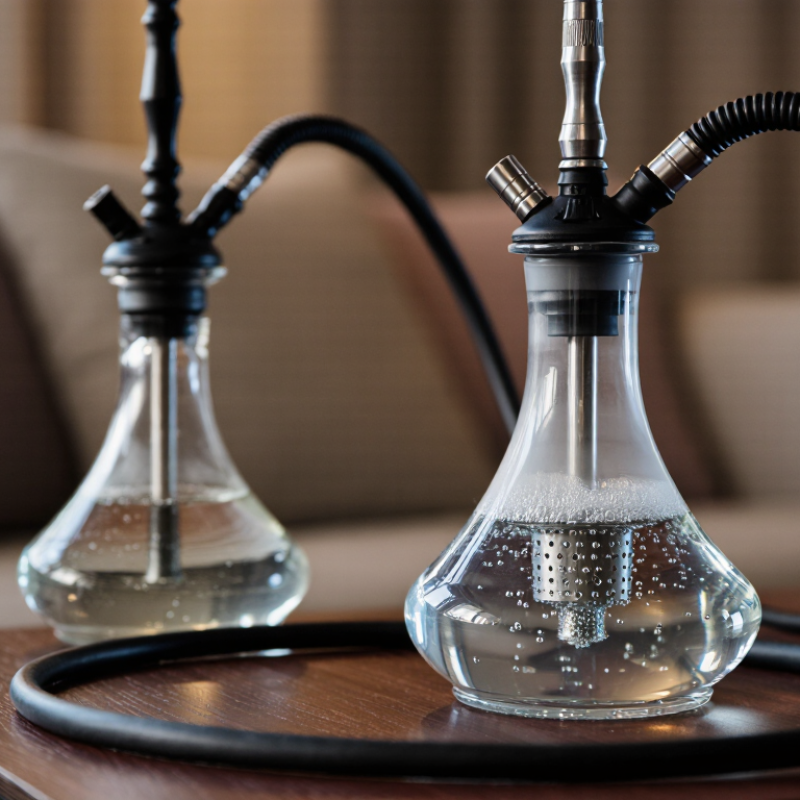
A hookah diffuser is a small perforated piece fitted to the submerged end of a hookah’s downstem. Some models attach separately; others have a diffuser built into the stem. Its holes divide the rising air into smaller bubbles as it passes through the water. You can often see the difference through a clear glass base: instead of a few large bubbles, the water produces a finer, more even stream. Small detail, noticeable change.

The diffuser can soften the bubbling sound and alter the feel of the draw. The effect depends on the hole size, water level, and the hookah’s design. A tighter draw may feel less comfortable to some users, so a diffuser is not automatically an upgrade. It also needs regular cleaning; residue can collect in its narrow openings and reduce airflow.

A softer bubbling sound should not be mistaken for safer use. The diffuser changes how air moves through the hookah, not the risks of inhaling smoke.


How a Diffuser Changes Airflow and Bubble Formation

A hookah diffuser changes the downstem’s outlet from one large opening to several smaller ones. Air then leaves through multiple jets, breaking into many bubbles instead of a few broad ones. The difference is easy to see: a coarse stream makes larger, louder bursts, while smaller bubbles tend to sound softer. Not magic. The result depends on hole size, water depth, and how quickly air is drawn.

Bubble size matters because smaller bubbles provide more water–air surface area for the same volume of air. NIST’s Chemistry WebBook lists water’s surface tension at about 72.8 millinewtons per meter at 20°C; surface tension helps shape bubbles as they form. A diffuser changes how air enters the water, but it cannot guarantee a particular bubble size or a measurable change in what the air contains. Real performance varies.

Airflow resistance is the trade-off. More openings may spread the flow, yet narrow or obstructed holes can make a draw feel tighter. ASHRAE’s Handbook—Fundamentals describes how flow resistance depends on passage geometry and operating conditions, a useful principle for understanding these parts. Compare the same setup with and without the diffuser, keeping water level and draw strength steady. Even then, the sensation is subjective; I would not treat a quieter bubbling sound as proof of better filtration.

Practical Benefits Buyers Seek from a Hookah Diffuser

A hookah diffuser is a perforated sleeve fitted over the submerged end of the stem. Its openings split rising air into smaller bubbles, which may soften bubbling noise and reduce splashing. Buyers often value these small comforts during setup and use. Not magic.

A quieter draw can make a shared setup feel easier to manage, especially when the hose shifts or water levels vary. But performance depends on fit. A loose sleeve may rattle, clog, or add resistance; stem widths also differ. Check compatibility, cleaning access, and whether the diffuser stays secure underwater. Small details matter.

A smoother feel should not be mistaken for safer use. The WHO’s 2005 Advisory Note on Waterpipe Tobacco Smoking estimates that a typical one-hour session may involve inhaling 100–200 times the smoke volume of one cigarette. That figure describes volume, not equivalent harm. A diffuser does not remove toxicants or make inhalation safe. Independent data measuring diffuser-specific performance remain limited, so claims of meaningful filtration deserve skepticism.

How a Diffuser May Affect Draw, Sound, and Smoke

A hookah diffuser sits at the end of the stem, where it breaks one stream of bubbles into many smaller ones. In a quiet room, that usually softens the bubbling sound. The change is easy to notice: less of a deep “glug,” more of a fine fizz. It may also make the draw feel smoother, though smoother does not always mean lighter. Small holes, water depth, and hose setup can all change resistance.

Smoke output is less predictable. A diffuser can spread bubbles through the water, but it does not reliably increase smoke or make it safer. The CDC reports that a typical one-hour hookah session can involve inhaling 100–200 times the smoke volume of one cigarette. That figure describes volume, not an exact measure of harm, and a diffuser does not remove this concern. The comparison is striking, but it can be easy to misread.

There is no single public test standard that predicts how every diffuser changes draw or smoke. I would compare the same setup, water level, and packing, then note the effort needed for each pull. My own impression can still be wrong; even a small change in water depth may alter the result. A diffuser is best judged as a sound-and-draw adjustment, not a performance guarantee.

What Buyers Consider When Choosing a Hookah Diffuser

Buyers often choose a hookah diffuser for a smoother, quieter draw, but comfort depends on the whole setup. The diffuser sits at the end of the stem and breaks larger bubbles into smaller ones. That can soften bubbling sounds. It may also make airflow feel tighter. Try to match the diffuser’s fit and opening size to the stem, rather than judging it by appearance alone.

The Grand View Research Hookah Market report estimated the global market at about US$2.3 billion in 2023, with projected growth through 2030. This figure covers the broader hookah market, not diffusers specifically, so it cannot show how many buyers prefer one diffuser design. Still, it signals a market where product usability and component compatibility matter. Check the stem diameter, insertion depth, and whether the diffuser stays secure when the unit is moved.

Cleaning deserves equal attention. Narrow slots may create finer bubbles, yet residue can collect in small openings. Look for smooth surfaces, accessible holes, and materials that tolerate regular washing. A simple test helps: inspect the diffuser under bright light after rinsing. No visible buildup. I would not assume a quieter draw is always a better one; personal airflow preference varies, and product descriptions rarely capture that feeling exactly.

Why Do Buyers Choose a Hookah Diffuser? - What Buyers Consider When Choosing a Hookah Diffuser

Buyer Consideration What Buyers Look For Practical Benefit Potential Trade-Off Typical Priority
Bubble and draw feel A diffuser with multiple small openings that breaks the downstem’s airflow into finer bubbles. Can make bubbling sound quieter and the draw feel smoother, depending on the hookah and water level. The draw may feel different from the more distinct bubbling of an open-ended downstem. High
Compatibility A fit that matches the downstem’s diameter, connection style, and available clearance inside the base. Helps the diffuser sit securely without interfering with the base or other components. Diffuser sizes and fittings are not universal, so measurements may be needed before purchase. High
Cleaning and maintenance Openings that are easy to rinse or brush, plus a shape that does not trap residue easily. Makes routine cleaning more straightforward and helps keep airflow openings clear. Small holes can collect residue and may need more attention than a plain downstem opening. High
Material and durability A sturdy material with a smooth finish and no visible cracks, rough edges, or loose parts. Supports regular use and makes handling and cleaning easier. Material choice can affect weight, fragility, and how carefully the diffuser should be handled. Medium
Water level and airflow A diffuser that works with the user’s usual water level and does not make inhalation feel excessively restrictive. Allows buyers to tune the bubbling and draw by adjusting the water level and setup. Too much water coverage or blocked openings can increase draw resistance. High
Noise reduction A design intended to reduce the larger, louder bubbles produced by an open-ended downstem. May create a quieter bubbling sound during use. The amount of noise reduction varies with the diffuser, water depth, and overall setup. Medium
Ease of installation A diffuser that can be attached or removed without tools and remains stable during use. Makes it easier to add the accessory to an existing hookah setup. A loose or poorly matched fit can reduce stability and affect airflow. Medium
Price and value A reasonable cost relative to fit, build quality, cleaning needs, and expected frequency of use. Helps buyers decide whether the changes in sound and draw are worthwhile for their setup. A diffuser is an optional accessory, and its benefits may be less noticeable in some setups. Medium

Powder Coat Booths

For those larger-sized parts, or smaller quantity runs, we have 2 independent powder coat booths and ovens. The quality, durability and affordability of today’s powder coating finishes make this the process of choice for world-class companies.

Powder coating advantages over other forms of coating are many. Materials used in the Powder coating process can be metals and non-metals that come in a multitude of thicknesses, textures, colors, etc. Another of Powder coating’s biggest advantages over conventional coatings is its ability to create finishes in many different textures. Powder Coating Booths allow us the ability to apply these advantages to large products.

Wet Paint Line

Tri-State Fabricators runs a full-service conveyor line for painting. Wet painting can provide protection or decoration to many different part styles. From start to finish, every project is easier to undergo random and point-based inspection by our skilled painting team.

Advantages to our Wet Paint Line are these lines start with product prep and ends with a thorough inspection of a high quality finished product. Our ability to complete large and small projects with a superior finish and doing so in a timely and economical fashion. This passes along the savings in production to our customers. When powder coating ins not an option, our Wet Paint Line gets the job done right the first time.

Wet Paint Booths

When the parts get big and heavy we roll-out our custom paint racks and oversize booth. By utilizing our partnerships with all the major paint brands, we can match virtually any color with wet paint.

The advantages of having access to a Wet Paint Booth are many. Large projects of many different shapes can be loaded into the booth. The Wet Paint Booth offers an environment that is much more controlled than a typical parts painting operation.

Not only are they used because of their controlled environment, but they’re are also advantageous when it comes to applying paint to parts that are needed in industries that require specialty coatings such as medical, aerospace, etc.

Military CARC

Our military forces have some very high standards when it comes to the finish of their vehicles and equipment. From the first pre-treatment step to final coat, it takes a great deal of knowledge and experience to protect the men and women of our armed forces. They deserve only the best, and Tri-State Fabricators provides it.

All of our processes are closely monitored by our staff and management teams. Both of which are highly trained in the processes of metal fabrication and finishing. Tri-State Fabricators’ goal is to always fully satisfy each and every customer, including the military. We will always put a 110% into what we do.

Glass-Bead Blasting

Abrasive media blasting is an excellent way to remove old paint, rust, and increase the paint/powder adhesion. Glass beads produce a much smoother and brighter finish than angular abrasives; leaving the part clean yet without any dimensional change. Chemically inert and environmentally friendly, we can recycle our beads approximately 30 times; making them a more preferred method of metal cleaning or surface finishing.

Advantages to Glass Bead Blasting are many. Glass bead blast media is used when a project is needing rough surfaces need to become smooth for applications of coatings such as paint. It is typically used to clean paint and rust from a product surface without deforming the surface it is being used on. Overall, compared to many other blasting media, Glass Bead Blasting is a very economical choice and those savings are always passed on to our customers.

Part Washing

Tri-State Fabricators utilize a zinc phosphate wash to clean and etch the material to ensure the best paint adhesion possible. The unique design of our 3-stage wash system does the work like a 5-stage. From Cleaning and rinsing to conversion coating and post-treatment, Our Part Washing process is a complete service and works throughout the fabrication service and the finishing service.

Along with the previously mentioned benefits, Curing is a vital chemical reaction that leaves the product finish hard and relatively safe from mild abrasion and aggressive corrosion. This process can be done in more than one way; ambient air-dry or in curing ovens at temps that exceed 240°.

Burn-Off Oven

From fixing paint mistakes (someone else’s of course) to simply cleaning our paint line hooks, our burn-off oven is put to good use. After a quick burn-off, a little clean up, and a fresh coat of paint, your parts will look better than new.

Why does our Burn-Off Oven work so well? Because super heating the air around parts turns the materials into ashes. From paint and powder coatings to rubber and machining oils, high temps do the job without degrading the integrity of the part.

Masking

Masking is a vital part of producing high quality products. We have die-cut masking patterns to protect machined surfaces as well as a wide range of plugs and caps to protect threaded holes and bolts. We provide permanent and temporary masking.

Masking allows the selected sections of a product to be protected from a fabrication or finishing service. This can be with both chemicals when etching and tapes, paints when only finishing just a section of the product. Masking is great in aiding the customization process of a project.

Screen Printing

Screen printing is a photographic process that transfers artwork onto a porous nylon screen which allows colored ink to flow through the screen and be deposited on an aluminum or plastic component. We can generally have just about any design created onto a screen for your parts.

Some of the advantages of Screen Printing are, brand recognition for your business displaying on your products, assembly instructions, product warnings/hazards, etc. Tri-State Fabricators produces Screen Printing of the highest quality so you know it’s durable.

Metal Finishing

Metal Finishing is the art of treating the exterior portion of product, often metal but can also be made of other materials, so that the surface is clean and free of any debris. Then the process of applying coats or either paint of powder coat takes place. This coating process improves the quality of the product in both appearance and resistance to wear and corrosion.

Tri-State Fabricators, Inc., understands that a project typically isn’t complete until a high-quality finish has been added to your product. This is why our painting and powder coating teams continuously inspect the products throughout the Metal Finishing process.
