


Bulk Instant Coffee can help businesses serve a dependable cup without adding grinders, brewing equipment, or lengthy preparation to every order. In a busy hotel breakfast room, café, office kitchen, or catering station, staff can portion granules quickly and keep service moving. The practical appeal is clear. Less equipment. Faster preparation.
Buying in bulk may also simplify stock planning. Larger packs can reduce frequent reordering, while consistent product specifications make it easier to train staff and estimate servings. But low cost per kilogram does not guarantee good value. Check the recommended dose, packaging size, storage requirements, and taste in the drinks your customers actually order. A sample test matters. So does feedback from the people serving it.
I can’t responsibly attribute a quotation to a named industry expert without a verifiable source. A suitable expert comment should address measurable factors, such as cup consistency, preparation time, or cost per serving—not simply praise bulk purchasing. This article can guide businesses through those considerations, including where Bulk Instant Coffee fits and where it may fall short. It is worth being honest: some customers prefer freshly brewed coffee, and instant coffee will not suit every menu. The best purchase is the one that meets your service needs, quality expectations, and budget, then performs reliably during a real shift.
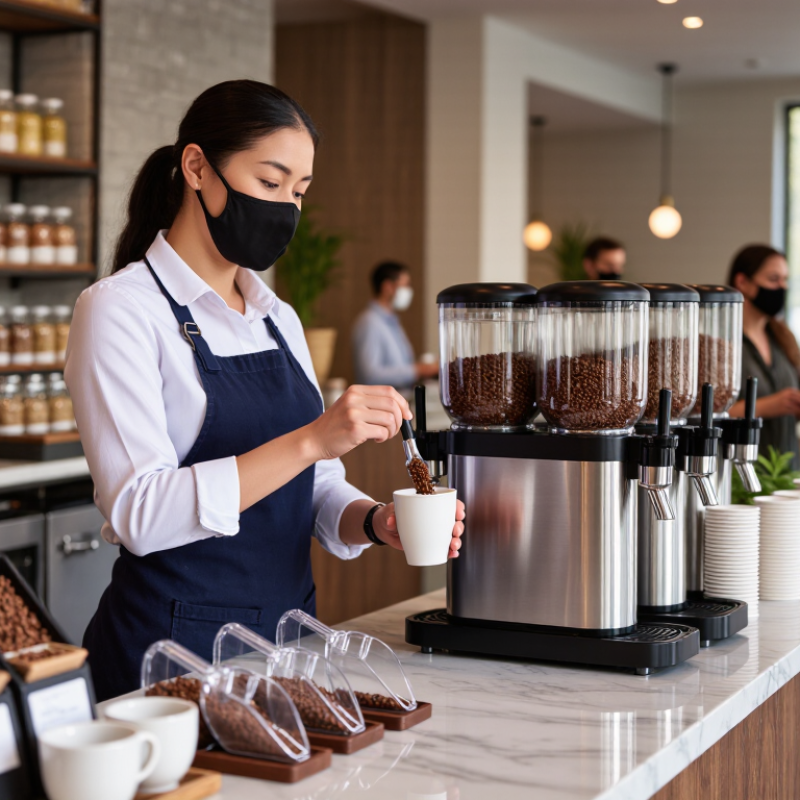
Bulk instant coffee is brewed coffee with most of its water removed, leaving soluble granules or powder. For businesses, that means a product that can be portioned quickly with hot water. No grinder or brewing equipment is needed at the serving point. Useful in a busy office. The National Coffee Association’s 2024 National Coffee Data Trends report found that 67% of U.S. adults drank coffee the previous day. That figure describes coffee overall, not instant coffee, but it signals steady demand for convenient service.
Production starts with roasted beans, which are ground and brewed into a concentrated liquid. Manufacturers then remove water, usually by spray-drying or freeze-drying. Spray-drying atomizes the extract into hot air, creating fine particles quickly. Freeze-drying freezes the extract, then removes ice under low pressure; the result is often larger, porous granules. Some aroma compounds may be captured and returned. Details vary by process and producer.
Bulk buyers should check granule size, roast profile, solubility, and pack protection against moisture. A damp scoop can turn free-flowing crystals into stubborn clumps. Not every instant coffee dissolves equally well in cold water, either. That matters for iced drinks. Bulk packs can reduce frequent reordering, but open containers may lose aroma if they sit near heat or steam. Storage needs attention. The practical trade-off is easy to overlook.

Instant coffee is brewed coffee that has been dried into soluble granules or powder. A typical production flow roasts and grinds the beans, extracts soluble coffee compounds with water, concentrates the extract, then dries and packages it. Drying commonly uses spray-drying or freeze-drying. The chart shows process order, not production time or volume; methods can vary by producer.
Businesses use bulk instant coffee wherever speed and predictable portions matter. In hotel breakfast rooms, staff can refill dispensers quickly while guests make a cup between meetings or before checkout. Small sachets also suit guest rooms, where a kettle and clean mug create a simple self-service station. No grinder required.
Offices use it in shared kitchens, training rooms, and reception areas. A measured scoop dissolves in hot water, so employees can prepare a drink without waiting for brewing equipment. That matters during short breaks. Keeping a sealed container near the kettle, with a dry scoop and clear portion guidance, helps maintain consistent flavor and reduce waste. Actual use varies, so track consumption before setting reorder quantities.
Caterers and event venues may choose bulk instant coffee for conferences, community gatherings, or outdoor service. It is easy to carry and can be prepared in batches, though freshly brewed coffee may suit some guests better. Not every guest agrees. Care homes and workplace canteens can also offer it as one option alongside other drinks. Check preparation directions, storage conditions, and serving temperatures; a container left open near steam can lose quality. A small tasting with staff can reveal whether the strength works for your setting. That step is easy to skip.
| Business Setting | Typical Use | Why Buy in Bulk | Common Serving Setup | Planning Consideration |
|---|---|---|---|---|
| Offices and workplaces | Staff kitchens, break rooms, and meeting rooms | Helps keep a frequently used pantry item in stock and reduces the need for repeated small purchases. | Shared jar or refill container with cups, hot water, and optional milk or sweeteners | Estimate demand from employee attendance and usage patterns; store opened coffee in a sealed, dry container. |
| Hotels and guest accommodation | Guest-room beverage stations and breakfast areas | Supports regular replenishment across multiple rooms or service points with a consistent product format. | Single-serve sachets in rooms or a shared container at a self-service station | Choose packaging that suits the service model, storage space, and housekeeping restocking routine. |
| Cafeterias and staff dining areas | Self-service coffee alongside meals and snacks | Bulk packs can simplify inventory management when coffee is served regularly throughout the day. | Portion-controlled dispenser or prepared cups made to order | Follow the preparation directions on the product label and keep serving equipment clean. |
| Vending and unattended refreshment points | Hot-drink machines in workplaces, transport hubs, or shared buildings | Bulk supply can make machine replenishment more efficient for locations with steady demand. | Machine-compatible ingredient pack or refill container, depending on equipment requirements | Check that the coffee’s form and particle size are compatible with the machine before purchasing. |
| Education facilities | Staff rooms, conference areas, and event catering | Provides a convenient option for serving staff and visitors without needing coffee-brewing equipment. | Shared serving station with hot water and clearly labeled add-ins | Keep hot-water equipment safely accessible and follow the facility’s food-service procedures. |
| Healthcare and care facilities | Staff break areas and approved visitor refreshment points | Easy preparation can be useful where staff need a straightforward beverage option between tasks. | Individually portioned sachets or a managed self-service station | Apply site-specific hygiene, allergen communication, and hot-liquid safety practices. |
| Event and catering operations | Conferences, training sessions, and temporary refreshment stations | Compact, shelf-stable stock can be convenient when beverage demand varies by event. | Pre-portioned servings or a bulk container paired with hot water | Plan quantities around expected attendance, service duration, and the number of serving points. |
| Travel and remote work sites | Staff cabins, mobile kitchens, and locations with limited preparation equipment | Instant preparation offers a practical coffee option where traditional brewing may be inconvenient. | Single-serve sachets or a resealable container with access to hot water | Consider transport, moisture protection, storage conditions, and access to potable water. |
Bulk instant coffee can lower the cost per serving, but only when the stock moves fast enough. A lower case price may be offset by storage, tied-up cash, or product waste. In the National Coffee Association’s 2024 National Coffee Data Trends report, 67% of U.S. adults said they had consumed coffee the previous day. That signals broad demand, not guaranteed demand at your site. Check actual cups served, including quiet weekdays, before setting order quantities.
USDA’s June 2024 Coffee: World Markets and Trade report forecast global coffee consumption of 170.6 million 60-kilogram bags for 2024/25. This market-wide forecast provides context, but it cannot predict your instant-coffee usage or purchase price.
Compare suppliers’ prices per prepared cup, then include freight and any minimum-order fees. A café serving 80 cups daily needs a different buffer from a small office serving 15. Keep cases dry, sealed, and away from heat; opened jars need tighter handling.
Small detail. Record delivery dates and use older stock first. Set a reorder point using weekly use and supplier lead time.
I would not chase the biggest discount automatically. A six-month supply may look efficient on paper, yet leave cash sitting on a shelf. Revisit the estimate after a month; the first forecast will probably be imperfect.
For a café, office, or hotel, bulk instant coffee should taste dependable from the first cup to the last. Check the aroma, color, and solubility before committing to a large order. A clean aroma and evenly sized granules can signal careful processing, though neither guarantees a flavor your customers will enjoy. Ask for a sample and compare it with the water and milk you plan to serve. Small details matter. Packaging matters too: resealable, moisture-resistant bags help protect the coffee from damp storage and stale odors. Keep opened stock sealed, cool, and away from strong-smelling foods.
Preparation can change the result more than expected. Measure coffee and water by weight during testing, then record a repeatable serving ratio for staff. Stir thoroughly and use hot water that is not aggressively boiling; excessive heat can make the cup seem harsher. Taste it warm. If customers prefer a lighter cup, adjust the dose before switching products. Flavor options may include mild, medium, or darker roast profiles, as well as decaffeinated varieties. Some products dissolve faster but taste flatter, while others retain more aroma and need a little extra stirring. It is tempting to choose the boldest option for a busy service, but that can overwhelm milk or put off guests who want a softer cup. Test honestly, even when the first sample seems “good enough.”
Choosing a bulk instant coffee supplier starts with the cup, not the sales sheet. Ask for samples from the actual product grade you plan to buy, then test them in your usual serving size. Check aroma, color, and how quickly the granules dissolve in hot water. If you serve iced drinks, test those too. A coffee that tastes balanced in a small kitchen trial may seem weak in a large batch.
Request clear specifications, including coffee type, processing method, pack size, and shelf life. Ask how each lot is checked and whether the supplier can provide product and food-safety documentation. Traceability matters. You should be able to identify a lot number on a carton and connect it to the relevant records. Small details matter. Also confirm minimum order quantities, lead times, and what happens if delivery dates change.
A reliable supplier answers practical questions directly and keeps specifications consistent between orders. Compare landed cost per serving, not just the price per kilogram; freight and waste can shift the calculation. Ask how packaging protects coffee from moisture after opening, especially if staff use large packs over several weeks. I would not treat one polished sample as proof of dependable supply. Request a second sample or discuss a small trial order, then check whether the delivered coffee matches what you approved. Some uncertainty remains, so keep written specifications and review them when your menu or volumes change.


For those larger-sized parts, or smaller quantity runs, we have 2 independent powder coat booths and ovens. The quality, durability and affordability of today’s powder coating finishes make this the process of choice for world-class companies.
Powder coating advantages over other forms of coating are many. Materials used in the Powder coating process can be metals and non-metals that come in a multitude of thicknesses, textures, colors, etc. Another of Powder coating’s biggest advantages over conventional coatings is its ability to create finishes in many different textures. Powder Coating Booths allow us the ability to apply these advantages to large products.
Tri-State Fabricators runs a full-service conveyor line for painting. Wet painting can provide protection or decoration to many different part styles. From start to finish, every project is easier to undergo random and point-based inspection by our skilled painting team.
Advantages to our Wet Paint Line are these lines start with product prep and ends with a thorough inspection of a high quality finished product. Our ability to complete large and small projects with a superior finish and doing so in a timely and economical fashion. This passes along the savings in production to our customers. When powder coating ins not an option, our Wet Paint Line gets the job done right the first time.
When the parts get big and heavy we roll-out our custom paint racks and oversize booth. By utilizing our partnerships with all the major paint brands, we can match virtually any color with wet paint.
The advantages of having access to a Wet Paint Booth are many. Large projects of many different shapes can be loaded into the booth. The Wet Paint Booth offers an environment that is much more controlled than a typical parts painting operation.
Not only are they used because of their controlled environment, but they’re are also advantageous when it comes to applying paint to parts that are needed in industries that require specialty coatings such as medical, aerospace, etc.
Our military forces have some very high standards when it comes to the finish of their vehicles and equipment. From the first pre-treatment step to final coat, it takes a great deal of knowledge and experience to protect the men and women of our armed forces. They deserve only the best, and Tri-State Fabricators provides it.
All of our processes are closely monitored by our staff and management teams. Both of which are highly trained in the processes of metal fabrication and finishing. Tri-State Fabricators’ goal is to always fully satisfy each and every customer, including the military. We will always put a 110% into what we do.
Abrasive media blasting is an excellent way to remove old paint, rust, and increase the paint/powder adhesion. Glass beads produce a much smoother and brighter finish than angular abrasives; leaving the part clean yet without any dimensional change. Chemically inert and environmentally friendly, we can recycle our beads approximately 30 times; making them a more preferred method of metal cleaning or surface finishing.
Advantages to Glass Bead Blasting are many. Glass bead blast media is used when a project is needing rough surfaces need to become smooth for applications of coatings such as paint. It is typically used to clean paint and rust from a product surface without deforming the surface it is being used on. Overall, compared to many other blasting media, Glass Bead Blasting is a very economical choice and those savings are always passed on to our customers.
Tri-State Fabricators utilize a zinc phosphate wash to clean and etch the material to ensure the best paint adhesion possible. The unique design of our 3-stage wash system does the work like a 5-stage. From Cleaning and rinsing to conversion coating and post-treatment, Our Part Washing process is a complete service and works throughout the fabrication service and the finishing service.
Along with the previously mentioned benefits, Curing is a vital chemical reaction that leaves the product finish hard and relatively safe from mild abrasion and aggressive corrosion. This process can be done in more than one way; ambient air-dry or in curing ovens at temps that exceed 240°.
From fixing paint mistakes (someone else’s of course) to simply cleaning our paint line hooks, our burn-off oven is put to good use. After a quick burn-off, a little clean up, and a fresh coat of paint, your parts will look better than new.
Why does our Burn-Off Oven work so well? Because super heating the air around parts turns the materials into ashes. From paint and powder coatings to rubber and machining oils, high temps do the job without degrading the integrity of the part.
Masking is a vital part of producing high quality products. We have die-cut masking patterns to protect machined surfaces as well as a wide range of plugs and caps to protect threaded holes and bolts. We provide permanent and temporary masking.
Masking allows the selected sections of a product to be protected from a fabrication or finishing service. This can be with both chemicals when etching and tapes, paints when only finishing just a section of the product. Masking is great in aiding the customization process of a project.
Screen printing is a photographic process that transfers artwork onto a porous nylon screen which allows colored ink to flow through the screen and be deposited on an aluminum or plastic component. We can generally have just about any design created onto a screen for your parts.
Some of the advantages of Screen Printing are, brand recognition for your business displaying on your products, assembly instructions, product warnings/hazards, etc. Tri-State Fabricators produces Screen Printing of the highest quality so you know it’s durable.
Metal Finishing is the art of treating the exterior portion of product, often metal but can also be made of other materials, so that the surface is clean and free of any debris. Then the process of applying coats or either paint of powder coat takes place. This coating process improves the quality of the product in both appearance and resistance to wear and corrosion.
Tri-State Fabricators, Inc., understands that a project typically isn’t complete until a high-quality finish has been added to your product. This is why our painting and powder coating teams continuously inspect the products throughout the Metal Finishing process.

