Why Are Benches Essential for Public Spaces?

Benches are among the quietest features in a public space, yet they shape how people use it. A shaded seat near a bus stop can give an older resident time to rest. A wide bench beside a playground lets caregivers watch children without standing continuously. These small moments reveal why seating deserves serious attention in urban design.

Well-designed Benches support comfort, accessibility, and social connection. Their height, back support, armrests, and clear surrounding space affect whether people can use them safely. Placement matters too. A bench facing trees may invite calm reflection, while seating near a walkway can encourage brief conversations. Urban designers and accessibility professionals often consider these details when creating welcoming streets, parks, and transport areas. Practical experience also shows that durable materials, regular cleaning, and adequate lighting influence public trust.

However, a bench is not automatically inclusive. A narrow seat may exclude people with mobility needs. Poorly placed seating can block a path or expose users to harsh weather. It can even feel unwelcoming when maintenance is neglected. This is where design becomes a continuing responsibility, not a finished decision. Local observations should guide improvements, because every neighborhood has different ages, habits, climates, and safety concerns. Good public seating leaves room for rest, dignity, and human contact. It should serve many people, without pretending one design fits everyone.
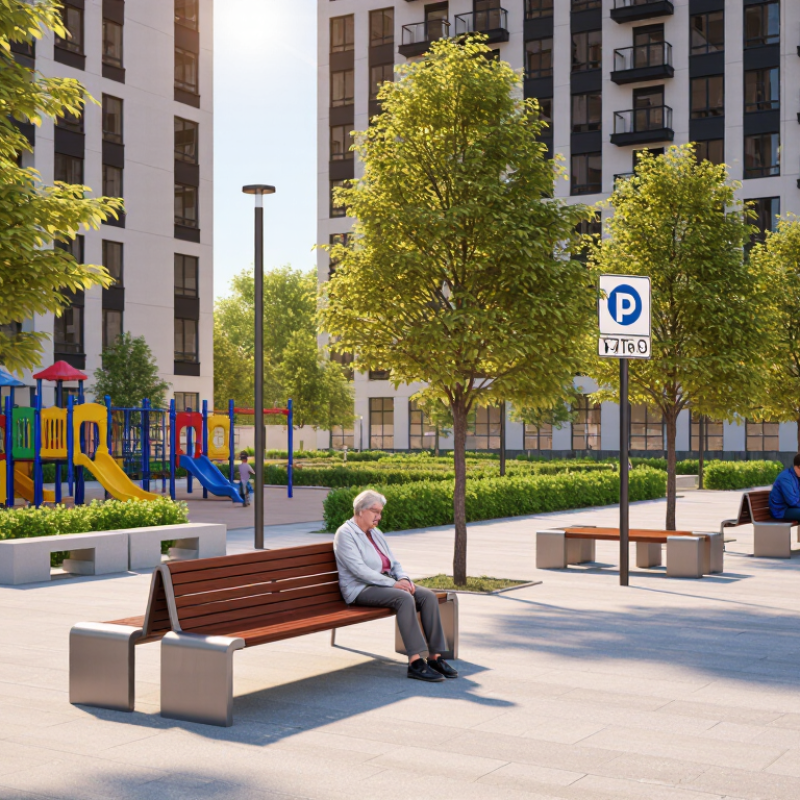
Why Are Benches Essential for Public Spaces?

What Public Benches Are and How They Function in Urban Design

Public benches are simple urban fixtures, but their role is more complex than it appears. A bench provides a place to rest, wait, observe, or meet. In urban design, it turns unused pavement into a social setting. UN-Habitat’s World Cities Report 2022 projects that 68% of the global population will live in urban areas by 2050. This growth makes small, accessible resting places increasingly important.

A well-designed bench supports movement through the city. Older adults can pause between destinations. Parents can watch children near a play area. Workers can eat outdoors during a short break.

The World Health Organization’s Global Age-friendly Cities guide recommends regular seating, especially along walking routes and near public facilities.

Placement matters as much as construction. A bench facing a blank wall feels different from one facing trees, pedestrians, or sunlight. Shade, back support, armrests, and clear wheelchair space also influence who can use it comfortably.

The details are practical.

In real streets, benches sometimes become uncomfortable or poorly positioned. They may block walking routes, collect rainwater, or offer no shade at noon. This shows a weakness in purely visual design. Public seating should be tested through observation, maintenance records, and direct user feedback. Designers can count waiting times, note unused locations, and speak with people who rarely sit there. No single bench serves everyone perfectly. That limitation deserves more honest attention in urban planning.

How Seating Supports Rest, Accessibility, and Inclusive Public Use

Public benches do more than fill empty edges. They give older adults, parents, and tired pedestrians a place to pause. A short rest can make a long journey possible. For someone with limited stamina, seating may determine whether a public space feels usable.

Accessibility depends on more than adding a bench. Seats should provide stable surfaces, comfortable heights, and enough room beside them for mobility devices. Backrests and arm supports can help people sit down and stand safely. Clear walking paths must remain open. A bench placed across a ramp is not inclusive design. It is an obstacle.

Placement also shapes public life. Benches near transit stops support daily travel, while seats beside playgrounds help caregivers supervise children. Shade, lighting, and clear sightlines can improve comfort and personal security. Maintenance matters too. A loose board or wet surface can discourage use quickly. Designers sometimes assume that one standard bench suits everyone, but that assumption deserves review. Some people need back support, some need space to transfer, and others prefer a seat with a view of passing activity. Even small seating areas can feel unwelcoming when they ignore these differences.

What Ergonomic Standards Recommend for Bench Height and Depth

Why Are Benches Essential for Public Spaces?

A well-designed bench gives people a practical reason to pause, talk, wait, or recover during a walk.

Its comfort depends heavily on proportion, especially seat height and depth. Ergonomic guidance commonly recommends a seat height of about 430–480 millimeters for many adults. This range supports easier sitting and standing without forcing the knees too high. A seat depth near 400–500 millimeters can provide thigh support while keeping the back close to the backrest.

Small details matter. A slightly sloped seat may improve posture and help rainwater drain away. Rounded front edges reduce pressure behind the knees. A firm backrest, positioned near the lower and middle back, can make longer sitting more comfortable. However, no single measurement suits every body. Older adults, children, and people using mobility aids may need different solutions. That is where standard measurements can fall short.

Tips: Test a full-scale sample before installation. Sit for ten minutes, not ten seconds. Check whether feet rest firmly on the ground and whether users can stand without pushing hard. Leave enough space beside the bench for mobility devices and personal movement. Observe real users, too. Their feedback may reveal problems that drawings miss. A bench can look balanced and still feel awkward.

How Bench Placement Influences Walkability and Social Interaction

Why Are Benches Essential for Public Spaces?

How Bench Placement Influences Walkability and Social Interaction

Benches are not merely resting furniture. Placed well, they shape how people move, pause, and meet. In site observations, a bench beside a narrow path often slows walking and creates awkward passing. Moving it several feet away can preserve a clear walking line. This small adjustment may improve comfort for older adults, wheelchair users, and parents with strollers.

Location also affects social behavior. Benches facing one another can encourage conversation, while parallel seating supports quiet observation. A seat near a tree may attract people during hot afternoons. One beside a busy crossing can feel stressful and exposed. Designers should study sunlight, noise, visibility, and nearby destinations before choosing a position. Practical accessibility guidance also supports generous circulation space around every seat.

I have seen attractive benches remain empty because they faced a blank wall. That was a design mistake. Comfort alone does not create connection. People need a reason to stop, such as shade, a view, or activity nearby. Still, not every placement works equally for every person. Some users prefer privacy, while others seek company. Trial observations at different hours can reveal patterns that drawings miss. A bench may look perfect on opening day, yet seasonal shadows and changing foot traffic can challenge the original decision.


How Durable Materials and Maintenance Determine Bench Longevity

Why Are Benches Essential for Public Spaces?

A bench is useful only when it remains safe, stable, and inviting. Material selection controls that outcome. The American Galvanizers Association reports that hot-dip galvanized steel can last over 50 years in rural conditions. Industrial or coastal exposure shortens that service life. Stainless steel resists corrosion better, but its higher cost needs careful justification. Hardwood can feel warmer, yet moisture creates hidden decay. The USDA Forest Products Laboratory notes that wood below 20% moisture content is less likely to support fungal decay.

Maintenance determines whether these estimates become reality. A neglected bench may fail long before its material’s expected lifespan. Field inspections should check loose anchors, sharp edges, cracked coatings, standing water, and unstable ground. Cleaning removes salt, soil, and bird droppings that accelerate surface damage. Drainage also matters. Water trapped beneath a seat can damage fasteners and wooden supports quietly. Small defects are easy to miss.

Tips: Inspect benches every month during heavy-use seasons. Tighten fasteners before movement worsens. Recoat exposed steel when corrosion first appears. Keep wooden surfaces dry and well ventilated. Record repairs with dates and photographs. Do not assume “maintenance-free” means maintenance-proof. That phrase often encourages poor decisions. ASTM standards can guide testing, but local weather and vandalism still require judgment. A cheaper bench may be the costlier choice after repeated repairs.

Article Source:

Powder Coat Booths

For those larger-sized parts, or smaller quantity runs, we have 2 independent powder coat booths and ovens. The quality, durability and affordability of today’s powder coating finishes make this the process of choice for world-class companies.

Powder coating advantages over other forms of coating are many. Materials used in the Powder coating process can be metals and non-metals that come in a multitude of thicknesses, textures, colors, etc. Another of Powder coating’s biggest advantages over conventional coatings is its ability to create finishes in many different textures. Powder Coating Booths allow us the ability to apply these advantages to large products.

Wet Paint Line

Tri-State Fabricators runs a full-service conveyor line for painting. Wet painting can provide protection or decoration to many different part styles. From start to finish, every project is easier to undergo random and point-based inspection by our skilled painting team.

Advantages to our Wet Paint Line are these lines start with product prep and ends with a thorough inspection of a high quality finished product. Our ability to complete large and small projects with a superior finish and doing so in a timely and economical fashion. This passes along the savings in production to our customers. When powder coating ins not an option, our Wet Paint Line gets the job done right the first time.

Wet Paint Booths

When the parts get big and heavy we roll-out our custom paint racks and oversize booth. By utilizing our partnerships with all the major paint brands, we can match virtually any color with wet paint.

The advantages of having access to a Wet Paint Booth are many. Large projects of many different shapes can be loaded into the booth. The Wet Paint Booth offers an environment that is much more controlled than a typical parts painting operation.

Not only are they used because of their controlled environment, but they’re are also advantageous when it comes to applying paint to parts that are needed in industries that require specialty coatings such as medical, aerospace, etc.

Military CARC

Our military forces have some very high standards when it comes to the finish of their vehicles and equipment. From the first pre-treatment step to final coat, it takes a great deal of knowledge and experience to protect the men and women of our armed forces. They deserve only the best, and Tri-State Fabricators provides it.

All of our processes are closely monitored by our staff and management teams. Both of which are highly trained in the processes of metal fabrication and finishing. Tri-State Fabricators’ goal is to always fully satisfy each and every customer, including the military. We will always put a 110% into what we do.

Glass-Bead Blasting

Abrasive media blasting is an excellent way to remove old paint, rust, and increase the paint/powder adhesion. Glass beads produce a much smoother and brighter finish than angular abrasives; leaving the part clean yet without any dimensional change. Chemically inert and environmentally friendly, we can recycle our beads approximately 30 times; making them a more preferred method of metal cleaning or surface finishing.

Advantages to Glass Bead Blasting are many. Glass bead blast media is used when a project is needing rough surfaces need to become smooth for applications of coatings such as paint. It is typically used to clean paint and rust from a product surface without deforming the surface it is being used on. Overall, compared to many other blasting media, Glass Bead Blasting is a very economical choice and those savings are always passed on to our customers.

Part Washing

Tri-State Fabricators utilize a zinc phosphate wash to clean and etch the material to ensure the best paint adhesion possible. The unique design of our 3-stage wash system does the work like a 5-stage. From Cleaning and rinsing to conversion coating and post-treatment, Our Part Washing process is a complete service and works throughout the fabrication service and the finishing service.

Along with the previously mentioned benefits, Curing is a vital chemical reaction that leaves the product finish hard and relatively safe from mild abrasion and aggressive corrosion. This process can be done in more than one way; ambient air-dry or in curing ovens at temps that exceed 240°.

Burn-Off Oven

From fixing paint mistakes (someone else’s of course) to simply cleaning our paint line hooks, our burn-off oven is put to good use. After a quick burn-off, a little clean up, and a fresh coat of paint, your parts will look better than new.

Why does our Burn-Off Oven work so well? Because super heating the air around parts turns the materials into ashes. From paint and powder coatings to rubber and machining oils, high temps do the job without degrading the integrity of the part.

Masking

Masking is a vital part of producing high quality products. We have die-cut masking patterns to protect machined surfaces as well as a wide range of plugs and caps to protect threaded holes and bolts. We provide permanent and temporary masking.

Masking allows the selected sections of a product to be protected from a fabrication or finishing service. This can be with both chemicals when etching and tapes, paints when only finishing just a section of the product. Masking is great in aiding the customization process of a project.

Screen Printing

Screen printing is a photographic process that transfers artwork onto a porous nylon screen which allows colored ink to flow through the screen and be deposited on an aluminum or plastic component. We can generally have just about any design created onto a screen for your parts.

Some of the advantages of Screen Printing are, brand recognition for your business displaying on your products, assembly instructions, product warnings/hazards, etc. Tri-State Fabricators produces Screen Printing of the highest quality so you know it’s durable.

Metal Finishing

Metal Finishing is the art of treating the exterior portion of product, often metal but can also be made of other materials, so that the surface is clean and free of any debris. Then the process of applying coats or either paint of powder coat takes place. This coating process improves the quality of the product in both appearance and resistance to wear and corrosion.

Tri-State Fabricators, Inc., understands that a project typically isn’t complete until a high-quality finish has been added to your product. This is why our painting and powder coating teams continuously inspect the products throughout the Metal Finishing process.



