


Why Are Automobile Bushings Important?

An Automobile Bushing is a small part with a demanding job. It sits between suspension or steering components, where it cushions contact and allows controlled movement. Picture a control arm rising over a pothole: its bushing helps soften the impact before vibration reaches the cabin. It also helps keep connected parts aligned. Small component. Big consequences.

Vehicle-dynamics engineer Thomas D. Gillespie’s published work explains how suspension behavior affects a vehicle’s response. A practical paraphrase of that engineering principle is: “A well-controlled suspension helps the tires stay connected to the road.” This is a paraphrase, not a verbatim quotation. Bushings contribute by flexing under load, but age, heat, road salt, and repeated impacts can wear them down. Cracked rubber, excess play, clunks, or uneven tire wear may signal a problem; none proves the bushing is faulty on its own. Diagnosis matters.

Why does this matter to drivers? Worn bushings can change steering feel, increase noise, and affect handling, especially over rough pavement or during braking. Yet replacement is not automatically the answer. Bushing design, inspection methods, and service limits vary by vehicle. A careful technician checks related joints and follows the manufacturer’s procedures before recommending repairs. That detail is easy to overlook. This guide explores what bushings do, common wear symptoms, inspection basics, and why timely attention can protect ride comfort and predictable handling. It also leaves room for a useful caution: not every vibration begins at a bushing.
Why Are Automobile Bushings Important?

What Automobile Bushings Do in a Vehicle’s Suspension and Chassis

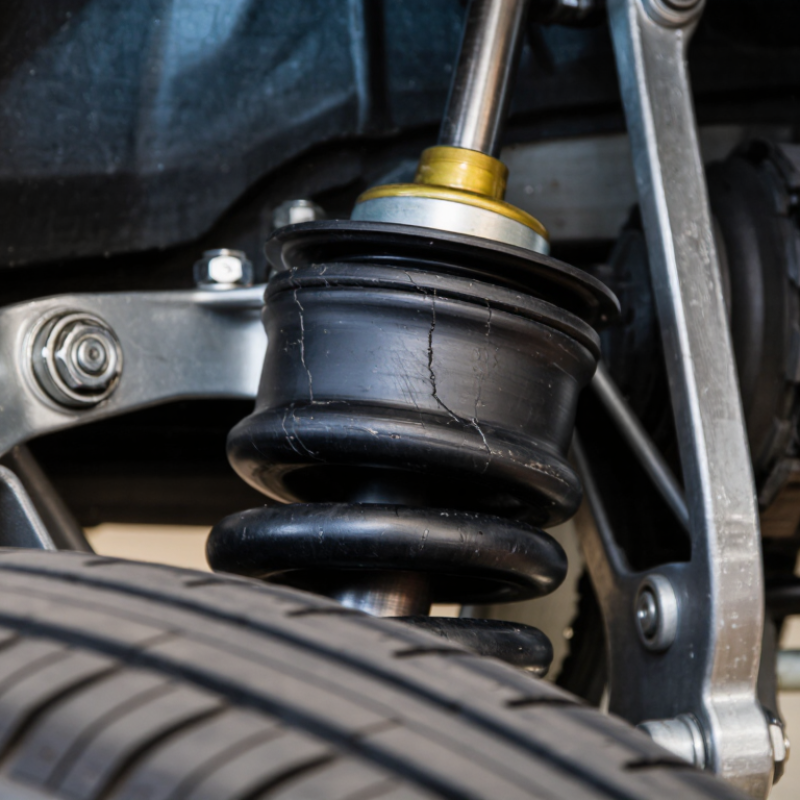
Automobile bushings are flexible joints between suspension or chassis parts. They let components pivot in a controlled way while reducing the harsh vibration that travels from tires into the cabin. A control-arm bushing, for example, cushions movement as a wheel crosses a pothole. The metal parts still need to move. The bushing helps guide that movement rather than letting the arm shift freely.

Bushings also help preserve suspension geometry under braking, cornering, and acceleration. When they are in good condition, the tires can maintain steadier contact with the road, and steering often feels more predictable. They may be made from rubber or other resilient materials, each with different firmness and comfort characteristics. A firm bushing can transmit more road feel. That matters. It may also make a rough commute less pleasant.

With age, heat, road salt, and repeated flexing can cause a bushing to crack, soften, or separate from its sleeve. Drivers may notice a dull clunk over bumps, uneven tire wear, or vague steering, but these signs can have other causes. No single noise confirms a failed bushing. A careful inspection checks for splits, excessive movement, and looseness at the joint. It is easy to overlook these small parts because they rarely draw attention until handling changes. That distinction deserves attention.

Why Are Automobile Bushings Important? — What Automobile Bushings Do in a Vehicle’s Suspension and Chassis
Bushing Location What It Connects Main Function How It Supports the Vehicle Possible Signs of Wear Inspection Considerations
Control arm pivots Control arms to the vehicle frame or subframe Allows controlled suspension movement while limiting unwanted movement. Helps keep wheel position and alignment stable as the suspension moves over bumps and during cornering. Clunks over bumps, uneven tire wear, steering wander, or visibly cracked or separated rubber. Check for splitting, excessive deformation, separation from the sleeve, and abnormal movement. Confirm any alignment concerns with a qualified inspection.
Stabilizer bar mounts and end links The stabilizer bar to the chassis, or the bar to suspension links Cushions contact and permits the bar and links to move as the suspension articulates. Helps the stabilizer bar resist differences in left-to-right suspension movement and reduce body roll. Rattling or knocking over uneven surfaces; a worn bushing may also look cracked, loose, or compressed. Inspect the mount and link bushings for looseness, deterioration, or missing material. Noise alone does not confirm bushing failure.
Subframe mounts The suspension or engine subframe to the vehicle body Supports the subframe and helps isolate vibration and noise from the body. Helps maintain the subframe’s position while reducing the transmission of some road and drivetrain vibration. Excessive vibration, clunks, or visible deterioration; symptoms can also come from other mounts or suspension parts. Look for torn or displaced material and signs of abnormal subframe movement. Diagnosis may require inspection under load.
Strut or shock absorber mounts The top of a strut or shock assembly to the body or chassis Provides a cushioned mounting point; some front strut mounts also incorporate a bearing for steering rotation. Helps limit vibration transfer and allows the suspension assembly to move or rotate as designed. Clunks, creaks, or knocking near a wheel; steering stiffness or noise may occur on some designs. Inspect the mount and any integrated bearing according to the vehicle’s service procedure. The exact design varies by vehicle.
Leaf-spring eye or shackle mounts The ends of a leaf spring to the frame or suspension shackle Allows the spring to pivot as it flexes and the suspension travels. Supports suspension movement while helping control spring position and noise. Squeaks, clunks, visible cracking, or movement at the spring eye or shackle. Check for deterioration, looseness, or metal-to-metal contact. Inspect related spring and fastener components as well.
General chassis and suspension joints Selected suspension links or chassis-mounted components Provides a flexible interface between connected parts and reduces direct metal contact. Balances component movement, vibration isolation, and positional control; stiffness depends on the application. Noise, vibration, handling changes, or uneven tire wear may occur, but these symptoms have many possible causes. Use the vehicle manufacturer’s inspection and replacement procedures. Do not diagnose a bushing from one symptom alone.

Key point: Bushings are flexible joints, commonly made from rubber or other elastomeric materials. Their design and stiffness vary by location. A worn bushing can affect noise, vibration, handling, or alignment, but symptoms should be checked alongside other suspension components.


How SAE J200 Classifies Automotive Rubber by Hardness and Performance

Automobile bushings sit between moving parts and the vehicle structure. They help control vibration, noise, and impact. Their rubber must suit the heat, fluids, and loads found in its location. SAE J200 gives engineers a shared way to specify rubber compounds.

The standard identifies material type by heat resistance and class by oil resistance. A grade points to required properties in a table, including hardness, tensile strength, and elongation. Hardness is measured with a durometer, commonly on the Shore A scale. A designation is not a simple quality score. Read the full requirements.

Hardness affects how a bushing behaves. Softer rubber may allow more movement; harder rubber can transmit more vibration. Neither choice is automatically better. A Shore A reading also cannot describe every real-world condition. Shape, wall thickness, temperature, and repeated compression matter. I would treat the specification as a useful starting point, not a verdict. A part can meet a material target and still feel wrong in a particular assembly. Testing the complete bushing under realistic loads helps reveal that gap.

How Bushings Manage Suspension Loads, Joint Movement, Noise, and Vibration

Automobile bushings sit between suspension components, where metal parts need to move without grinding against each other. They are commonly made from flexible materials that compress and twist as the wheels travel over bumps. That controlled movement helps manage loads from braking, cornering, and uneven pavement. A sharp pothole sends a brief force through the wheel and suspension; bushings help absorb and distribute some of it.

They also guide joint movement. A bushing that is too soft or worn may let a control arm shift more than intended, affecting handling and tire contact. Too stiff, and it may pass more impact into the cabin. The right balance depends on the suspension design. Small parts, real work. Bushings also reduce noise and vibration by interrupting the path between moving suspension parts and the vehicle body. A dull knock over bumps or extra vibration can be a clue, but not a diagnosis.

Age, heat, road salt, and repeated flexing can cause cracking or looseness. During inspection, look for torn rubber, separated edges, or unusual movement under load. Symptoms can overlap with worn joints, loose hardware, or other suspension problems. It is easy to blame a bushing too quickly, though. A careful check helps identify the actual source before parts are replaced.

How ASTM D412 Tensile Tests and ISO 815-1 Compression-Set Tests Assess Durability

Why Are Automobile Bushings Important?

How ASTM D412 Tensile Tests and ISO 815-1 Compression-Set Tests Assess Durability

An automobile bushing cushions vibration and allows controlled movement between connected parts. Its rubber must stretch without tearing, then recover after repeated loads. ASTM D412 measures tensile properties, including tensile strength and elongation at break. In a lab, a rubber specimen is pulled until it breaks. The results help engineers compare compounds and identify materials that may be too weak or too stiff for a specific design. Small details matter: specimen shape, thickness, and test conditions can affect the numbers.

Tensile strength is only part of the picture. ISO 815-1 measures compression set: how much a rubber specimen stays deformed after being compressed for a set time and temperature, then released. A high compression set can suggest that a bushing may lose its clamping force or fit over time. The test gives useful evidence, not a direct prediction of service life.

Real bushings also face road vibration, changing temperatures, moisture, and combined stresses. That gap matters. A bushing can perform well in a static test yet wear differently in a vehicle. Engineers therefore use these results alongside design checks and durability testing, while recognizing that no single test captures every road condition.

How Worn Bushings Affect Alignment, Steering Response, and Ride Quality

Automobile bushings are small rubber or elastomer joints, but they help locate suspension arms while filtering vibration. As they crack, soften, or separate, the suspension can shift under braking and cornering. That movement may alter toe or camber, even when a static alignment appears acceptable. The steering wheel may feel vague, wander on a straight road, or need constant correction. Subtle changes matter.

The ride can become harsher, with knocks over potholes and extra vibration through the cabin. AAA’s 2022 pothole analysis estimated that U.S. drivers spent $26.5 billion on pothole-related vehicle repairs in 2021. That figure is not a bushing-failure rate, but it shows the scale of road impacts that suspension parts endure. A practical check is to inspect bushings for splits, displaced rubber, or metal-to-metal contact, then compare alignment readings and tire wear. Diagnosis is not always clean: worn tires, loose joints, and incorrect pressure can create similar symptoms. Replacing bushings without checking those causes may leave the steering feel unchanged.

Powder Coat Booths

For those larger-sized parts, or smaller quantity runs, we have 2 independent powder coat booths and ovens. The quality, durability and affordability of today’s powder coating finishes make this the process of choice for world-class companies.

Powder coating advantages over other forms of coating are many. Materials used in the Powder coating process can be metals and non-metals that come in a multitude of thicknesses, textures, colors, etc. Another of Powder coating’s biggest advantages over conventional coatings is its ability to create finishes in many different textures. Powder Coating Booths allow us the ability to apply these advantages to large products.

Wet Paint Line

Tri-State Fabricators runs a full-service conveyor line for painting. Wet painting can provide protection or decoration to many different part styles. From start to finish, every project is easier to undergo random and point-based inspection by our skilled painting team.

Advantages to our Wet Paint Line are these lines start with product prep and ends with a thorough inspection of a high quality finished product. Our ability to complete large and small projects with a superior finish and doing so in a timely and economical fashion. This passes along the savings in production to our customers. When powder coating ins not an option, our Wet Paint Line gets the job done right the first time.

Wet Paint Booths

When the parts get big and heavy we roll-out our custom paint racks and oversize booth. By utilizing our partnerships with all the major paint brands, we can match virtually any color with wet paint.

The advantages of having access to a Wet Paint Booth are many. Large projects of many different shapes can be loaded into the booth. The Wet Paint Booth offers an environment that is much more controlled than a typical parts painting operation.

Not only are they used because of their controlled environment, but they’re are also advantageous when it comes to applying paint to parts that are needed in industries that require specialty coatings such as medical, aerospace, etc.

Military CARC

Our military forces have some very high standards when it comes to the finish of their vehicles and equipment. From the first pre-treatment step to final coat, it takes a great deal of knowledge and experience to protect the men and women of our armed forces. They deserve only the best, and Tri-State Fabricators provides it.

All of our processes are closely monitored by our staff and management teams. Both of which are highly trained in the processes of metal fabrication and finishing. Tri-State Fabricators’ goal is to always fully satisfy each and every customer, including the military. We will always put a 110% into what we do.

Glass-Bead Blasting

Abrasive media blasting is an excellent way to remove old paint, rust, and increase the paint/powder adhesion. Glass beads produce a much smoother and brighter finish than angular abrasives; leaving the part clean yet without any dimensional change. Chemically inert and environmentally friendly, we can recycle our beads approximately 30 times; making them a more preferred method of metal cleaning or surface finishing.

Advantages to Glass Bead Blasting are many. Glass bead blast media is used when a project is needing rough surfaces need to become smooth for applications of coatings such as paint. It is typically used to clean paint and rust from a product surface without deforming the surface it is being used on. Overall, compared to many other blasting media, Glass Bead Blasting is a very economical choice and those savings are always passed on to our customers.

Part Washing

Tri-State Fabricators utilize a zinc phosphate wash to clean and etch the material to ensure the best paint adhesion possible. The unique design of our 3-stage wash system does the work like a 5-stage. From Cleaning and rinsing to conversion coating and post-treatment, Our Part Washing process is a complete service and works throughout the fabrication service and the finishing service.

Along with the previously mentioned benefits, Curing is a vital chemical reaction that leaves the product finish hard and relatively safe from mild abrasion and aggressive corrosion. This process can be done in more than one way; ambient air-dry or in curing ovens at temps that exceed 240°.

Burn-Off Oven

From fixing paint mistakes (someone else’s of course) to simply cleaning our paint line hooks, our burn-off oven is put to good use. After a quick burn-off, a little clean up, and a fresh coat of paint, your parts will look better than new.

Why does our Burn-Off Oven work so well? Because super heating the air around parts turns the materials into ashes. From paint and powder coatings to rubber and machining oils, high temps do the job without degrading the integrity of the part.

Masking

Masking is a vital part of producing high quality products. We have die-cut masking patterns to protect machined surfaces as well as a wide range of plugs and caps to protect threaded holes and bolts. We provide permanent and temporary masking.

Masking allows the selected sections of a product to be protected from a fabrication or finishing service. This can be with both chemicals when etching and tapes, paints when only finishing just a section of the product. Masking is great in aiding the customization process of a project.

Screen Printing

Screen printing is a photographic process that transfers artwork onto a porous nylon screen which allows colored ink to flow through the screen and be deposited on an aluminum or plastic component. We can generally have just about any design created onto a screen for your parts.

Some of the advantages of Screen Printing are, brand recognition for your business displaying on your products, assembly instructions, product warnings/hazards, etc. Tri-State Fabricators produces Screen Printing of the highest quality so you know it’s durable.

Metal Finishing

Metal Finishing is the art of treating the exterior portion of product, often metal but can also be made of other materials, so that the surface is clean and free of any debris. Then the process of applying coats or either paint of powder coat takes place. This coating process improves the quality of the product in both appearance and resistance to wear and corrosion.

Tri-State Fabricators, Inc., understands that a project typically isn’t complete until a high-quality finish has been added to your product. This is why our painting and powder coating teams continuously inspect the products throughout the Metal Finishing process.
