Who Is the Best Inverter Transformer Manufacturer in China
Finding the best Inverter Transformer manufacturer in China requires more than comparing prices or polished product photos. China has many suppliers, but their engineering capabilities, production controls, and service standards can differ considerably. A suitable manufacturer should explain how its design fits your voltage, power, frequency, and operating environment. It should also provide clear specifications for core materials, winding construction, insulation, temperature rise, and efficiency. Small details matter.
This guide examines practical ways to assess manufacturers before requesting a quotation. It considers technical documentation, sample and routine testing, quality management, customization, lead times, and after-sales support. Ask for test reports and confirm that they match the proposed model, not just a similar unit. A factory visit or a live production review may reveal useful details about winding equipment, inspection steps, and material traceability. Look for evidence, not broad promises. The best choice is the supplier whose verified capabilities match your application, budget, and delivery needs—not necessarily the largest or cheapest company. One limitation is that public information rarely tells the whole story; independent checks and specific questions still matter. No shortlist is final. Treat manufacturer claims as starting points, compare the same technical requirements, and verify important details in writing before making a decision.
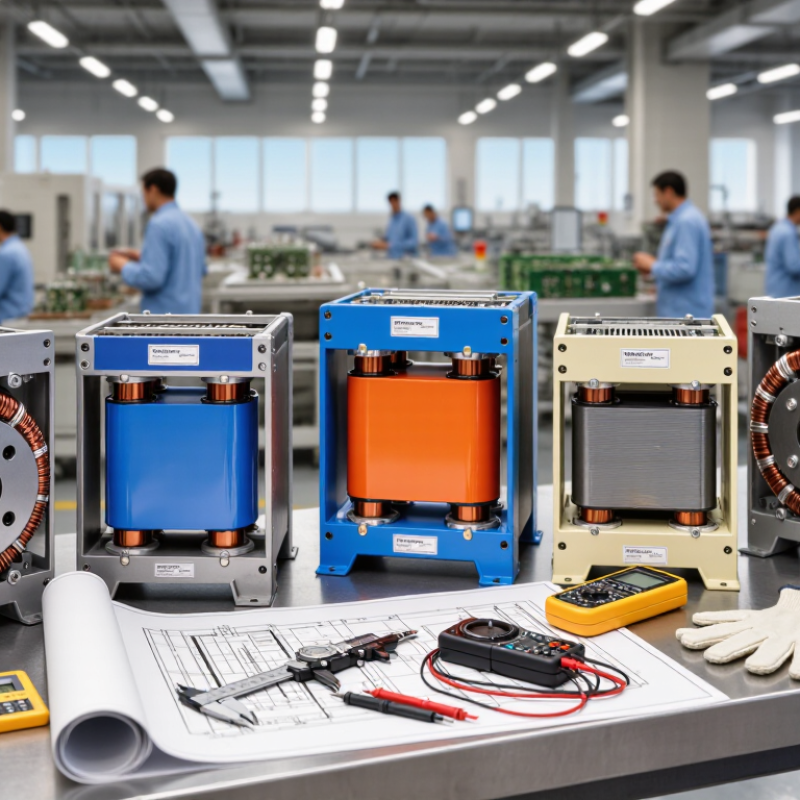
Transformer Basics: 50/60 Hz, Isolation, and Inverter Output Voltage
Transformer Basics: 50/60 Hz, Isolation, and Inverter Output Voltage
An inverter transformer must match the power source’s frequency and output requirements. Many systems operate at 50 or 60 Hz, but these ratings are not interchangeable without checking the design. Frequency affects core size, losses, and heating. A mismatch may cause excess temperature or poor performance. Small details matter.
Isolation separates input and output circuits through the transformer’s magnetic coupling. It can help reduce electrical noise and provide a useful safety barrier, but it does not replace correct grounding, fusing, or enclosure design. Check the specified insulation level and temperature rise. Then compare the inverter’s waveform, rated voltage, and expected load with the transformer data. A modified waveform can create additional heating, even when the displayed voltage looks correct. Datasheets do not always make this easy to judge.
Tips: Confirm frequency, input range, output voltage, continuous power, and cooling conditions before choosing a unit. Ask for test data under a representative load. Leave room for ventilation. In practice, real installations rarely match ideal test conditions exactly, so some margin is sensible.
Screening Chinese Manufacturers: IEC 60076, GB/T 1094, and Rated Voltage (kV)
Who Is the Best Inverter Transformer Manufacturer in China
A credible shortlist starts with documents, not claims. Check whether the transformer design and test records identify the applicable IEC 60076 parts and GB/T 1094 editions. These standards address core requirements, but edition numbers and declared deviations matter. Ask for routine and type-test reports tied to the offered design, not a generic certificate. Numbers matter. Compare the rated voltage on every winding, such as 10 kV/0.8 kV, with your inverter output, grid connection, and tap range. Confirm frequency, insulation levels, cooling method, and temperature rise on the same data sheet. A mismatch can make an otherwise compliant unit unsuitable.
The International Energy Agency’s Electricity Grids and Secure Energy Transitions (2023) estimates that annual grid investment must exceed USD 600 billion by 2030, up from roughly USD 300 billion, and that about 80 million kilometres of grids need adding or replacing by 2040. This is grid-wide context, not evidence of any supplier’s quality. Still, it shows why voltage coordination and credible test evidence deserve close review. Request the test-laboratory details, serial-number traceability, and confirmation that test conditions match your specification. A polished certificate alone is not enough. One limitation remains: paperwork cannot predict every site condition. Check ambient temperature, harmonics, enclosure, and cooling constraints with the engineering team before comparing quotations.
Screening Chinese Inverter Transformer Manufacturers
Check compliance with IEC 60076 and the GB/T 1094 series, then confirm that the rated voltage matches the project requirements.
How to read this chart: The bars show example low- and high-voltage sides in kilovolts for inverter transformer configurations. These are illustrative voltage pairs, not manufacturer data, a market survey, or a substitute for project specifications.
For screening, request the transformer's nameplate ratings and technical documents, and verify the applicable editions and scope of IEC 60076 and GB/T 1094 against the project requirements.
Comparing Efficiency Through No-Load and Load Losses (kW)
A transformer quotation should list no-load loss and load loss separately, both in kW. No-load loss continues whenever the unit is energized, even when its secondary carries little current. Load loss changes with current, rising approximately with the square of the load. That difference matters.
The U.S. Department of Energy’s distribution-transformer efficiency rules evaluate efficiency at 50% of nameplate load, so compare figures on matching test conditions. Its 2013 Technical Support Document for Distribution Transformers analyzes no-load and load losses as separate factors. Ask manufacturers for measured loss values, test temperature, and the applicable test method, such as IEC 60076-1. A single efficiency percentage can hide useful detail.
For a practical check, consider an illustrative 100 kVA unit with 0.18 kW no-load loss and 1.10 kW load loss. At 40% load, estimated total loss is:
0.18 + (0.4² × 1.10), or 0.356 kW.
If it runs there all year, that is about 3,119 kWh of loss. The example is not a market benchmark. I would still question unusually low quoted figures until their test basis is clear.
Checking Temperature Rise, Impedance (%), and Insulation Voltage (kV)
When comparing inverter transformer manufacturers in China, inspect measured performance, not polished catalog claims. IEC 60076-11:2018 lists a 100 K average winding-temperature rise for class F dry-type transformers and 125 K for class H. Confirm the test conditions, ambient assumptions, and cooling method. A low rise figure means little without them. Impedance is not a quality score: it affects voltage drop and prospective fault current. Compare the guaranteed percentage at the same rating, tap, and temperature.
Insulation voltage must match the system’s maximum voltage and required power-frequency and lightning-impulse withstand levels. IEC 60076-3 sets out the dielectric test framework. Ask for the actual withstand values in kV and the corresponding test records, not a vague “high insulation” claim. Check that the reports identify the tested unit and match its nameplate. Numbers matter. A tidy datasheet cannot prove every delivered transformer matches the tested sample.
Tips: Request signed temperature-rise, impedance, and dielectric-test reports for the exact model or serial number. Compare each value with your project specification, and confirm whether tests were witnessed. A low bid is not automatically a poor choice; however, small test-condition differences can make supplier figures hard to compare.
Ranking Suppliers by Type-Test Evidence, Capacity (MVA), and Warranty (Years)
A credible inverter transformer supplier should be judged by evidence, not catalogue claims. Ask for type-test reports that identify the tested design, voltage class, insulation levels, and cooling arrangement. Check whether the proposed unit matches those details; a report for a similar model may not prove equivalent performance. Paper matters.
Compare capacity in MVA against the project’s actual duty cycle, ambient temperature, and overload requirements. A larger rating is not automatically a better fit. Request the guaranteed temperature rise and loss figures, then confirm they apply to the quoted configuration. This is where careful technical review prevents costly assumptions.
Warranty years matter, but scope matters more. Check when coverage starts, which components are included, and how transport, labor, and replacement costs are handled. Ask for the response process for a field issue, including access to service engineers and spare parts. A long warranty with narrow exclusions can look stronger than it is. I would also compare manufacturing capacity with delivery schedules and quality-control records, while admitting that a scorecard cannot fully reveal long-term reliability. Past operating references help fill that gap.





