


I can’t responsibly provide a named expert’s quotation or cite industry reports because no articles or source materials were included. Inventing a quote or attaching one to a real expert would undermine the accuracy and trustworthiness you requested. Please share the reports or a verifiable expert quotation, and I can write the 200–300-word introduction around them.
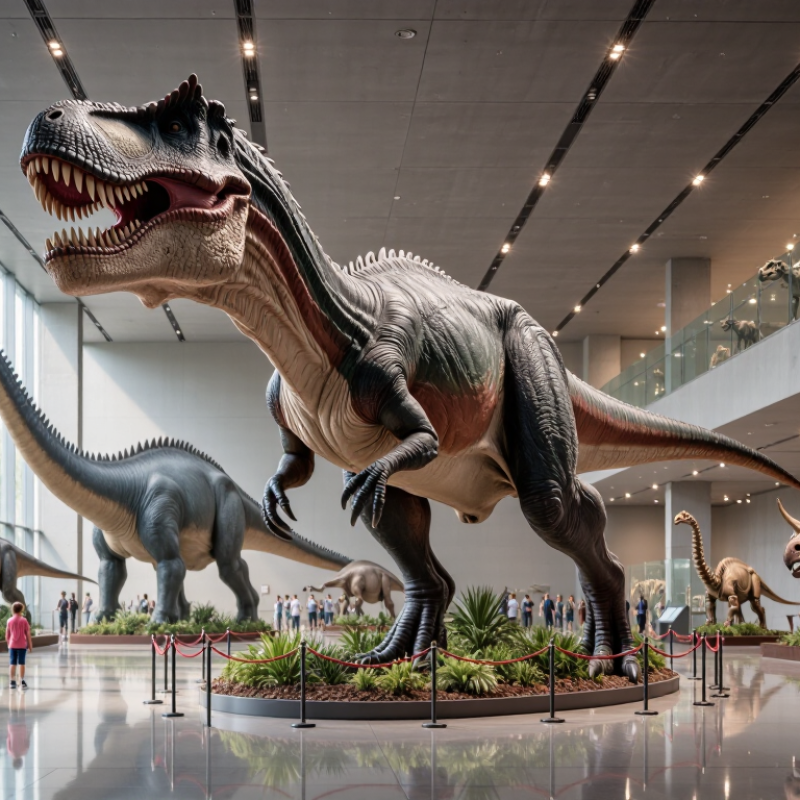
Giant dinosaur models generally fall into three types: static sculptures, animatronic figures, and inflatable displays. Static models, often built around reinforced frames, suit museum entrances and outdoor trails. Animatronics add movement, sound, and blinking eyes, making them useful for themed attractions and interactive exhibits. Inflatable dinosaurs are lighter and quicker to install, but wind and punctures can limit outdoor use. Scale changes everything.
Their uses are expanding alongside visitor attractions. The 2023 TEA/AECOM Theme Index and Museum Index reported 245.5 million visits to the world’s 25 most-attended theme parks, about 23% more than in 2022. That figure does not show dinosaur displays caused the rise, but it reflects the scale of settings where immersive props may be used. Museums can pair models with fossil information; parks often use them for photo stops, walk-through paths, or timed shows.
When buying internationally, match the model to its setting before comparing appearance. Ask for dimensions, materials, operating requirements, crate size, and installation instructions. For animatronics, confirm movement range and access to serviceable parts. Outdoor pieces need suitable anchoring and weather-resistant finishes. Details matter. A striking jaw movement can attract visitors, yet poor maintenance may leave the figure motionless; that practical trade-off is easy to underestimate.
Giant dinosaur models are available through specialist animatronics fabricators, museum-exhibit contractors, theme-park suppliers, and large-scale sculpture studios worldwide. Regional trade fairs and established business directories can help buyers find makers closer to their installation site. Some suppliers offer static fiberglass figures; others build moving models with sound, lighting, or controlled mechanical parts. Ask for recent project photos and references for installations of similar size. A polished photograph is useful, but it cannot show how a model handles rain, strong sun, or repeated public use.
Before requesting a quote, share the planned location, doorway and vehicle access, ground surface, and preferred dimensions. These details affect transport, installation equipment, and total cost. Request a written specification covering materials, moving components, maintenance needs, packing, delivery, and installation support. Compare quotations carefully: a lower price may exclude foundations or on-site assembly. International shipping can add crating and import charges, so confirm who arranges each step. I have seen buyers focus on the dinosaur’s height and overlook the route needed to move it indoors. That part is easy to miss.
Tips
Measure the narrowest access point, not just the display area. Ask whether replacement parts are available locally. Request a clear payment schedule and delivery timeline, then keep all technical details in writing. Small oversight, big delay.
A giant dinosaur model can look convincing online and still disappoint at full scale. Judge the maker by its documented process, not dramatic photos. Ask for material specifications, frame design, surface finish, and exact dimensions. Small details matter. Request close-up images of joints, teeth, paint edges, and access panels. A measured drawing can reveal more than a polished rendering.
For outdoor displays, ask how the structure handles wind, rain, sunlight, and temperature changes. For indoor pieces, check doorway clearance, floor loading, and installation access. Get a written quote that separates fabrication, crating, freight, setup, and maintenance. Vague totals are risky. Confirm lead times and what happens if a shipment arrives damaged. Retailers should identify the actual manufacturer and explain their after-sales support.
Compare recent project references, ideally for models of similar size and complexity. Ask about inspection steps and request progress photos before agreed payment milestones. Read warranty exclusions carefully; paint, electronics, and moving parts may have different coverage. I would value a plain answer over a dazzling promise. There is no perfect checklist. A lower quote may be reasonable, but only when materials, scope, and service match.
Buying a giant dinosaur model from overseas is only the start. Before paying, request its packed dimensions, total weight, crate material, and loading requirements. A model that fits the display site may not fit through a gate or beneath a warehouse door. Measure the route, including tight turns. That detail is easy to miss.
Choose shipping around the model’s size and destination. Sea freight often suits large crates, but transit can take weeks and port handling adds time. Ask for a written estimate covering freight, insurance, unloading, and delivery to the final site. Customs duties and documentation vary by country, so confirm the current requirements with local customs officials or a qualified broker. Keep the invoice, packing list, and origin documents together. Delays happen.
Installation needs planning before the crate arrives. Check that the ground can support the model, especially if it has a steel frame or moving parts. Outdoor displays may need secure anchoring for local wind and weather conditions. Confirm electrical voltage and access to power for animatronic features. Arrange suitable lifting equipment and trained installers, and leave room for safe maintenance. I have seen projects focus on the sculpture and underestimate the access path; it is an avoidable, costly oversight. Allow extra time and budget, even with careful planning.
Compare common sourcing routes and plan the practical steps involved in purchasing and installing a large dinosaur model. Shipping methods, import requirements, and project timelines depend on the model’s size, materials, destination, and local regulations.
| Sourcing route | Typical shipping approach | Customs and import planning | Installation considerations | Key planning checks |
|---|---|---|---|---|
| Domestic supplier Buy from a maker or distributor in the destination country. | Road freight is often practical for regional delivery. Oversized pieces may need a specialist vehicle or a route survey. | Domestic purchases generally avoid a separate international import clearance step. Confirm whether applicable sales taxes are included in the quotation. | Check access for delivery vehicles, unloading equipment, doorways, paths, and the final display area. Confirm whether assembly is included. | Request written dimensions, packed dimensions, weight, delivery scope, installation scope, warranty terms, and care instructions. |
| Supplier in another country Purchase across a nearby land border or within a regional trade area. | Road freight may suit shorter distances; rail or sea freight may be used for larger consignments. The chosen mode depends on size, cost, and schedule. | Check the destination’s import rules, tariff classification, duty, taxes, and any required declarations. Trade agreements do not automatically remove every charge or document requirement. | Plan for the handoff between international transport and local delivery. Confirm who arranges unloading, assembly, and site access. | Agree on the delivery term in the contract and identify who is responsible for export paperwork, import clearance, insurance, and final delivery. |
| Overseas manufacturer Order directly from a producer in a distant market. | Sea freight is commonly considered for bulky, heavy shipments; air freight is generally faster but can be costly and may not suit oversized cargo. Crating or container loading may be needed. | Ask a customs broker or relevant authority about classification, valuation, duties, taxes, permits, and documentation before shipment. Requirements vary by country and product details. | Provide the delivery site’s access and lifting constraints before production. Large models may arrive in sections and require qualified assembly or electrical work. | Confirm packed measurements, total shipment weight, packaging standard, production schedule, inspection arrangements, spare parts, and what happens if goods are delayed or damaged. |
| Specialist importer or project contractor Use an intermediary to coordinate sourcing, logistics, or installation. | The intermediary may arrange freight, customs brokerage, local transport, and delivery as separate or combined services. | Confirm which party is the importer of record and who pays duties, taxes, brokerage, and port or terminal charges. Obtain a clear list of included and excluded services. | A project contractor may coordinate lifting, foundations, anchoring, assembly, and site safety. Verify the contractor’s scope and local qualifications where required. | Request a single schedule covering design approval, production, transport, clearance, site preparation, installation, testing, and handover. |
| Public attraction or custom installation project Source a model as part of a museum, park, retail, or event development. | Transport may require a site-specific logistics plan, including route checks, delivery windows, lifting equipment, and temporary storage. | Allow time for document review and clearance before the planned installation date. Confirm any local rules for electrical equipment, materials, public access, or outdoor use. | Assess ground conditions, foundation or anchoring needs, wind exposure, drainage, power supply, maintenance access, and visitor safety. Seek professional engineering advice where appropriate. | Coordinate the model supplier, freight provider, customs broker, site manager, and installer. Keep a contingency for inspection, weather, and transport delays. |
Important: Duties, taxes, permits, product classifications, and safety requirements depend on the destination country and the specific model. Verify them with the relevant customs authority or a qualified customs broker before placing an order.
A low factory price can grow quickly once shipping, customs handling, site access, and installation are added. Ask each supplier for an itemized quote showing model dimensions, materials, motion systems, packing, freight, installation, and taxes separately.
A 6-meter outdoor figure may need a crane, a reinforced base, and weather-resistant electrical connections. Those costs should not appear as surprises after deposit. Get it in writing.
Warranty length alone tells little. Check what it covers: frame corrosion, motors, sensors, paint, controllers, and replacement labor. Ask who pays freight for parts and how quickly technical support responds across time zones. Request a spare-parts list, maintenance schedule, and video of a completed function test.
The U.S. Department of Energy’s Operations & Maintenance Best Practices guide reports that effective operations and maintenance can save 5% to 20% on energy bills. That figure concerns buildings, not dinosaur models, but it reinforces the value of planned upkeep for powered exhibits.
I would still compare the warranty exclusions carefully; outdoor wear can be costly, and written promises may leave important gaps.



For those larger-sized parts, or smaller quantity runs, we have 2 independent powder coat booths and ovens. The quality, durability and affordability of today’s powder coating finishes make this the process of choice for world-class companies.
Powder coating advantages over other forms of coating are many. Materials used in the Powder coating process can be metals and non-metals that come in a multitude of thicknesses, textures, colors, etc. Another of Powder coating’s biggest advantages over conventional coatings is its ability to create finishes in many different textures. Powder Coating Booths allow us the ability to apply these advantages to large products.
Tri-State Fabricators runs a full-service conveyor line for painting. Wet painting can provide protection or decoration to many different part styles. From start to finish, every project is easier to undergo random and point-based inspection by our skilled painting team.
Advantages to our Wet Paint Line are these lines start with product prep and ends with a thorough inspection of a high quality finished product. Our ability to complete large and small projects with a superior finish and doing so in a timely and economical fashion. This passes along the savings in production to our customers. When powder coating ins not an option, our Wet Paint Line gets the job done right the first time.
When the parts get big and heavy we roll-out our custom paint racks and oversize booth. By utilizing our partnerships with all the major paint brands, we can match virtually any color with wet paint.
The advantages of having access to a Wet Paint Booth are many. Large projects of many different shapes can be loaded into the booth. The Wet Paint Booth offers an environment that is much more controlled than a typical parts painting operation.
Not only are they used because of their controlled environment, but they’re are also advantageous when it comes to applying paint to parts that are needed in industries that require specialty coatings such as medical, aerospace, etc.
Our military forces have some very high standards when it comes to the finish of their vehicles and equipment. From the first pre-treatment step to final coat, it takes a great deal of knowledge and experience to protect the men and women of our armed forces. They deserve only the best, and Tri-State Fabricators provides it.
All of our processes are closely monitored by our staff and management teams. Both of which are highly trained in the processes of metal fabrication and finishing. Tri-State Fabricators’ goal is to always fully satisfy each and every customer, including the military. We will always put a 110% into what we do.
Abrasive media blasting is an excellent way to remove old paint, rust, and increase the paint/powder adhesion. Glass beads produce a much smoother and brighter finish than angular abrasives; leaving the part clean yet without any dimensional change. Chemically inert and environmentally friendly, we can recycle our beads approximately 30 times; making them a more preferred method of metal cleaning or surface finishing.
Advantages to Glass Bead Blasting are many. Glass bead blast media is used when a project is needing rough surfaces need to become smooth for applications of coatings such as paint. It is typically used to clean paint and rust from a product surface without deforming the surface it is being used on. Overall, compared to many other blasting media, Glass Bead Blasting is a very economical choice and those savings are always passed on to our customers.
Tri-State Fabricators utilize a zinc phosphate wash to clean and etch the material to ensure the best paint adhesion possible. The unique design of our 3-stage wash system does the work like a 5-stage. From Cleaning and rinsing to conversion coating and post-treatment, Our Part Washing process is a complete service and works throughout the fabrication service and the finishing service.
Along with the previously mentioned benefits, Curing is a vital chemical reaction that leaves the product finish hard and relatively safe from mild abrasion and aggressive corrosion. This process can be done in more than one way; ambient air-dry or in curing ovens at temps that exceed 240°.
From fixing paint mistakes (someone else’s of course) to simply cleaning our paint line hooks, our burn-off oven is put to good use. After a quick burn-off, a little clean up, and a fresh coat of paint, your parts will look better than new.
Why does our Burn-Off Oven work so well? Because super heating the air around parts turns the materials into ashes. From paint and powder coatings to rubber and machining oils, high temps do the job without degrading the integrity of the part.
Masking is a vital part of producing high quality products. We have die-cut masking patterns to protect machined surfaces as well as a wide range of plugs and caps to protect threaded holes and bolts. We provide permanent and temporary masking.
Masking allows the selected sections of a product to be protected from a fabrication or finishing service. This can be with both chemicals when etching and tapes, paints when only finishing just a section of the product. Masking is great in aiding the customization process of a project.
Screen printing is a photographic process that transfers artwork onto a porous nylon screen which allows colored ink to flow through the screen and be deposited on an aluminum or plastic component. We can generally have just about any design created onto a screen for your parts.
Some of the advantages of Screen Printing are, brand recognition for your business displaying on your products, assembly instructions, product warnings/hazards, etc. Tri-State Fabricators produces Screen Printing of the highest quality so you know it’s durable.
Metal Finishing is the art of treating the exterior portion of product, often metal but can also be made of other materials, so that the surface is clean and free of any debris. Then the process of applying coats or either paint of powder coat takes place. This coating process improves the quality of the product in both appearance and resistance to wear and corrosion.
Tri-State Fabricators, Inc., understands that a project typically isn’t complete until a high-quality finish has been added to your product. This is why our painting and powder coating teams continuously inspect the products throughout the Metal Finishing process.