What Is a Wheel Hub Assembly and What Type Do You Need?
A Wheel Hub Assembly is the connection point between your vehicle and its wheel. It supports the wheel, allows smooth rotation, and helps maintain accurate steering control. Many modern assemblies include a bearing, mounting flange, wheel studs, and an ABS sensor or tone ring. When these parts work correctly, the drive feels quiet and stable.
In my experience, a failing hub assembly often reveals itself through a humming sound that rises with speed. You may also notice looseness, vibration, uneven tire wear, or an ABS warning light. Noise can travel through the body, however, making the damaged side difficult to identify. That assumption can be wrong. A tire, brake, or axle problem may create similar symptoms.
The correct replacement depends on your vehicle’s design and operating demands. Some vehicles use bolt-on hub bearing assemblies, while others use separate bearings pressed into the steering knuckle. Front and rear hubs may differ, especially on four-wheel-drive models. You must also confirm ABS compatibility, spline count, stud pattern, and load rating. Fit matters.
A reliable choice begins with the vehicle identification number, service manual, and precise inspection. Quality matters too. A poorly manufactured bearing may develop play or noise sooner than expected. This guide explains how a Wheel Hub Assembly works and how to choose the right type. It also highlights practical checks, common mistakes, and situations requiring professional diagnosis. Even careful owners can overlook small details. That is worth remembering.
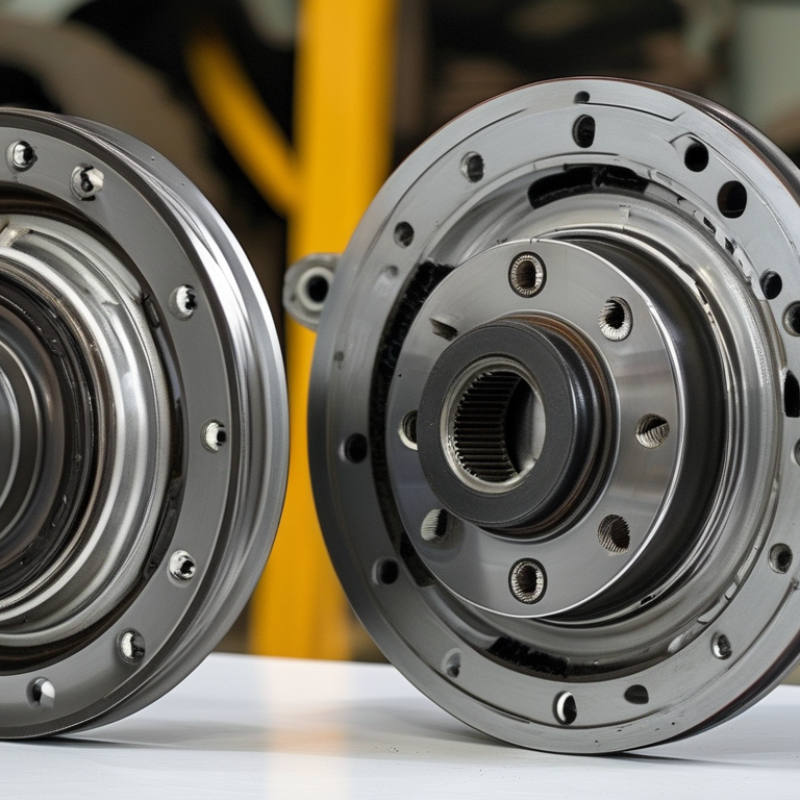
Wheel Hub Assembly Defined: Hub, Bearings, Flange, and ABS Sensor
A wheel hub assembly is the central connection between a vehicle’s wheel and suspension. It usually combines the hub, wheel bearings, mounting flange, and ABS sensor. The hub holds the wheel studs or bolts. It also transfers engine and braking forces through the wheel. Inside the assembly, bearings allow smooth rotation while supporting the vehicle’s weight. Without proper bearing preload, the wheel may develop play, noise, or uneven wear.
The mounting flange attaches the assembly to the steering knuckle or axle. Its position affects wheel alignment and brake component fitment. The ABS sensor monitors wheel speed and sends data to the vehicle’s safety systems.
A damaged sensor can trigger a warning light or reduce electronic braking assistance. Not every hub assembly uses the same sensor design. Some sensors are built into the unit, while others mount separately.
Choosing the correct type requires more than matching the vehicle’s year. Check drivetrain layout, front or rear position, bearing design, flange pattern, and sensor connection. Engine size and brake configuration may also matter. A visual match can mislead. Measure carefully. During inspection, check for rough rotation, looseness, rust, or damaged wiring. I have seen quiet bearings fail soon after installation because the wrong assembly was selected. The part should match the vehicle’s specifications and the manufacturer’s repair information. Installation torque matters too. A hub can look perfect yet fail early when fasteners are overtightened or left loose.
How Hub Assemblies Carry Radial, Axial, and Vehicle Torque Loads
What Is a Wheel Hub Assembly and What Type Do You Need?
A wheel hub assembly connects the wheel to the vehicle’s suspension and braking system. It commonly includes a hub flange, bearings, seals, and an ABS sensor ring. During inspection, I look for play, rough rotation, uneven noise, and damaged wiring. A small amount of looseness can become a serious handling concern.
The assembly carries three important forces. Radial load comes from the vehicle’s weight pressing through the tire onto the bearing. It increases when the vehicle carries cargo or crosses potholes. Axial load acts from side to side during cornering, lane changes, and uneven road contact. Vehicle torque travels through the hub during acceleration and braking. That torque can expose weak splines, worn fasteners, or poor seating surfaces.
The required type depends on the axle position, drive system, suspension design, and sensor arrangement. A driven hub must transfer engine or motor torque, while a non-driven hub mainly supports rotation and load. Some designs use press-fit bearings; others use bolt-on assemblies. I once assumed two similar-looking hubs were interchangeable, but their sensor signals and mounting depths differed. That mistake is worth remembering. Always verify the original dimensions, connector, spline count, bearing rating, and tightening specification. Correct fit matters more than appearance.
Hub-Unit Types: Generation 1, 2, and 3 Integrated Designs
A wheel hub assembly connects the wheel to the vehicle and supports smooth rotation. It usually includes a hub, bearing, mounting flange, and sometimes a speed sensor. The correct design depends on the suspension layout, axle position, and electronic systems. A wrong match can create play, noise, or inaccurate wheel-speed readings.
Generation 1 units use a separate bearing and hub. The bearing is commonly pressed into the steering knuckle, while the hub fits inside it. This design can be durable, but replacement requires accurate pressing and careful alignment. A small installation mistake may damage the bearing before the vehicle leaves the workshop. Generation 2 units combine the bearing with a mounting flange. They often bolt directly to the knuckle, making installation cleaner and faster. Some include an integrated encoder or sensor ring.
Generation 3 units are more complete. The bearing, hub, flange, encoder, and wheel-speed sensor may form one sealed assembly. This arrangement reduces adjustment work and supports modern stability and braking systems. Still, the generation labels are not perfectly universal. Manufacturers may use different layouts under similar names. Check the original dimensions, connector, bolt pattern, encoder position, and sensor gap before ordering. A visual match is not enough. It can mislead you. In practical inspections, compare the old unit beside the replacement and turn both by hand. Rough movement or a faint grinding sound deserves further investigation.
Choosing Fitment by Load Rating, Dimensions, ABS, and ISO 281 Data
What Is a Wheel Hub Assembly and What Type Do You Need?
Choosing Fitment by Load Rating, Dimensions, ABS, and ISO 281 Data
A wheel hub assembly combines the hub, bearings, mounting flange, and sometimes an ABS encoder. Correct fitment requires more than matching the vehicle model. Check the required load rating against the vehicle’s axle load, wheel size, and operating conditions. A higher rating is not automatically safer if the geometry or bearing preload is wrong.
Measure carefully. Confirm bolt pattern, flange offset, center pilot diameter, bearing bore, spline count, and overall width. Even a small dimensional error can cause rotor misalignment or uneven tire wear. Fitment is not guesswork. Compare these measurements with verified technical data and the original part.
ABS compatibility also deserves close attention. The encoder may use a magnetic ring, a toothed ring, or another signal pattern. Sensor clearance and connector position must match. ISO 281 data can help evaluate bearing life through dynamic load rating, equivalent load, and calculated rating life. However, ISO 281 does not fully predict service life under water exposure, road debris, poor installation, or impact loads. That limitation is easy to overlook. Recheck the calculation when driving conditions change. A catalog value may look precise, yet real-world duty cycles are rarely perfect. After installation, verify sensor output, fastener torque, and smooth rotation before regular use.
What Is a Wheel Hub Assembly and What Type Do You Need?
Choose fitment by load rating, dimensions, ABS compatibility, and ISO 281 bearing-life data.
Load Rating Select a hub assembly whose radial and axial load capacity meets or exceeds the vehicle's axle load and operating requirements.
Dimensions Verify bearing bore, flange diameter, bolt pattern, wheel pilot diameter, flange offset, and overall assembly width against the vehicle specification.
ABS Compatibility Confirm whether the assembly requires an integrated magnetic encoder or tone ring, and match the sensor position and connector.
ISO 281 Reference The chart uses the ISO 281 basic rating-life equations: L10 = (C/P)3 for ball bearings and L10 = (C/P)10/3 for roller bearings.
C/P is the ratio of basic dynamic load rating to equivalent dynamic bearing load. L10 is expressed in millions of revolutions and represents the life at which 90% of an identical bearing population is expected to survive under stated conditions. Always verify final fitment using the vehicle service specification.
ISO 281 L10 Life: A 90% Reliability Benchmark for Bearing Selection
What Is a Wheel Hub Assembly and What Type Do You Need?
A wheel hub assembly connects the wheel to the vehicle’s suspension and braking system. It usually contains bearings, a hub flange, seals, and sometimes a speed sensor. The correct type depends on wheel position, drive layout, load, and sensor design. A front hub may handle steering forces, while a driven hub also transfers engine torque. Small differences matter. In practical service, bearing selection should begin with measured loads, wheel size, operating speed, and road conditions. ISO 281 provides a useful engineering reference for this decision. Its L10 life represents the calculated service life that 90% of identical bearings should reach before rolling-contact fatigue appears.
That benchmark is useful, but it is not a promise. If a hub has an L10 life of 100,000 kilometers, about 90% should reach that distance under the stated load and operating conditions. The remaining 10% may fail earlier. Real roads are less predictable. Water, grit, misalignment, impact loads, and incorrect pressing can shorten bearing life quickly. Technicians should compare the basic dynamic load rating with the actual equivalent load, then check sealing and installation space. Do not ignore fit. A clean, even press fit matters. Yet ISO 281 does not fully describe corrosion, sensor damage, or poor maintenance. That limitation deserves attention. A suitable hub assembly balances calculated L10 life with real operating risks, not just a catalogue number.





