What Is the Best Steel Fire Rated Shutter?
Choosing the best Steel Fire-Rated Shutter is not a matter of selecting the thickest curtain or the largest motor. The right choice depends on the opening, fire-risk assessment, tested configuration, and installation details. A shutter beside a busy loading bay faces different demands from one protecting a small service counter. Look closely at the guides, bottom bar, release mechanism, and controls. Small details matter.
Fire-protection researcher Dr. James A. Milke is a relevant voice on fire behavior and building safety. However, no source was provided for a verified quotation from him about fire-rated shutters, so attributing invented words to him would be misleading. That limitation matters. Buyers should ask manufacturers for current test evidence and clear documentation showing which shutter assembly was evaluated, including its size, supporting construction, and operating hardware.
A dependable choice should suit the actual opening and work reliably during routine use, not just look reassuring on a specification sheet. Check how the system responds to alarms, power loss, inspections, and everyday wear. A shutter that is poorly maintained can disappoint. This guide compares the practical factors behind a strong selection, including fire performance, materials, operation, installation, and after-sales support. The best option is the one whose documented performance matches the building’s needs—and whose limitations are understood before purchase.
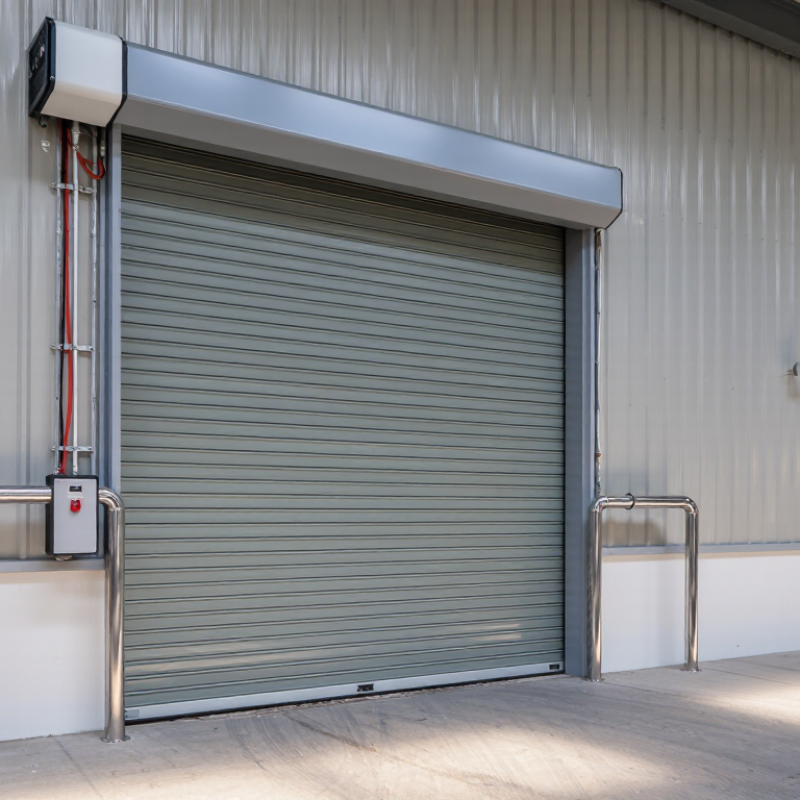
What a Steel Fire-Rated Shutter Is and How It Works
A steel fire-rated shutter is a movable barrier designed to close an opening during a fire. Its curtain is usually made from interlocking steel slats that travel inside vertical guide rails. The fire rating applies to the tested shutter assembly, not simply to the steel. It is not a promise that every fire or installation will be contained.
During normal operation, the shutter stays open so people or goods can pass through. When a heat detector, fire alarm, or fusible link triggers the release, the shutter closes. Depending on its design, a motor or counterbalance system controls the movement. The curtain descends along the guides and forms a barrier across the opening. It is not magic.
The shutter’s performance depends on correct installation and regular checks. In practice, the neat diagram is not the whole story: nearby equipment, damaged guides, or an obstructed path can affect closure. A routine inspection should confirm that the release works and the curtain moves freely. Dust and corrosion can be easy to miss. A small gap matters. A fire-rated shutter also does not automatically provide smoke control; that depends on the tested design and the building’s wider fire-safety plan.
How Fire Ratings and Testing Measure Protection
A steel fire-rated shutter is judged as an assembly, not by curtain thickness alone. Testing includes the curtain, guides, barrel, hood, and closing mechanism. UL 10B and UL 10C expose assemblies to a prescribed furnace time-temperature curve; UL 10C also applies positive pressure. A 90-minute rating describes performance under that test, not a guarantee against every real fire. That distinction matters.
NFPA 80 calls for annual inspection and operational testing of fire door assemblies, including rolling steel doors. Technicians check whether the shutter closes fully and whether its path is clear. Small faults count. A bent guide or blocked track can prevent closure. NFPA’s 2023 U.S. fire-loss report estimated about 1.39 million fires and $23.2 billion in property damage. Those figures are not shutter-specific, but they show why tested, working fire barriers matter.
A rating only helps when the shutter matches the opening and is installed and maintained correctly. Keep pallets, cables, and stored boxes away from its travel path. In practice, a shutter can pass a laboratory test yet fail to close when clutter catches its bottom bar. I would not treat the label as the whole answer; the inspection record and the actual closing test deserve equal attention.
Which Design Features Affect Safety and Durability
What Is the Best Steel Fire Rated Shutter?
Which Design Features Affect Safety and Durability
A reliable steel fire-rated shutter is a tested assembly, not just a heavy curtain. Its fire rating depends on the curtain, guides, fixing details, and installation working together. Check that the proposed configuration has suitable test documentation for the opening and intended use. A rating alone does not prove that every size or installation method is covered. That distinction matters.
Look closely at the guides and bottom bar. They should stay aligned, with secure fixings suited to the wall construction. The curtain must travel smoothly without catching, even after repeated operation. Small details count. A protected motor, suitable controls, and an appropriate closing mechanism can support dependable operation during an alarm. Ask how the shutter responds if power fails; the answer should match its design and site requirements. Durability also depends on the environment. Dust, moisture, and frequent impacts can wear components, so finishes and maintenance access deserve attention. It is tempting to choose the thickest steel and stop there. That is not enough. Regular inspection, correct installation, and clear service records help reveal problems before they affect performance.
How to Match a Shutter to a Building and Opening
What Is the Best Steel Fire Rated Shutter?
How to Match a Shutter to a Building and Opening
The best shutter is the one that fits the wall, opening, and daily use. NFPA’s U.S. Fire Loss report estimated 1,504,500 fires in 2022, with 3,790 civilian fire deaths. Those figures describe the wider risk, not the performance of any single shutter. For a real project, check the required opening-protection rating against the wall assembly and local code. A shutter’s tested listing matters; steel thickness alone does not establish fire performance. Small detail. Big consequence.
Measure the clear opening, wall construction, available headroom, and side-guide space on site. A wide loading bay with frequent forklift traffic may need robust guides and controls suited to repeated cycles. A narrow corridor opening may have different clearance and access needs. Smoke-control requirements can also affect the selected assembly. One awkward point: drawings rarely show every beam, pipe, or uneven floor that installers encounter. Verify these conditions before ordering, then confirm installation, release operation, and inspection arrangements against NFPA 80 and the shutter’s listing. A rating chosen without those checks can look right on paper, yet fail to suit the building.
How to Compare Options and Choose the Best Fit
Compare shutters by the tested fire-resistance rating of the complete assembly, not by steel thickness alone. Check whether the rating suits the wall, opening, and fire strategy; a shutter does not automatically provide smoke control. Ask for test documentation, installation limits, and details for the guides, curtain, hood, and bottom bar. Small details matter. A narrow guide clearance or unsuitable lintel can complicate installation. Involve the building’s fire-safety professional before comparing prices.
Then match the operating system to daily use. For a busy loading bay, check opening speed, duty cycle, controls, and access during a power failure. At a rarely used service opening, simpler operation may be easier to maintain. Measure clear width and height, headroom, side room, and floor level on site; drawings can miss uneven concrete. Consider noise, corrosion, cleaning, inspection access, and how often the shutter will cycle. Ask who will test it and how faults are reported. A low purchase price can mean awkward servicing later. Not always, but worth checking.





